1500+ reviews


Argentine, odorous house, fire, and carpenter ants are the four most common residential culprits around Magnolia, and the control that works starts with species ID, bait placed along active trails, and targeted exterior treatment at entry points. In Magnolia, Texas, 102,906 residents and 34,581 households were estimated in 2024, with a projection of 110,157 residents by 2029 in the wider area, so recurring ant pressure is part of the local housing reality, not a one-off nuisance.
A July afternoon can turn into a kitchen trail by dinner, especially when mulch is packed against the slab, the dog bowl sits by the back door, and one small gap becomes a highway. That's the pattern homeowners keep seeing from one season to the next, and it lines up with a pest problem that's been widespread for well over a century, including the historical indoor-ant survey that found 53% of residents reporting ants indoors and a later house-ant study where 64% of homes submitted at least one specimen Belcher et al.
What matters now is the decision tree, not the panic. Magnolia homes need a practical plan for identification, prevention, baiting, and escalation, plus a clear sense of where local service coverage fits around FM 1774, FM 1488, and the route network that ties Magnolia to nearby service hubs.
Why Magnolia Homes Keep Getting Ants Every Summer
A Magnolia kitchen can look clean at breakfast and have a full ant trail by late afternoon after a humid stretch of weather. The usual setup is familiar, too, mulch pressed too close to the foundation, irrigation wetting the soil near the slab, a pet bowl that stays out overnight, and a few thin cracks that nobody notices until the ants do.
Why the same house keeps getting hit
The Houston region's humidity and mild winters keep ant colonies active for long stretches, and Magnolia's expanding residential footprint gives them even more disturbed soil, landscaping, and edge habitat to work with. In slab-on-grade homes, attached garages, utility penetrations, and dense foundation plantings create more entry and moisture points than older, looser housing often had.
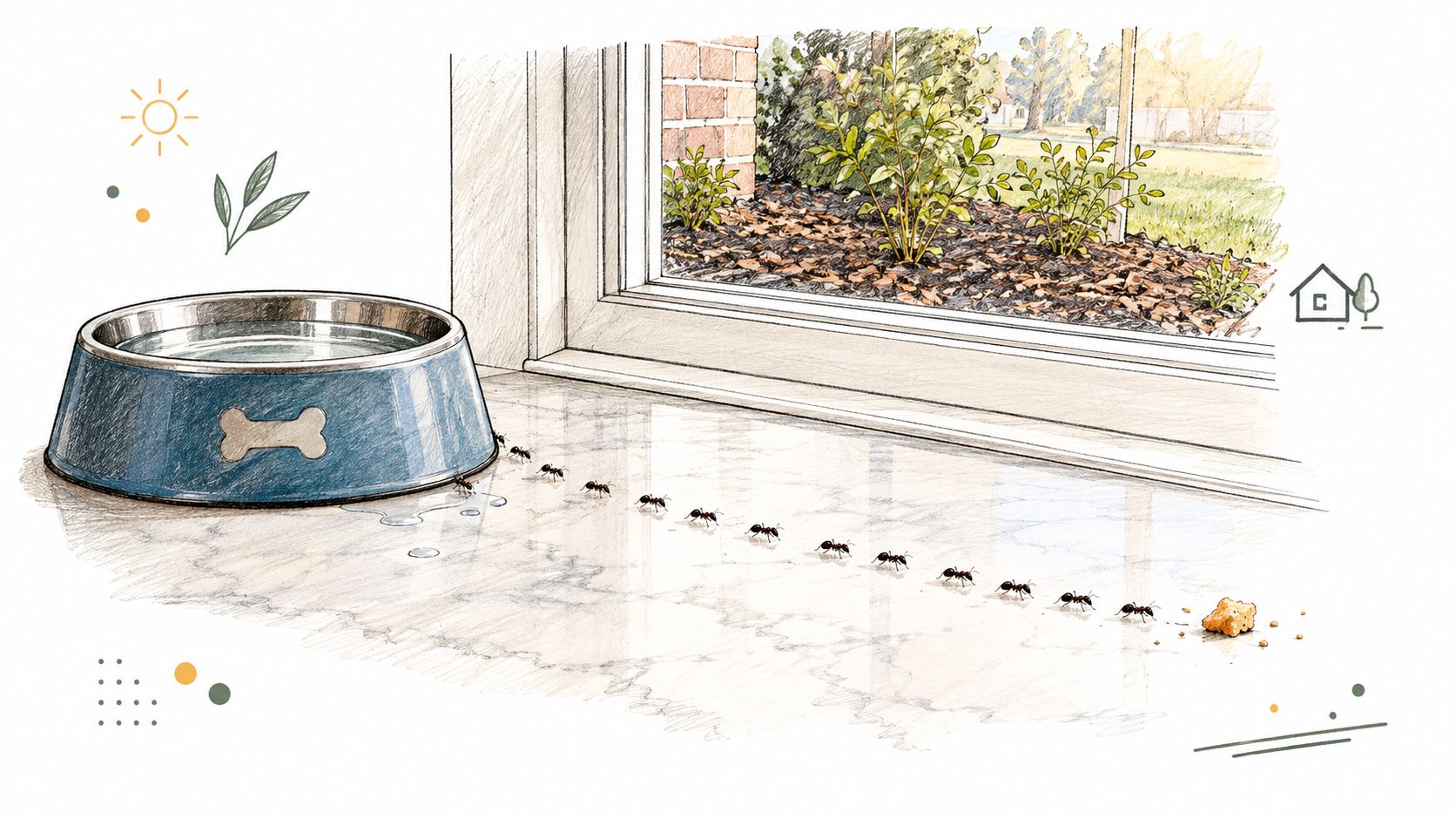
The old lesson still holds up: visible ants are usually foragers from outdoor colonies, not proof that the nest is inside the wall. That's why repeated indoor spraying rarely solves the issue, it knocks down the workers you can see and leaves the colony, food source, and entry route intact.
Practical rule: if the same trail returns, treat it as a routing problem first, not just an insect problem.
What a local control plan has to solve
The rest of the job is about matching the method to the biology, then keeping the path closed. If summer rain has pushed ants toward the house, the bigger issue may be moisture, not just insects, which is why a local guide has to account for both weather and structure, as described in this summer rainfall and pest activity overview.
A realistic Magnolia strategy needs species identification, sanitation, entry-point sealing, and baiting that reaches the colony. It also needs a threshold for escalation, because some trails disappear after cleanup, while others keep reappearing from the same wall void, the same slab crack, or the same shaded bed against the foundation.
The Ants Magnolia Homeowners Most Often See
The first mistake homeowners make is trying to identify ants by color alone. That usually fails, because what matters more is where they forage, what they feed on, and whether they're nesting in soil, wood, or wall voids.
Four species, four control problems
Argentine ants are the classic trail-followers. They favor sweets, spread through interconnected colonies, and show up hard in disturbed areas, which is why new subdivisions often seem to get them first.
Odorous house ants are smaller but notorious indoors. Crush one and you may notice the rotten-coconut smell that gives them away, and they often set up shop in wall voids or damp edge spaces near kitchens and baths.
Fire ants are a different problem altogether. They build mounds, sting aggressively, and tend to dominate open, sunny yards, especially where soil has been repeatedly disturbed.
Carpenter ants are the one that should change the conversation fast. They're larger, often active at night, and point to moisture-damaged wood or hidden decay rather than a simple food trail.
How the ID changes the treatment
A sugar-loving ant often responds better to sweet liquid bait, while another species may prefer protein or grease-based options. Carpenter ants usually call for moisture repair and inspection, not just more bait on a counter.
Watch the trail, not just the ant. Indoors, where the ants travel and what they're ignoring usually tells you more than the color of the body.
In Magnolia's mix of new construction, mature trees, shaded lots, and open sunny yards, that distinction matters. New builds and disturbed soil can favor Argentine ant spread, shaded foundations and older trees can put pressure on wood-associated species, and sunny lots can keep fire ants visible in the yard long before they reach the kitchen.
What Actually Works for Prevention and DIY Control
DIY control works best when the problem is still small, the trail is obvious, and the ants haven't spread through multiple rooms or yard mounds. The winning sequence is simple, clean up what attracts them, block what lets them in, reduce moisture, and bait where they're traveling.
Start with sanitation and exclusion
Wipe up crumbs, sticky spills, and pet food residue fast, then keep trash sealed and counters clean. A non-toxic cleaner can help with daily wipe-downs, and choose a non-toxic cleaner is the kind of option homeowners often want for routine surface work.
Then seal the structure. Caulk slab penetrations, rework weatherstripping, and trim vegetation away from the siding so ants lose the bridge between the yard and the wall. Redirect irrigation away from the foundation, move firewood off the ground, and fix the leaks that keep soil damp near entry points.
Place bait where the ants are already feeding
The strongest baiting advice is also the least intuitive, put bait directly on the active trail, indoors or outdoors, and don't keep moving it every hour. University of Georgia guidance recommends that approach because baits work through colony transfer, while contact sprays can kill foragers before they carry anything back University of Georgia baiting guidance.
Outdoor bait should sit in shade when possible, because heat and direct sun can dry it out and make it less attractive. If the ants don't accept it and the trail keeps returning, the next step is targeted exterior treatment of entry points, windows, doors, adjacent soil, or nest sites, not random indoor spraying.
Good DIY scope: one room, one trail, one visible food source.
Bad DIY scope: multiple rooms, recurring wall activity, or mounds in the yard.
A simple internal reference for homeowners is these prevention tips you can do today to reduce ants, which fits best when the infestation is still localized and the structure itself hasn't become the colony's route.
DIY Sprays Versus Professional Ant Treatment
The difference between DIY sprays and professional service shows up in the numbers, and the numbers are blunt. In a University of California residential study on Argentine ants, more than 70% of surveyed residents used over-the-counter insecticides, but only 10% of that group reported complete or almost complete control, while 63% of those who hired professional pest-control services reported that level of control University of California residential study.
What the spray solves, and what it misses
OTC sprays are good at one thing, dropping the ants you can see right now. They don't solve the route, the nest, the moisture source, or the foraging network, and they can interfere with baiting if you spray too broadly.
Professional treatment adds species identification, trail mapping, targeted bait placement, and exterior perimeter work. That matters in homes where the ants are using the foundation, utility openings, or mulch edge as a repeat path, because the objective shifts from temporary knockdown to colony-level suppression.
If you're looking for a broader comparison from another market, ant control services Miami is a useful example of how service providers frame the same basic issue, baiting and placement matter more than spray volume.
| Approach | Typical Reach | Reported Complete or Near-Complete Control | Best Use |
|---|---|---|---|
| DIY sprays | Visible foragers and short-lived surface knockdown | Low, based on the study above | One-time sighting, cleanup aftermath |
| Professional ant treatment | Trails, entry points, bait access, exterior harborage | Much higher in the UC residential study | Recurring trails, multiple rooms, yard pressure |
A technician's advantage isn't just chemistry. It's knowing when the ant is telling you there's a wall void, a wet sill plate, or an outside colony that keeps feeding the inside trail.
What a FullScope Service Plan Looks Like
A structured ant program starts with inspection, not with a can of spray. FullScope Pest Control describes residential pest work as inspection, treatment, and ongoing protection, with options that include quarterly or biannual service packages, plus emergency response when activity spikes.
What gets checked first
The first visit should identify the ant species, map trails, and look for moisture problems, slab cracks, siding gaps, and the places where landscaping touches the structure. That's the part most homeowners can't do well on their own, because you need to connect what's visible in the kitchen with what's happening outside the foundation line.

What the treatment sequence should include
The initial treatment typically combines an exterior perimeter barrier, targeted bait placement on active trails, and foundation or entry-point work where the ant pressure is concentrated. That sequence fits the way bait efficacy is usually judged in field settings, not by same-day visibility, but by activity changes over the following 7 to 28 days field efficacy study.
Follow-up matters just as much as the first treatment. Baits may need replenishing or relocation, and low-toxicity options are useful in homes with kids or pets when the label and placement are handled correctly.
A good service plan should also tell you what to watch between visits, trail reappearance, new room activity, moisture changes, or fresh mound formation. FullScope's service plans page, service package options and cadence, is the right place to compare the rhythm of quarterly or biannual prevention with the actual reality of Magnolia's year-round pressure.
Serving Magnolia From Cleveland, Conroe, and Porter
Magnolia sits within a practical regional service corridor, rather than outside the normal route network. The city is about 45 miles northwest of Houston, 25 miles southwest of Conroe, and roughly 20 miles from both I-45 and U.S. 290. FM 1774 and FM 1488 meet at the community's core City of Magnolia location page.
Those routes matter during ant season. A nearby crew can usually schedule recurring exterior work more consistently than one traveling from far outside the area. FullScope's Cleveland, Conroe, and Porter locations place Magnolia within its regular residential coverage, including homes near the FM 1774 and FM 1488 corridor.
Why local coverage matters as the area grows
New construction along the FM 1774 corridor continues to put subdivisions, cleared lots, and established properties close together. That mix creates different inspection points. Freshly disturbed soil can push colonies toward new foundations, while mature yards may hold trails beneath mulch, timber borders, or irrigation lines.
Housing construction also varies across the service area. Slab-on-grade homes often concentrate inspection around expansion joints, plumbing penetrations, and exterior wall edges. Pier-and-beam properties call for closer attention beneath the structure, around utility access, and where vegetation touches the perimeter.
A technician serving Magnolia, Cleveland, Conroe, and Porter can adjust bait placement and inspection methods to those conditions instead of treating every address alike. Local route coverage also makes follow-up more practical when trails reappear after weather changes or bait activity develops slowly.
Local service wins on timing. Ant control works better when the technician understands the home's construction, the yard, and the routes residents use every day.
When to DIY, When to Call FullScope
DIY is reasonable when the ants are confined to one trail, the trigger was a recent spill, and the activity doesn't keep returning in the same spot. If you can clean it, bait it, and see the trail fade within a short window, you probably caught it early enough to stay in-house.
Call a pro when the pattern changes. Multiple rooms, recurring monthly trails, mounds in the yard, carpenter ant signs, or moisture damage all point beyond simple DIY.
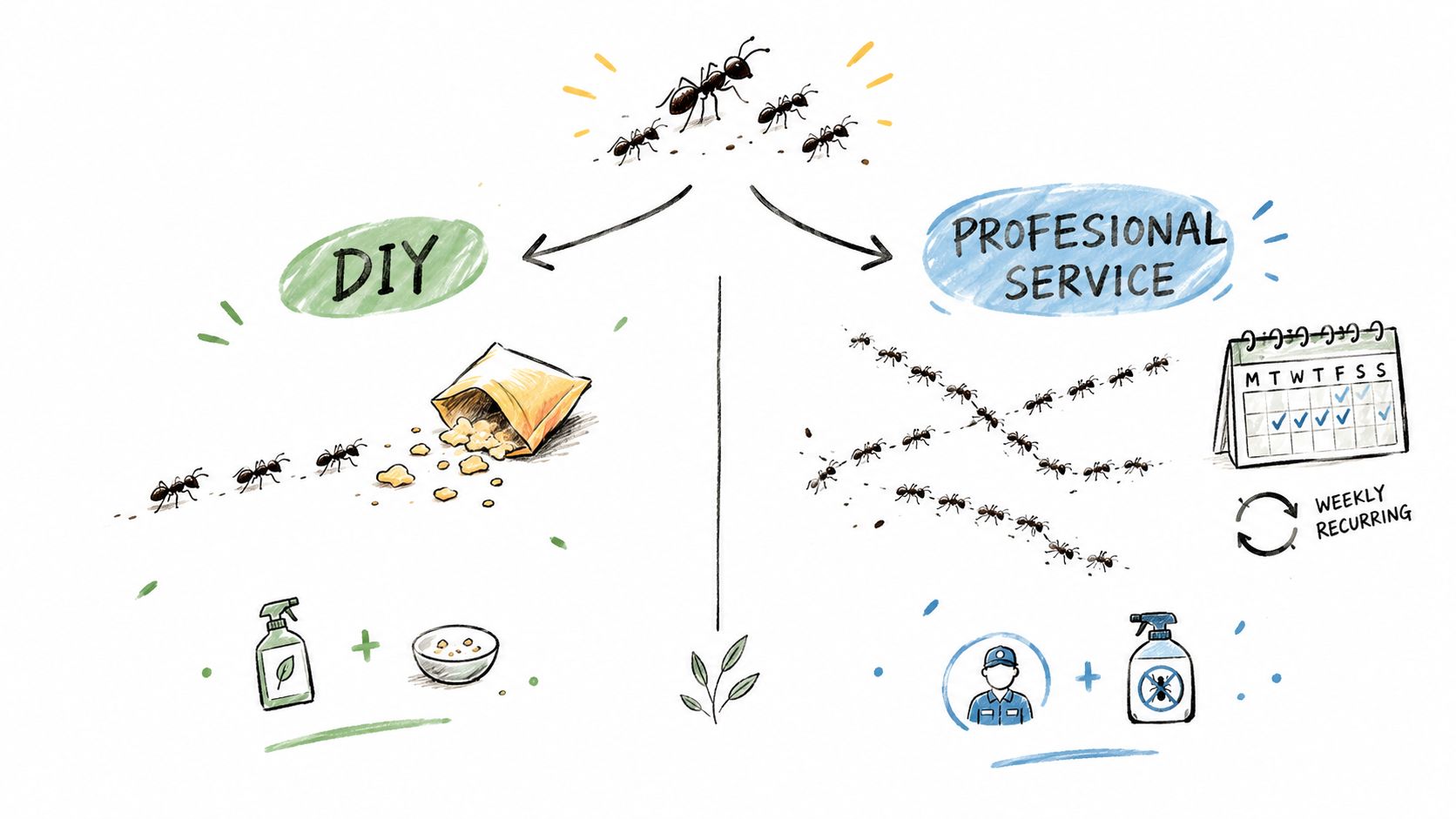
If the ants keep returning after about two weeks of baiting, or if you're seeing large indoor swarms, don't keep cycling through the same spray bottle. That's usually the point where the problem has moved from surface nuisance to colony behavior, and the response needs to match.
A technician can also reduce exposure concerns by using enclosed bait stations and targeted exterior products instead of repeated indoor contact sprays. The California Department of Pesticide Regulation notes that certain enclosed fipronil ant stations have negligible handler and post-application exposure, with dermal contact as the main handler route, which is why placement and containment matter California DPR.
Use this checklist before you decide what to do next.
- Identify the species. Look at size, trail behavior, smell, and nest location.
- Remove food and moisture. Pet food, spills, leaks, and damp mulch all keep the trail active.
- Place bait on the trail. Don't spray over it and don't keep disturbing the station.
- Watch for 7 to 28 days. That's the window where real bait performance becomes easier to judge.
- Escalate if the pattern persists. Recurring activity, yard mounds, or moisture-linked carpenter ant signs deserve an inspection.
If you're in Magnolia and the ants keep coming back, schedule a residential ant inspection with a local technician who can map the trail, check the structure, and set a treatment plan that fits the house instead of just the day's sighting.