1500+ reviews

You're standing by the back door in Magnolia, looking at a line of ants that wasn't there yesterday. The lawn is damp, the mulch is holding moisture against the foundation, and the next scheduled treatment is still weeks away. A calendar can tell you when a technician is due. It can't tell you whether those ants, a hidden termite swarm, or mosquitoes breeding after rain deserve attention today.
A defensible pest control schedule starts with observation, then moves to a treatment decision. That approach fits Southeast Texas, where weather, drainage, landscaping, construction, and the biology of each pest can make neighboring properties behave very differently. The practical question is not merely, “Do I need monthly or quarterly service?” It's, “What are we monitoring, what result triggers action, and when will we check whether the treatment worked?”
Why Your Pest Schedule Should Start With Observation
A homeowner near 77355 notices the first fire-ant mounds in March around a five-year-old single-family home. The easy conclusion is that a quarterly spray will take care of the problem. But a few mounds may be isolated outdoor activity, while a spreading trail near the patio, foundation, or children's play area may justify a different response. The calendar doesn't make that distinction. A technician has to.
That starts with identifying the pest and, where relevant, its life stage. Fire ants, German cockroaches, subterranean termites, mosquitoes, and rodents don't respond to the same products or timing. A schedule that treats all of them as interchangeable “bugs” can produce a tidy service history without addressing the actual risk.
What observation should establish
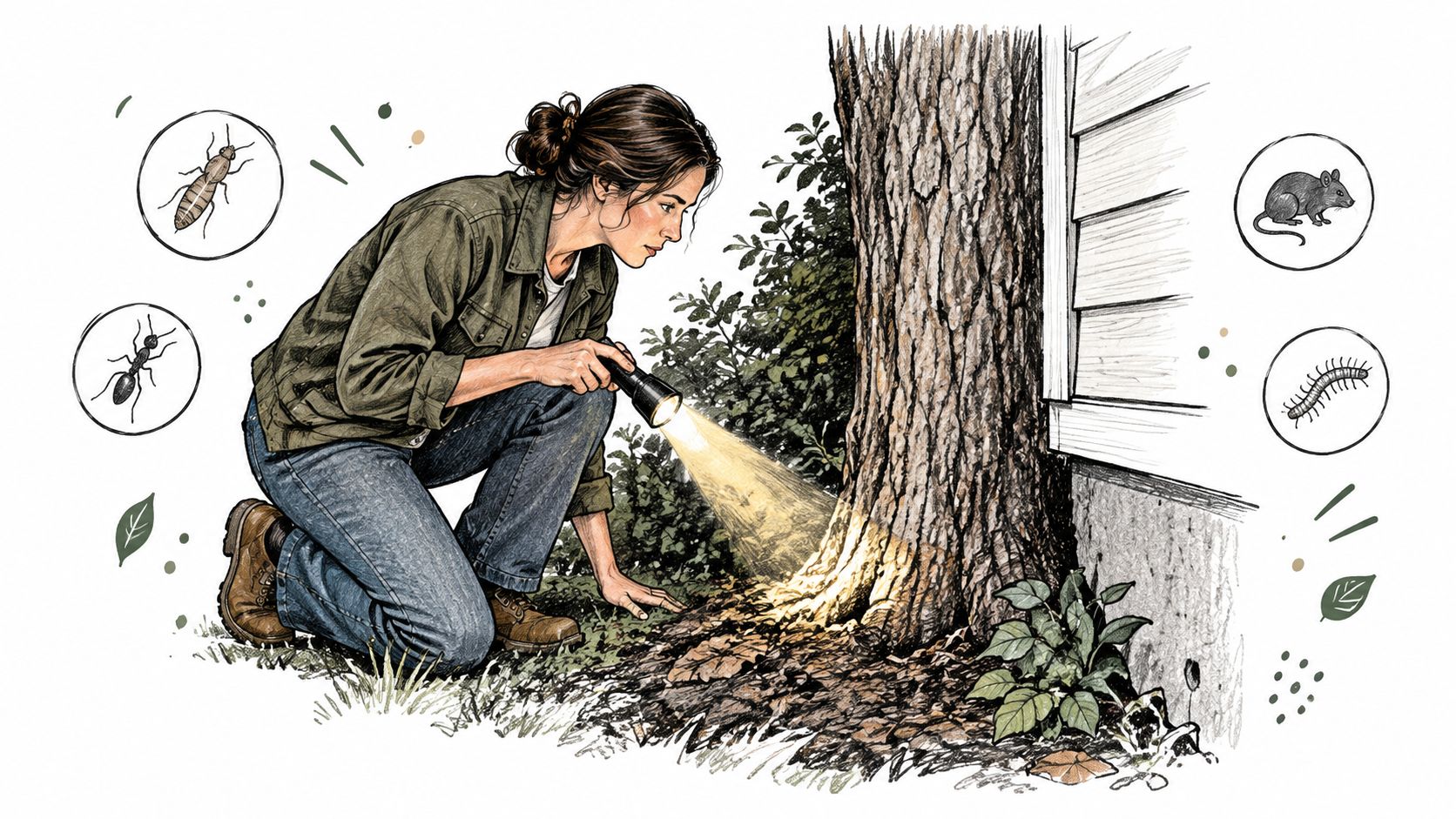
The first visit should create a documented baseline. That means checking interior rooms, the garage, the exterior perimeter, management zones in the yard, and likely entry points. The inspector should record conducive conditions such as food, moisture, harborage, vegetation contact, drainage problems, and gaps around utilities.
A useful schedule also establishes an action threshold. One ant mound in a far corner may call for monitoring. Repeated activity at a doorway, fresh droppings in a food-preparation area, or termite swarmers near the foundation crosses a more serious line. Thresholds make the service defensible because they connect the treatment to evidence rather than a preset date.
Practical rule: A routine visit can be calendar-based. A follow-up treatment should be evidence-based.
During active risk periods, inspect at least weekly. When counts approach the intervention threshold, or when warm, wet conditions are accelerating pest development, near-daily checks may be appropriate for a high-risk area. Use the same traps, inspection points, and counting method each time. University IPM guidance emphasizes distributing samples across multiple areas instead of relying on one observation, as described in this guide to regular pest inspections.
The cheapest plan often means the fewest scheduled visits, but that isn't automatically the lowest-cost protection. Repeated spraying without identification can waste product, mask the pattern, and leave entry points or moisture problems untouched. Ask the provider what they found, where they found it, what threshold applies, and when they'll return to evaluate the result.
The Building Blocks of a Working Schedule
A working schedule is less complicated than it sounds. It needs four disciplined actions, repeated consistently: inspect, identify, record, and set a threshold. Skip one, and the service can drift into routine spraying.
Start with a baseline map
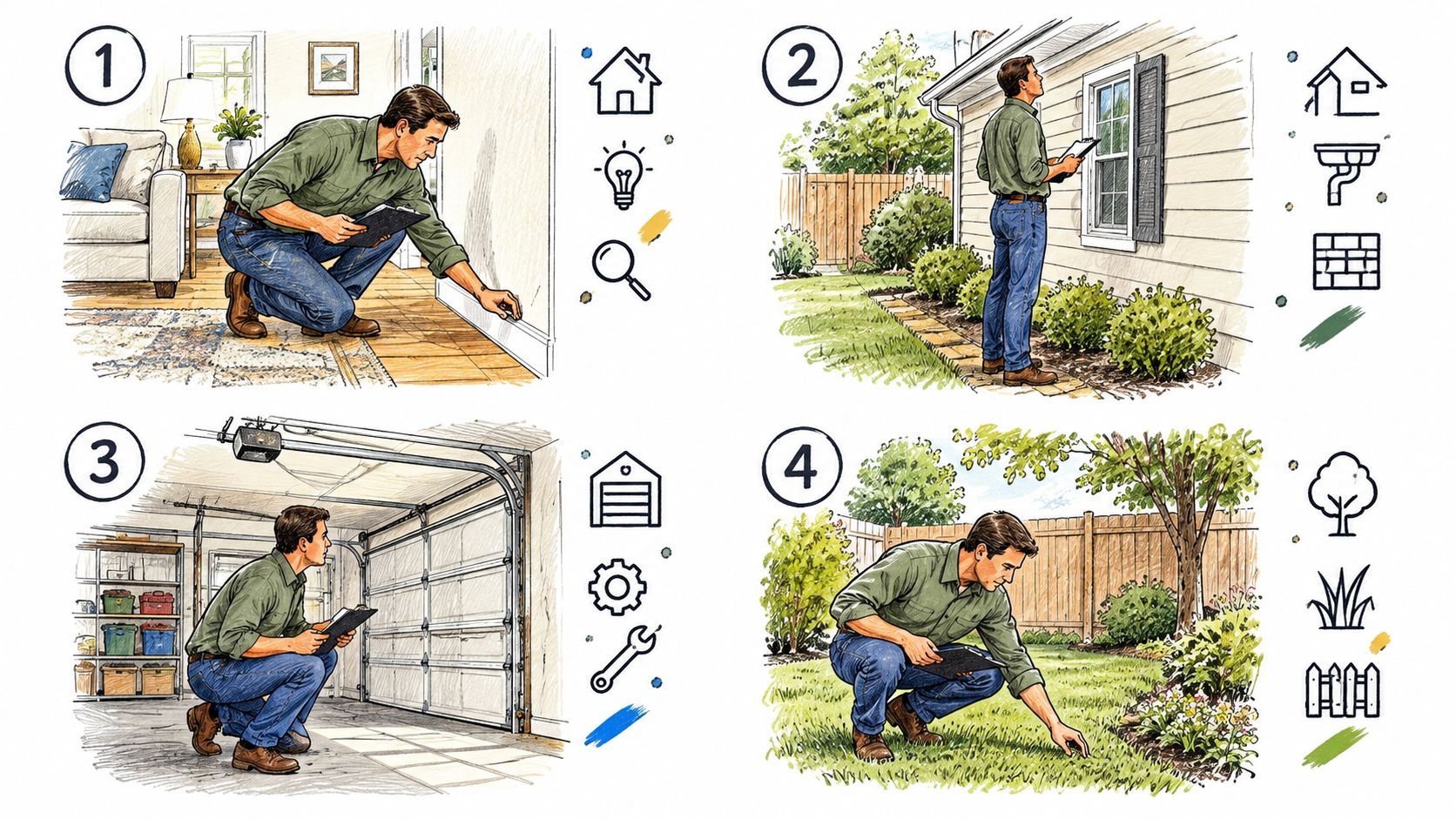
Walk the property by zone instead of wandering until something catches your eye. Include living areas, kitchens, bathrooms, attic or crawl-space access, the garage, the foundation line, porches, sheds, fences, trees, mulch beds, and irrigation or drainage features.
Mark recurring inspection locations. A sticky trap behind the refrigerator, a monitoring station beside the garage door, and a set of exterior checkpoints can produce comparable observations over time. If the technician checks a different place on every visit, a lower count may just mean the sampling changed.
Identify before choosing a treatment
Species matters. So does life stage. A German cockroach infestation requires attention to harborage, sanitation, and nymphs, while a termite inspection focuses on wood-to-soil contact, moisture, structural conditions, and evidence of activity. Mosquito work centers on adult resting areas and water-holding sites, not just a broad perimeter application.
Treatment should follow confirmation of the target pest and the susceptible stage. Where practical, use controls in a sensible order:
- Exclusion: Seal gaps, repair screens, close utility penetrations, and correct door-sweep failures.
- Sanitation: Remove food residue, pet food, overflowing trash, and clutter that provides shelter.
- Habitat modification: Reduce moisture, improve drainage, move debris, and trim vegetation touching the structure.
- Mechanical control: Use traps, monitors, and physical removal where they fit the situation.
- Targeted pesticide use: Apply a labeled product only to the confirmed target zone and according to its restrictions.
Record conditions, not just sightings
A useful service record notes pest counts, trap captures, fresh damage, locations, weather, product, rate, technician, and any non-target effects. It should also describe what changed since the last visit. A note such as “ants present” gives little guidance. “Activity increased at the east patio door after irrigation, with trails entering beneath the threshold” supports a decision.
Set the action threshold
Decide in advance what requires treatment, what requires correction of a property condition, and what can remain under observation. One mound, a rising trap count, repeated mosquito breeding sites, or fresh rodent evidence may each have a different threshold.
Reinspect after the product-specific response interval. Don't inspect immediately after an application and treat the absence of visible pests as proof of success, because residues can distort observations. If control is inadequate, investigate the cause before repeating the same treatment or mode of action. Repeating one approach can increase resistance pressure while leaving the original condition in place.
Matching Frequency to the Pests You Actually Have
Magnolia properties don't need one universal inspection rhythm. Mosquito pressure can change quickly after warm, wet weather. Termite activity can become obvious during a short swarm event. Roaches and rodents often require a repeated sanitation and exclusion review rather than a simple exterior spray. Fire ants respond more closely to soil conditions and colony activity than to a named month.
Routine inspection and treatment trigger are separate decisions. A provider may visit on a predictable cadence so conditions don't go unobserved, but treatment should still depend on what the inspection finds. For outdoor turf and garden programs, extension guidance gives an example of pest-specific timing, with many broadcast insecticide treatments potentially requiring repetition every 4 to 8 weeks during the growing season under the product and pest conditions described in this Washington State University IPM guidance. That doesn't turn 4 to 8 weeks into a universal residential rule.
Fire-ant baiting illustrates the point. Baits work best on dry ground with no imminent rain and soil temperatures around 70 to 90°F, according to the same extension guidance. The useful signal is active foraging under suitable conditions, not merely the arrival of spring.
| Pest | Peak Months in Magnolia | Routine Inspection Cadence | Treatment Trigger |
|---|---|---|---|
| Mosquitoes | Warm, wet periods and the humid summer season | Inspect after rain and during sustained activity, with closer checks where water collects | Larvae, recurring adult pressure, or breeding sites that remain after source correction |
| Termites | Swarm activity can be brief and weather-dependent | Maintain continuous monitoring and inspect structural risk areas during service visits | Swarmers, mud tubes, live termites, fresh damage, or a confirmed conducive condition |
| German cockroaches | Warm indoor conditions, especially where food and moisture persist | Check monitors at least weekly during active pressure | Nymphs, rising trap counts, droppings, or repeated live sightings |
| Rodents | Pressure increases when shelter, food, or entry conditions change | Review exclusion points and evidence weekly during active risk | Fresh droppings, gnawing, noises, damaged packaging, or confirmed entry |
| Fire ants | Active foraging during suitable warm soil conditions | Inspect lawn, beds, play areas, and foundation zones during risk periods | Activity above the property's threshold or colonies in high-use locations |
| Spiders and seasonal invaders | Activity shifts with prey, weather, and shelter conditions | Check eaves, garages, porches, and entry points during routine visits | Repeated indoor sightings, webs in high-use areas, or confirmed entry conditions |
Outdoor treatment timing must also respect weather and the product label. If a spray has dried before rain, reapplication is often unnecessary, while wash-off risk depends on the product and application conditions. A reliable operator records the weather and evaluates efficacy after the expected response period instead of automatically returning after every shower.
Choosing Between Quarterly Biannual and On Demand Plans
A quarterly plan buys predictability. It can suit a homeowner who regularly sees ants, spiders, or seasonal invaders and wants exterior conditions checked before a small problem becomes an indoor one. It still doesn't replace termite monitoring, mosquito assessments after heavy rain, or a same-week response to fresh rodent evidence unless those services are specifically included.
A biannual plan can work for a property with corrected moisture and entry issues, low pest history, and an owner willing to inspect between visits. It becomes a weak fit when nobody checks the garage, crawl-space access, exterior doors, or standing water between appointments. The savings come with a responsibility, not a guarantee that pest pressure will wait for the next visit.
On-demand service makes sense in narrower situations. Vacant homes, rentals between tenants, lightly used properties, and homes with consistently low activity may not need a recurring perimeter visit. But an on-demand model depends on someone noticing early evidence and knowing what deserves escalation.
Compare the plan against the property
Magnolia is a defined community in southwestern Montgomery County within the Houston metropolitan area. The City of Magnolia lists a 2024 population of 5,836, an area of approximately 5.7 square miles, and approximately 69% of housing structures as single-family homes on its official demographic page: Magnolia demographics. Those figures don't prescribe a service interval, but they help explain why many local programs center on detached homes with yards, exterior barriers, garages, and varied drainage conditions.
The same city page lists a 2024 median home value of $340,530, while the homeownership rate was 65.4% based on the 2021 American Community Survey five-year estimate. Homeowners often have more control over exclusion, landscaping, moisture correction, and recurring service decisions than tenants do.
A plan is only as strong as the inspection and follow-up included between applications.
Before signing, ask whether the provider documents pest counts, offers follow-up for covered activity, separates termite work from general pest service, and adjusts visits for weather or site risk. Review the options described in FullScope Pest Control's service plans alongside other providers, then compare what each cadence specifically includes.
Weather and Site Triggers That Override the Calendar
A fixed date can be the wrong date. In Montgomery County, warm wet periods, heavy rain, new mulch, drainage changes, landscaping work, and construction disturbance can alter pest pressure before the next quarterly appointment.

Use conditions as inspection prompts
After rain, walk the yard and inspect anything that can hold water. Check buckets, toys, tires, plant saucers, clogged drains, low spots, and containers around sheds. If standing water remains for several days, arrange a mosquito-breeding-site check rather than automatically asking for another broad treatment.
Heavy storms deserve a rodent exclusion review, especially around crawl-space vents, roof penetrations, garage doors, and utility lines. Construction or landscaping near the foundation can open gaps, disturb harborage, expose wood, or change water flow. New mulch may also create a favorable shelter zone against siding if it stays wet or blocks inspection access.
Termite swarmers near a porch light or foundation are a different signal. Even one sighting warrants prompt documentation and a professional inspection, because the visible insects may be only the brief part of a larger structural risk.
Correct the site before adding visits
Look for leaf litter against siding, dense vegetation touching the structure, leaks under porches, poorly directed downspouts, pet food left out overnight, and cracks or gaps around service lines. Correcting those conditions can reduce pressure without increasing pesticide use.
Drainage deserves special attention. If runoff repeatedly collects beside the house, a resource such as Twin Cities drainage experts can help explain grading and water-management principles, even though the service area is elsewhere. The pest decision remains local, but water behavior is a useful part of the inspection conversation.
A weather-triggered inspection doesn't automatically mean a treatment. First confirm the pest, locate the source, and compare the observation with the threshold. Climate-responsive scheduling can mean inspecting earlier, sealing an entry point, removing breeding habitat, spot-treating a defined area, or waiting because evidence is absent.
A short video can help homeowners recognize why conditions matter before changing a service interval:
Emergency Triggers and When to Escalate to a Professional
A single outdoor ant isn't the same emergency as fresh rodent droppings in a kitchen drawer. The response should match the risk, location, and likelihood that hidden activity is already present.
Consider a homeowner in 77355 who finds a few rodent droppings in the garage. That calls for a prompt inspection of food storage, door gaps, wall penetrations, attic or crawl-space access, and possible nesting areas. Fresh droppings in a kitchen drawer are more urgent because the activity is inside a food-storage area and may involve contamination and concealed entry.
Call promptly when the threshold is serious
Contact a qualified professional promptly when you find:
- Termite swarmers: Insects near a foundation, porch light, window, or interior sill need identification and a structural inspection.
- Fresh rodent evidence: Droppings, gnaw marks, damaged packaging, scratching, or a confirmed entry point require more than a perimeter spray.
- Attic wildlife: A raccoon or other animal in an attic raises safety, exclusion, and humane-removal concerns.
- Stinging-insect nests: Multiple yellow-jacket nests near doors, play areas, or paths create a direct exposure risk. Don't disturb active nests yourself.
- Commercial threshold breaches: Repeated pest sightings, trap captures, sanitation findings, or tenant complaints should trigger documented corrective action.
For commercial facilities and managed properties, the record matters as much as the visit. A useful program connects service frequency to pest counts, complaint volume, food-handling risk, regulatory exposure, and follow-up results. The technician should document the target zone, product, weather, corrective recommendations, and whether non-target effects occurred.
Professional support earns its place when targeted chemistry, monitoring stations, exclusion work, or specialized equipment exceeds what a homeowner can safely or legally perform. It also helps when the property is vacant, the source is hidden, or repeated DIY applications haven't changed the evidence. Use this guide to deciding when to hire pest control to frame the call around risk rather than panic.
Magnolia's local government references help clarify the service area. Montgomery County lists its Precinct 2 administration at 19100 Unity Park Drive, Magnolia, Texas 77355, and the county tax office lists a Magnolia branch at the same address with weekday hours of Monday through Friday, 8:00 a.m. to 4:30 p.m. See the Montgomery County local office information when confirming the community and ZIP code, particularly if you're comparing coverage around Conroe, Tomball, and nearby north-Houston locations.
Putting the Annual Rhythm Together and Knowing When to Call
A practical annual rhythm is simple to remember:
- Inspect by zone on a repeatable schedule.
- Identify the pest and life stage before choosing a control.
- Record counts, locations, conditions, weather, and treatments.
- Treat when evidence crosses the threshold, not merely because a date arrived.
- Reinspect after the product-specific interval and document the result.
For ordinary household pressure, that may support a quarterly plan, a biannual plan with diligent homeowner checks, or on-demand service. Termites, rodents, stinging insects, vacant properties, and commercial compliance needs move the decision toward professional monitoring and documented follow-up.
Use a broader seasonal home maintenance checklist to pair pest observations with screens, doors, roofline details, drainage, and exterior upkeep. Those maintenance checks often reveal the condition that explains why activity keeps returning.
FullScope Pest Control serves Magnolia as part of its broader north-Houston coverage, with operations in communities including Kingwood, Conroe, Porter, New Caney, and surrounding areas. Its service offering includes residential and commercial pest control, termite protection, mosquito management, rodent services, inspections, and recurring or urgent-response options. If your notes show termites, fresh rodent evidence, recurring mosquito breeding, or a threshold you can't manage safely, request an inspection and bring the location history, photos, and dates with you.
Start today by walking the foundation, garage, kitchen, porch, and yard with a flashlight. Photograph active signs, mark where you found them, remove obvious food and water sources, and ask any provider you contact to explain the inspection points, treatment trigger, follow-up interval, and exclusions in writing. A pest control schedule built around those facts will fit your Magnolia property far better than a generic calendar.