1500+ reviews

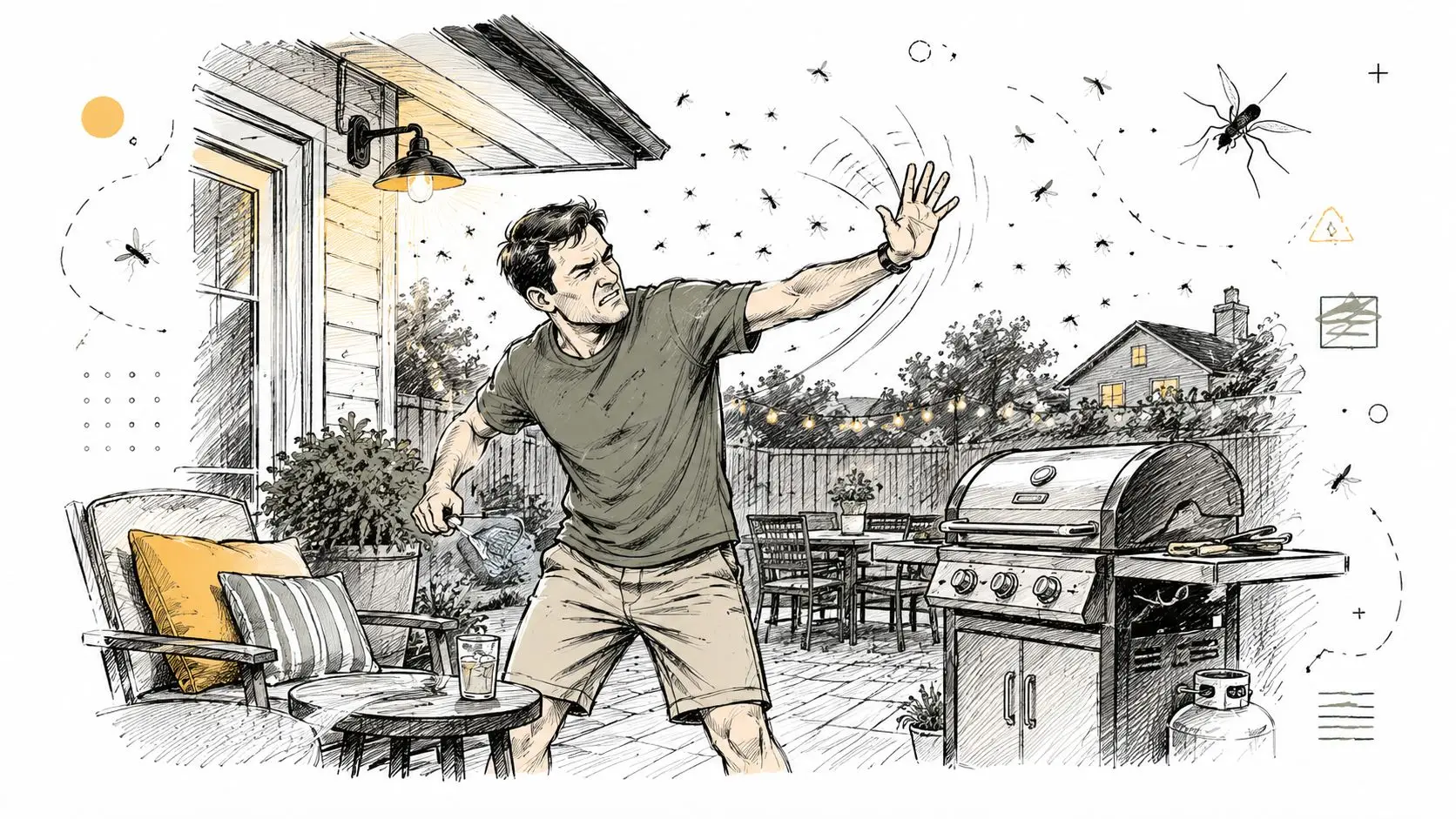
You're on the back porch in Magnolia, the grill is going, and everyone keeps swatting at mosquitoes instead of enjoying dinner. In north Houston and Southeast Texas, warm evenings, humidity, thick vegetation, and water that collects after rain can make a backyard feel unusable before the food is served.
A mosquito misting system can help reduce that outdoor nuisance by releasing scheduled treatments through nozzles installed around the property. But it isn't a magic shield, and it isn't a proven disease-prevention device. The right decision depends on your lot, landscaping, exposure to wooded or drainage areas, maintenance habits, and how you use your yard.
What a Mosquito Misting System Does
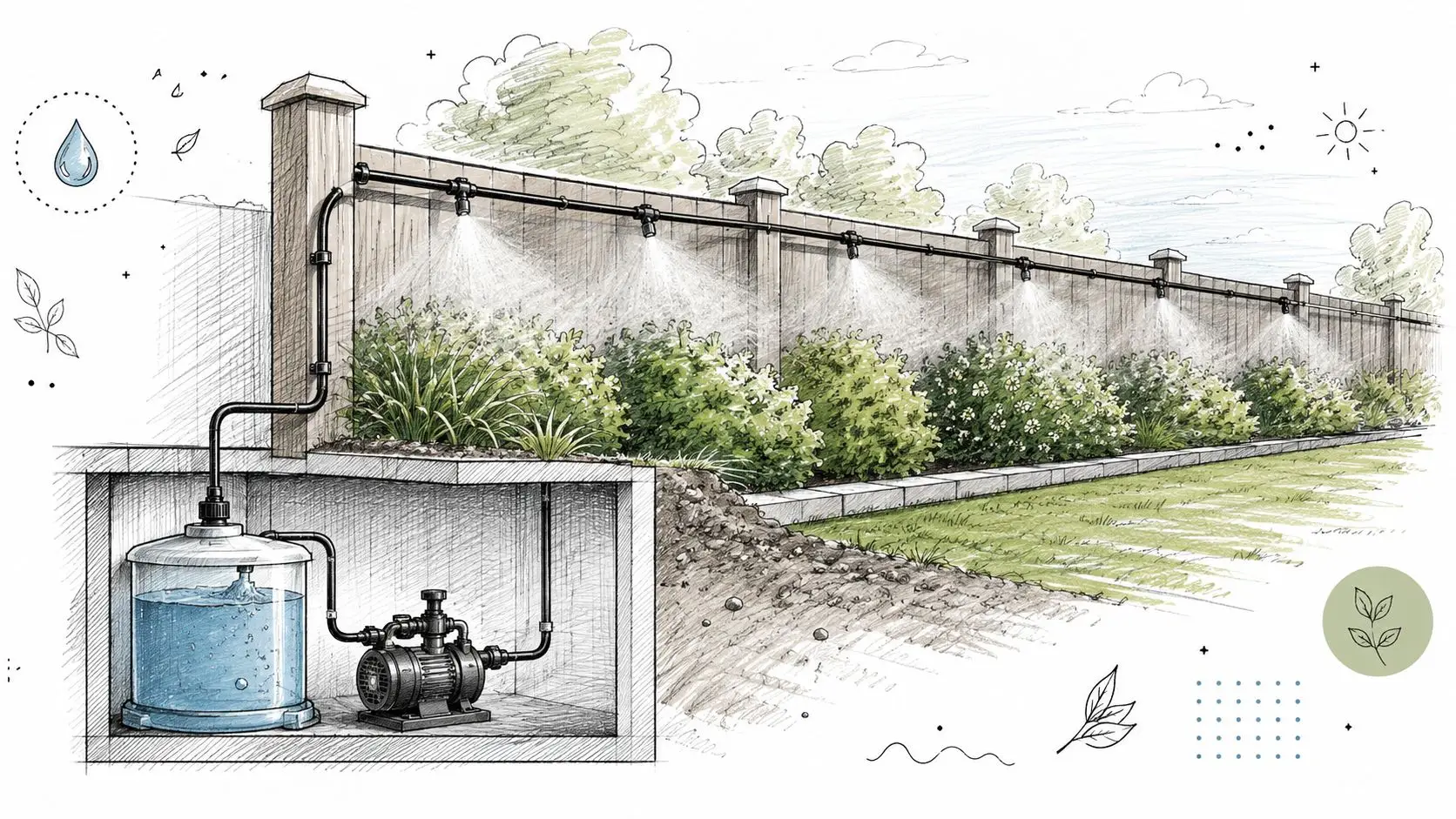
A mosquito misting system works like a programmable sprinkler network for mosquito control. Instead of watering plants, it sends a diluted insecticide solution through small nozzles placed near the areas where mosquitoes rest and fly. On a Magnolia property, that may mean shaded shrubs, fence lines, patio edges, or dense vegetation near a drainage area.
A typical setup includes:
- A reservoir, which holds the treatment solution.
- A pump, which moves the solution through the system.
- Tubing, commonly routed along fences, garden beds, or patio edges.
- Nozzles, positioned to reach nearby foliage and shaded resting areas.
- A controller, which activates scheduled treatments.
The equipment usually stays out of the middle of the yard. A technician can place the reservoir and pump in a service area, then route tubing around the property's perimeter. Nozzles may sit inside landscaping, where they treat mosquito shelter areas without making the patio look like a work site. Lot size and layout matter here. A compact Magnolia yard may need fewer treatment points, while a larger lot in the surrounding north Houston area may require more perimeter coverage.
The system's main benefit is consistency. A handheld sprayer depends on someone mixing the product, walking the property, and treating the right surfaces each time. An automated controller follows its schedule, which can suit a family that uses the backyard often or a home with a broad, irregular perimeter.
Convenience does not establish effectiveness. The EPA's current guidance page on outdoor residential misting systems says outdoor residential systems have not been studied enough to document their effectiveness against mosquitoes or other yard pests. The agency also says these systems have not been scientifically proven to prevent West Nile Virus or other diseases. Its guidance page was last updated in 2026, so homeowners in Magnolia and its extra-territorial jurisdiction should still treat the evidence gap as part of the decision.
A system is designed to suppress mosquito activity in treated areas. It does not remove every breeding site or guarantee a disease-free yard.
Manual Misters vs Automated MistAway Systems
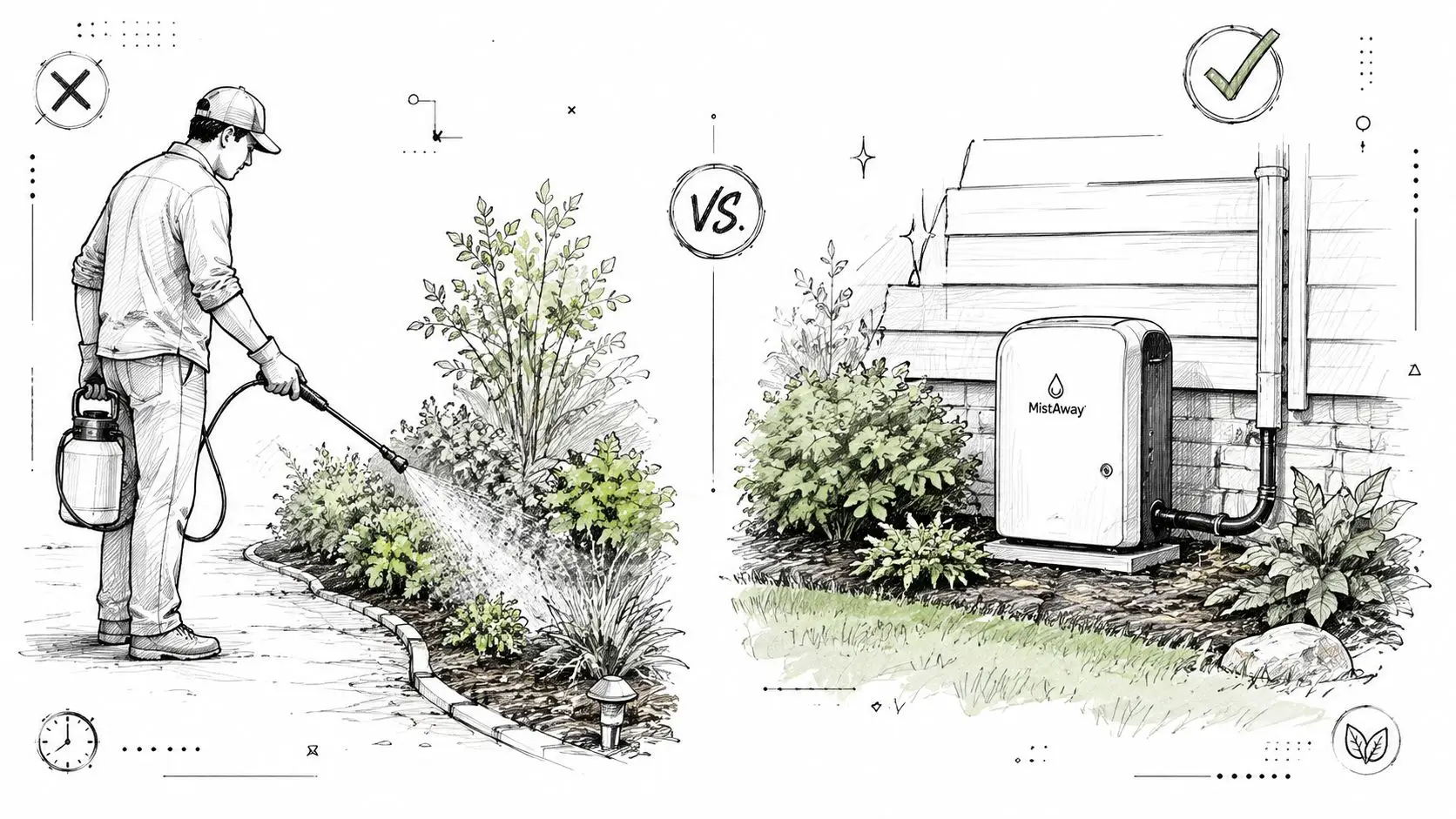
A manual mister works like a garden hose. You decide when to activate it, direct the treatment, and accept responsibility for covering the property evenly. An automated system, such as a MistAway-style setup, works more like an irrigation controller. Once programmed, it delivers scheduled cycles without requiring someone to press a button each evening.
Manual systems suit occasional users
A manual system may make sense if you only need help before outdoor gatherings or if your property has a compact, simple layout. You control the timing, so you can avoid spraying when guests are outside and inspect the yard before each application.
The tradeoff is labor. You have to monitor the reservoir, check connections, move or direct the spray equipment, and remember to operate it when mosquitoes are active. If the system sits unused, it won't provide any practical benefit.
Automated systems suit routine yard use
An automated MistAway system is more appropriate when the yard is part of daily life. Families with children, homeowners who entertain outdoors, and residents with large or irregular landscaping may value scheduled operation more than hands-on control.
Automation also creates new responsibilities. The controller still needs attention after storms, power interruptions, nozzle problems, or changes in how the family uses the property. You'll also need to keep treatment materials available and follow the product label and installer's instructions.
The choice isn't just about buying more equipment. It's about matching the system to your habits. A manual mister can be adequate for limited use, while automation is more convenient for a property that needs regular attention.
This video offers a visual introduction to the difference between manual spraying and an automated arrangement:
Practical rule: If you already struggle to remember routine yard tasks, don't choose a system that depends on daily memory just to imitate automation.
How Misting Systems Work on a Property
A misting system begins at the reservoir. The pump draws treatment from the tank and sends it through tubing along the usable perimeter of the property. Nozzles then release a fine spray toward vegetation, fence lines, shaded corners, and other places where mosquitoes commonly rest.
Placement controls performance
Nozzle location matters as much as the controller. A nozzle aimed into open wind can send treatment away from the plants it should cover. Dense shrubs may block the spray, while a nozzle set too far from a patio or seating area may leave that space with less coverage.
A north Houston installation must account for fence orientation, ornamental beds, patios, drainage features, and the direction mosquitoes enter the yard. A Magnolia property beside a wooded edge or drainage corridor can behave differently from a compact lot surrounded by neighboring lawns. Lot size and the city's extra-territorial jurisdiction also affect how much perimeter the tubing needs to follow, especially where a yard borders undeveloped land or a drainage route.
Field evidence shows why homeowners should not judge a system by its equipment alone. The ASPCRO research summary reported weekly mosquito reductions ranging from 98% to 14%, depending on conditions. It also reported that mosquito abundance in treated backyards stayed below a specified threshold for 30 weeks, compared with 21 weeks in untreated control backyards. Another evaluation described reductions of about 62% to 91% for much of the summer, after an early period when treated yards were 71% to 98% lower than untreated yards.
The same summary reported spray-card coverage for the automated Freezanz system ranging from 20% to 100%, with coverage increasing in the direction of the wind. For a Magnolia homeowner, that means wind, vegetation density, nozzle position, and maintenance can produce different results across one property.
The practical takeaway is simple. A misting system can suppress mosquito activity, but performance varies. A layout matched to the lot and regular inspection give the equipment a better chance to work as intended.
Misting Systems Compared to Other Mosquito Controls
A misting system is one tool in a broader yard-management plan. It targets adult mosquito activity around treated areas, but it doesn't remove every container, puddle, clogged gutter, or drainage feature where mosquitoes may reproduce.
Source reduction should be the starting point for nearly every Magnolia property. Emptying containers, correcting water-holding conditions, clearing blocked drainage, and managing dense vegetation can reduce the places mosquitoes use. These steps don't require a machine, but they do require a property inspection and repeat attention after rain.
Barrier sprays offer a different service model. A technician treats vegetation and resting surfaces during scheduled visits, rather than installing permanent tubing and a reservoir. This can suit homeowners who want professional oversight without maintaining equipment, especially when the property has a manageable perimeter or mosquito pressure changes with the season.
Backpack fogging is more event-oriented. It can provide rapid treatment before a gathering, but the result depends on timing, weather, and the return of mosquitoes from untreated areas. It isn't the same as correcting breeding sources.
Mosquito traps attract and capture mosquitoes rather than distributing insecticide around the yard. Their value depends on placement, maintenance, and the local mosquito population. A trap may complement other measures, but it shouldn't be treated as a universal replacement for source reduction.
Larvicide treatments focus on water where immature mosquitoes develop. They may be useful for suitable standing-water areas that can't be removed, although homeowners need to use only products labeled for that purpose and follow the directions carefully.
| Control | Main strength | Main limitation |
|---|---|---|
| Misting system | Scheduled treatment around a property | Weather and placement can affect coverage |
| Barrier spray | Professional treatment without homeowner-owned equipment | Requires recurring service |
| Fogging | Rapid, event-focused knockdown | Doesn't address breeding sources |
| Trap | Captures mosquitoes without treating all vegetation | Needs appropriate placement and upkeep |
| Larvicide | Targets mosquitoes in qualifying standing water | Only applies to specific water sources |
| Source reduction | Removes conditions that support breeding | Requires repeated inspection after rain |
For a more detailed look at yard-level options, review what is the best mosquito control for a yard. Many homeowners get better results by combining source reduction with one targeted adult-mosquito treatment instead of expecting one device to solve every condition.
Installation, Refills, and Yearly Maintenance
A professional installation starts with a property walk-through, not a box of parts. The installer identifies where people sit, where vegetation holds moisture, how the fence lines connect, and where the reservoir can remain accessible without becoming a visual or safety problem.
Tubing commonly follows fence lines and landscaping beds. Nozzles need to face the intended treatment area, and the installer should check for sections blocked by dense shrubs, structures, gates, or changes in elevation.
A practical maintenance rhythm
During the active mosquito season, the owner or service provider should keep the reservoir supplied with the approved treatment solution. The exact refill interval depends on the tank, schedule, nozzle count, weather, and property layout, so a fixed calendar promise isn't reliable.
Use this routine after installation:
- Inspect the reservoir and controller. Confirm the system has product, power, and the correct schedule.
- Watch a test cycle. Look for clogged nozzles, leaks, weak spray, or tubing that has pulled loose.
- Check after major storms. Wind and heavy rain can shift vegetation, damage fittings, or alter spray coverage.
- Clean or replace problem nozzles. Mineral deposits, pollen, and debris can narrow the opening and create uneven output.
- Adjust for landscaping changes. A hedge that grows into the spray path can reduce coverage even when the pump is working normally.
- Prepare for lower winter activity. Follow the manufacturer's winterization instructions rather than leaving the system unattended.
A patio, pergola, or gazebo can also change where you want outdoor comfort. If you're planning a new shaded seating area, compare options through this guide to find your perfect pergola or gazebo, then ask whether nozzle placement should be adjusted around the structure.
For seasonal shutdown details, use this MistAway winterization guide. The important principle is that winterization isn't just about turning off the controller. The reservoir, lines, pump, and nozzles all need treatment appropriate to the equipment and local weather.
Costs, Safety, and the EPA Evidence Gap
A misting system costs more than its equipment. The budget may include installation, treatment refills, inspections, repairs, and the time needed to monitor the system. In Magnolia and nearby north Houston properties, lot size, wooded edges, patios, and drainage areas can change the amount of tubing and the number of nozzles required. Ask for a quote based on the actual perimeter, not a generic price.
The EPA has not found enough research to document how well outdoor residential misting systems control mosquitoes or other yard pests, and disease prevention has not been scientifically proven. Treat the system as a comfort and nuisance-management tool, rather than as a medically proven barrier.
That evidence gap does not decide every homeowner's choice. It does clarify what you are buying: scheduled help reducing mosquito activity around the places your household uses, with results that depend on placement, product, maintenance, weather, and nearby habitat.
Safety belongs in the installation conversation
Children and pets should stay out of the treatment area during an active cycle and until the product label and applicator instructions allow re-entry. Keep people away from wet surfaces. A mist that disappears quickly can still leave product where it settled.
Pollinators require careful planning. Nozzles should not point at flowering plants or areas where bees are actively foraging. Scheduling, nozzle direction, product selection, and drift control all affect exposure. The technician should explain how the layout protects gardens, ponds, edible plants, and neighboring properties, especially on smaller lots where spray zones are close together.
Homeowners can also review safe and eco-friendly mosquito control when comparing lower-impact practices and integrated control. Ask to see the product label and application instructions. Confirm who handles refills, inspections, repairs, and schedule changes, and ask exactly what the quoted service includes. Those answers make it easier to judge whether the system fits the property and the household's comfort goals.
Is a Misting System Right for Your Magnolia Property
A Magnolia mailing address doesn't tell you everything about the property. The City of Magnolia has approximately 5 square miles of city limits, with an extra-territorial jurisdiction extending a half-mile beyond those limits. The city's ZIP code area extends beyond the municipal boundaries, so a Magnolia address doesn't necessarily mean the home sits inside the city itself. You can review the boundary context in the Magnolia, Texas overview.
That distinction matters when you're arranging service. A provider should confirm the actual property location, access requirements, and local conditions instead of assuming every Magnolia address has the same lot pattern or municipal setting.
Start with the property, not the equipment
An automated system is often worth investigating when:
- The yard is used frequently. Daily outdoor meals, children's play, and regular entertaining make convenience more valuable.
- The perimeter is broad or complicated. Multiple fence lines, garden beds, patios, and wooded edges require thoughtful coverage.
- Mosquitoes enter from nearby habitat. A drainage feature, creek corridor, dense vegetation, or neighboring overgrowth can create recurring pressure.
- You want scheduled operation. Automation removes the need to remember every treatment cycle.
- You accept routine maintenance. The system still needs inspections, refills, nozzle care, and seasonal attention.
A barrier spray plan or targeted treatment may fit better when the yard is small, outdoor use is occasional, or the main problem comes from one identifiable breeding source. If a clogged gutter, neglected container, low area, or drainage issue is producing mosquitoes, installing equipment before correcting that source can leave you paying to treat a symptom.
The research evidence also argues for a site-specific decision. The ASPCRO summary found results that varied substantially across conditions, and coverage on Freezanz spray cards ranged from 20% to 100% depending partly on wind direction and placement. Those findings are cited in the field research summary, so a professional should inspect your actual yard rather than promise identical performance everywhere.
Ask these questions before accepting a quote
- Where will the reservoir and pump sit? The location should be accessible for refills and protected from avoidable damage.
- How will tubing follow the property? Ask which fence lines, beds, structures, and access gates are included.
- Which areas won't be treated? A clear exclusion map prevents surprises around pools, play areas, gardens, ponds, and neighboring boundaries.
- How will wind and dense landscaping affect coverage? The installer should explain likely weak points and how they'll be monitored.
- What does ongoing service include? Clarify refills, nozzle cleaning, repairs, controller checks, storm inspections, and winterization.
- What safety instructions apply? Request product information, re-entry guidance, pollinator precautions, and storage procedures.
- How does the service area handle your location? Confirm whether the property is in Magnolia city limits, the ETJ, or a surrounding community such as Conroe, Montgomery, Tomball, or another north Houston location.
For local options, FullScope Pest Control offers residential mosquito management using barrier treatments and MistAway automated misting systems, with installation, maintenance, repair, and winterization support among its service offerings. Treat that as one provider option, then compare the inspection process, written scope, product information, and ongoing responsibilities with other qualified companies.
Misting System Options at a Glance for Magnolia Homeowners
| Option | Best For | Typical Cost Range | Maintenance Effort | Effect on Pollinators |
|---|---|---|---|---|
| Automated MistAway system | Frequently used yards with a suitable perimeter | Request a property-specific quote | Regular refills, nozzle checks, storm inspections, and seasonal care | Depends on product, timing, nozzle direction, and drift control |
| Manual mister | Occasional outdoor use and hands-on homeowners | Varies by equipment and treatment needs | Higher homeowner involvement during each use | Depends on application practices and label compliance |
| Barrier spray plan | Homeowners who prefer recurring professional visits | Request a service-specific quote | Lower equipment maintenance, recurring appointments | Depends on treatment choice, timing, and application practices |
| Source reduction | Properties with visible standing-water sources | Often involves homeowner labor or targeted service | Repeated inspections after rain | Generally avoids broad insecticide application |
The best next step is an inspection during the season when mosquitoes are limiting your yard use. Bring a simple property sketch, identify where your family spends time, point out drainage or wooded edges, and ask for a written quote that separates installation, treatment materials, maintenance, repairs, and winterization. That conversation will tell you far more than a generic kit description.
Contact a qualified local mosquito-control provider to schedule a Magnolia property inspection, confirm whether your home falls inside the city limits or nearby ETJ service area, and receive a written recommendation comparing an automated MistAway system with barrier treatment and source reduction. Ask the technician to walk the perimeter with you and explain exactly where the equipment, tubing, and nozzles would go before you commit.