1500+ reviews

If you live in Magnolia and your St. Augustine is thinning out along the driveway while dollarweed keeps showing up after every wet spell, you're probably not looking for a “lawn package,” you're trying to figure out what fixes the yard. In Southeast Texas, the wrong move is usually the same one, treating every problem like it needs another product instead of a better read on grass type, soil, drainage, and timing.
Lawn treatment services work best when they're tied to what the lawn is doing, not to a generic calendar. That matters in Magnolia, where warm-season turf, clay-heavy soil, and long humid stretches change the playbook faster than a one-size-fits-all plan can keep up.
What Lawn Treatment Services Actually Cover
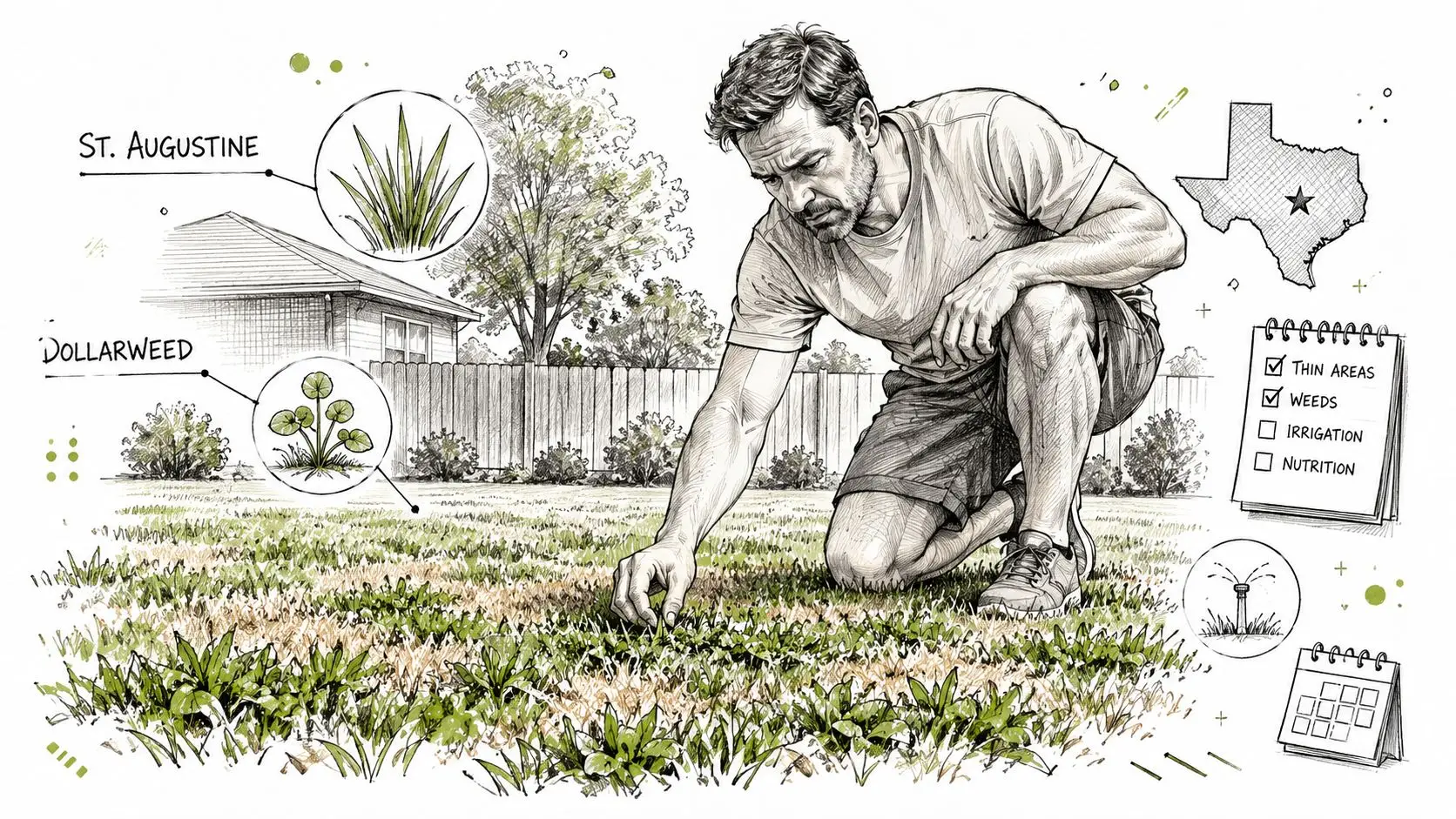
A Magnolia homeowner sees thin, pale patches in late spring, then broadleaf weeds pushing through the turf after a stretch of rain. The core question is usually the treatment itself. In Southeast Texas, the right fix starts with reading the lawn, grass type, soil, drainage, and timing, before anyone reaches for another product.
The main service categories
A real program usually combines several tools, and each one solves a different problem. Fertilization feeds turf when the lawn can use the nutrients. Broadleaf and grassy weed control targets dollarweed, clover, crabgrass, and similar invaders, but the timing has to match both the weed and the turf.
Pre-emergent blocks certain weeds before they germinate. Core aeration opens compacted soil so water and nutrients move better, which matters on the heavier soils common across Southeast Texas. Disease management comes into play when humidity, poor drainage, or plant stress creates fungal pressure. Grub preventive is a separate treatment, used to protect roots before larvae start feeding.
The difference that matters is between a crew that applies something and a provider that adjusts product, rate, and timing based on what the lawn is showing. Rutgers NJAES says nutrient timing and rate should be tied to turf needs, and that spring nitrogen can raise leaching risk when soils are wet and turf growth is still weak (Rutgers NJAES).
Practical rule: if a provider can't say what problem they treated, what area they treated, and why that timing made sense, you are buying a visit, not a program.
Why the program matters more than the product
Cultural work decides whether treatment holds up. Soil testing, mow height, irrigation habits, and turf selection all change the outcome. Cornell's guidance puts the focus on soil testing and rate selection instead of guesswork, and that is how a good lawn treatment service should operate.
Outdoor details matter too. A yard looks finished when the grass, hardscape, and perimeter features work together, so it helps to look at landscaping and fence projects alongside turf care instead of treating the lawn like its own isolated job.
For a local breakdown that stays focused on pest and turf control, see types of lawn care for pest control.
A Seasonal Schedule for Magnolia and Southeast Texas
Magnolia lawns do not follow a northern calendar. Warm weather shows up early, humidity hangs around, and St. Augustine keeps growing when other regions are still dormant. In clay-heavy soil, that means timing matters as much as product choice.
A good schedule starts with the season, then adjusts for what the turf is doing on your property. A lawn in Kingwood with shade, compaction, and weak drainage will not need the same approach as a sunnier Magnolia yard with active St. Augustine and fewer disease signs. The work has to match the conditions on the ground.
A sample calendar that fits local turf
| Season | Common treatments | Why it matters |
|---|---|---|
| Late winter | Pre-emergent | Helps stop crabgrass and similar weeds before they establish |
| Spring | Light broadleaf control, cautious feeding | Controls early weeds without pushing soft growth too hard |
| Early summer | Targeted feeding, disease watch | Supports the lawn while humidity raises fungal pressure |
| Late summer to early fall | Core aeration, selective renovation where needed | Loosens compacted soil and improves root movement |
| Fall | Higher-value feeding window | Supports recovery and root reserves before cooler weather |
| Winter | Winterizer where appropriate | Helps the lawn store energy rather than forcing tender growth |
That late-summer to early-fall window carries a lot of weight in Southeast Texas. The lawn is still active, the soil stays warm, and roots can use what you apply. I like that period for building strength before the next stretch of heat, especially on St. Augustine that has already been stressed by summer storms, mowing, and irrigation swings.
Spring needs a lighter hand. Too much nitrogen early can make the grass look good for a short stretch, then leave it softer, thirstier, and easier to trouble with disease. In this part of Texas, restraint usually pays better than trying to force a fast flush of growth.
How the season changes the job
By summer, the job changes from pushing growth to keeping the lawn steady. Weed pressure, fungal activity, and irrigation mistakes do more damage than a missed round of fertilizer. A provider who understands seasonal lawn care tips that minimize pest pressure will pay attention to pressure points instead of spraying on a fixed schedule.
A useful provider leaves a paper trail. Product, active ingredient, application rate, treated area, and weather conditions should be recorded on every visit.
That record is what lets a program improve instead of repeat the same mistakes. Soil condition, turf response, and timing all matter, especially on the clay soils common around Magnolia and the wider Southeast Texas coverage area.
One-Time Treatments Versus Recurring Programs
A Magnolia homeowner with a graduation party on the calendar does not need the same service plan as a rental property owner trying to keep turf steady through the season. The better package matches the lawn's condition and the homeowner's goals, whether that means a single rescue visit or a recurring program.
A one-time rescue makes sense when the target is clear, a weed flush before an event, a stressed patch that needs triage, or a bare area that needs a targeted fix. That kind of visit is narrow by design. It deals with the immediate problem without putting you into treatments you may not need.
A recurring quarterly program fits lawns that need steady monitoring across the growing season. It gives the provider room to adjust products and timing as weather shifts, especially when disease pressure or weed emergence changes fast. A biannual plan sits in the middle, useful when the lawn mostly behaves but still benefits from the most important timing windows.
There is also a practical trade-off on the homeowner side. A bigger plan can look safer on paper, but a soil test and two well-timed treatments may solve more than a five-visit bundle ever would. Soil condition and nutrient rate still have to match the yard, and that point is easier to follow than a broad schedule that treats every property the same. Rutgers NJAES makes the same basic case in its guidance on tying fertility to what the soil can use.
A practical way to compare the options
If a provider quotes several packages, ask which problems each visit is meant to prevent, not just what gets applied. A quarterly plan should justify itself through prevention and adjustment. A one-time visit should justify itself through targeted relief.
Recurring service only earns its keep when the lawn faces ongoing pressure, compacted soil, repeated weeds, or seasonal disease risk that changes through the year. If the issue is mostly cultural, recurring treatment may be too much. The same logic shows up in how recurring pest control keeps your home protected year-round, steady coverage makes sense when the risk keeps returning.
What Drives Lawn Treatment Pricing in Magnolia
Two Magnolia homes can look similar from the street and still get very different quotes because pricing tracks the yard's size, grass type, and condition. That happens all the time. A lawn with heavy St. Augustine, poor drainage, and years of weed pressure takes more labor than a yard that has been kept on a clean routine.
Square footage is the first driver. A larger lawn means more product, more labor, and more time. Grass type matters too, because St. Augustine, Bermuda, and mixed turf do not respond the same way to feeding or weed control. Condition matters as well, since a neglected yard often needs more labor than a lawn that has been maintained regularly.
The line items worth watching
Product tier changes price when a homeowner asks for low-toxicity or more selective applications instead of standard treatment. Access and slope affect labor, especially on awkward side yards or lots with tight gate access. Add-ons like aeration, disease treatment, or fire ant control also move the total because they are separate jobs, not freebies.
A quote should make those differences visible. If one provider bundles everything into a single vague number and another breaks out the service steps, the second quote is easier to compare. That does not automatically make it cheaper, but it does make the scope easier to read.
The market context is large, which helps explain why local pricing can vary so much. The U.S. landscaping services industry reached $176.7 billion in revenue in 2026 and included about 556,000 businesses, according to the IBISWorld May 2026 update summarized by HMNDP, with revenue growth of 0.9% in 2026 and a 3.0% CAGR over 2021 to 2026 (HMNDP). That scale does not set your quote, but it does show that lawn care sits in a mature service market where packages and pricing structures vary widely.
Mordor Intelligence also estimates the U.S. lawn care market at $60.0 billion in 2025, rising to $62.91 billion in 2026 and projected to reach $79.68 billion by 2031 (HMNDP summary of Mordor Intelligence). In practice, the more important question is whether the provider can explain what is included and why.
When a Lawn Does Not Need More Treatment
A lot of Magnolia lawns do better with fewer chemicals, not more. The core solution is often less water, tighter mowing habits, or choosing turf that fits the site instead of fighting it all season.
Three common Southeast Texas mistakes
Shallow-rooted St. Augustine usually comes from daily watering. The turf gets used to surface moisture, roots stay near the top, and the lawn starts to struggle when the heat settles in. Dollarweed usually points to wet soil, slow drainage, or irrigation habits that keep the ground too damp for too long. Chinch bugs are different, they often show up when drought stress weakens the turf and leaves room for insects to spread.
From the curb, those problems can look like a fertilizer miss. Usually they are not.
Reentry question to ask: how long do kids, pets, and foot traffic need to stay off the lawn after treatment, and does the answer change by product?
That question matters because a treatment should earn its keep. If a provider cannot explain the risk reduction in plain terms, the trade-off is hard to justify. Too much lawn care marketing pushes a “green” or “low-toxicity” label without saying what problem it solves or what performance you give up to get it. A better first move is to ask whether a cultural fix can handle most of the problem before any product goes down.
What usually works before product does
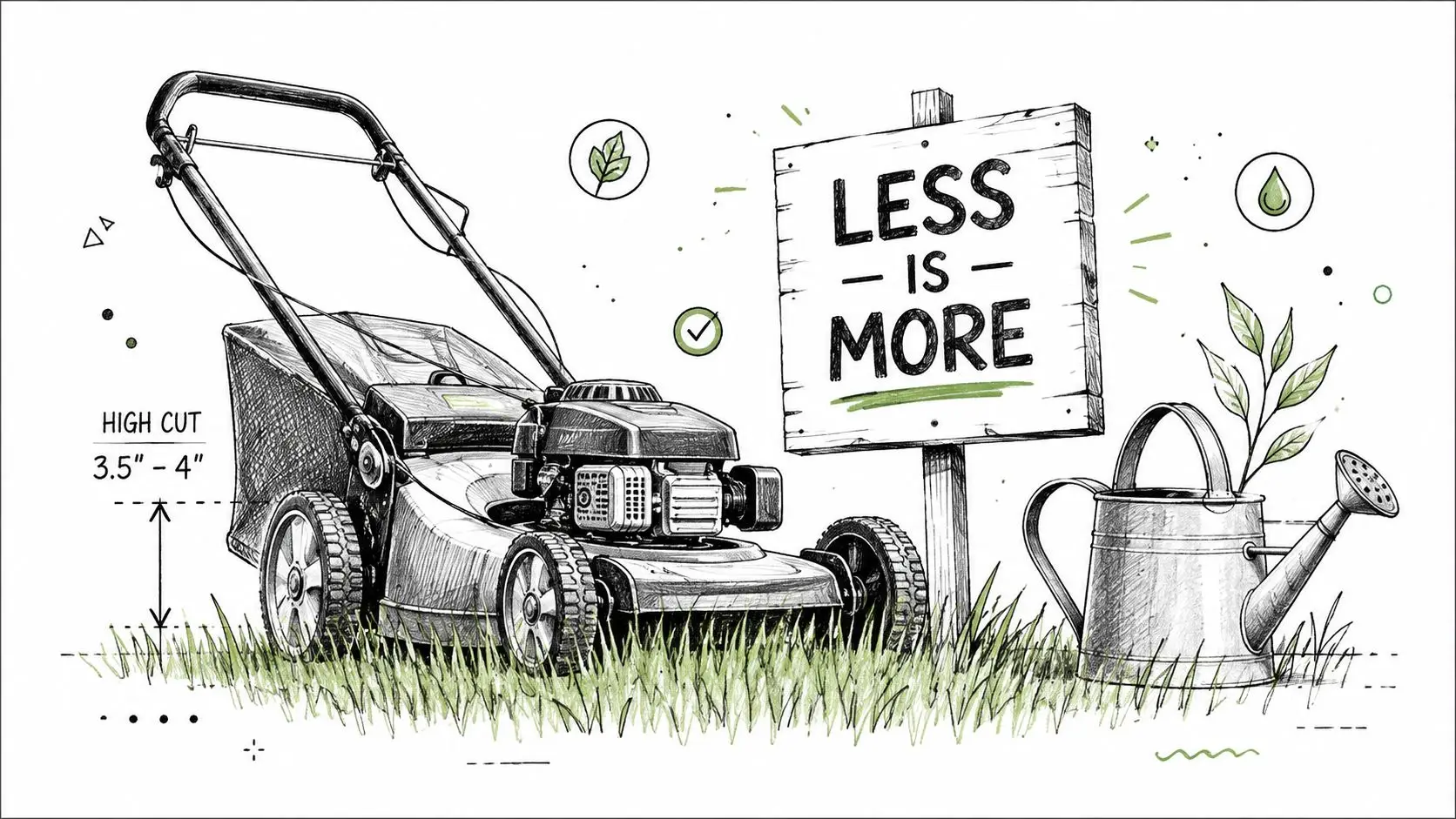
Raise mow height where the turf can handle it. Water thoroughly and less often instead of giving the lawn a daily sip. Relieve compaction if the soil is sealing shut. Match the grass to the site if the current turf is fighting the yard all season.
That lines up with extension guidance, many lawn problems start with culture, then turn into chemistry only after the habits are already wrong. The article at who to call for lawn problems points in the same direction for homeowners trying to sort out whether they have a care issue or a product issue.
A lot of the best jobs I've seen in Southeast Texas started by subtracting, not adding. Less water on clay-heavy ground. Better mowing on St. Augustine. A sharper eye on shade, drainage, and root stress. The guide to local SEO for landscapers may help service companies get found, but the actual lawn still has to be treated according to what it is doing on the ground.
How to Choose a Magnolia Lawn Treatment Provider
A lot of homeowners start with the wrong assumption, they think every lawn needs a standing treatment plan. Magnolia doesn't work that way. A provider worth hiring should ask about mowing, irrigation, shade, turf type, and drainage before talking about a product.
Questions that separate real operators from sales scripts
Ask whether the company uses integrated pest management, not just blanket applications. Ask for written treatment notes, including product, rate, and area treated. Ask how they handle reentry intervals, and whether they provide follow-up if the yard doesn't respond as expected.
Licensing and safety matter too, especially in Texas where chemical handling should never be casual. If a provider won't show proof of licensing and insurance, or can't explain safe practices for children and pets, move on. A good company should also be willing to quote from a property-specific estimate instead of guessing by sight alone.
A lawn estimator is useful when it's directly tied to the yard. That's different from a quick sales quote. An estimator that asks about square footage, turf type, and conditions can flag whether you need a one-time rescue, a maintenance plan, or nothing more than cultural corrections.
The local search side matters for service companies too. A practical guide to local SEO for landscapers can help explain why strong local visibility should go hand in hand with clear service boundaries and documented work.

Frequently Asked Questions From Magnolia Homeowners
How often should a Southeast Texas lawn be treated? It depends on the yard's condition and goals. A healthy lawn may only need a few key windows, while a stressed or weed-prone lawn may need a recurring program tied to the season and soil.
Do low-toxicity or eco-friendly products work? Sometimes, but the fit matters. Ask what problem the product is meant to solve, how long it stays effective, and whether a cultural fix could reduce the need for repeat applications.
What records should a provider keep? At minimum, the treatment note should show product, active ingredient, rate, treated area, and the conditions at application. That record is what lets the next visit build on the last one instead of starting over.
Can lawn treatment be combined with mosquito or general pest services? Yes, on a property plan that separates turf needs from perimeter or mosquito work. The key is coordination, not just stacking visits. If you want a quick screen before booking, plug your property into a lawn care estimator and compare the proposal against your actual grass type and problem areas.
Putting It Together for Your Magnolia Property
A Magnolia yard usually answers three questions before anything else starts working. What grass is growing, what does the soil tell you, and does this property need a one-time correction or a recurring plan? If those answers stay vague, the treatment quote probably does too.
Ask for a written plan that spells out the product, rate, and timing. Check the service area as well, because coverage matters if you want a provider that works the north Houston corridor instead of guessing from afar. FullScope Pest Control lists Magnolia-area coverage along with Cleveland, Kingwood, Conroe, and Porter, and it offers a lawn care estimator, QualityPro credentials, and lawn-related services within its Southeast Texas footprint.

The most effective lawn treatment services in Magnolia are documented, timed to the local growing season, and adjusted when the lawn shows a different need. A yard with St. Augustine on clay-heavy soil does not usually need the same playbook as a thin, weed-prone lot after a wet spell. If your lawn has been fighting you all year, ask for a property-specific estimate and compare it against your turf, your soil, and the actual problem in front of you.