1500+ reviews

You can vacuum until your back aches and still find fleas hopping on the dog two days later. That's the part that frustrates Magnolia homeowners the most, especially in Southeast Texas where warm, humid weather keeps flea pressure active longer than people expect. The problem usually isn't that nothing worked, it's that the treatment didn't hit the pet, the indoor hiding spots, and the outdoor harborages at the same time.
Flea pest control works best when you treat it like a synchronized job, not a one-and-done spray. The house, the animal, and the yard all have to be pushed through the same timeline, or the life cycle resets. That's why timing matters more than the brand name on the bottle.
Why Fleas Keep Coming Back After Treatment
A family in Magnolia can do everything “right” on a Saturday, spray the floors, clean the bedding, even treat the dog, then see fresh fleas again by Tuesday. That usually feels like failure, but it's often the pupal stage doing what it does best. The protective cocoon shields the insect until conditions are right, so the problem can look finished before it really is.
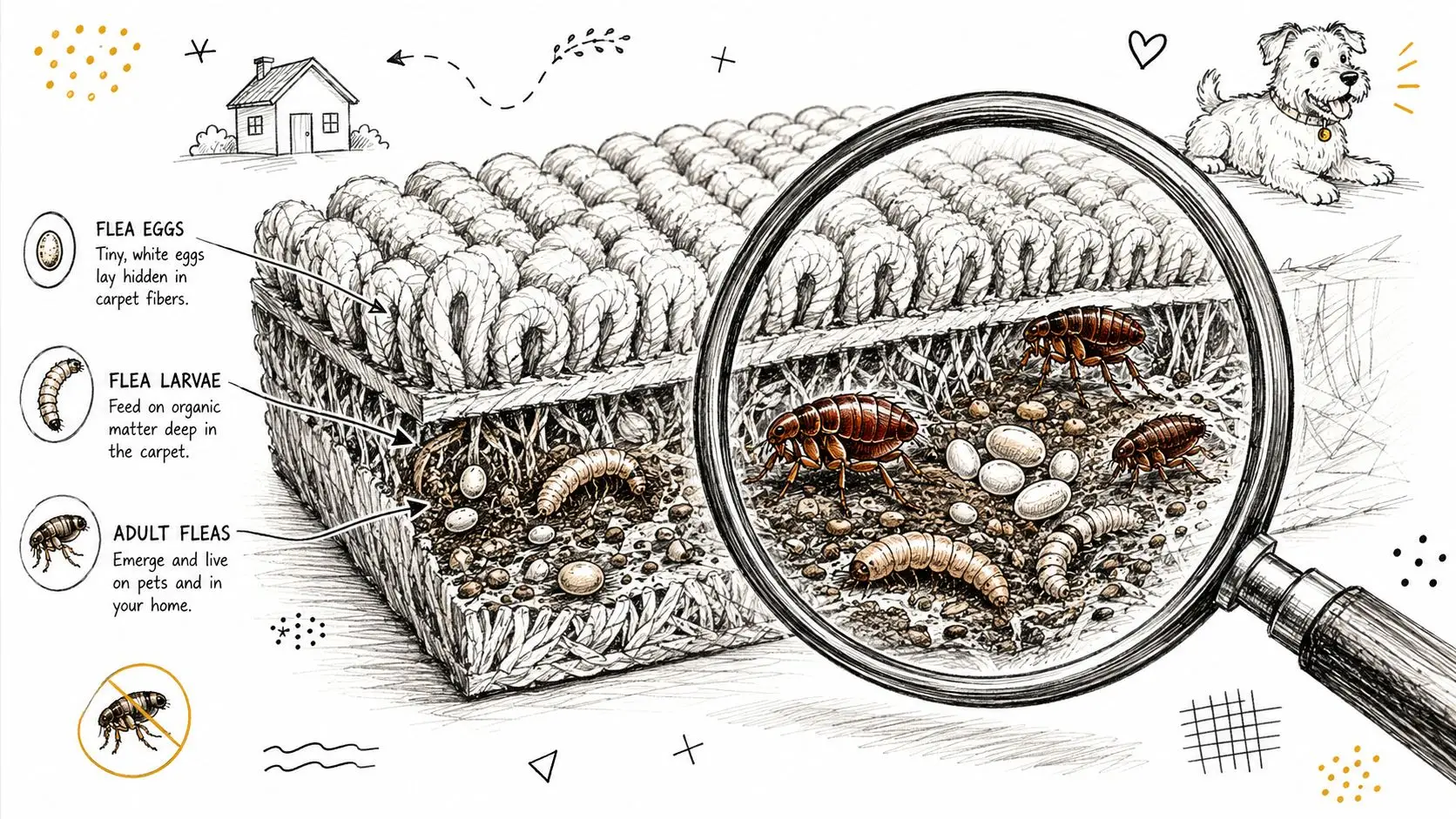
The part most homeowners never see
Fleas don't live only on the pet. Eggs fall into carpet, furniture seams, baseboards, and pet bedding, then larvae feed and develop out of sight. When a treatment hits carpets and upholstery, it may stop larvae, but it doesn't kill pupae, so fleas can keep emerging for up to 2 weeks after treatment according to UC IPM's flea guidance.
That delay is why people think the treatment failed when it didn't. The job may have knocked down the active stages, but the hidden reserve keeps hatching. If the pet wasn't treated at the same time, those emerging adults have a host waiting.
Practical rule: if fleas “come back,” assume the cycle was interrupted, not destroyed.
What keeps the cycle alive
A single indoor spray misses the point if the dog or cat is still carrying fleas. The same is true in reverse, a pet-only treatment leaves the carpets, couches, and shaded yard spots untouched. For a cleaner visual on the warning signs that show up before a full blowout, the FullScope flea infestation signs guide is worth keeping handy.
The reason recurring cases feel so stubborn is simple. Flea pest control is about synchronized pressure on the pest at every stage, not a quick kill on the adults you can see. When that timing slips, the pupae get a second chance, and homeowners see exactly what they thought they'd already eliminated.
Inspecting Your Home and Pets for Flea Activity
Start with the animal. Use a flea comb over the neck, back, belly, and tail base, then check the comb over a white paper towel so dark specks stand out. If those specks smear reddish-brown when dampened, that's a strong sign of flea dirt rather than ordinary dust.
Check the places fleas actually prefer
Inside the home, look where the pet spends the most time, not just where you happen to walk. Carpets, couch cushions, pet beds, and soft crevices hold more risk than bare tile. The Montgomery County Vector Control District notes that homeowners may need to vacuum carpets, rugs, cushions, upholstered furnishings, and all crevices repeatedly for days or weeks until the infestation is gone.
A quick white-sock walk across carpeted rooms can help expose adult fleas. They're small, but if they're active, you'll often notice movement near rest areas, baseboards, and the edges of furniture. Outdoor checks matter too, especially under decks, beside kennels, around doghouses, and in shaded turf where pets linger.
- Pet bedding: Pull it up first, because eggs and larvae collect fast here.
- Resting spots: Focus on couches, chair corners, and the exact patch of carpet the animal prefers.
- Outdoor harborages: Look at shaded areas near walls, kennel runs, and spots with minimal sun exposure.
- High-traffic crevices: Baseboards, floor gaps, and under furniture can hold fleas even when the center of the room looks clean.
If you're washing bedding during inspection week, a guide to clean dog bedding can help you choose washable options that make routine maintenance easier.
Match the inspection to the treatment plan
A light infestation may show up in just one or two pet resting areas. A heavier one spreads into multiple rooms, upholstery, and outdoor pet zones. That's the practical dividing line, if fleas are concentrated, treatment can be targeted, but if you're seeing them in several rooms, the whole environment needs attention.
For a tighter homeowner checklist, the FullScope treatment checklist is useful before any product goes down. The point of inspection is not just to confirm fleas are present. It's to find the exact locations that will keep feeding the infestation if you miss them.
Executing a Same-Day Treatment Sequence
The strongest flea control jobs don't drift across several days. They start the same day on the pet, move through the house, and finish with the outdoor zones where the pet spends time. That coordinated sequence is what keeps adults from bouncing back before the environment has been reset.
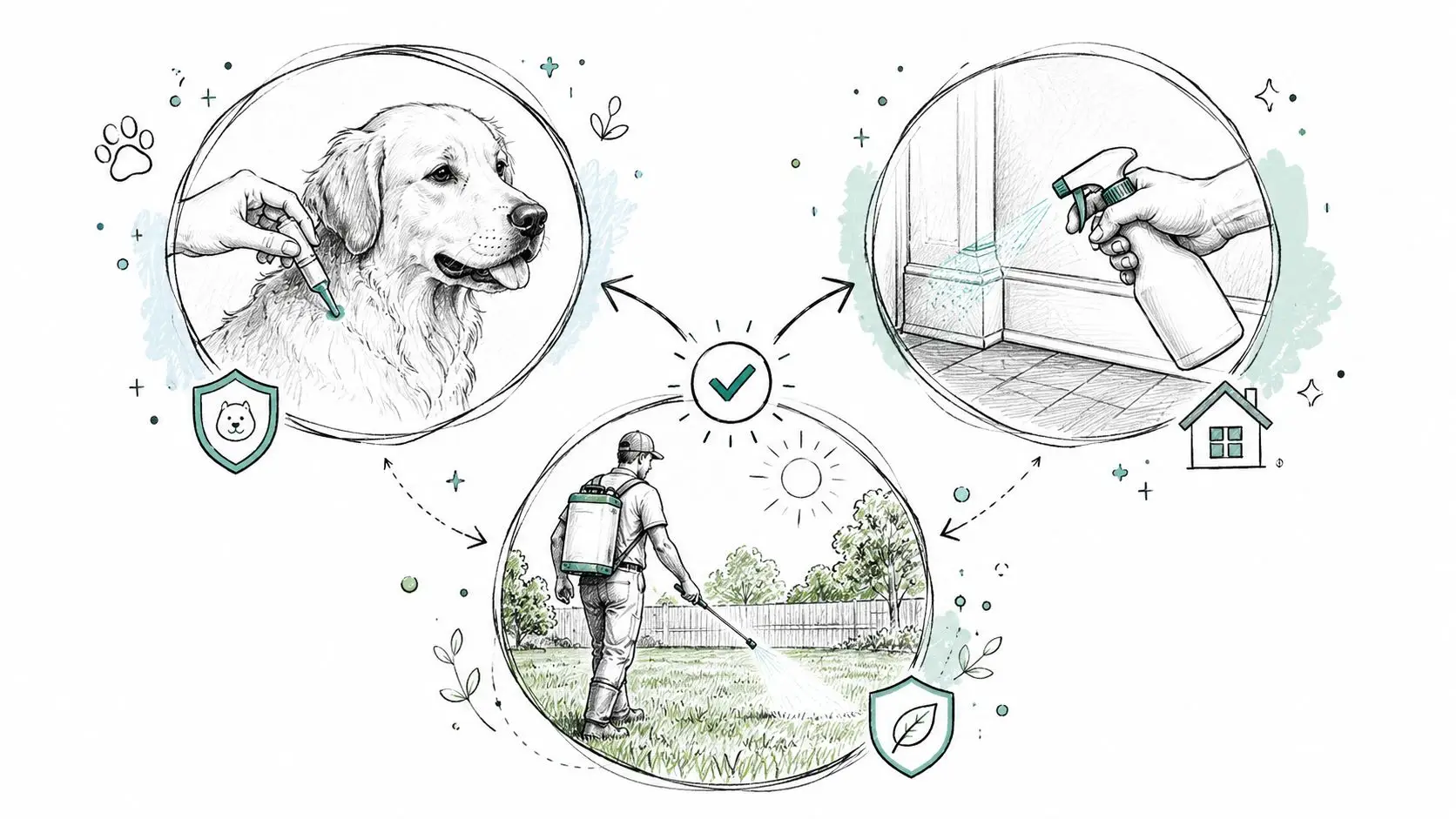
Start with the pet, then move to the room
The pet comes first because every untreated host can repopulate the room. Use veterinarian-recommended products suited to the species, since cats and dogs don't always respond safely to the same ingredients. Public-health guidance from the European Centre for Disease Prevention and Control says control should include periodic ectoparasiticide treatment on pets along with cleaning the pet environment.
After that, vacuum all pet-visited areas thoroughly. University extension guidance says to treat pets, vacuum pet-visited areas, exclude other hosts where possible, and treat indoors and outdoors in one coordinated sequence, all on the same day according to UAEX flea management guidance. That same-day timing matters because fleas don't stay neatly in one stage or one location.
Treat the animal, then the rooms, then the outdoor harborages. If that order gets scrambled, the cycle survives.
Use the right product logic, not just the strongest spray
Insect growth regulators matter because they interrupt reproduction. They don't give the fast adult kill that people want to see, but they prevent the next wave from maturing. In professional flea work, a combination of pyrethrin plus an IGR or IDI is a common approach, and Oklahoma State University Extension specifically identifies that pairing as effective for flea control.
Wash bedding in hot, soapy water and treat the pet bedding area, not just the bedding itself. Clean the places fleas drop off, hide, and mature. If the pet has a kennel, doghouse, run, or shaded turf area, those spots deserve targeted attention too.
Keep the sequence tight
This is the part many homeowners miss. If you spray the house and wait until tomorrow to treat the pet, fleas keep feeding and laying eggs in the meantime. If you treat the pet but skip the couch seams and carpet edges, the immature stages stay behind. A same-day sequence closes both doors at once, which is why it works better than a scattered weekend of partial fixes.
Managing the Two-Week Pupal Emergence Window
The two weeks after treatment are when homeowners start second-guessing the work. A few fleas show up, and it looks like the treatment missed. In many cases, those fleas are adults emerging from pupae that survived the first round, which is why the follow-up window matters as much as the initial application.
What to do while fleas are still emerging
Keep vacuuming through the emergence period so you pull out adults as they appear. Seal and discard the vacuum bag right away, or empty the canister outdoors if that is the style you use. Fresh adults can start feeding and laying eggs fast, and vacuuming also removes debris, eggs, and larvae from carpet, baseboards, and upholstery where treatment does not always reach fully.
Outdoor work needs a narrow target. UC IPM notes that it is seldom necessary to treat the entire yard or lawn when the pet is treated correctly. That matters in Southeast Texas, where homeowners can burn time and product on open lawn while the primary flea pressure sits in shaded rest areas, pet paths, porch edges, and the places the animal returns to every day.
Why follow-up timing matters more than panic
Repeat treatment is normal when the population is still cycling out of pupae. Adults emerging after the first treatment do not mean the job failed. They mean the protected stages were already in place, and those fleas need to be interrupted again before they rebuild the infestation.
Keep the sequence tight. Treat the pet, then the rooms, then the outdoor harborages, and keep that order consistent during the follow-up window. If you want a practical way to stay organized, the FullScope homeowner checklist for flea treatment helps keep the steps lined up. From field experience, more flea jobs go sideways because follow-up got scattered than because the first product choice was wrong.
- Keep vacuuming regularly: Carpets, rugs, and soft furniture need attention while adults are still emerging.
- Watch the pet bedding: If the animal keeps returning to the same blanket, bed, or crate pad, that spot can keep feeding the cycle.
- Hold off on re-spraying everything: Check what is still active, then target those areas instead of starting over blindly.
A few fleas after treatment can happen. A few fleas after treatment with no follow-up plan is how a short-lived problem turns into a homewide restart.
Choosing Between DIY Products and Professional Treatment
DIY flea products can help when the infestation is small and contained. A careful homeowner with a vacuum, washable bedding, and a flea-safe pet product can sometimes get ahead of a light problem. The trouble starts once fleas are spread across the pet, the house, and the outdoor resting spots, because those three pieces have to be handled on the same timeline.
Professional service usually costs more upfront, but it gives the job structure. Flea work is often sold as a separate service, and professionals commonly pair general-use insecticides with insect growth regulators, according to the European Centre for Disease Prevention and Control flea summary. That is a practical sign that flea control is treated as a targeted job, not just a quick spray on top of general pest work.
| Factor | DIY Approach | Professional Service |
|---|---|---|
| Speed | Can work on light, contained issues | Better for multi-room or recurring infestations |
| Product selection | Limited to what the homeowner buys | Uses targeted combinations and follow-up logic |
| Pet safety | Higher risk if the wrong product is chosen | Can match treatment to the pet species and exposure risk |
| Follow-up | Depends on the homeowner staying consistent | Usually built into the service plan |
| Coverage | Easy to miss cracks, upholstery, and outdoor harborages | More likely to address the whole habitat pattern |
Safety matters more in mixed-household homes
Homes with children, cats, and dogs need more than a fast knockdown. Some flea ingredients are not interchangeable across species, and some products are a poor fit for homes where residue risk matters. Health Canada notes that some flea product ingredients can be hazardous to cats or young children, so the product has to match the household, not just the pest pressure.
A professional integrated approach adds value because it follows the cycle from pet to room to yard. It does not just chase adults. It aims to interrupt the next wave before the pupae start turning into another round of fleas, which is the part that makes many homeowners think the treatment failed when the timing was the core issue.
If you want a more detailed look at how a structured service is put together, FullScope's flea extermination approach shows how inspection, treatment, and follow-up fit together for Southeast Texas homes.
When to Call FullScope Pest Control for Flea Elimination
Call for help when fleas keep coming back after you have already cleaned, vacuumed, and treated the pet. That usually means the problem is bigger than a spot treatment can handle, or the timing slipped long enough for the life cycle to get ahead of you again. Oklahoma State University Extension is direct about it, the pet, all pets in the home, and the indoor/outdoor environment must be treated simultaneously or reinfestation is likely, according to OSU flea control guidance.
The cases that justify professional intervention
Recurring infestations, multi-pet households, and homes with a lot of shaded outdoor cover are the common trouble spots. Homes where cats, kids, and soft furnishings all share the same spaces need extra care too, because product choice and residue management matter more there. If fleas are moving from one room to another, or if you have already gone through two rounds of DIY treatment without a clean finish, the job needs a tighter plan.
A real flea call in Southeast Texas usually has a timing problem at the center of it. The adults are only part of what you are seeing. Eggs, larvae, and pupae keep cycling in the carpet, pet bedding, shaded soil, and other harborages, then a new flush of adults appears after the home starts to look better. That rebound is the part homeowners often read as treatment failure, even though it is usually the next wave arriving on schedule.
FullScope Pest Control works in Magnolia, Kingwood, Conroe, Porter, and surrounding Southeast Texas communities, and the company's service model includes inspection, treatment planning, and ongoing protection. Its flea and tick control sits inside its broader pest options, including yard treatments for fleas and ticks in the Ultra Shield Pest Control Plans, which fits homes where the outdoor source has to be handled along with the indoor one. For a closer look at how that process is organized, the FullScope flea extermination overview is the place to start.
What a structured service can do
Professional flea pest control should do three things well. It should identify the active zones, treat the right stages, and build in the follow-up timing that keeps pupae from turning into a new wave of adults. In Southeast Texas, where pets move between indoor air conditioning and humid outdoor spaces, that coordination matters more than most homeowners realize.
The value is not just stronger product, it is the sequence. Pet treatment, indoor treatment, and yard treatment have to line up, then the follow-up has to catch the delayed emergence window that shows up after the first pass. Skip that timing, and the home can look improved for a few days before fleas start showing up again. Handle it in order, and the cycle breaks where it needs to break.
If you are in Magnolia or a nearby Southeast Texas community and the fleas keep outlasting your cleanup routine, book an inspection and get the treatment sequence matched to your pets, rooms, and yard. The fastest path out of a recurring flea problem is a plan that treats the whole cycle, not just the insects you see today.