1500+ reviews

Yes, citronella oil can repel insects, but the version most homeowners buy for the yard usually underdelivers. In tests, citronella's mean Complete Protection Time was 9.5 minutes compared with 360 minutes for DEET, and the citronella plant itself contains less than 0.1 percent citronellal, which isn't enough to provide meaningful fly control.
That's the part most backyard advice skips. People hear “citronella” and lump together the plant, the candle, the oil, and every spray on the shelf as if they all work the same way. They don't.
If you're trying to enjoy a patio dinner in Southeast Texas, that difference matters. Our heat, humidity, rain, long fly season, and constant pressure from trash, pet waste, and outdoor food make weak scent-based products a poor fit for real-world control. The result is familiar: the candle is lit, the guests are outside, and flies are still working the table.
The Citronella Myth and the Battle for Your Patio
A lot of homeowners ask a simple question: Does citronella repel flies? The honest answer is yes, a little, in some forms, for a short time. But the popular version of that advice, “put out a citronella plant or candle and your patio will stay clear,” doesn't hold up well once you look at how these products perform.
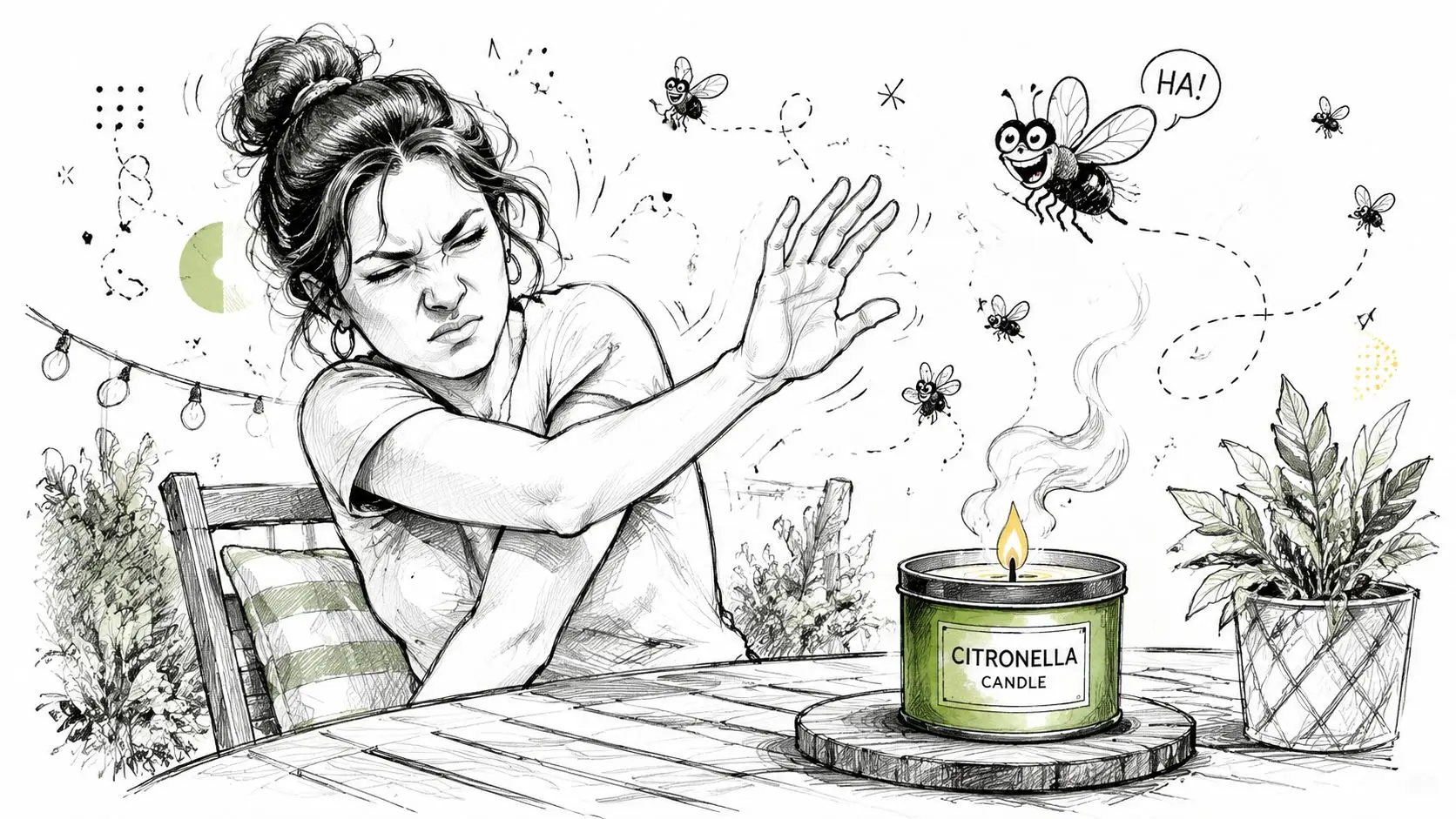
The biggest myth is the plant itself. Research summarized by Better Homes & Gardens on citronella plant effectiveness notes that the so-called citronella plant contains less than 0.1 percent of the active compound citronellal, and scientific research confirms the plant itself offers no significant pest deterrence. The same source also notes that citronella candles only work in the immediate radius around the candle in a breeze-free setting, and many tested products were no better than having no protection at all.
Why the patio test matters
Backyard conditions are not lab conditions. On a patio, you have moving air, smoke from the grill, food odors, drinks, trash, and people coming and going. That's a lot of competing scent for one candle or one potted plant to overcome.
Practical rule: If a product only works in still air and close range, it's not a dependable plan for an active Texas backyard.
For homeowners in Kingwood, Conroe, Porter, and nearby areas, frustration starts. You're not trying to win a science fair. You want to sit outside without waving flies off your food.
What most DIY advice gets wrong
Most online tips flatten citronella into a magic ingredient. In practice, you have to ask better questions:
- What form is it in? A live plant is not the same as a concentrated oil.
- How far does it reach? A tiny scent pocket near a candle won't cover a patio table.
- How long does it last? Short-lived masking isn't the same as control.
- What's attracting the flies already? If the food source stays in place, the pressure stays in place.
That's why citronella often disappoints. There's some real science behind the ingredient, but the common consumer products people rely on usually don't match the concentration, coverage, or staying power needed for outdoor fly management.
How Citronella Works and Why It Often Fails
Citronella doesn't kill flies. It mainly works by masking attractive odors. This is similar to spraying air freshener in a kitchen where fried food is still sitting on the counter. The original smell hasn't gone away. You've only tried to cover it.
That distinction matters because flies aren't just wandering randomly. They're tracking odor, moisture, food residue, and breeding opportunities. A masking scent can interfere for a while, but it doesn't remove the reason flies are there in the first place.
The masking effect fades fast
Peer-reviewed research on oil of citronella repellency and protection time showed that its repellency against Aedes aegypti dropped from 97.9% at application to 71.4% after 1 hour and 57.7% after 2 hours. The same review reported a mean Complete Protection Time of 13.5 ± 7.5 minutes for 5% citronella oil, while 23.8% DEET provided 301.5 ± 37.6 minutes.
Those numbers come from mosquito testing, but they explain the core problem with citronella in outdoor pest control. It starts with some effect, then loses strength quickly. For a homeowner, that means the product may smell strong to you while already becoming weak where it counts.
Citronella is best understood as a short-lived scent mask, not a yard-wide barrier.
Why backyard use usually disappoints
On a patio, flies don't face one clean odor stream. They're dealing with meat, fruit, soda, garbage, pet waste, drains, and damp organic material. In that environment, citronella has to compete with stronger attractants.
A few conditions make failure more likely:
- Moving air: breeze breaks up the scent pocket.
- Open space: there's no contained area for the odor to hold.
- Heavy attractants: food and waste beat fragrance.
- Time: the effect weakens quickly, so reapplication becomes constant.
If you're also dealing with repeated hatching around the property, masking alone won't touch the population cycle. That's why understanding how long flies live and reproduce outdoors matters. When the breeding source stays active, short-term repellency won't solve a long-term pressure problem.
The plant problem
The word “citronella” also tricks people into trusting the plant itself. But a scented geranium in a decorative pot is not the same as a tested repellent formulation. The plant may smell pleasant when brushed or crushed, yet that's very different from delivering concentrated active ingredients in a way that protects a seating area.
That gap between branding and performance is why so many homeowners swear they “tried citronella” and got nowhere.
Comparing Citronella Products From Plants to Sprays
Product type matters, but in Southeast Texas the bigger issue is whether a product can hold up in heat, humidity, and open-air patios where flies already have stronger reasons to stay.
That is why homeowners get mixed results with citronella. A product may smell strong to people and still do very little once Gulf Coast air starts moving and food odors take over.
Plants and candles
A citronella plant is mainly a decorative choice if the goal is fewer flies around a table or grill. The plant releases a scent when handled or when leaves are crushed, but that does not translate into reliable protection across a sitting area. Homeowners often buy one or two pots and expect a buffer zone. In practice, that is not how it performs.
Candles and torches give a more noticeable scent cloud, but only within a small pocket nearby. On a calm evening they may make a seat or two more comfortable. On a typical Southeast Texas patio, with warm air, fan use, and people moving in and out with drinks and food, that pocket breaks apart fast.
Diffusers, incense, and oils
Diffusers and incense sit in the middle. Some homeowners prefer them because they want natural protection for home without spraying synthetic products near seating areas. That is a fair goal. The trade-off is limited reach and uneven performance from one yard to the next.
Concentrated oil has the best case among common citronella options, especially for personal use instead of area treatment. A clinical review of citronella formulations found that lotion emulsions with 10% citronella oil gave about 30 minutes of protection, while 50% and 100% formulations reached 50 and 120 minutes. The same review noted that purified citronellal derivatives performed better than standard citronella oil in controlled testing. Those results matter, but they do not turn citronella into patio control. They show that stronger formulations can help for a short window, mainly on the person wearing them.
That is a very different standard from keeping flies off a backyard table for an entire evening.
A practical buying lens
If you have read our guide to plants that keep mosquitoes away, you have seen how often citronella gets grouped with other fragrant plants. That kind of list is useful for garden design ideas and for choosing pleasant-smelling additions near a patio. It is not the same as performance testing against flies around trash cans, pet stations, fallen fruit, or outdoor dining.
Here is the simple way to judge citronella products. Ask whether the product protects a person, a chair, or an entire activity area. Most citronella products only have a chance at the first two.
Citronella Product Effectiveness Comparison
| Product Type | Effective Radius | Typical Duration | Verdict |
|---|---|---|---|
| Citronella plant | Very limited and unreliable for meaningful fly control | Ongoing scent from the plant, but not meaningful repellency | Best treated as decorative |
| Citronella candle or torch | Immediate radius only | Short-lived and easily disrupted outdoors | Comfort item, not real control |
| Citronella diffuser or incense | Small surrounding area | Variable and heavily affected by airflow | May help a little in still conditions |
| Low-concentration citronella oil product | Close personal or spot use | About 30 minutes at 10% in lotion emulsions, as noted in the clinical review above | Too short for most backyard use |
| High-concentration citronella oil product | Personal application area | About 50 minutes at 50% and 120 minutes at 100% in the same review | Temporary help, not practical for area-wide fly control |
| Purified citronellal derivatives | Topical use rather than patio-wide use | Stronger protection in controlled testing | Better performance than common candles or plants, but still not a yard solution |
Strong scent does not equal strong fly control. Around Southeast Texas patios, citronella usually masks human odor briefly while flies keep following the food source.
A Realistic Fly Control Plan for Southeast Texas Yards
For Southeast Texas, the better question isn't “What scent should I burn?” It's “What are the flies feeding on, breeding in, and getting attracted to on my property?”
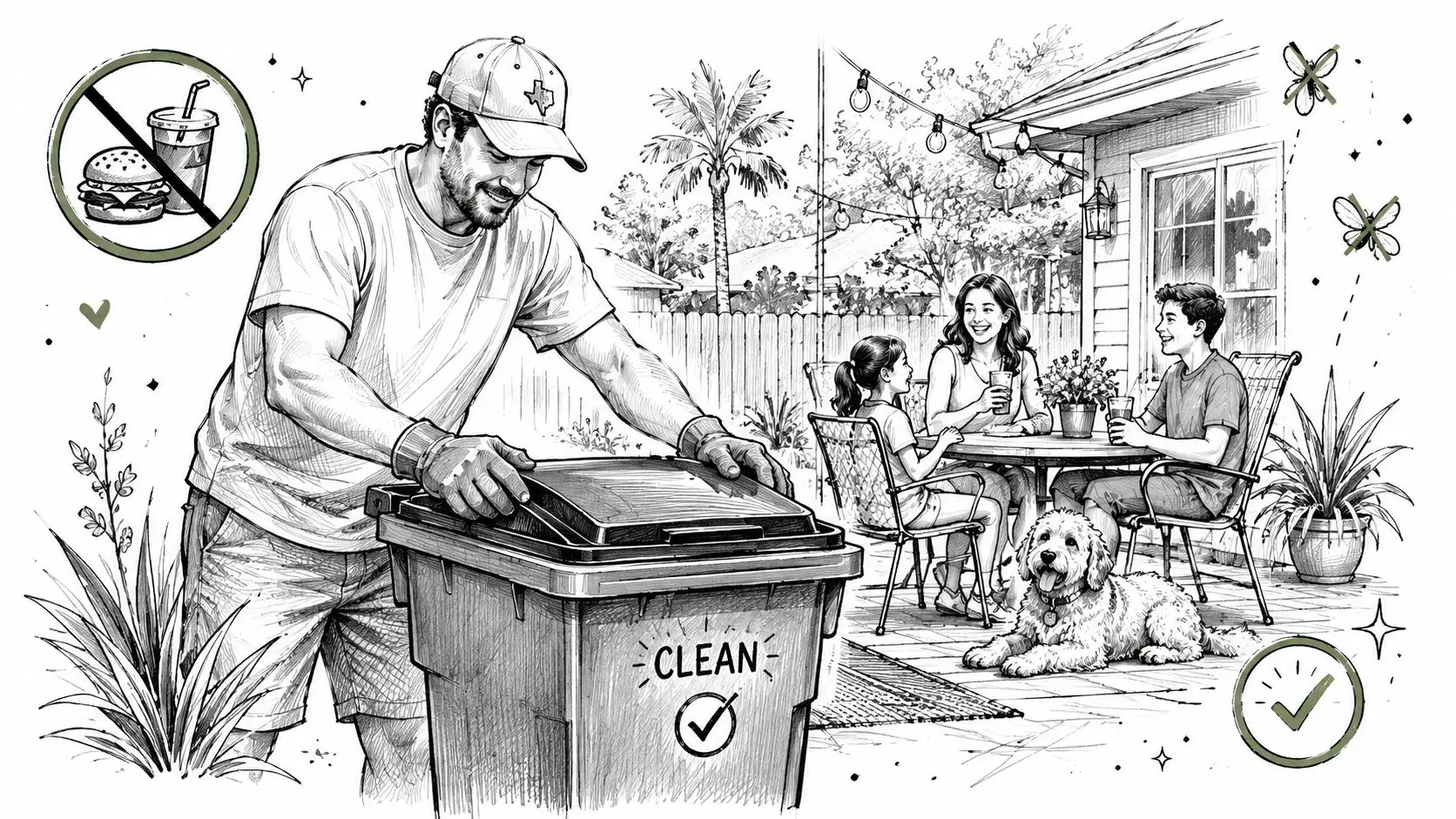
That's where professional fly control starts. A recent industry summary on sanitation-first fly control strategies states that over 80% of fly infestations are driven by accessible food sources like garbage and pet waste, not just scent. The same source reports that an integrated approach combining sanitation with other methods reduced fly populations by 92%, compared with 35% from citronella alone.
Those numbers line up with what technicians see every week. Flies follow food, moisture, and breeding material. If that buffet stays open, they keep coming.
The fly diet approach
I call this the fly diet approach because the goal is to starve the problem. When flies lose easy access to food and breeding spots, pressure drops. Not overnight in every case, but consistently.
Use this checklist around the yard:
- Trash control: Keep lids closed tight. Rinse sticky residue from the rim and sides of bins, especially after parties or lawn work.
- Pet waste cleanup: Remove it promptly and keep disposal containers sealed.
- Outdoor eating areas: Wipe tables, chair arms, and grill side shelves after every use.
- Drain and moisture cleanup: Check low spots, soggy mulch, and wet organic buildup after rain.
- Compost discipline: Keep it managed and away from seating areas.
- Door habits: Limit long open-door periods between the house and patio.
Light matters more than people think
The same source notes that flies are more likely to land in areas lit by blue-toned lighting than yellow lighting. That matters on patios where decorative LEDs stay on every evening. If your seating area uses cool, bright, blue-leaning bulbs, you may be helping the flies concentrate right where you want to relax.
A small lighting change can support a larger sanitation plan. It won't solve the issue by itself, but it can stop working against you.
If your patio stays busy with flies after dark, look at the bulb color before you buy another candle.
Why this matters more in Southeast Texas
Southeast Texas gives flies what they like: warmth, humidity, rain, pet-heavy neighborhoods, and a long season for outdoor cooking and trash generation. That raises the value of routine sanitation. It also lowers the value of weak, short-range repellents.
Citronella can still have a role as a minor supporting product if you enjoy it. But in this region, it's usually the side dish, not the main meal. The main work is sealing trash, removing pet waste, reducing wet organic buildup, and making the yard less attractive to adult flies in the first place.
Safety Tips for Using Citronella Around Your Home
Some homeowners will still use citronella products, and that's fine as long as expectations stay realistic and use stays safe.
One practical concern in this region is the plant itself. Guidance from Pestline on citronella and fly control limits notes that citronella plants are sensitive to cold and wilt in temperatures below 50°F, which makes them a poor year-round choice for Southeast Texas outdoor control. The same source notes that achieving patio-wide protection with candles could require 10 or more, creating a meaningful cost and fire hazard.
Candle and torch precautions
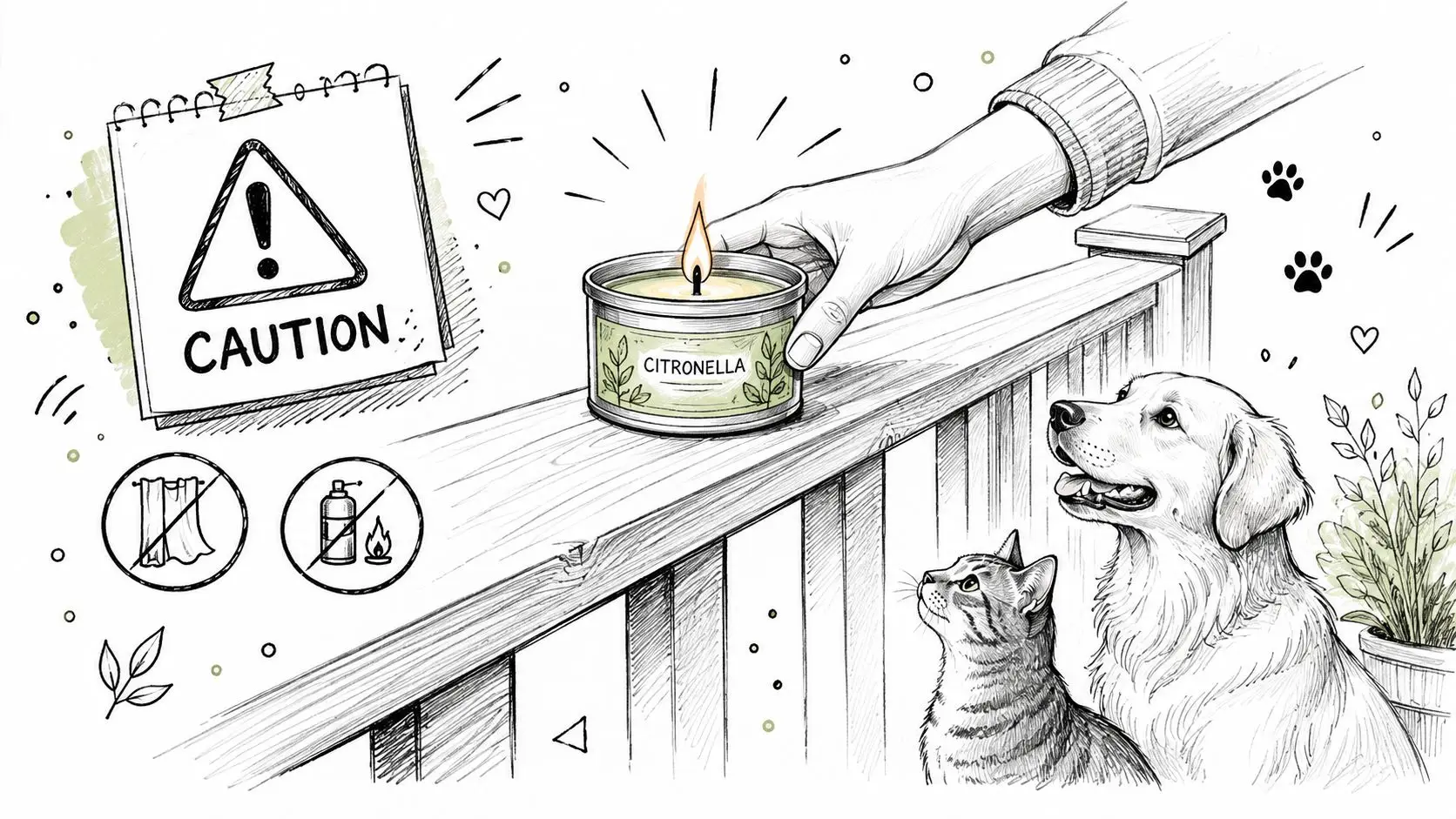
If you use candles or torches, treat them as open flames first and pest products second.
- Keep distance from structures: Don't place flames near siding, railings, dry leaves, or low branches.
- Avoid crowded tabletops: Flies are annoying, but a tipped candle around food, drinks, or kids is worse.
- Watch the wind: A little breeze hurts performance and increases the chance of wax spills or flame problems.
- Extinguish promptly: Don't leave them burning after the gathering moves indoors.
Oil and pet considerations
Citronella oil is concentrated. People sometimes assume “plant-based” means harmless, but concentrated essential oils can still irritate skin and create issues if misused around pets.
Use common-sense rules:
- Don't apply undiluted oil to skin: Follow the product label.
- Keep products out of reach: Curious pets may lick spilled oil or chew plant matter.
- Use caution near bowls and bedding: Don't aerosolize or spill products where animals eat or rest.
- Ventilate enclosed spaces: Patio-adjacent sunrooms and screened areas can hold odor longer than you expect.
Don't build a fire ring of candles
Citronella proves self-defeating. If meaningful coverage would require a large number of candles, that's a sign the method doesn't fit the job. A patio should be comfortable, not lined with open flame just to chase a problem that sanitation and targeted treatment handle better.
When DIY Is Not Enough Call a Professional
Some fly problems are small and occasional. Others keep coming back because the property has a steady food source, a breeding area, or outdoor conditions that support repeated activity. That's the point where DIY citronella products usually hit their ceiling.

A technician looks at the whole environment, not just the symptom near the patio table. That means checking trash storage, pet areas, moisture pockets, door habits, drains, lighting, and the property's layout that may be holding heat and organic debris. If you're also reworking the yard, it helps to think about choosing the right landscape partner so plant beds, drainage, and outdoor living spaces don't keep feeding the pest pressure.
What professional fly control does differently
Professional service works because it uses Integrated Pest Management, not one scent and one guess. The process usually includes:
- Inspection of the pressure points: where flies feed, rest, and breed
- Sanitation recommendations: targeted to the property instead of generic advice
- Treatment matched to the site: not every yard needs the same approach
- Ongoing prevention: because outdoor pest pressure changes with weather and use
For outdoor living areas in Southeast Texas, stronger options can include targeted barrier treatments and, where appropriate, automated systems such as MistAway for mosquito-related pressure around the yard. The important point is that these approaches are built around coverage, timing, and source reduction. They aren't trying to win with fragrance alone.
When it's time to stop experimenting
A few signs tell you the problem has moved beyond DIY:
You've cleaned up the obvious attractants, tried the shelf products, and flies still show up every time you cook, open the back door, or sit outside.
At that stage, paying for more candles and decorative plants usually means paying to stay frustrated. If you're weighing the next step, this guide on when to hire pest control for your home can help you decide whether the issue is occasional nuisance activity or a recurring property-level problem.
The short answer to Does citronella repel flies is yes, but not well enough in the forms commonly used. For Southeast Texas yards, the durable fix is almost always source reduction first, then targeted treatment where it is most effective.
If flies are taking over your patio, grill area, or back door zone, FullScope Pest Control can inspect the property, identify the pressure points, and build a practical treatment plan for your home in north Houston and surrounding Southeast Texas communities. Reach out for a professional evaluation and get a yard you can use.