 1500+ reviews

5 Tips for Termite Control in Your Home
Termites are one of the most destructive pests that can invade your home. Each year, they cause billions of dollars in damage to homes and businesses in the United States. If you suspect that you have a termite problem, it’s important to take action immediately to get rid of them and prevent further damage. Here are five tips for termite control: 1. Schedule an inspection: The first step in termite control is to schedule an inspection with a qualified pest control professional. They will be able to identify the type of termites that are infesting your home and recommend the best course of treatment. 2. Eliminate moisture: Moisture is one of the things that attract termites to your home. Be sure to fix any leaks, repair any damaged gutters or downspouts, and keep your yard free of standing water. 3. Seal off entry points: Once you’ve eliminated moisture, seal off any potential entry points that termites could use to get into your home. This includes cracks in the foundation, gaps around windows and doors, and openings for vents and pipes. 4. Remove wood debris: Wood debris around your home is another attractant for termites. Be sure to remove any decaying wood, stumps, or fallen trees from your property. If you have a wood pile, keep it away from your house. 5. Use bait stations: Bait stations are an effective way to get rid of termites and prevent them from coming back. The stations are placed around your property and contain a bait that attracts termites. Once they eat the bait, they take it back to their nest where it kills the rest of the colony. Must Read: HOW TO SPOT EARLY SIGNS OF A RACCOON INFESTATION IN YOUR HOME Conclusion: Termites are extremely destructive pests that can do a lot of damage to your home if they’re not controlled properly. By following these five tips, you can get rid of existing termites and help prevent them from coming back in the future. If you have any concerns or questions about termite control, be sure to talk to a pest control professional who can help you create a plan that’s specific to your needs.
The Top 10 Termite Mistakes What homeowners do to invite termites
Termites. They’re hungry. And to them, your house is food. Is there anything you can do to stop them? Can you make your home less appetizing? More than 100 termite experts ─ with a combined 2,000 years of experience ─ say these are the top 10 mistakes homeowners make when it comes to termites: 10. Repairing utilities on the property disrupting the termite soil treatment. If your lawn gets dug up for plumbing, gas or electrical work, chances are good you’ve compromised your termite treatment if your home has been treated with a liquid termiticide. 09. Piling excessive mulch around the home Termites love mulch. Too much up against your home holds soil moisture and can be an easy food source for hungry termites. “The mulch typically used around homes is often a soft wood like pine, which is a great food source for termites,” says Camille Landry of FullScope Pest Control. “I’ve seen termites foraging in and around the mulch just 1 inch deep. If the mulch is piled very high up on the foundation of a structure, it makes a natural bridge the termites can use to enter the structure.” 08. Digging around the home’s foundation disrupting a termite treatment. Liquid termite treatments around your foundation are effective only if left undisturbed. So if you dig around your house to plant a new rosebush, you might have opened a hole for termites to crawl through. If your home is protected by a baiting product such as the Sentricon® System, digging around your foundation isn’t a concern as long as the stations stay in place. Must Read: BROWN RECLUSE SPIDERS: WHAT YOU NEED TO KNOW 07. Leaving old tree stumps in the yard Dead trees are desirable to termites ─ almost as desirable as your house. Stumps in your yard can serve as a launch pad for an attack on your home. 6. Stacking firewood near the home If you put firewood up against your house, you might as well also leave out a welcome mat for the termites. They can burrow into the woodpile and then right into your house. 05. Using do-it-yourself (DIY) products to try to control termites themselves Termite control is not like fixing a leaky faucet. Fail to do it right, and you and your home will most likely pay the price. This is one time you should leave it to the professionals. 04. Having untreated wooden materials next to the home. Yes, that new fence will keep Fido in your yard, but that untreated wood up against your house also might let termites in. It is best to use treated wood or vinyl fencing, or at least leave a gap between the fence and your home. 03. Constructing additions to the home without expanding termite protection. If you’ve added a sunroom, expanded your kitchen or poured a new patio, that addition needs to be protected from termites, too. Don’t offer up that beautiful new addition as a termite’s next meal. 02. Not fixing earth-to-ground structural wood contact. If a portion of your wood porch is touching soil, you’re asking for termites. Soil + wood contact = termites. 01. And the No. 1 mistake homeowners make when it comes to termites is: Not getting a professional termite inspection. Termites are not easy to detect, and failing to do so can cause thousands of dollars in damage. Trained professional termite inspectors know termite behavior ─ where they like to hide, what their damage looks like, what they leave behind as evidence. You don’t. Leave this one up to the professionals. “Homeowners don’t have the experience to know what to look for,” Derek Salazar says. “When we do an inspection, we can point out to the customer what we think are liabilities that would increase the incidence of termites in their home.” This survey was conducted in 2012 with Certified Sentricon Specialists® from across the country. To find a termite professional or to learn more about Sentricon, visit Sentricon.com or download the Sentricon System app through iTunes here.
5 Best Ways To Remove Termites
As some termites can cause severe, long-lasting damage, termites inside a home can be a significant problem for homeowners. These bugs will establish a colony inside a house where they will eat the wood and cause damage. Termites can harm a home’s structural stability severely and sometimes permanently if they are not dealt with quickly and effectively. Hence, these are the top 5 ways to remove termites. Termiticide Defenses Termite-killing products designed for professionals may be available depending on your location. These traditional termite treatments are applied to the exterior perimeter of your home to create a barrier. Termites cannot detect termiticide and thus do not attempt to avoid it. A termite will die if it consumes termiticide-treated materials. Termiticides work similarly to viruses in that they spread. When one termite comes into contact with termiticide, it unknowingly spreads it to other termites, infecting them and ultimately killing the colony. Boric Acid Boric acid is a tried-and-true method of termite control. Many termite insecticides on the market contain highly effective boric acid as the main ingredient. Boric acid is toxic to termites because it causes them to dehydrate and shut down their nervous systems, ultimately leading to death. Just spray the acid into the holes and crevices on the ground, walls, and ceilings. Insecticides Foam termite treatments, such as Termidor, can penetrate deep into cracks and crevices to eradicate hidden termites. The space will be filled with foam, and when it evaporates, it will leave an insecticide behind, killing any termites who come into contact with it. You can use dust agents to eliminate any remaining termites that foam or liquid treatments have missed. Read all insecticide instructions carefully and avoid using them around pets or children. Another advantage is that foams frequently work to eliminate ants and termites, providing an additional layer of pest control. Beneficial Nematodes The nematodes kill termites by injecting a specific type of bacteria into their body, so there is a high probability that the entire colony will be affected. They’re simple to use and safe for both people and animals. Spraying them into the yard, garage, basement, and other contaminated areas would be best. Orange Essential Oil Orange peel makes orange essential oil, which has the insecticidal chemical D-limonene. Insects are repelled and killed by this compound. This strategy for preventing termites relies on a certain concentration of citric acid within the D-limonene molecule. This acid degrades the termite’s backbone, which in turn causes it to lose water and protein until it eventually expires. Must Read: HOW TO KEEP BOXELDER BUGS OUT YOUR HOME THIS WINTER Final Thoughts If you have a termite problem, it’s better to call an exterminator than try DIY methods. This will ensure that they’re not just repelled but actually killed. When hiring a professional, you can rest assured that they will have a thorough understanding of the chemicals and equipment required to complete the task at hand. Also read about How to keep Boxelder Bugs out of this winter. At Fullscope Pest Control, we provide the most effective pest control service with a strategy created especially for your needs and budget limit. We’re here to help you keep your home termite-free, so give us a call today!
Does Pest Control Include Termites?
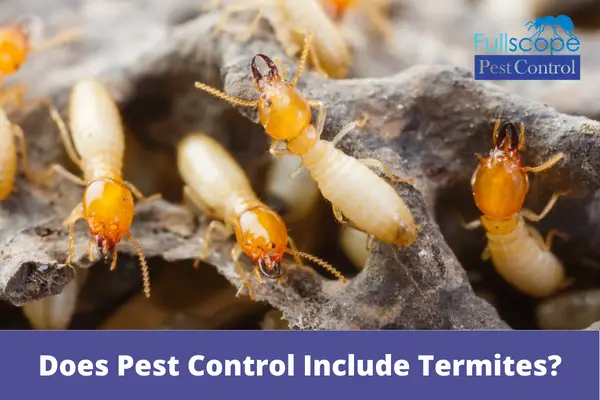
Do you have concerns about termite damage? In such a case, you’re not alone. Property owners pay over $2 billion annually on termite control. Termites wreak billions of dollars in damage to buildings each year. This post will educate you, as a customer, on how to recognize termite damage and what you need to do to keep these pests out of your house. If I Have Termites, How Can I Tell? Keeping an eye out for termites is the first line of defense. Termites seldom emerge from their tunnels in the ground, mud, or food sources. It is not until a swarm appears or damage is discovered during building that most individuals realize they have termites. Following are a few of the methods you may check for termites: Use a flathead screwdriver or similar instrument to poke the exposed wood for hollow places. Recognizing a swarm of ants from a swarm of termites is critical. Ants The wingspan is significantly wider at the front than at the back. The antennas are bent at a 90-degree angle. Termites The span of both wings is nearly equivalent. Its antennae are straight and may droop. Pest Management vs. Termite Treatment Termite control is very different from standard pest control. Most termites are too well protected underground or in mud tubes to be eradicated by conventional pest management methods. Specialized chemicals developed to eliminate an entire termite colony, as opposed to just a few, are necessary for effective termite management. Subterranean termites, for example, construct mud tubes underground and reside in them. Subterranean termites build “mud tubes” out of their excrement to reach their food source because furniture and walls are crafted from wood. Professional solutions must be put to the ground surrounding the foundation to eradicate these Termites properly. When you hire us for termite control, they will dig trenches around the perimeter of your home and drill into the soil under any concrete slabs to eradicate any lingering colonies. Pest Control In most cases, pest control treatments are used externally. They are most effective against insects that can move freely, such as crickets, desert roaches, spiders, ants, earwigs, centipedes, etc. Flying pests that land in treated areas may also be eliminated. Also read How to control the Spider webs in home However, Subterranean Termites in their fortified mud tubes and underground colonies are impenetrable to standard pest management methods. While termite treatment is a separate service, our technicians check for the little buggers throughout every visit. Let’s Stop Termite Infestation Now! There are occasions when pest treatment on your own isn’t possible. A professional certified pest control operator is the one to call for jobs like these. If you need pest control, hire someone who has the appropriate license. That’s when Fullscope Pest Control got your back. When working with us, you’ll always know what’s happening with termites and how to handle the situation effectively. Our blog on recognizing and eliminating termites is provided with the hope that it will be helpful to the reader. With 30 years and more in the business, we are the go-to exterminators in this region. Just dial 832-898-0190 now! Schedule your termite inspection now!
Things to Know About Flying Termites
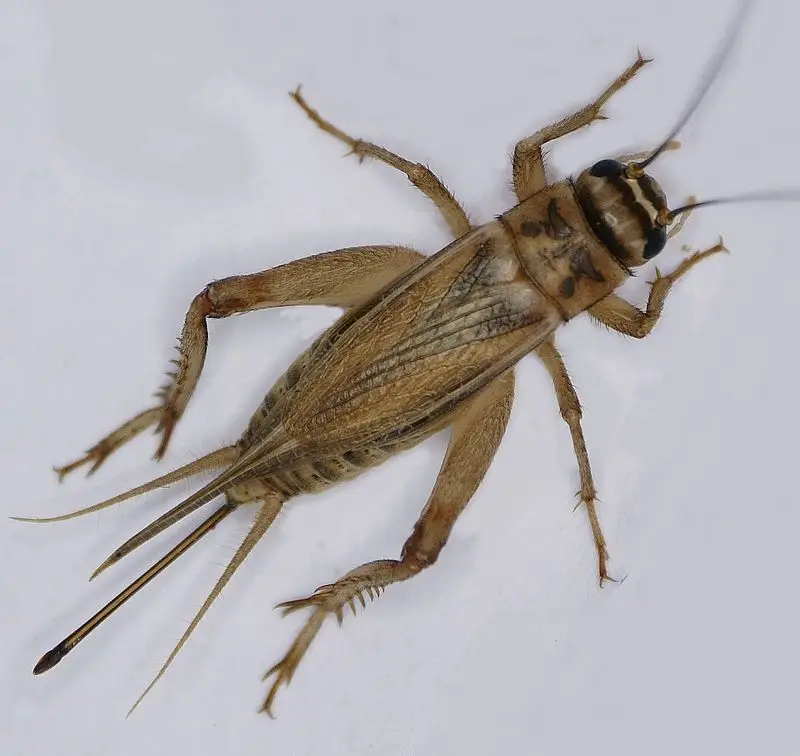
Have you ever observed how flying insects flock to light bulbs during the rainy season? If they happen to be flying termites, believe it or not, they might be the start of your household nightmare. They are social insects with distinct castes: workers, soldiers, kings, queens, and, last but not least, alates – also known as flying termites. Furthermore, flying termites are winged reproductive insects that swarm out from the nest to form new colonies. They frequently appear when the humidity is high, usually in the evening after the rain, and are drawn to well-lit regions. One of the unmistakable indicators of termite infestation is this. Are you one of those aspirants who want to learn more about flying termites? This knowledge might save you hundreds of dollars in repair costs. As a result, learn more. In any case, the following are some facts regarding flying termites: 1.Not all termites have the ability to fly. Termites are not classified as flying insects. Only a few termites can fly, and they can only do so for a brief time before losing their wings. Only the alates can fly among the termite castes since they are the only ones with wings. These are the only termites with sexual development and will be the kings and queens of the termite colonies the following season. Swarms refer to termite flight patterns and behaviors. 2.Termites swarm to reproduce and establish new colonies. The termite life cycle begins with termites swarming to reproduce and establish new colonies. During this time, sexually mature male and female winged termites leave their nests and fly. This is known as nuptial flight, and it is also undertaken by other insects such as ants. After leaving their nest, the winged termites aggregate in the air (swarms) and mate with other colonies of the same species. After successfully mating, the termites will land, drop their wings, and establish a new colony. 3.Flying termites emerge at random or when the light draws them. Flying termites are drawn to light. This collection of flying insects has shed their wings and begins to crawl around on the floor without their wings for an unknown amount of time before dying. Also, read Why Mosquitos Bites me so much. 4.Flying termites have a distinct appearance and may be identified by attentively inspecting them. Flying termites seem different from other flying insects and may be identified by attentively inspecting them. They are often the same beige or tan hue as the other termite castes. They have two antennae that are typically straight with a slight bend and two sets of wings equal in length, white, translucent, and veiny. Termites are classed depending on their body shape. The flying termite and wingless termite have a solitary thick body feature. Unlike ants, Termites do not have a constriction between their thorax and abdomen. Recommended Read: What Causes Flying Termites in Your House Conclusion Because flying termites make up such a small fraction of all termites, the best strategy to eliminate them is to eradicate all termites in general. Termite removal from your property will deal with flying termites and minimize and limit the spread of termite colonies in your region. Are you concerned about flying termites? Contact Fullscope Pest Control immediately to learn how to protect your house against termite damage.
Types Of Wood-Destroying Insects In Texas
Wood-destroying insects (WDIs) consume and chew on wood, as one might assume. These insects create headaches as well as money for repairs. They are cunning, forming huge colonies within the confines of your home. Furthermore, they frequently go unnoticed for years, implying that you may be living with them right now. Termites Termites are winged insects that feed on the cellulose in wood and chew through it, creating a network of tunnels. The wood appears good on the surface, but it crumbles when pushed with a screwdriver or other tool. The most frequent varieties are subterranean and dry wood termites. Subterranean termites live underground and require moisture to survive. They infest wood that is close to the soil, particularly in moist basements, and are commonly found in foundation joists and structural lumber. Drywood termites, as the name implies, consume dry wood such as structural lumber, fence posts, and dead tree branches. They do not build their nests underground and then enter your home through the roof. Powderpost Beetles Powderpost beetles have elongated bodies and short heads. Depending on the species, they range in length from 1/8 to 3/4 inches. Powderpost beetles lay their eggs on top of or near the surface of the wood. When the eggs hatch, the larvae eat on the wood for one to five years, chewing a tunnel to the surface. Hard and softwoods are both eaten by bugs. The species determines the type of wood consumed, and damage is frequently observed in floors, planks, paneling, door frames, furniture, and molding. Carpenter Ants Carpenter ants don’t eat wood, but they use it to build colonies. Depending on the species, these huge ants appear in a variety of hues, such as red, black, yellow, and brown. Carpenter ants, like termites, have wings. Unlike termites, which have equal-length wings, carpenter ants have longer front wings than back wings. Carpenter ants find the perfect entry point into your home through rotting wood. They’re frequently seen in basements or around rotting timber along window sills or leaky pipes. A carpenter ant infestation might be indicated by piles of wood shavings. Wood Borers Wood borers are a type of bug that consumes trees, acorns, and nuts. When these insects emerge as larvae, they leave holes in the wood, but they do not cause structural harm. Metallic wood borers, wood wasps, bark beetles, and long-horned beetles are examples of common wood-boring insects. The appearance of each species differs. Some are tiny, such as the 1/8-inch-long bark beetle, while others, such as the 2-inch-long long-horned beetle, are enormous. Timber borers are frequently discovered in firewood, log homes, and structural wood. When it comes to destructive wood insects, don’t let them ruin your day or your home. Please follow your instincts and contact FullScope Pest Control if you suspect that you have a wood-destroying insect infestation in your home. Our professional termite and WDI inspectors are well-versed in the warning signs of these wood-destroying pests and know where to look for them in the first place.
7 Signs Of A Home Termite Infestation
Have you ever seen any termite activity in your home? Termites are cunning insects that may already harm your premise without your knowledge. They may be tiny in size, but termite colonies are massive. They have the potential to quickly destroy the timber structure of your property, leaving you with an enormous repair bill if you don’t respond soon or take preventative steps. Your Humble Texas pest control providers can help save your home from these unwanted pests. Our team in Fullscope Pest Control is here to alert you about the most typical warning signs that your home or property is already heavily infested with termites. Mud Tubes Mud tubes are tiny tubes that serve as tunnels for termites’ mobility and protection. They are frequently composed of dirt, soil, and termite droppings. These mud tubes can be difficult to detect because they are typically formed in the dark, concealed areas of your property, but having these mud tubes is one of the most common warning signs that require your immediate attention. When you notice this, it implies that termites are already wreaking havoc on your property. Wood Tunnels Wood tunnels, sometimes known as “galleries,” are difficult to notice from the outside, unlike mud tubes. However, these can be found in areas with shattered wood or timbre infestations. This is an unmistakable symptom of a termite infestation. However, technical advancements like Humble Texas pest control have enabled pest treatment professionals to discover wood tunnels and termites even when no evident exterior indicators exist. Electronic odor detectors, sound detectors, and infrared detectors are examples. Swarmers (Flying Termites ) Swarmers are typically one of the first indicators of a termite infestation. Swarmers are winged termites that emerge in large groups from their nests. Male and female flying termites have left the nest searching for a suitable companion near or in your home. Some animals congregate at night and are drawn to light sources. Other species will swarm during the day, but all dry wood termites swarm after rain at specific times of the year. Piles of Detached Wings If you don’t see any termite swarms outdoors, have a check around the grounds, especially around the corners of walls, windows, and doors. If you find a mound of detached, discarded wings, you may have a termite infestation in your home. Flying termites prefer well-lit, warm environments and eventually shed their wings. You might mistake them for flying ants, yet the wings of flying termites are the same size. The dropped wings are a dead giveaway if your property is a breeding ground. Termite Droppings (Frass) Termite droppings are also known as frass. These are little pallets that are typically discovered near termite access locations. These feces are discharged from their nest through small kick holes. These tiny six-sided, egg-shaped pellets gather over time in a mound beneath and around the afflicted wood’s base. The frass of carpenter ants and beetle larvae is much rougher and tougher in texture than the frass of other wood parasites. If you see a pile of droppings outside or within your home, it is a definite indication that termites are present. Cracked, Bloated, or Bubbled Paint We usually attribute paint cracks, bloating, and bubbling to water leaks or piping issues. This is usually true. Termites can also make them. Termites chew away at the wood inside walls, threatening the structure’s stability and integrity. This damages exterior finishes, notably paint. If you see this indicator in your house, we can’t stop the infestation. Still, it’s time to schedule an inspection from Humble Texas pest control providers to prevent more damage to your property. Visible Damages The ultimate and most evident indicator is observable damage in your home’s timber materials, such as ceilings, floors, stairs, furniture, books, and paper. This is an indication of termites in your house. Termites consume almost everything, so call your pest control company if you see the damage that appears to be eaten away. Procrastinate not since these indicators only appear after a long-term termite infestation. Prevent costly structural deterioration. Termites are not a nuisance that can be eliminated on your own. Contact your Humble Texas pest control to arrange an inspection if you suspect an infestation. Must Read: fullscope pest control Are you worried about termite damage? Because termite damage is typically not covered by insurance policies, it is a good idea to have a professional inspection performed regularly to discover termite infestations as early as possible and reduce costly damages to your home. If termite activity is discovered, our team at Fullscope Pest Control can recommend the best treatments for your property. We are experts in detecting termite signs in your house and have the equipment to identify them even with no visual signs.
Reasonable Termite Control Cost in Conroe and Montgomery, TX
Termites are one of the most difficult pests to get rid of. Additionally, termites control Conroe TX is a costly affair. As per a statistic, US residents spend around USD 1 billion for termite control and repairs. Thus, identifying and getting rid of termites at the earliest is essential to save yourself from damages. But how much does termite residential pest control Montgomery TX cost? Well, there is no straightforward answer to it. It depends on several factors. These include the size of the residential property, the infested area, and the severity of the infestation, among others. The average cost for termite control ranges from USD 200 to USD 900. However, the actual cost can vary significantly, primarily depending upon the type of termite treatment. Here’s a look at the five most common methods of termite control Conroe TX and the costs associated with them. Termite Control Treatments And Their Costs Below are the five most-commonly used termite control treatments, along with their costs. Chemical Treatments Chemical treatments are the most widely used treatment method against termites. In this method, a liquid termiticide is applied to the home’s exterior. The liquid termiticide is poured into holes dug around the house. Sometimes, it is even poured directly into the foundations. This treatment method works best for subterranean and dry wood termites. The cost of this treatment method is comparable to the other methods on the list. A chemical treatment method for termite control in Conroe TX can cost anywhere from USD 3 to USD 16 per linear square foot. Bait Treatments This is another great treatment method if you face the issue of subterranean or dry wood termites. Similar to the above method, trenches are dug around the house. These are called bait stations. The bait station contains wood, cellulosic material, or other materials liked by termites. However, the materials are coated with poison. The termites are attracted to the bait stations. They feed on the poisoned material and even carry it back to their colony, poisoning other termites in the process. The only downside to this method is that it works slowly compared to the chemical soil treatment method mentioned above. The cost of bait treatment is similar to chemical treatment. Tenting Treatments This termite control method is used if the termite infestation is high. Tenting treatments cover a larger area than the methods mentioned above and can cover your entire home. In this method, the entire structure is covered in a tent. Termite-killing chemicals are then introduced into the enclosure. Ingesting or smelling the chemicals kills the termites. The cost of tenting treatments run from USD 5 to USD 20 per foot. However, considering that the entire home is covered under treatment, tenting treatments can cost you thousands of dollars. Fumigation Treatments This method is similar to the tenting method. However, the only difference is that gas is used instead of chemicals to kill the termites. Like the above method, the entire house is first covered in a tent. Lethal gas is then introduced through small holes that kill the termites present in the house. The treatment takes hours to complete. Even after that, it is advised to remain outside the house for residents, plants, and pets, for three to five days. Fumigation treatments cost between USD 10 to USD 20 per linear foot. Heat Tenting Treatments This is closely similar to the other two methods mentioned above. First, the house or the area to be treated is wrapped in a tent. Next, hot air is pumped inside till the overall temperature reaches 150 degrees Fahrenheit. The wood temperature is brought to 120 degrees Fahrenheit, which is enough to kill the termites. Heat tenting treatments cost about USD 10 per linear foot. Final Thoughts Getting rid of termites is no easy task. Moreover, it is an expensive process. You can schedule an annual termite inspection that can help you save on termite treatments and damages caused by termites in the long run. If you think that you have a termite issue at home, you can contact professional termite control and residential pest control services in Montgomery TX. They will help find signs of termite infestation, damages, and provide you with the best possible solution. Keep in mind that the quality and cost of the services will differ based on the service provider and from service to service. So, make an informed decision before you hire termite control services.
What Are Some Good Termite Control Companies In The Willis TX?
If you are a homeowner then you may well know what a disaster it would be to have termite infestation in your home causing all kinds of damage and posing all kinds of health risks to you and your family, not to mention with all the havoc they would bring with them. And, you’re wondering what are some good termite companies in the Willis TX area to call upon which is a good thing —- you get to choose a competent and trusted professional for this problem. You’ll Need Serious Professional Pest Control Intervention When termites come into your home, getting rid of them becomes a top priority because of the potential damage that they could cause you if they happen to stay for long periods of time. So it is essential that you consider finding good termites control in Willis TX to try and get rid of them as soon as possible. There are two ways of applying pest control management: either by doing it yourself which could be tedious and bring little to no results, or by hiring a termite removal expert to actually come in and bring the situation under control. By getting a termites control in Willis TX expert to get rid of termites, you can rest assured that the pests will not come back and will not cause you any further trouble because you will have had an expert deal with the problem for you. If you are just relying on your methods, you can’t be certain that they will work long enough for the termites to leave your property alone for good. Why Pest And Termite Control Services Can Do Good For Your Home Pest infestation leads to millions of damages to a property whenever neglected. Rodents, mice, and roaches are carriers of illness-causing bacteria and are a health hazard. And, they damage electrical wirings, feast on leftover food, leave droppings in some areas in the home. When you notice early indicators of infestation inside your home, don’t hesitate to seek a skilled termites control in Willis TX to get rid of termites and other known pests. Rodent Control Service For Your Business Rodents of all shapes and sizes might be chewing their way through your storage containers and leaving little surprises for the end user that opens the carton first. Structural and electrical damage can also be traced back to larger infestations of rats and mice that make their homes behind walls and the hidden places within your facility. Perhaps you run a business where a walk-in clientele is commonplace? Most casual customers may choose not to inform you they just saw a mouse run between the pantry area or in the restroom. You can rest assured they will tell as many colleagues and family members as they can, all of which choose never to return to your place of business ever again. Your reputation is damaged all because someone decided not to tell you of your rodent problem. Being proactive to pest control is very important to most businesses whether you choose to believe it or not. Hiring a reputable rodents control in Atascocita TX is an investment that is worth every penny. Industrial rodent control is more than the simple placement of mouse traps with peanut butter as bait. When it comes to a professional commercial exterminator, you should expect a full plan from your pest control partner designed to eradicate any current problems and address the issue from a prevention standpoint. Rodents like rats and mice have the ability to reproduce to an exponential rate. Get on top of your rats and mice before they get on top of your future profits. Professional Rodents Control Assistance Your local chamber of commerce is a good place to start seeking out a facility’s pest control services to effectively manage and prevent business pest disasters. Make sure you check references, ask colleagues for references and do your due diligence before making an ad hoc decision on rodents control in Atascocita TX that you choose. The partner you select should conduct a full inspection of the property identifying any problem areas prior to providing you with a comprehensive statement of work. If you manage a manufacturing facility it is important you seek out a professional team experienced in rodents control in Atascocita TX-based businesses. The service should also include a well laid-out plan of not only baiting and trapping but the removal of the rodent remains in a timely fashion. Proficient warehouse rat mice control for facilities requires the outer perimeter of the building to be included in the overall plan. If you own a food service facility in the region, it is even more imperative to hire a restaurant exterminator that has a stellar reputation with the local health inspector. That doesn’t always mean you need a brand name exterminator. A quality local food service pest control team may have a better reputation and relationship with the health inspector. Taking on a DIY Commercial insect control attitude is ill advised. It’s your business, your client’s and your reputation.
8 Steps to Make Your Porter, TX House Less Attractive to Termites
Are termites common in Texas? Termites are an increasing problem in Texas, especially in areas like Houston that feature humidity and moisture. Texas arguably has one of the highest concentration of termites in the country. It puts all of our homes at risk for a termite infestation.