1500+ reviews

Yes, professional pest control can get rid of rats, but only when exclusion, sanitation, and population reduction are combined and repeated. In a tracked 21-month program, active rat signs fell by 54% and severe infestation fell by 58%, showing what coordinated control can accomplish.
If you're in Magnolia and you've noticed droppings near the kitchen, heard scratching over the garage, or found gnaw marks around stored items, the important question isn't whether one spray will kill a rat. It's whether the property will still offer food, water, shelter, and an entry route after the technician leaves. In Southeast Texas, those conditions often remain unless the work includes structural repairs and follow-up.
Magnolia, Texas, is a defined community in southwestern Montgomery County and part of the Houston metropolitan area. Its 2020 census population was 2,359, according to Magnolia's community profile. The town also sits within a short-radius service area that includes Tomball, The Woodlands, Conroe, Spring, and Willis, so rats can move between wooded lots, drainage corridors, outbuildings, and neighboring properties.
How Rats Become a Problem in Magnolia Homes
A Magnolia rat problem often announces itself. You may see dark droppings behind the refrigerator, hear movement above a bedroom ceiling, or notice a musty odor near the attic access. By the time those signs appear indoors, rats may already be using a route through the roofline, foundation, garage, or utility penetrations.
Why the local setting matters
Southeast Texas gives rodents several things they need. Humidity supports persistent shelter and moisture, mature oak and pine cover provide protected travel routes, and drainage corridors along Spring Creek and local bayous connect one property to another. A home beside a wooded lot, horse property, chicken coop, or unmanaged drainage edge can face more pressure than a home surrounded by closely maintained yards.
Magnolia's location also matters for local service planning. The community is about 45 miles northwest of downtown Houston and about 25 miles southwest of Conroe, while nearby towns such as Tomball and The Woodlands sit within practical driving distance, as described by this Magnolia geographic overview. Those connections make it sensible to think beyond the walls of one house. Rats can travel through connected habitat and return when a neighboring source remains available.
Slab homes and pier-and-beam homes have different construction details, but both can develop access points. Look at places where utility lines, dryer vents, plumbing, gas lines, and air-conditioning conduits meet the exterior. Damaged soffits, unsealed roof vents, gaps around the garage, and openings at the foundation can turn a minor exterior issue into attic or wall activity.
Practical rule: A rat sighting is evidence of access and resources, not just evidence of one animal.
Why early recognition helps
Rats can damage wiring, insulation, stored materials, and HVAC ductwork while remaining mostly out of sight. Their activity may begin around a detached garage, woodpile, garden bed, or chicken-feed area before spreading toward the house.
Homeowners looking for more detail on seasonal behavior can review why rodents become a serious winter problem. The central lesson remains the same year-round: professional pest control can get rid of an active rat population when the technician first finds the route, then combines inspection, exclusion, sanitation, and population reduction. A one-time spray doesn't address that system.
The Three-Part Approach Professional Rat Control Follows
Professional rat work follows Integrated Pest Management, often called IPM. The approach treats the property as a connected system. It asks where rats enter, what they use for food and shelter, how they travel, and what will prevent the next group from returning.
Inspection finds the pattern
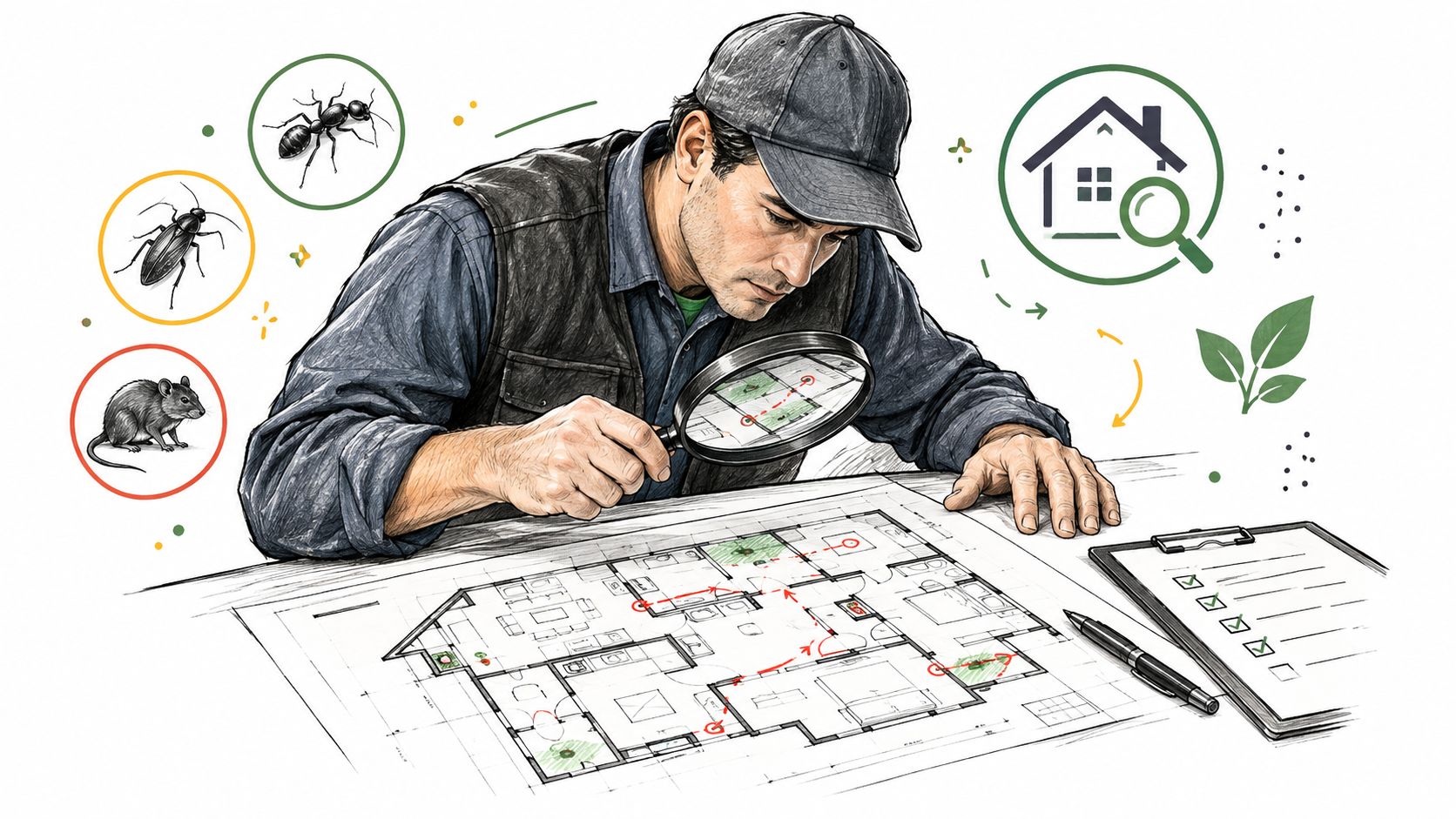
A technician starts by mapping evidence. Droppings, rub marks, gnawing, tracks, nesting material, and runways help show whether rats are entering from the ground, climbing toward the roof, or moving through an attic. The inspection also distinguishes likely Norway rat activity near ground level from roof rat activity in higher spaces, although the physical evidence and property layout determine the working diagnosis.
That map guides every later decision. A trap placed away from a runway may remain untouched, while a trap set beside a wall or established travel path has a better chance of intercepting movement. Inspection also reveals whether a bait station would create an unnecessary risk near pets, livestock, or children.
Exclusion closes the route
Structural exclusion lasts longer than a chemical treatment because it prevents re-entry. Cornell's rodent IPM guidance identifies exclusion as a durable part of rodent management, while UC IPM guidance sets a practical threshold of 1/4 inch for openings that should be sealed against rats and mice.
For rats, technicians examine pipe penetrations, roof-to-wall transitions, damaged soffits, vent screens, foundation gaps, and the rim area of pier-and-beam construction. Materials may include metal flashing, hardware cloth, copper mesh, and expanding foam used in the right combination. Foam alone often fails where rats can chew around or through a weak repair.
Population reduction removes the animals inside
Trapping, multi-catch devices, and carefully managed exterior bait stations reduce the active population. Illinois public-health guidance explains that sanitation and exclusion improve trapping and baiting because rats must travel farther when food and shelter are less available.
Skipping one part weakens the whole program:
- Trapping without exclusion: Remaining or incoming rats can use the same access route.
- Exclusion without population control: Rats already inside may stay in walls, attics, or crawlspaces.
- Treatment without sanitation: New rats can replace the animals that were removed.
The technician's job is not merely to place a product. It's to change the conditions that allow rats to persist.
What a Rodent Inspection and Exclusion Visit Looks Like
A thorough Magnolia service call usually begins outside, not with a spray inside the kitchen. The technician walks the foundation line and looks for openings where gas lines, water pipes, electrical conduits, and A/C lines pass through the slab or pier-and-beam rim area.
The exterior review also covers the garage, roofline, soffits, vents, crawlspace access, detached structures, fence line, garbage storage, woodpiles, and areas where vegetation touches the building. These details matter because rats often use a protected route before they enter the living space.
The attic provides important evidence
Inside, the attic receives careful attention. The technician looks for droppings on insulation, nesting material, rub marks, gnawed wiring near junction boxes, and roof vents without proper screening. A flashlight and visual inspection may be supported by tracking material, cameras, or other monitoring tools when the route isn't obvious.
The evidence helps determine whether the activity is consistent with Norway rats that stay close to ground-level shelter or roof rats that climb toward attic spaces. The distinction affects trap placement and the order of repairs. A technician who sees attic activity but only checks the foundation may miss the route that matters most.
Proofing uses the right material for the opening
The practical exclusion threshold is important. Openings larger than 1/4 inch should be sealed to exclude rats and mice, according to UC IPM guidance cited earlier. A professional also considers the size of the animal, the strength of the material, and whether the opening can expand around a pipe or conduit.
Small gaps may receive copper mesh secured with expanding foam. Wider openings may need metal flashing, mortar repair, or hardware cloth. Roof and foundation vents require durable screening rather than a temporary patch. A homeowner should receive a written list of repairs that need a contractor, roofer, plumber, or electrician when the pest technician can't safely complete them.
For a visual guide to common gaps, see identifying and sealing common rodent entry points. The visit should also end with sanitation recommendations for refuse, stored feed, pet food, garden beds, and outdoor storage. Removing those attractants makes every trap and exclusion repair more effective.
Trapping, Baiting, and Follow-Up on a Magnolia Property
Consider a representative Magnolia scenario. A homeowner hears scratching in the attic over the garage on a humid October night, then notices fresh evidence near the foundation. The inspection finds rats traveling along the building edge toward an access point rather than entering randomly through the middle of the yard.
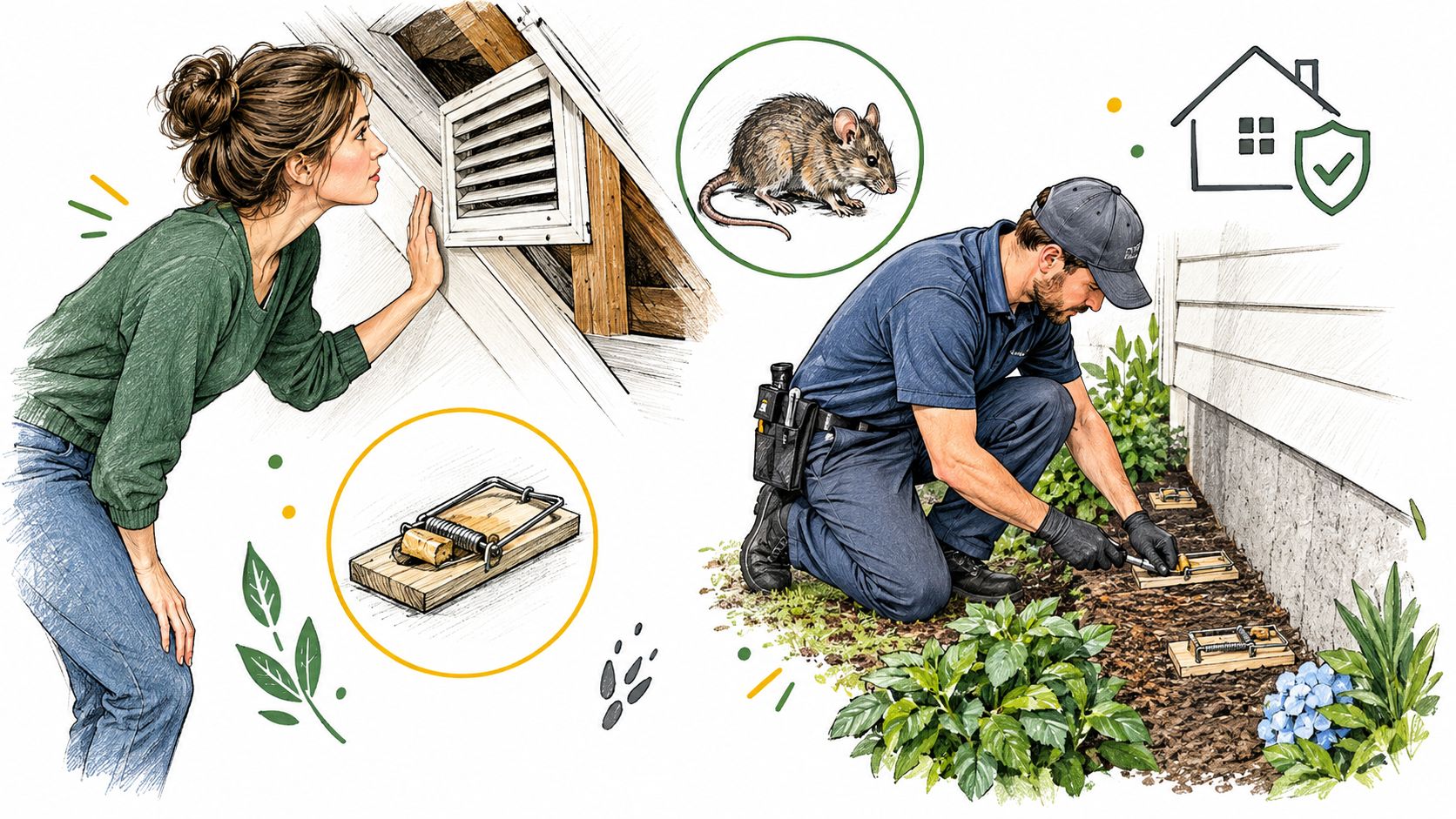
The technician places snap traps in the attic where the evidence shows movement and uses exterior bait stations along the drainage corridor behind the fence. Bait is not scattered loose inside the home. The equipment is positioned to manage risk and intercept travel while the homeowner removes food sources and arranges structural repairs.
Follow-up changes the plan
During the first week, the technician checks whether rats are using the selected routes and whether traps are being approached or avoided. Rats may change their path after equipment is disturbed, so a technician can relocate traps rather than assuming an untouched trap means the property is clear.
The next visit focuses on fresh evidence. The technician looks for new droppings, disturbed tracking material, camera activity, trap results, and signs of movement around exterior stations. If the rats have shifted from the foundation to a roofline or wall void, the equipment and proofing priorities change with them.
By the third review, the question is whether movement has stopped, not whether one trap was triggered. Cameras, dust tracking, and physical evidence can help confirm that the property no longer shows new activity. Equipment should be removed or adjusted based on that evidence, not left indefinitely without a monitoring decision.
Why the surroundings still matter
A property near a wooded drainage route can receive new pressure after the original animals are gone. Seasonal follow-up around exterior stations helps detect that change before rats settle back into the attic. A maintenance plan may also include recurring checks during periods when cooler weather pushes rodents toward sheltered structures.
A homeowner can support the process by keeping refuse tightly covered, storing feed in rodent-resistant containers, removing fallen food, and reporting new signs quickly. Rodent extermination methods and their uses vary by property, species evidence, access, and safety conditions. The right sequence is more important than using the most aggressive-looking product.
Realistic Expectations for Rat Removal Success
The honest answer to “can pest control get rid of rats” depends on what get rid of means. A professional program can remove the active animals using traps or other population-control methods. Keeping the property rat-free requires continued attention to access points, food, water, shelter, and nearby sources.
Historical evidence supports substantial reduction without promising permanent eradication. In New York City, a neighborhood rat-management program tracked for 21 months and found that, after three rounds of indexing, the percentage of properties with active rat signs fell by 54%, while severe rat infestation fell by 58%. The CDC report on that program illustrates why repeated inspections, trapping or baiting, and environmental cleanup work better together than a single treatment.
What results depend on
Rats cross roads and move between properties, which makes a single-building response vulnerable to reinvasion. A systematic review of urban rat movement and control describes why exclusion, sanitation, monitoring, and population control need to operate together and at the scale where rats move and breed.
In Magnolia, that means a sealed attic can still face pressure from a wooded lot, drainage ditch, horse property, unsecured chicken coop, or poorly managed garbage area nearby. Thick vegetation and connected corridors around the broader Southeast Texas area can keep introducing new animals even after the original infestation has been removed.
Rat Removal Outcomes at a Glance
| Timeframe | Expected Activity Reduction | Key Driver |
|---|---|---|
| Initial visit | Activity begins to decline when traps, stations, and repairs address the active route | Accurate inspection and correct placement |
| Follow-up period | Activity can fall substantially when fresh evidence continues to disappear | Adjusted equipment, exclusion, and sanitation |
| Long term | Activity stays low only when new access and resources remain controlled | Maintenance, proofing, and neighborhood awareness |
The practical goal is no new evidence over time, supported by a property that no longer invites rats to feed, hide, or enter. Anyone promising permanent elimination from one visit is overlooking how quickly reinvasion can occur.
One-Time Service Versus an Ongoing Maintenance Plan
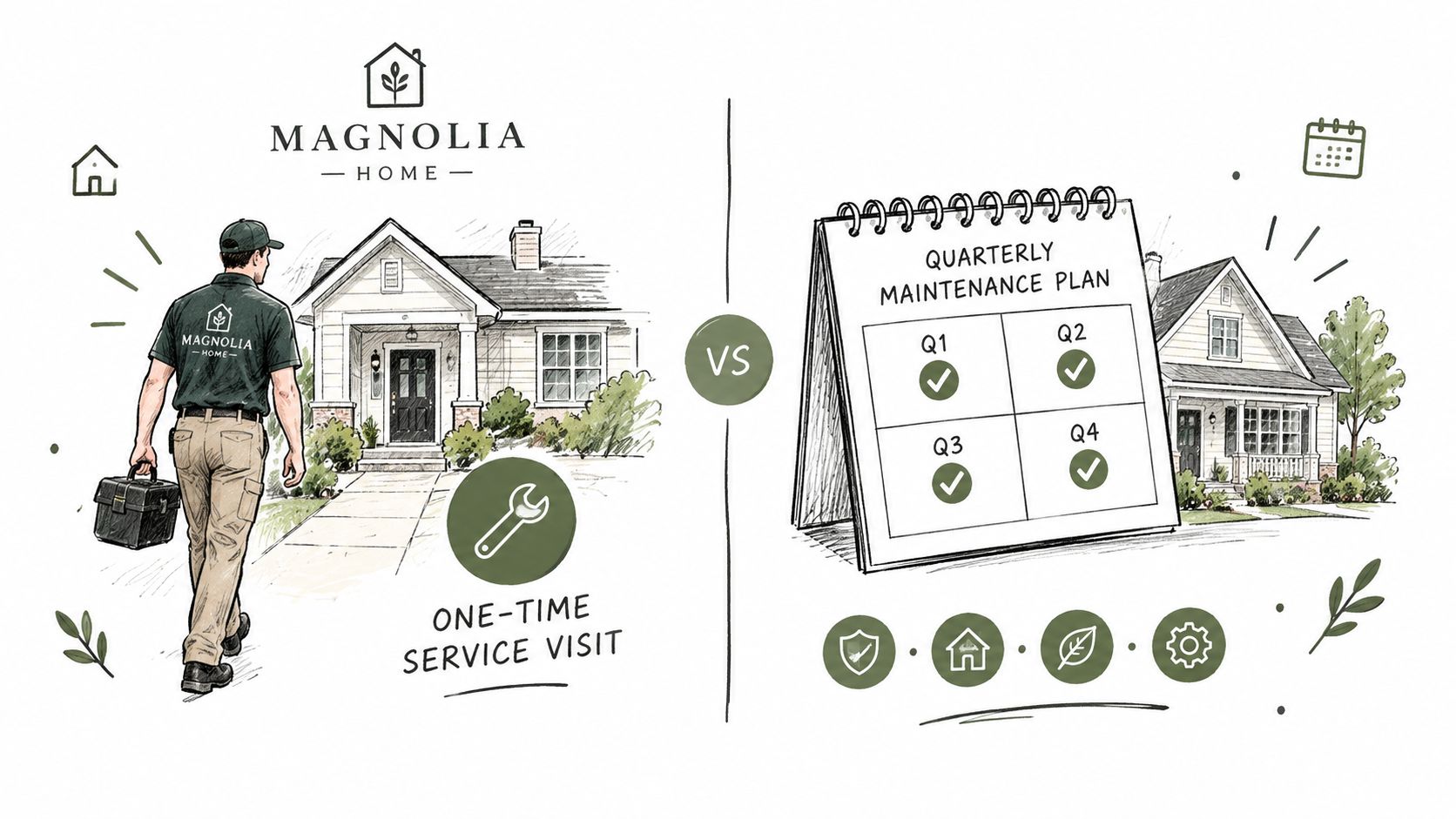
A one-time remediation visit can suit a home with a newly discovered problem, one clear access point, and clean surroundings. The work may include an inspection, available proofing, trap placement, sanitation guidance, and a scheduled follow-up. It's most appropriate when the homeowner can complete recommended repairs and the property has limited exposure to nearby habitat.
An ongoing plan makes more sense when rats have returned before, the home borders wooded drainage, construction keeps opening new gaps, or outdoor food and livestock create continuing pressure. Recurring inspections can identify a new route before rats establish themselves in an attic, wall, garage, or crawlspace.
Compare the service level to the property
| Situation | More suitable approach | Reason |
|---|---|---|
| One recent sighting and a clear opening | One-time remediation with follow-up | The source may be isolated and repairable |
| Repeated attic or crawlspace evidence | Ongoing monitoring | New activity needs early detection |
| Wooded lot, drainage corridor, or outbuildings | Ongoing protection | Exterior pressure can continue |
| Active construction or recurring repairs | Reinspection after work | New penetrations can reopen access |
| Food, livestock, or unsecured refuse outdoors | Sanitation plus monitoring | Resources can attract replacement animals |
Magnolia's climate, slab and pier-and-beam construction, and proximity to tributaries connected with the Lake Conroe area make recurring monitoring a practical consideration for many properties. The right choice isn't determined by the calendar alone. It depends on whether the property can stay sealed and resource-poor after the initial animals are removed.
FullScope Pest Control is one local option that provides rodent inspection, exclusion guidance, trapping, bait stations, and one-time or ongoing service planning. Ask any provider to explain what the visit includes, which repairs are excluded from the service, how follow-up evidence will be evaluated, and how the plan protects people and pets.
Your Next Steps for Rat Control in Magnolia
Start by documenting what you've found. Photograph droppings, gnaw marks, damaged insulation, holes, and the locations where you hear movement. Note whether the evidence appears in the attic, garage, kitchen, crawlspace, garden, woodpile, or along the foundation.
Then remove easy resources without disturbing suspected nesting areas:
- Secure food: Store pet food, livestock feed, and birdseed in durable rodent-resistant containers.
- Control refuse: Keep garbage tightly covered and clean spills around outdoor bins.
- Reduce shelter: Organize woodpiles and storage, and trim vegetation away from exterior walls.
- Protect entry points: Mark gaps around pipes, conduits, vents, soffits, and foundation transitions for professional review.
- Check connected properties: Ask nearby homeowners whether they're seeing similar activity, especially near drainage routes.
A first professional visit should include an attic or crawlspace walk-through when safe, a foundation and roofline inspection, evidence mapping, entry-point recommendations, and a plan for traps or secured exterior stations. The technician should explain what you can repair yourself and what needs a qualified building professional.
For Magnolia homeowners, the relevant service area can extend through Tomball, Conroe, The Woodlands, and Spring, as well as nearby Montgomery County communities. The Magnolia area listing places those communities within the surrounding local network, which reinforces why rat control often requires awareness beyond one property line.
Don't rely on snap traps alone when you're hearing repeated attic movement or finding fresh evidence. Book a professional rodent inspection, bring your photos and notes, and ask for a written exclusion and follow-up plan. During peak rat activity, a local technician may be able to schedule an on-site visit within a few business days, but early booking gives you a better chance to stop the route before the infestation spreads.
Call FullScope Pest Control today to schedule a Magnolia-area rodent inspection. Ask the technician to check your attic, foundation, utility penetrations, vents, outdoor storage, and drainage-facing property edges, then request a clear plan covering inspection, exclusion, sanitation, population reduction, and follow-up.