1500+ reviews

You hear it after the house settles down. A quick scratch in the pantry wall. A light scurry above the garage ceiling. Then silence.
Most homeowners don't start by asking about the best mouse bait. They start by buying a trap, setting it wherever there's room, and hoping for a result by morning. Then the bait is gone, the trap is still open, and frustration sets in fast. Around North Houston, Kingwood, Conroe, and Magnolia, that pattern shows up all the time, especially when weather shifts push rodents indoors.
That Unmistakable Sound The Search for a Solution
A lot of mouse calls begin the same way. Someone heard movement at night, found a few droppings the next morning, and put out a trap with cheese because that's what they grew up seeing in cartoons. The trap sat there untouched, or the bait disappeared without a catch.
That doesn't mean traps don't work. It means bait choice matters more than is commonly assumed.

If you're hearing activity and want to confirm whether it's really rodents, these common signs of mice and rodent activity can help you sort out what you're dealing with before you start setting traps.
Why bait is usually the real problem
A mouse trap is only a tool. The bait is what gets the mouse to commit. In the field, the difference between an empty trap and a productive one usually comes down to one of these trade-offs:
- Wrong food choice: Cheese gets used a lot, but it isn't the standard bait that works best.
- Too much bait: A large smear lets a mouse feed without putting enough pressure on the trigger.
- Ignoring the season: A mouse in cooler months may respond better to nesting material than to food.
- Ignoring the room conditions: In hot spaces, moisture can matter as much as calories.
Most failed DIY trapping jobs don't fail because the trap was defective. They fail because the bait didn't match mouse behavior.
That matters in Southeast Texas. Homes here deal with humid summers, mild winters, garage clutter, attic heat, pet food in utility rooms, and plenty of sheltered travel paths along walls. A generic answer won't cover all of that. The best bait in one room or season may not be the best in another.
Understanding Mouse Psychology Why Bait Works
Mice in North Houston homes usually do not move out into the open unless they have a reason. They stay tight to baseboards, slip behind storage, and work the same protected routes night after night. Good bait works because it gives them a payoff that feels worth the risk.
Food gets attention, but mouse behavior is broader than hunger.
A mouse is looking for whatever solves its immediate problem in that spot. In a pantry, that may be a fatty food with a smell it can pick up quickly. In a garage during a December cold snap, I have seen mice show more interest in soft nesting material than a food bait sitting a few inches away. In a hot attic in late summer, especially after a dry stretch, moisture can matter more than calories.
That is why bait choice cannot be separated from the room, the season, and the competition around the trap.
Scent gets them close. Texture gets them caught.
Strong-smelling bait helps a mouse notice the trap. Sticky or fibrous bait helps hold it on the trigger long enough to fire. That second part gets missed in a lot of DIY setups.
A big blob of bait often lowers trap performance. The mouse can lick at the edge, steal a little, and leave. A small amount pressed onto the trigger forces more contact. With snap traps, that usually means a thin smear or a bait the mouse has to tug, not a loose pile it can pick off.
Mice are cautious, especially in familiar routes
A trap is a new object dropped into a travel lane the mouse already knows. Some mice rush it. A lot of them do not. They sniff, skirt around it, and test it from the side first. Homeowners often blame the bait when the bigger issue is that the mouse has not accepted the trap yet.
That hesitation shows up a lot in cluttered Southeast Texas garages, attics, and laundry rooms where mice have plenty of cover and plenty of alternate stops. If dog food, bird seed, or spilled grain is easier to reach than your trap, your bait has to compete with a food source the mice already trust.
Why behavior matters more than bait myths
The best trap setup matches what the mouse is already trying to do. If it is feeding, use a bait with strong odor and enough stickiness to keep it working the trigger. If it is gathering nesting material in cooler weather, soft fibers can outperform food. If conditions are hot and dry, spots near condensate lines, pet water, or other moisture sources often produce better results than random baiting in the middle of an attic.
Practical rule: Put the trap on an active edge, use a small amount of bait, and match the bait to the mouse's current need.
That is the part many generic bait tips miss. Mouse bait works best when it fits the season and the space, not just the old habit of putting out peanut butter and hoping for the best.
A Head to Head Comparison of Mouse Baits
Homeowners usually ask for one bait that works every time. In the field, there is no single answer that fits every house, every season, and every room. Peanut butter is still the most reliable starting point on a snap trap, but I change bait based on what the mice are already using in that part of the house and what Southeast Texas conditions are doing to their behavior.
A trap in a North Houston pantry calls for a different approach than a trap in a hot garage in July or an attic in December.
| Mouse Bait Effectiveness Comparison | |||
|---|---|---|---|
| Bait Type | Effectiveness | Pet/Child Safety | Best For |
| Peanut butter | High | Use with caution on accessible traps. Keep traps away from children and pets | General indoor trapping, pantry areas, utility rooms |
| Peanut butter plus Tootsie Roll | High | Use with caution on accessible traps. Keep traps secured | Situations where you want both scent and a bait mice must pull |
| Milk chocolate morsels or gum drops | Good | Use with caution because sweet bait can attract children and pets | Kitchens, pantry edges, spots where sweet food is already attracting activity |
| Marshmallow melted onto trigger | Good | Use with caution on accessible traps | Traps needing a sticky sweet bait that stays put |
| Beef jerky with sugar content | Good | Use with caution because of strong odor and pet interest | Areas where mice are ignoring sweeter options |
| Fruit jam or preserves | Good | Messier option, keep away from reachable surfaces | Traps where aroma matters and you can monitor often |
| Dental floss, yarn, or twine | High in fall and winter | Better than food for avoiding food odor, but traps still must be secured | Cooler months when mice are gathering nesting material |
| Cheese chunks | Lower | Use with caution on accessible traps | Usually not the first choice |
Peanut butter is still the baseline
As noted earlier, peanut butter stays at the top for a reason. It has smell, oil, and tack. That combination gets mice to stop and work the trigger instead of making a quick pass.
The amount matters as much as the bait choice. Use a small smear, not a blob. A heavy glob gives a mouse room to lick from the side and get away clean. A thin dab pressed into the trigger cup forces contact.
If mice are stripping soft bait without firing the trap, add a small solid piece like a Tootsie Roll worked onto the trigger. That gives you scent plus resistance. I use that combination in utility rooms and garage edges where mice have already learned how to steal an easy snack.
Sweet baits work better than many homeowners expect
Sweet baits can produce solid results in the right room. They do especially well where mice are already feeding on cereal dust, snack residue, pet treats, or stored dry goods with sugar in them.
Milk chocolate morsels, gum drops, marshmallow, and jam all have one thing in common. They match food sources mice already recognize inside an occupied home. The downside is practical. They are messier, they dry out faster in warm areas, and they draw more attention from kids and pets if the trap is left in the open.
That trade-off matters in Texas homes. In a warm laundry room or garage, soft sweet bait can get gummy fast and collect dust. In those spots, I usually want something that stays put longer.
Meat and grease based baits have a narrower use
Beef jerky with some sugar content can help when mice ignore peanut butter and sweets. It has a stronger scent and can stand out in homes where the competing food source is grease, dry pet food, or trash residue instead of pantry crumbs.
I would not call jerky a first-line choice.
I use it as a changeup bait when standard food baits stop producing, especially around garage walls, outdoor kitchen transitions, or storage areas where mice are feeding on mixed scraps. Pet interest is higher with jerky, so placement has to be tighter and better protected.
Cheese is mostly a habit, not a top performer
Cheese still gets recommended because people grew up hearing about it. On an actual trap, it usually loses to stickier and stronger-smelling options. It dries out, breaks off too easily, and does not make the mouse work the trigger the way peanut butter or a soft candy bait does.
If cheese is all you have in the house, you can try it. It is rarely the bait I would choose first in a service call.
Seasonal bait beats one-size-fits-all bait
For Southeast Texas homes, a more practical approach is needed. In cooler months, food is not always the only draw. Mice in attics, garages, and storage rooms may be focused on building a nest. In those cases, dental floss, yarn, or twine tied to the trigger can outperform food bait because the mouse has to tug to carry it off.
In hot, dry stretches, I pay closer attention to where mice are getting water. A good bait on the wrong trap location will still underperform. Around AC condensate lines, water heater pans, pet bowls, or sink plumbing, even a plain peanut butter setup often starts producing faster because the trap is sitting where the mice already have a reason to stop.
Use the bait that fits the problem
A simple way to choose:
- Peanut butter for most indoor trapping jobs
- Peanut butter plus a small solid piece for bait theft problems
- Sweet bait for kitchens and pantry-driven activity
- Jerky when mice are passing up sweet and fatty baits
- Dental floss, yarn, or twine during fall and winter nesting activity
- Skip loose crumbs and dry cheese because mice can remove them too easily
Safety changes the final decision
In homes with children or pets, bait choice cannot be separated from trap placement. A sweet or greasy bait can make a snap trap much more interesting to a dog or a curious child. That is why I prefer protected placements behind appliances, inside restricted-access cabinets, or in secured stations where hands and paws cannot reach easily.
The best mouse bait is the one that gets the mouse to commit and lets you set the trap safely in that specific part of the house.
Advanced Baiting for the Texas Climate
North Houston area homes don't face one rodent pattern year-round. Weather changes what mice look for, and that should change what you put on the trap.
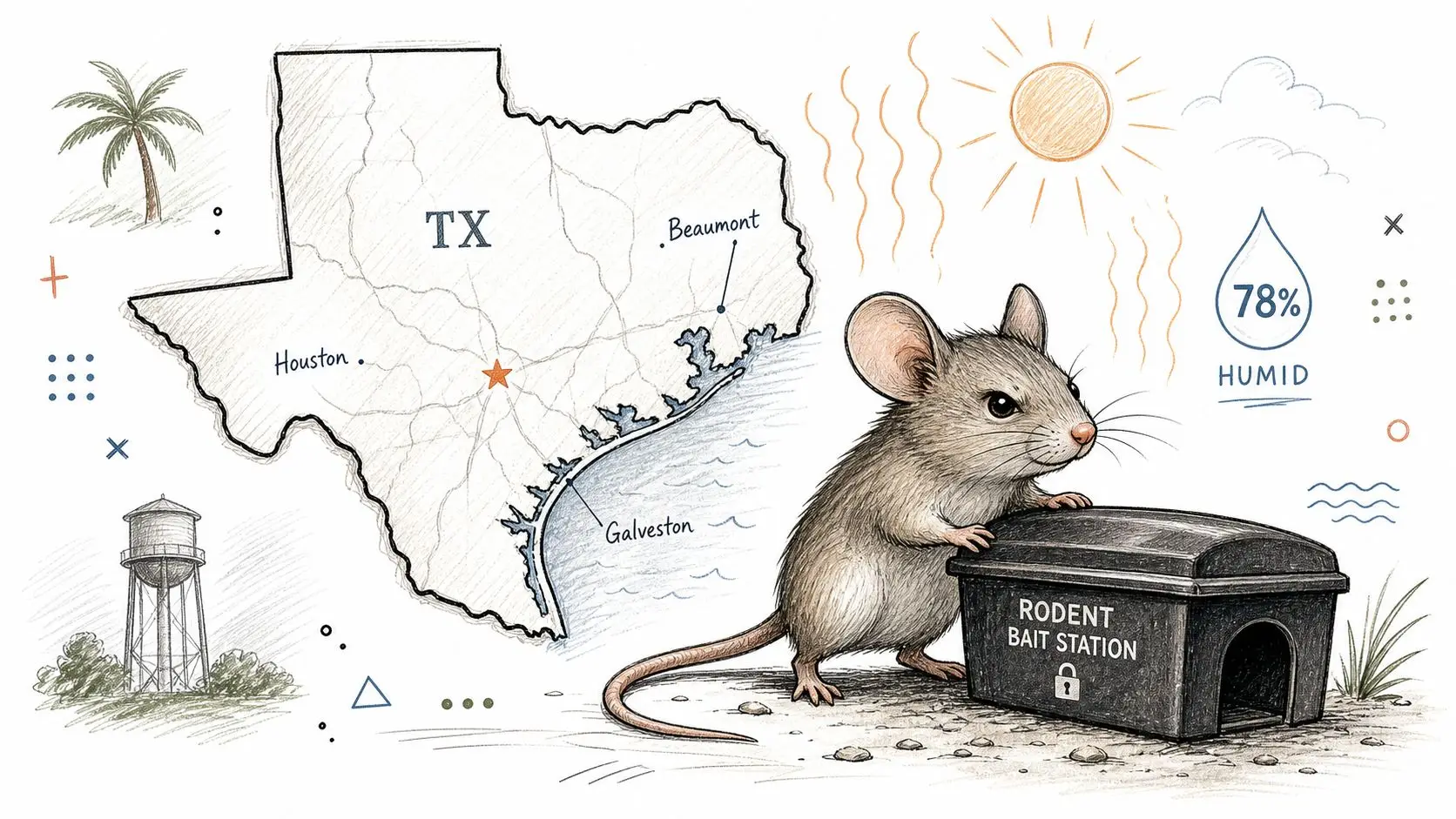
Fall and winter call for nesting bait
When temperatures cool, mice don't just hunt food. They also hunt shelter and nesting material. That's where a lot of online advice misses the mark.
That matters in places like garages, attics, storage rooms, and sheds around Magnolia, Conroe, and the wider North Houston area. In those spaces, mice may ignore a food bait if they already have easy access to dog food, bird seed, or pantry spillover. A short piece of tied dental floss or yarn can outperform food because it taps into a different instinct.
When to try nesting material first
Use nesting bait when:
- Food bait keeps getting ignored in cooler months
- The trap is near insulation, stored fabric, or paper clutter
- You suspect nesting activity, not just quick feeding runs
Keep the material short and fixed to the trigger so the mouse has to tug.
Summer heat changes the equation
Southeast Texas is humid, but many rodent spaces inside a structure are still functionally dry. Attics bake. Garages get hot. Mechanical rooms can have warmth without easy drinking water. In those conditions, moisture can become a lure.
A practical example of this approach is shown here:
The point isn't that water replaces every food bait. It doesn't. The point is that environmental stress changes mouse priorities. In a hot attic or near a dry storage zone, a moisture-based lure can be worth testing when standard food baits stall out.
Match the bait to the room, not the internet
Local judgment matters. In Texas homes, I would think about bait like this:
- Pantry or kitchen edge: Start with peanut butter or a sweet bait tied to what mice are already raiding.
- Garage in cooler months: Try twine, dental floss, or yarn on the trigger.
- Hot attic or dry utility area: Consider whether moisture is the missing attractant when food bait keeps failing.
The best mouse bait in Southeast Texas often changes with the season and the room. Homeowners who adjust for that usually get better results than those who repeat the same bait everywhere.
Best Practices for Trap and Bait Placement
You hear scratching in the wall after midnight, set one trap in the middle of the laundry room, and wake up to the same noise the next night. That happens all the time. In North Houston and Magnolia homes, the problem usually is not the bait. It is placement, competition from other food, or a trap set where mice do not feel safe approaching.
A strong bait only works if the trap sits on an active runway. Mice travel tight to edges, behind storage, under appliances, and along garage walls. They do not like crossing open floor unless they have to.
Set the room up before you bait
Before traps go down, remove what competes with them. Pick up pet food at night, wipe up grease and crumbs, and get dry goods into sealed containers. In real homes, I see mice ignore a perfectly baited trap because spilled bird seed in the garage or dog kibble by the utility room is easier to reach.
Placement decides a lot of the outcome. Set traps flush to the wall, not angled out into the room. Put them where droppings, rub marks, or gnawing already show activity. In Southeast Texas houses, that often means behind the stove, beside the pantry wall, near the water heater closet, or along the inside perimeter of a garage.
Trigger direction matters too. Face the trigger toward the wall so the mouse meets it while following the edge.
A practical setup that works better
Use this order instead of dropping a few traps wherever there is space:
- Remove competing food first. Clean crumbs, secure pantry items, and stop overnight pet feeding.
- Set multiple traps on the same route. One trap may get avoided. A short line of traps improves your odds.
- Keep traps tight to travel edges. Walls, corners, and the protected side of appliances are better than open floor.
- Match placement to the room. In a hot attic, place traps near runs along joists or around HVAC platforms. In a garage during cooler weather, focus near stored boxes, wall edges, and nesting cover.
- Pre-bait if mice are trap-shy. Leave the trap unset for a day with bait attached, then arm it once feeding starts.
That last step helps in older homes where mice have had time to settle in and get cautious.
Safety matters inside occupied homes
In houses with kids or pets, trap access has to be controlled. Do not leave baited snap traps in open play areas, beside pet bowls, or anywhere a child can reach under a sink and grab one.
Safer placement includes:
- Behind large appliances
- Inside secured trap stations
- In attic or garage corners that pets and children cannot access easily
- Along wall void entry points with limited foot traffic
Snap traps are usually the fastest choice for an indoor mouse problem if they are placed correctly. Enclosed traps reduce accidental contact. Glue boards create disposal and humane concerns, and I do not recommend loose rodenticide use indoors where non-target exposure is possible.
Good trapping works better when entry points are being closed at the same time. Homeowners dealing with repeat activity should review this guide to identifying and sealing common rodent entry points while setting their trap plan.
Beyond Bait An Integrated Approach to Rodent Control
Bait catches mice. It doesn't fix why they got in.
That's the mistake that keeps infestations cycling. A homeowner catches one mouse in the pantry and feels relief, but the gap under the garage side door is still open, the dog food is still stored in a torn bag, and clutter in the attic still gives cover. The trap solved the symptom.
What long-term control actually depends on
Lasting rodent control comes from three actions working together:
- Exclusion: Seal gaps around pipes, utility penetrations, door sweeps, and foundation openings.
- Sanitation: Store food in sealed containers, clean crumbs fast, and manage pet food carefully.
- Harborage reduction: Cut back clutter, cardboard buildup, fabric piles, and hidden nesting spots.
If you skip any one of those, trapping gets harder. Mice don't need much space, and they don't need much food. A little shelter and a regular route are enough to keep activity going.
The mindset that gets better results
Think of bait as a tool inside a larger system. Use it to confirm activity, reduce the current problem, and target high-traffic areas. Then remove what brought the mice in and what lets them stay.
A trap is a response. Exclusion is prevention.
That's especially true in Southeast Texas, where garages, attics, utility chases, and storage-heavy spaces give mice plenty of cover. The homeowners who get ahead of rodent problems aren't just the ones using the best mouse bait. They're the ones removing access, food, water, and shelter at the same time.
When to Call a Pro in North Houston and Magnolia
Some mouse problems are small enough for a careful homeowner to handle. Some aren't.
If you're catching mice in one area and activity stops, DIY trapping may be enough. If you keep hearing movement, keep finding droppings in more than one room, or you're worried about traps around kids and pets, it's time to bring in a professional who can inspect the whole structure and deal with entry points, sanitation pressure, and active control at the same time.
Signs the problem has moved past DIY
Call for help when you notice conditions like these:
- Recurring activity: You trap mice, then hear or see new signs again.
- Multiple hot spots: Droppings show up in the pantry, garage, attic access, or laundry room.
- Safety concerns: You need control options that work around children, pets, or sensitive indoor areas.
- Structural suspicion: You know mice are entering somewhere, but you can't identify the route.
For homeowners who want local help, FullScope rodent control in Magnolia is a direct option for inspection, control, and exclusion support.

FullScope Pest Control serves Magnolia, Texas with a dedicated local location at 30225 Tudor Way Suite A, Magnolia, TX 77355, offering comprehensive services for rodents, termites, and other pests. That local presence matters if you're in Magnolia and want service from a team already working in North Houston communities rather than a distant call center.
FullScope also serves nearby Southeast Texas areas including Kingwood, Conroe, Porter, Cleveland, and surrounding communities. If the scratching in the wall has turned into a repeat problem, professional rodent work usually costs less than repeated DIY trial and error, especially once contamination, damaged food, and hidden entry points start piling up.
The best mouse bait is the one that matches the season, the room, and mouse behavior. In many homes, that's peanut butter. In cooler months, nesting material can be the better play. In hot, dry spaces, moisture can matter more than people expect. Pair the right bait with proper placement and entry-point sealing, and your odds improve fast.