1500+ reviews


Yes, rats commonly carry fleas, and the flea species depends on the rat species and its environment rather than the rat alone. But if you remove the rats, what happens to the fleas they leave behind?
That's the gap many homeowners miss. A rat problem and a flea problem need related but different responses, and finding a flea doesn't automatically mean your family faces plague. For homeowners in Magnolia, Texas, and surrounding Southeast Texas communities, the useful questions are where the fleas are living, what exposure has occurred, and how to address both pests safely.
Which Fleas Rats Carry and Why It Matters
Yes, rats can carry several flea species, but not every rat is infested, and not every flea carries disease. A flea's name also doesn't restrict it to a particular animal. Finding fleas on a dog, for example, doesn't establish that they're dog fleas or that rats brought them indoors.
The University of Maryland Extension's flea guidance describes the connection between fleas, their animal hosts, and infested environments. The Oriental rat flea, Xenopsylla cheopis, preferentially feeds on rats and other small mammals, but it can also bite cats, dogs, wildlife, and people. Roof rats can carry northern rat fleas, cat fleas, dog fleas, and sticktight fleas, sometimes in greater numbers than Oriental rat fleas.
Flea species found on rats and their usual hosts
| Flea species | Usual hosts | Link to rats | Risk to people and pets |
|---|---|---|---|
| Oriental rat flea (Xenopsylla cheopis) | Rats, also cats, dogs, wildlife, and humans | Primary rat-associated flea that preferentially feeds on rats | Medically important; principal historical plague vector when infected |
| Northern rat flea | Rats and mice | Associated with rats and other small rodents | Can bite people and pets when animal hosts leave |
| Cat flea | Cats, dogs, and rats | Found on roof rats in many settings | Household pest that bites pets and people |
| Dog flea | Dogs and rats | Found on roof rats in many settings | Bites pets and people |
| Sticktight flea | Poultry, rodents, and wildlife | Found on roof rats in some settings | Bites and attaches firmly to skin |
Treat these associations as inspection clues, not a home identification key. Fleas are small, and distinguishing species generally requires closer examination than watching one jump across a floor.
Say a roof rat nests above a garage where a dog sleeps. Finding fleas on the dog wouldn't establish which animal supported the infestation first. A useful inspection identifies the rodent, checks accessible flea specimens, and examines both nesting sites and the dog's resting area.
Practical rule: Identify the host and the hiding places, not just the insect you happen to see.
Ignoring nests, wall voids, and crawlspaces while removing visible rats can leave a separate flea problem untreated.
Flea-Borne Diseases Rats Can Pass to People
The Black Death provides a stark historical example of the rat-flea connection. Plague reached Mediterranean ports in 1347 and killed roughly one-third of Europe's population between 1347 and 1351, according to Britannica's account of its cause and outbreak. Infected fleas moving between rodents and people helped transmit the bacterium responsible.
Maritime trade illustrates how rodents and their parasites could travel together.

Rats don't produce plague by being present alone. The World Health Organization's plague fact sheet explains that Yersinia pestis circulates mainly among small mammals and their fleas, with human infection possible through infected flea bites, infected tissues, or infectious respiratory particles. The pathogen and a route of exposure must both be present.
Flea-borne diseases linked to rats and their fleas
| Disease | Causative organism | Flea vector | How people get infected |
|---|---|---|---|
| Plague | Yersinia pestis | Oriental rat flea | Infected flea bite, contact with infected tissue, or inhalation of infectious respiratory particles |
| Murine (flea-borne) typhus | Rickettsia typhi | Oriental rat flea | Infected flea feces entering a bite wound, scratch, or mucous membrane |
| Cat-scratch disease | Bartonella henselae | Cat flea | Scratch or bite from an infected cat, with fleas helping spread the organism among cats |
The routes aren't interchangeable. Plague can follow an infected flea's bite; murine typhus involves contaminated flea feces entering the body. Cat-scratch disease adds another animal to the chain, so it shouldn't be interpreted as a disease people routinely catch directly from rat fleas.
The CDC's overview of fleas and disease identifies plague, flea-borne typhus, and cat-scratch disease as flea-associated illnesses. It also notes that plague in the United States is most commonly spread by infected ground-squirrel fleas, rather than implying that every household rat infestation represents that same risk.
These distinctions explain why the health risks of rodent infestations deserve attention without turning a disease list into a diagnosis. Historical severity establishes why prevention matters, not the probability that a particular flea in a Magnolia home is infected.
When a Flea Sighting Signals Real Health Risk
A flea sighting is evidence of a pest problem, not proof of disease transmission. Ordinary bites commonly cause itchy welts. They deserve treatment and prevention, but an otherwise well person who notices a flea doesn't automatically need emergency medical care.
The more useful distinction is between a brief encounter and meaningful exposure. A flea jumping near a doorway presents a different situation from repeated bites in a room containing rodent nests, dead rodents, or heavily infested pet bedding. Shared, confined spaces give rodents, fleas, pets, and people more opportunities to come into contact.
Judge the exposure, not just the bite
The CDC's rodent-control guidance supports reducing rodent food, water, shelter, and access while avoiding direct contact with wild rodents. It also explains why flea-associated exposure deserves attention: infected rodents and their fleas can participate in disease transmission.
Consider these circumstances when deciding how urgently to act:
- Repeated exposure: New bites continue in a room where rodents or fleas are active.
- Contaminated material: Someone handled a carcass, disturbed a nest, or touched flea dirt without protection.
- Pets sharing the space: A dog or cat sleeps beside suspected rodent harborage and carries fleas into occupied rooms.
- Illness after contact: Fever or other systemic symptoms develop following significant flea or rodent exposure.
Flea-borne diseases are uncommon but can be serious. Seek medical advice for fever, headache, rash, or swollen lymph nodes after significant exposure, and tell the clinician about recent flea bites, rodent activity, or carcass handling. A bite's appearance alone can't identify an infection.
Don't try to diagnose a flea-borne illness from a photograph of a welt. Describe the exposure and symptoms to a healthcare professional.
For bites without systemic symptoms, avoid scratching, keep the skin clean, and ask a clinician or pharmacist about suitable itch relief. Scratching can damage the skin and create another problem even when no flea-borne pathogen is involved.
Avoiding direct contact with rodents, nesting material, and flea dirt is more practical than treating every flea sighting as a medical emergency.
Why Fleas Outlast Rats and How to Spot Them
Removing rats doesn't necessarily end the flea infestation. Adult fleas may seek another host after a rodent dies or leaves, while eggs, larvae, and pupae remain in bedding, nests, carpets, cracks, and sheltered locations.
Pet scratching can become the first noticeable sign of that remaining population.
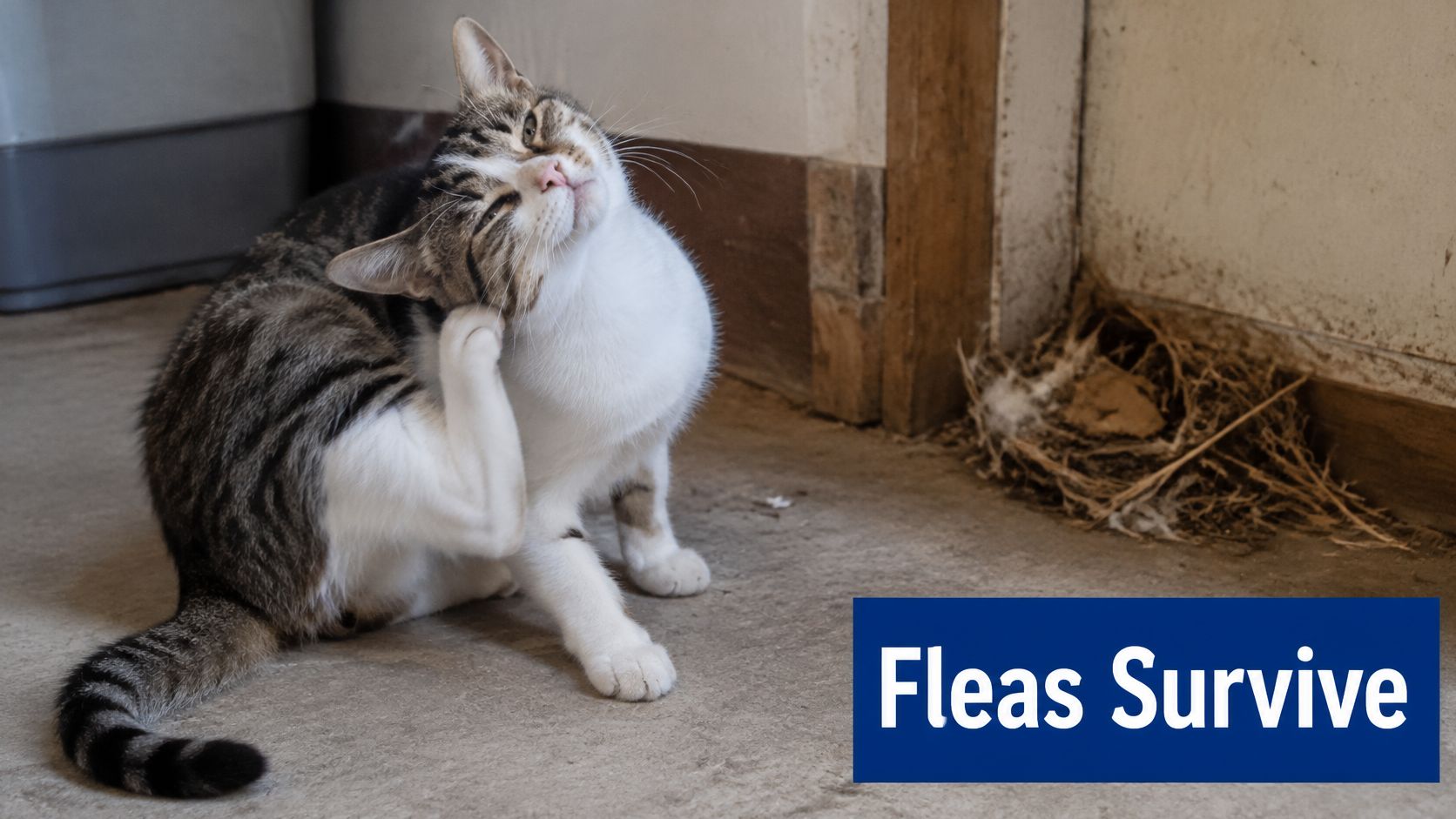
For example, a homeowner might stop hearing attic noises after trapping but continue noticing bites near a sofa where the dog rests. That sequence doesn't establish that trapping failed. The remaining flea life stages and animal resting sites need their own assessment.
Look for a pattern of signs
- Flea dirt: Tiny black specks that turn reddish-brown when moistened on white paper suggest digested blood.
- Bite clusters: Small, itchy marks around ankles and lower legs can fit flea exposure, although bites alone aren't diagnostic.
- Pet discomfort: Scratching, chewing, or hair loss around the neck, tail base, or belly warrants a flea check and veterinary advice.
- Protected resting sites: Examine pet bedding, beneath furniture, along baseboards, and around sleeping areas.
- Rodent evidence: Dark, pellet-shaped droppings and shredded nesting material can indicate rodents; rat droppings may have blunt or pointed ends, so shape alone isn't reliable.
You may miss live fleas during a casual inspection. Combine the evidence rather than treating a single speck or skin mark as confirmation. Our guide to flea infestation signs provides additional clues to compare.
Homes, sheds, garages, crawlspaces, and rental units can all contain overlooked reservoirs. If dampness is also present, Restore Heroes explains how to check ceiling stains for leaks, a separate maintenance issue worth investigating rather than assuming every stain relates to pests.
Use the video as a visual supplement to the physical inspection.
Monitor without disturbing rodent waste
Place a white paper towel near the pet's sleeping spot overnight, then moisten any dark specks found on it. A reddish-brown smear supports the possibility of flea dirt, but this isn't a reliable standalone test or proof that the infestation is gone.
The EPA's household flea-control guidance recommends daily vacuuming during initial control and washing bedding in hot, soapy water. That advice applies to flea-prone household surfaces, not piles of rodent droppings.
There isn't a universal bite-free deadline after rat removal. Keep a record of where new bites occur, and use ongoing evidence to assess progress rather than assuming persistent bites prove rats remain.
How to Clear Rats and Fleas Safely
Address safety before disturbing an infested space. If rodents and fleas are both active, coordinate flea management with rodent removal so the work doesn't shift exposure toward people or pets.
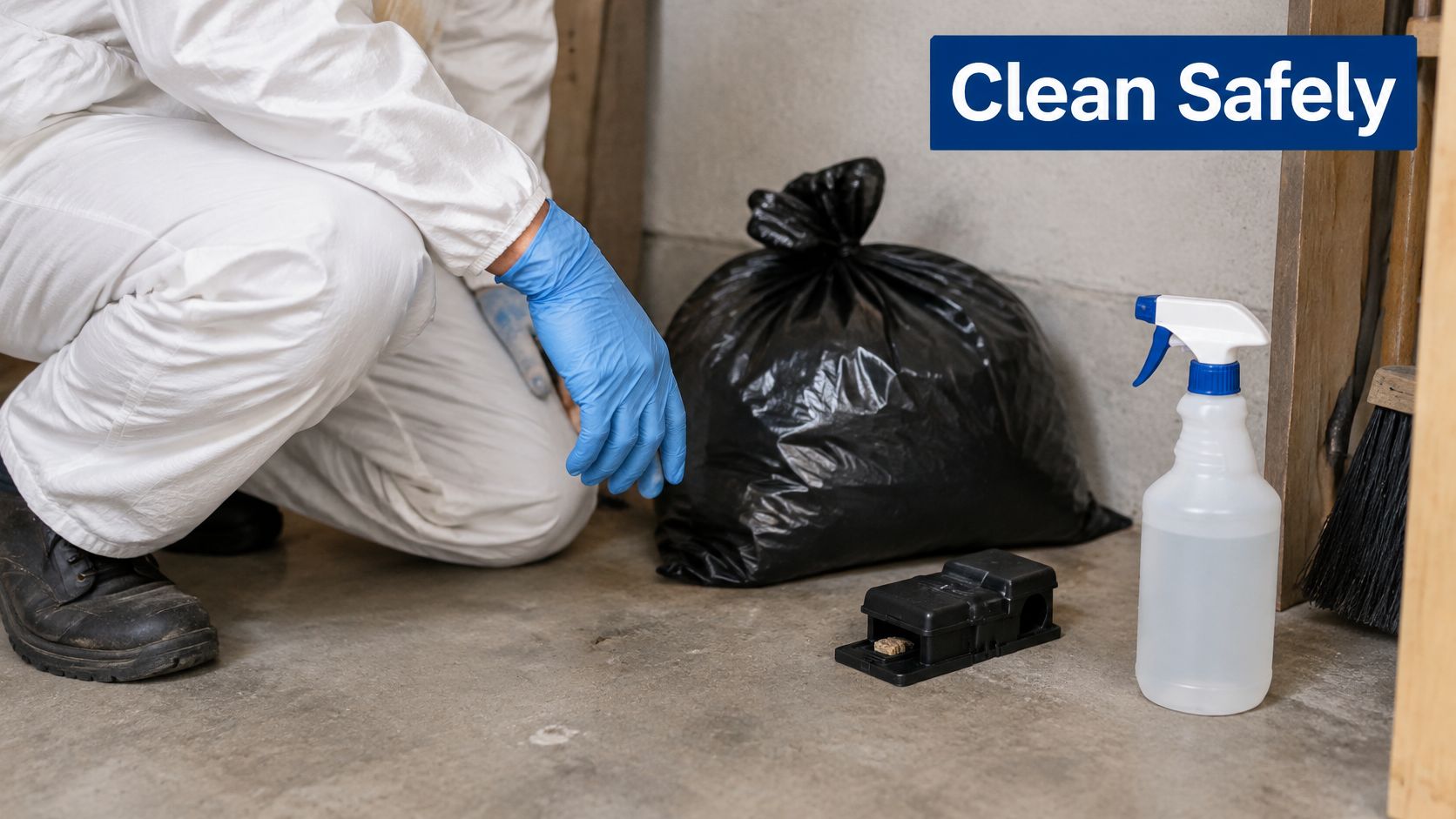
Protective equipment and careful cleanup matter as much as the trap itself.
Follow a coordinated cleanup plan
Protect yourself first. Wear gloves and use an insect repellent appropriate for the activity; never handle rodents, nests, or droppings bare-handed, and don't sweep or vacuum dry rodent waste.
Remove food, water, and shelter. Store pet food in sealed containers, secure rubbish, repair accessible leaks, and reduce clutter that conceals activity.
Handle carcasses carefully. Wet the carcass and surrounding contamination with a suitable disinfectant, allow its labeled contact time, then pick it up with gloves and double-bag it for disposal under local requirements.
Close access points. Inspect door corners, pipe penetrations, vents, and damaged screens; coordinate sealing with trapping so animals aren't left inaccessible inside occupied spaces.
Vacuum flea-prone surfaces. Focus on carpets, upholstery edges, and pet resting sites, then seal collected debris and dispose of it outside; keep this work separate from rodent-waste cleanup.
Wash bedding. Use hot, soapy water where the fabric permits, including washable pet blankets and household bedding exposed to fleas.
Protect pets appropriately. Ask a veterinarian for approved flea control suited to each animal; never assume a dog product is safe for a cat.
Treat and monitor harborage. Use only flea products labeled for the intended site, follow reentry directions, and repeat observations at the label's or pest professional's recommended interval.
Cleaning and disinfecting serve different purposes. Gmaids' discussion of non-toxic home hygiene for Dallas families offers useful household context, but routine cleaning advice doesn't replace rodent-specific precautions or disinfectant directions.
Safety boundary: Vacuum ordinary flea reservoirs, not dry rodent droppings or nesting debris.
For larger infestations, inaccessible carcasses, or recurring activity, our safe and effective rodent-removal guidance explains the broader approach. Our inspection process considers rodent pathways and flea-prone resting sites, rather than treating trapping as the entire solution.
Get a Magnolia Rat and Flea Inspection
Magnolia, Texas, is a distinct community, not a Houston neighborhood. The City of Magnolia's location guide places it in southwestern Montgomery County at FM 1774 and FM 1488, approximately 45 miles northwest of Houston and 25 miles southwest of Conroe, with the greater Magnolia area extending roughly 12 miles in every direction.
That surrounding area matters when arranging an inspection. The incorporated city recorded 2,359 residents in 2020, according to the U.S. Census Bureau's Magnolia profile, but an address described as Magnolia may lie in a surrounding rural subdivision or wooded property outside municipal boundaries.
Prepare for the inspection
FullScope Pest Control serves nearby communities including Conroe, Montgomery, Spring, and Willis. Confirm that your specific Magnolia address is covered when you call, especially for properties beyond the city limits.
Have these details ready:
- Sightings: Dates and locations of rats, fleas, or scratching sounds.
- Affected rooms: Where people have noticed bites.
- Pet history: Recent fleas and current veterinary flea prevention.
- Carcasses: Any dead rodents found and whether they were disturbed.
Our licensed pest control professionals begin rodent and wildlife control with a free inspection and assessment, then recommend solutions based on what they find. We also offer a free rodent control estimate.
Contact FullScope Pest Control to confirm coverage for your Magnolia address and arrange your inspection. Mention both rodent activity and flea signs when scheduling so we can assess the source, affected resting areas, and appropriate next steps together.