1500+ reviews


Yes, you can get sick from mouse droppings, but illness usually requires contact with waste from an infected mouse or inhalation of contaminated dust, not just seeing one pellet. U.S. surveillance recorded 890 laboratory-confirmed hantavirus disease cases from 1993 through 2023, which makes safe cleanup important without making every discovery an emergency.
The familiar advice to grab a broom and clean immediately gets the most important part wrong. Before moving anything, consider where the waste is, whether it's dry, and whether you can remove it without creating dust.
Yes If You Disturb Contaminated Waste
Say you open a pantry and find a dropping beside a food container. You haven't touched it, and nothing has stirred up the surrounding dust. That discovery calls for a careful response, but it doesn't establish that you've been infected.
Now consider pulling a dusty cardboard box out of a closed garage. Beneath it are dried droppings and shredded nesting material. Dragging the box, shaking its contents, or sweeping underneath it creates a different exposure.
Think of flour spilled in a pantry. The flour stays largely in place until someone runs a broom through it and sends a cloud into the air. Contaminated rodent waste can behave similarly, although you won't necessarily see the particles you inhale.
What makes an exposure different
Pathogens can enter through the eyes, nose, mouth, or broken skin after contact with contaminated material. Inhalation is another route when someone disturbs dried urine, droppings, or nesting debris.
A small deposit on a reachable kitchen tile is usually a manageable wet-cleaning job. A dry nest in an enclosed attic, garage, shed, crawl space, or vehicle deserves more caution, particularly where waste has accumulated unnoticed.
The important distinction is the cleanup method, not how quickly you can remove the visible pellet.
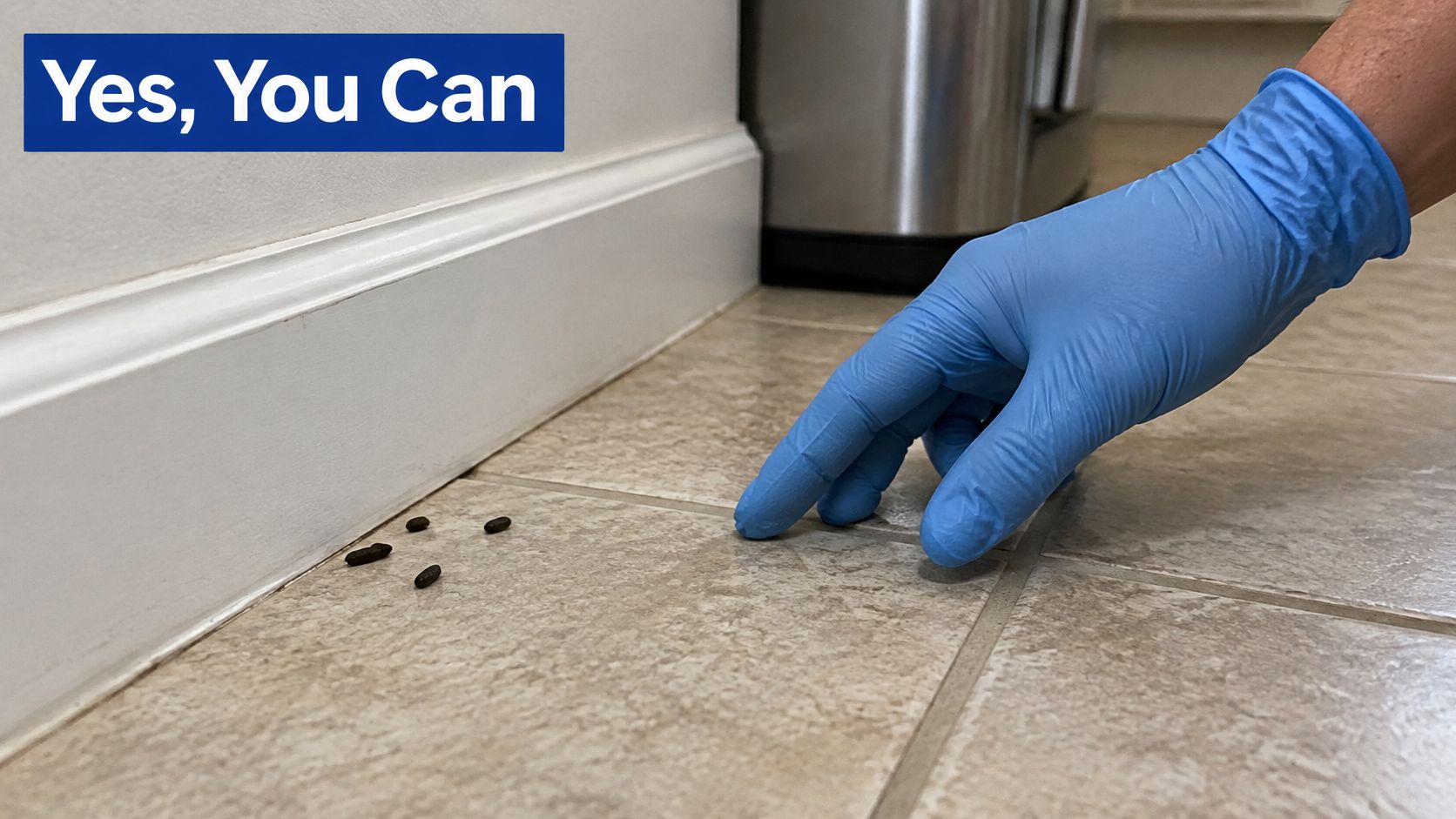
Practical rule: If you were about to dry-sweep, stop before touching the waste.
The useful questions are which illnesses the exposure could cause, which symptoms need medical attention, and whether the scene is suitable for household cleanup. Start by distinguishing the diseases rather than treating every rodent-related illness as the same problem.
Illnesses Mouse Droppings Can Carry
Illnesses linked to mouse droppings
| Illness | Main exposure | What the record shows | Higher-risk people |
|---|---|---|---|
| Hantavirus pulmonary syndrome | Inhaling dust from dried droppings, urine, or nests | The Centers for Disease Control and Prevention recorded 890 U.S. laboratory-confirmed hantavirus disease cases from 1993 through the end of 2023, with 35% resulting in death. These totals cover hantavirus disease overall, not HPS alone. | Anyone after heavy exposure in an enclosed space |
| Lymphocytic choriomeningitis (LCMV) | Contact with fresh waste through the eyes, nose, mouth, or broken skin, or inhaling contaminated dust | Urban antibody studies show 2% to 5%; fewer than 1% of infected people generally die | Pregnant people, infants, and immunocompromised residents |
| Salmonella | Droppings contaminating food, preparation surfaces, hands, or pet bowls | Foodborne gut illness, not lung disease; no reliable home case count | Young children, older adults, and people with weak immune systems |
Different routes lead to different illnesses
Hantavirus is chiefly an inhalation concern during cleanup. Infected rodent urine and nesting debris matter alongside the visible droppings. That's why removing pellets while leaving dusty nest material behind doesn't fully address contamination.
Most reported U.S. hantavirus illnesses have been hantavirus pulmonary syndrome, or HPS. This severe illness can progress from fever and muscle aches to coughing, breathing difficulty, and respiratory failure. National case counts are low compared with everyday respiratory infections, but the consequences justify taking dusty enclosed spaces seriously.
Those national figures aren't your personal probability of becoming ill after finding a dropping. They describe diagnosed disease, not everyone who encountered a mouse or cleaned a cabinet.
LCMV has a different relationship with household mice. The common house mouse is its primary reservoir, and exposure can occur through contact as well as inhaled dust. Many infections are mild or unnoticed, but that doesn't make the infection harmless for every household.
Food contamination needs a separate response
Salmonella is primarily the food-and-mouth problem in this comparison. A mouse crossing a preparation counter, gnawing pantry packaging, or contaminating a pet bowl can leave material that reaches someone's mouth through food or hands.
The expected concern is gastrointestinal illness, not sudden respiratory failure. Don't assume that every stomach illness after finding droppings came from mice, though. Foodborne infections have many possible sources.
For context on a different cause of bacterial gut illness, BacteriaFAQ.com's Understanding E. coli O157:H7 risks is a useful companion resource. E. coli and Salmonella aren't interchangeable diagnoses, even when symptoms overlap.
Household contamination also extends beyond infection. This overview of risks associated with rodent infestations explains why food safety, nesting activity, and property damage belong in the same inspection.
The underlying rule remains specific: infection requires an infected rodent and a genuine route of exposure. You can't determine either by looking at a pellet alone.
Symptoms That Should Send You to a Clinician
Watch the person, not the pellet. After substantial rodent exposure, early illness may resemble an ordinary viral infection, so the exposure history can change how a clinician evaluates otherwise familiar symptoms.
Fever, deep fatigue, and muscle aches deserve attention after cleaning a contaminated attic or moving rodent-infested storage. Hantavirus-associated aches can involve the large muscles of the thighs, hips, back, and shoulders. Headache, dizziness, chills, nausea, vomiting, or diarrhea may also occur.
Recognize the change that needs emergency care
Coughing and shortness of breath after an initial flu-like illness are especially concerning. HPS can worsen rapidly, so don't wait for a routine appointment if breathing becomes difficult.
- Seek emergency evaluation: Trouble breathing, significant chest tightness, or new confusion requires immediate assessment. Call emergency services if the person is severely breathless, faint, or unable to travel safely.
- Call a clinician promptly: Fever, severe muscle aches, headache, or nausea after substantial rodent exposure warrants medical advice.
- Describe the exposure clearly: Say where you were, what you disturbed, whether you swept or vacuumed, and whether the space was enclosed.
You don't need to identify the mouse species before seeking care. A description of the cleanup and when symptoms began is more useful than a photograph you delayed treatment to obtain.
Pregnancy and weakened immunity change the threshold
LCMV can cause fever, headache, chills, muscle aches, and nausea. Some infections involve meningitis or other neurological complications, making a severe headache, stiff neck, or altered awareness particularly important to report.
The CDC's LCMV guidance reports antibody prevalence of 2% to 5% in several urban population studies, generally fewer than 1% deaths among infected people, and approximately 70% mortality among infected immunocompromised people. These describe different groups and measures; antibody prevalence indicates past exposure, not the chance of getting sick from a particular cleanup.
Pregnancy raises a separate concern because congenital infection has been associated with hydrocephalus, chorioretinitis, developmental injury, and fetal or neonatal death. In plain language, infection can harm the developing brain and eyes or lead to pregnancy or newborn loss.
A pregnant resident should contact their clinician after a meaningful exposure, even if symptoms seem mild. An immunocompromised resident should also seek individualized advice rather than relying on the generally mild course seen in healthier people.
Tell the clinician about rodent exposure, not just that you think you have the flu.
Decide Between Wet Cleanup and Professional Help
Match the actual scene to a cleanup method before collecting supplies. Accessibility matters as much as the visible amount: waste on tile is different from waste embedded in insulation above your head.
Which mouse-dropping scenes you can clean
| What you found | Why the risk changes | Safer next move |
|---|---|---|
| One or two droppings on a hard counter or floor | Small amount, easy to soak, little dust if you don't sweep | Wet-clean with gloves, disinfect, and wash hands |
| Dry droppings in a closed garage, attic, or shed | Dried waste can become airborne when disturbed | Ventilate and soak accessible deposits; hire help if the area is widespread |
| Crawl space, insulation, or HVAC and vents | Porous material and duct interiors can't be reliably wiped clean | Don't vacuum; use professional remediation |
| Many rooms, dead mice, or a pregnant or immunocompromised resident | Greater contamination or higher personal stakes makes an improvised cleanup less appropriate | Skip DIY cleanup and arrange professional rodent service |
When household wet cleaning is reasonable
A manageable job has clear boundaries. You can see the affected surface, reach it without crawling through debris, wet the waste thoroughly, and remove it without shaking contaminated objects.
For example, droppings beneath an accessible kitchen cabinet may be suitable for careful cleanup if the surrounding area isn't heavily contaminated. The same discovery becomes a different job if removing the cabinet exposes a nest, urine-soaked material, or extensive waste behind appliances.
The CDC's rodent-cleanup guidance specifically warns against sweeping or vacuuming rodent urine, droppings, and nests. A household vacuum isn't a shortcut around the need for wet disinfection.
Don't use apparent freshness as proof of safety. A soft-looking dropping can still be contaminated, and you shouldn't squeeze or crumble waste to judge its age.
When to leave the material alone
Insulation can hold urine and nesting debris throughout its depth. Wetting the visible surface doesn't turn it into a cleanable countertop, and pulling it out may release dust from hidden layers.
Ductwork also calls for a different assessment. Don't insert a vacuum hose through a register or spray disinfectant into a ventilation system. A qualified contractor should determine what is contaminated, how to isolate it, and whether material needs removal or replacement.
Signs that favor professional help include:
- Broad contamination: Droppings appear across storage areas or in several rooms rather than at a single accessible spot.
- Hidden or difficult access: The work involves a cramped crawl space, attic insulation, wall cavities, or vents.
- Evidence of ongoing activity: Dead mice, strong urine odor, nests, or recurring deposits suggest more than an isolated cleanup.
- Personal limitations: Pregnancy, weakened immunity, older age, breathing limitations, or inability to use protective equipment safely make delegation more sensible.
A respirator doesn't convert a large infestation into a suitable homeowner project. Safe access, containment, waste handling, and removal of contaminated materials also matter.
The guide to when professional wildlife and rodent control is appropriate can help you prepare questions about the work. Ask whether the provider handles inspection and trapping only, or also contaminated-material removal and sanitation.
Before booking: Confirm the cleanup scope and whether your exact Magnolia street address is covered. A Houston-area service description doesn't automatically establish either.
The practical choice is between a contained wet cleanup and leaving extensive dry contamination undisturbed for professional assessment. If fever, severe aches, headache, nausea, or breathing problems follow exposure, medical care takes priority over finishing the job.
How to Wet Clean Droppings Safely
Use this procedure only for a small amount of waste on a hard, reachable surface. Stop if inspection reveals a nest, contaminated insulation, widespread deposits, or an area you can't access without disturbing debris.
The goal is to wet the contamination before lifting it, rather than brushing it toward a dustpan.
Prepare the space and supplies
Keep people and pets away. Open exterior doors or windows when feasible, without walking through contaminated material. Don't aim a fan across the droppings.
Put on protective equipment. Wear disposable rubber, latex, vinyl, or nitrile gloves and clothing that covers your arms. For work that could create dust, use eye protection and a properly fitted respirator rather than a cloth mask, or leave the job to someone equipped for it.
Set out everything before starting. Gather an EPA-registered disinfectant suitable for the surface, paper towels, waste bags, and soap for handwashing. A ready-to-use product avoids guessing a bleach dilution; if you use household bleach, follow its directions for the intended disinfection task and never mix it with other cleaners.
Wet, remove, and disinfect
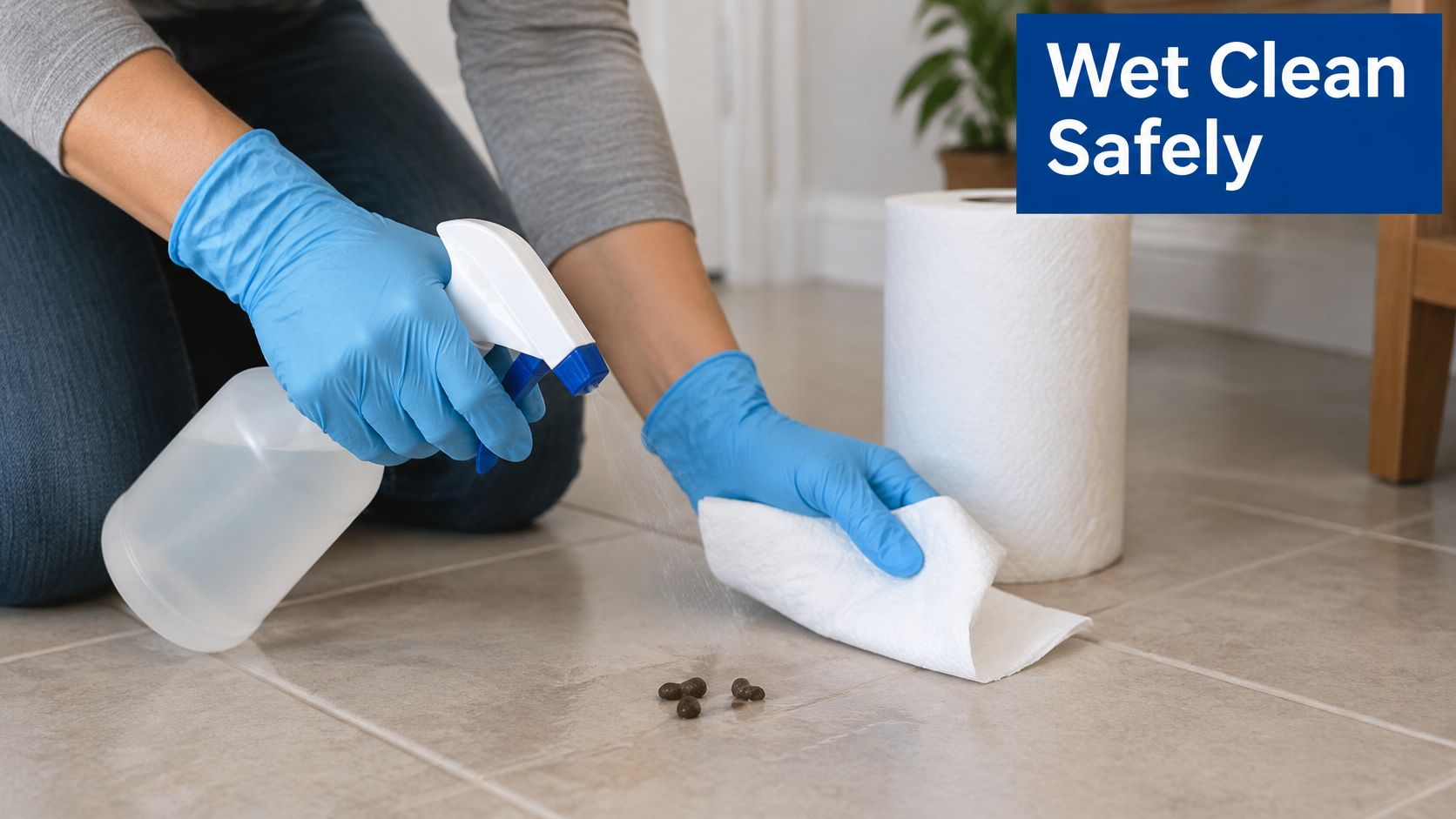
Saturate the waste gently. Wet droppings, nearby urine contamination, and any small amount of accessible nesting material thoroughly. Never sweep, vacuum, blow, or dry-brush the debris, and avoid a forceful spray that scatters it.
Allow the disinfectant to work. The CDC hantavirus prevention brochure specifies leaving material visibly wet for 5 minutes, or following the disinfectant label's contact time. Don't spray and immediately wipe it dry.
Lift the waste with paper towels. Place the used towels and wet debris into a bag without squeezing or shaking them. Seal the bag and place it in a covered trash container.
Disinfect surrounding hard surfaces. Treat the affected floor, counter, cabinet surface, or baseboard using a product compatible with the material. Follow any food-contact rinsing directions before preparing food on a treated counter.
This demonstration provides a visual companion to the wet-cleaning method.
Finish without carrying contamination elsewhere
Handle nearby belongings separately. Discard food that may have been soiled rather than wiping the packaging and assuming the contents are safe. Wash contaminated washable fabrics with hot water and detergent when the care label permits, without shaking them first.
Clean reusable tools. Disinfect compatible mop equipment after use. Don't carry a contaminated mop or cleaning cloth into another room.
Remove gloves carefully and wash your hands. Avoid touching the contaminated glove exterior with bare skin. Wash with soap and water after disposal, even if the gloves appear intact.
If ventilation, disinfectant, or suitable protection is missing, pause. An unfinished wet-cleaning job is preferable to improvising with a broom.
Keeping Mice Out of Magnolia Homes
Cleaning removes existing contamination. Exclusion, which means blocking rodent entry, keeps mice from replacing it.
Mice can use gaps about the width of a pencil. Food, water, and sheltered nesting spots give them reasons to remain, so a lasting response addresses the building and household storage habits together.
Inspect the building, not just the pantry
Walk the exterior and look closely at garage-door corners, utility penetrations, attic vents, and the joint where siding meets the slab. Check damaged screens and openings around plumbing rather than assuming a closed door means a sealed house.
An exterior inspection can reveal gaps that are easy to overlook from indoors.
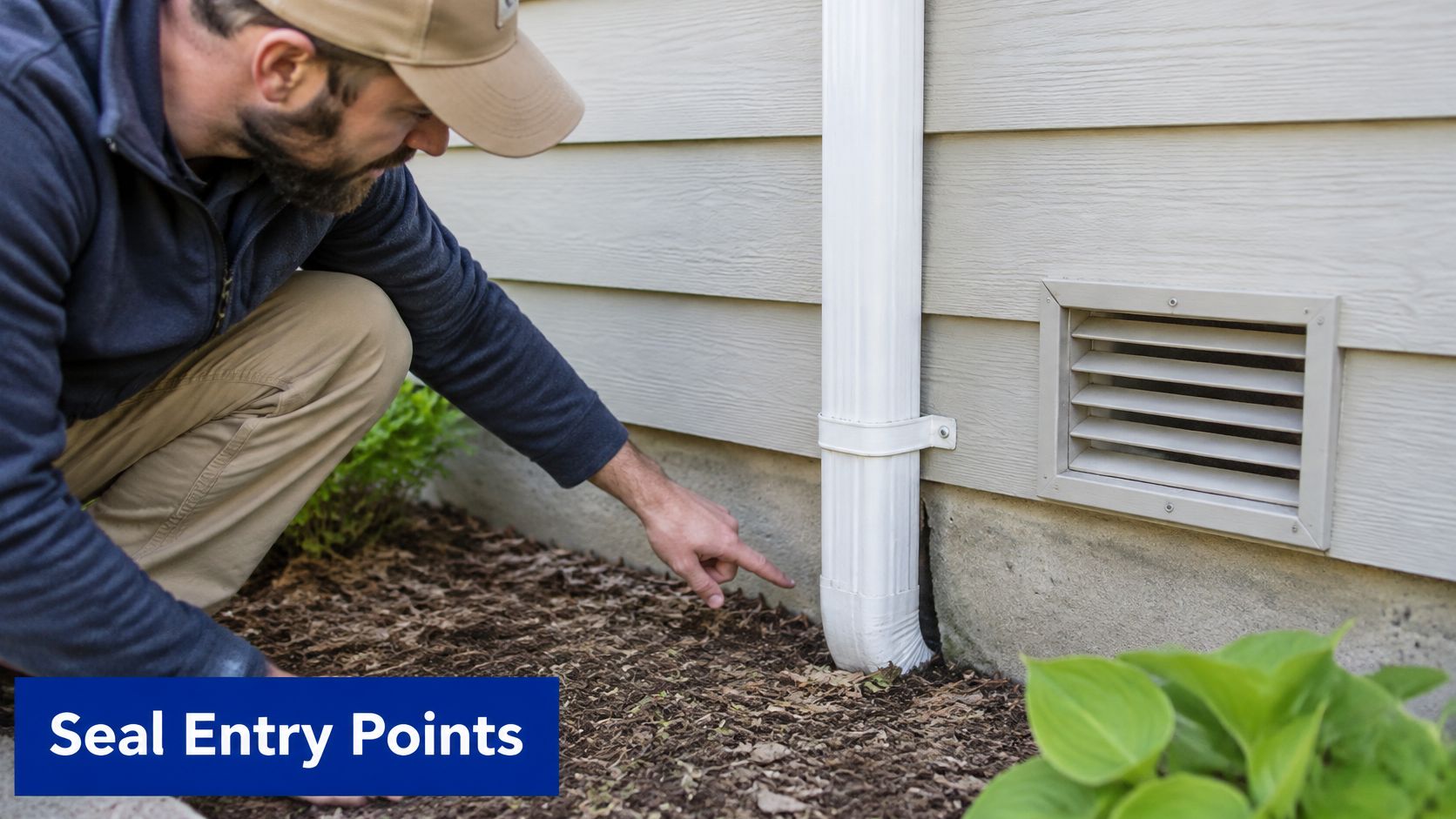
Use metal mesh, flashing, and compatible sealants rather than relying on expanding foam alone. Preserve drainage and ventilation openings: brick weep holes need purpose-made exclusion products, not indiscriminate plugging.
This guide to identifying and sealing common rodent entry points provides a useful inspection checklist. Coordinate sealing with trapping when mice are already inside so you don't confine them within the structure.
- Secure food: Store pantry staples, pet food, and bird seed in durable, tightly closed containers.
- Remove water sources: Repair leaks beneath sinks and around utility equipment.
- Reduce shelter: Clear garage clutter and replace damaged cardboard storage with cleanable containers.
- Manage outdoor attractants: Keep trash contained and avoid spilled seed or pet food near the house.
Check Magnolia coverage by address
According to the City of Magnolia, Magnolia sits at the junction of FM 1774 and FM 1488, approximately 45 miles northwest of Houston and 25 miles southwest of Conroe. The city also describes the greater Magnolia area as extending about 12 miles in all directions, with an estimated population above 138,000.
That broader area includes homes beyond the incorporated city boundary. A Magnolia mailing address, subdivision name, or unincorporated Montgomery County location may require an address-specific coverage check.
FullScope Pest Control is one option for rodent inspection, exclusion, sanitation guidance, and trapping at addresses it serves. Its service locations in Conroe, Kingwood, Porter, and Cleveland are distinct from Magnolia; their presence doesn't automatically confirm coverage at a particular Magnolia property.
When contacting any provider, give your complete address and describe whether you need rodent control, contaminated-material cleanup, or both. Ask who handles insulation or HVAC contamination if those materials are involved.
A one-time cleanup without closing entry points leaves the underlying problem unresolved. The lasting fix is to remove the contamination safely, address active mice, and deny the next mouse a way inside.