1500+ reviews

You hear scratching after the lights go out, find dark pellets behind the toaster, or notice a chewed food package in the pantry. The animal may never appear in the open, but the evidence is already telling you that your home offers food, shelter, or a route inside. When you're dealing with rats or mice in the house, the lasting solution isn't killing the animal you happen to find. It's identifying how it entered, what keeps it there, and what will stop the next one.
Rodents have lived alongside people for roughly 15,000 years, using human settlements for dependable food and shelter (archaeological and genetic research on house-mouse commensal behavior). That relationship still shapes indoor infestations today. A clean kitchen can have a gap around a pipe, a damaged vent, an open crawl-space transition, or a food source in a garage that makes the building attractive.
Identifying the Intruder by Physical Evidence
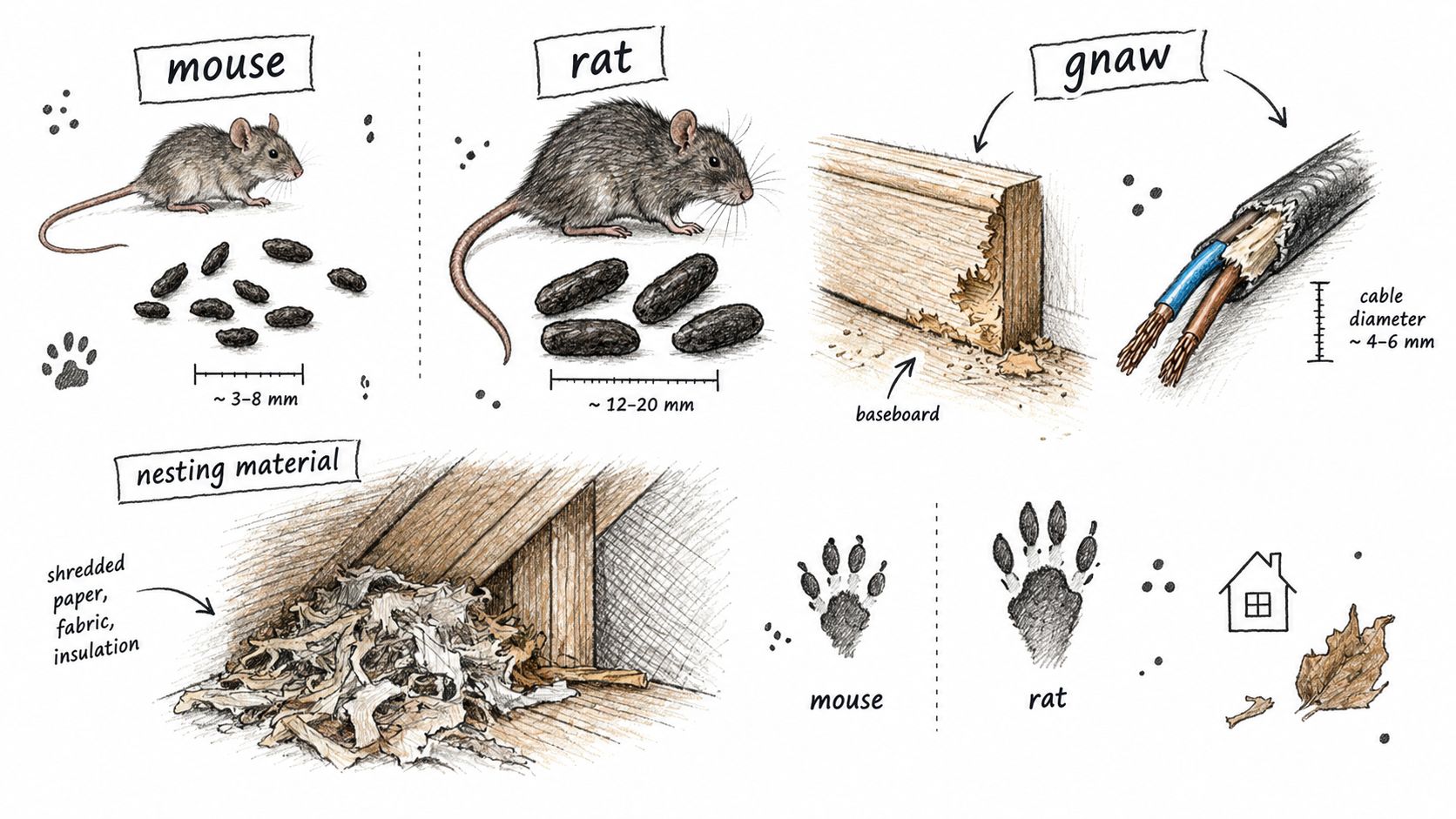
You don't need to catch sight of a rodent to make a useful first assessment. Start with the physical evidence, then combine it with location and sound. Droppings near kitchen cabinets and behind appliances commonly point toward mouse activity, while larger droppings in attics, crawl spaces, or along foundation edges raise concern about rats.
House-mouse droppings are smaller and often appear in greater numbers around food storage, baseboards, and wall voids. Roof rats tend to leave evidence higher in the structure, especially around attics, roof gaps, and upper crawl spaces. Norway rats generally create more ground-level activity, including signs near foundations, lower wall penetrations, and crawl spaces. These patterns aren't absolute, but they help determine where to inspect first.
What the marks and nesting materials reveal
Gnawing is another important clue. Mice may chew food packaging, cardboard, trim, and wiring in concealed areas. Rats can leave heavier marks on wood, plastic, insulation, and electrical components. Fresh edges suggest recent activity, while old, dusty marks may reflect a previous infestation. Check the backs of cabinets, utility penetrations, garage storage, attic wiring, and the edges of crawl-space entrances.
Nesting material usually consists of shredded paper, fabric, insulation, or other soft material. A nest in a wall void or behind an appliance often indicates mice. A nest in an attic or upper crawl space fits roof-rat behavior more closely, while low exterior burrows or disturbed soil near a foundation warrant inspection for Norway rats.
| Evidence | More consistent with mice | More consistent with rats |
|---|---|---|
| Droppings | Smaller pellets near food and appliances | Larger pellets in attic, crawl-space, or foundation areas |
| Gnawing | Packaging, trim, and concealed wiring | Heavier damage to wood, wiring, plastic, and structural materials |
| Nesting | Wall voids, cabinets, and quiet interior spaces | Attics, upper voids, crawl spaces, or foundation-adjacent areas |
| Sound | Light, quick movement in walls | Heavier scratching or movement near ceilings, roofs, or lower levels |
Listen to the timing and weight of the sound, but don't treat noise alone as proof. Light, rapid movement in a wall may fit mice. Heavier scratching in an attic or ceiling may suggest rats, although insulation, ducts, and building movement can distort what you hear. For a closer visual reference, compare your findings with this guide to identifying rodent droppings.
Health Hazards and Structural Damage Risks
Rodents create two problems in the same visit. They contaminate the areas they travel through, and they damage the house while they settle in. If activity continues for even a short time, droppings, urine, nesting debris, and gnaw marks often spread beyond the spot where the animal was first noticed.
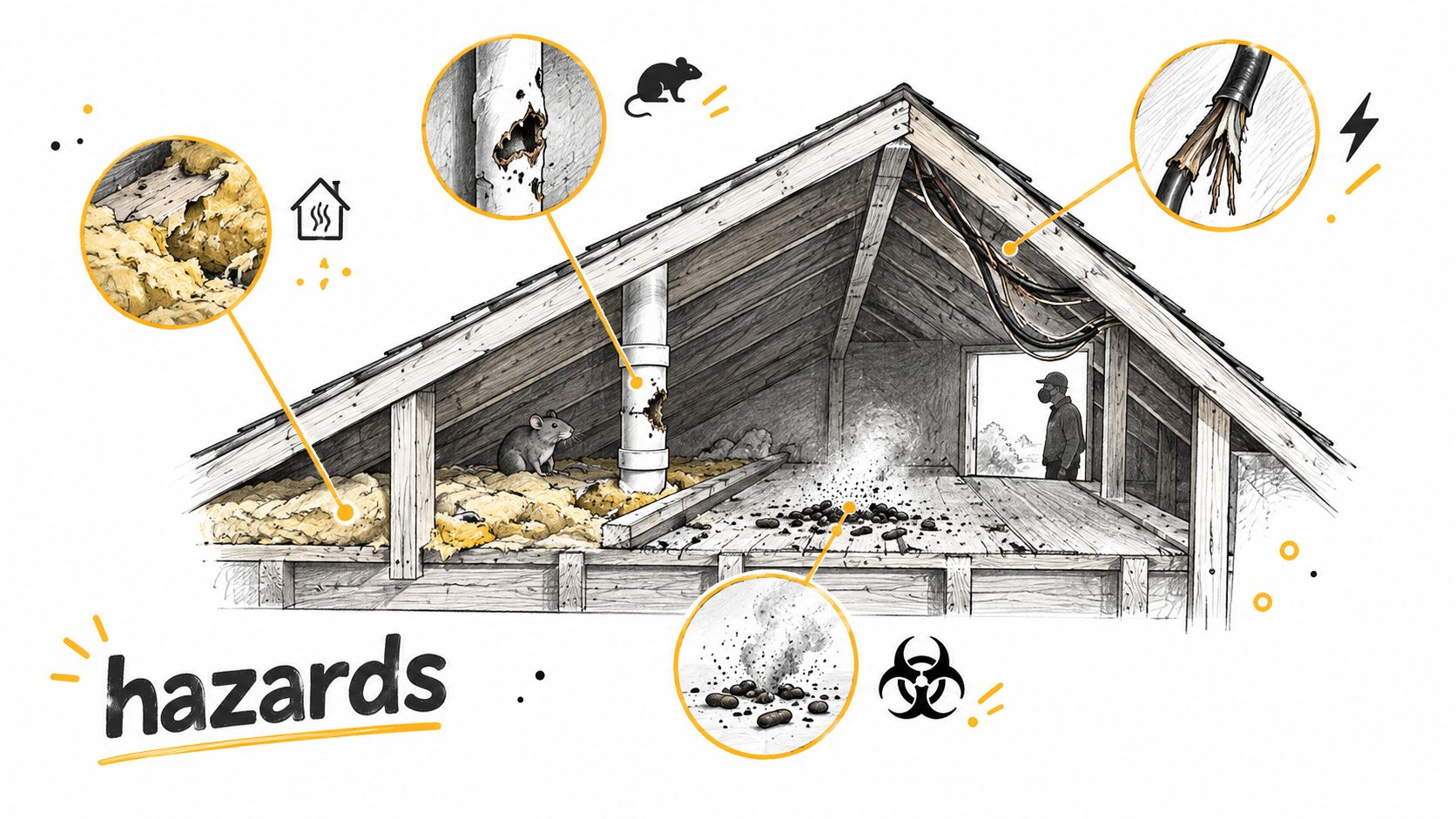
Health exposure usually starts with the environment the rodents leave behind. CDC guidance identifies several exposure routes including droppings, urine, saliva, bites, contaminated materials, and contaminated food. The bigger mistake I see in homes is disturbed waste. Once someone starts sweeping dry droppings, vacuuming nest debris, or dragging storage bins through a contaminated attic, particles can move into the air and into nearby rooms.
Why hidden contamination matters
A nest above insulation or inside a wall void can sit there for a long time without obvious signs indoors. Then a service technician enters the attic, an HVAC system pulls air across the space, or a homeowner starts cleaning too fast, and the contamination is no longer contained. In houses with children, pets, or anyone with asthma, hidden waste in an attic, crawl space, or mechanical pathway deserves more attention than a few pellets found in the garage.
Food areas need the same level of caution. Throw out packages with gnaw marks or visible contamination. Keep children and pets out of affected rooms until cleanup is handled correctly. If there is a return-air grille nearby, or duct runs through the same space, treat that as a building issue, not just a pest issue. This guide to healthier indoor air is a useful reference when contamination may have reached ducts or other air-moving parts of the house.
The property damage is often concealed
Rodents chew constantly because their teeth keep growing. In real homes, that means damage can show up on trim, stored items, pipe insulation, plastic components, and electrical wiring hidden behind finished surfaces. Fire risk is one concern. Loss of insulation performance is another, especially when the material also holds urine and nesting debris.
Inspect for:
- Electrical damage: Look for tooth marks, exposed conductors, and disturbed wiring in attics, garages, and crawl spaces. Leave suspect wiring alone until an electrician checks it.
- Pipe and seal damage: Check flexible lines, PVC-related parts, insulation, and sealants around utility penetrations.
- Insulation contamination: Heavy nesting and urine usually mean the material cannot be handled with surface cleaning alone.
- Food and storage exposure: One chewed package often means wider travel through cabinets, storage areas, or wall voids.
Practical rule: Fewer visible droppings do not mean the house is safe. Safety comes from closing entry points, removing contaminated material properly, and correcting the moisture, clutter, and food conditions that kept the infestation active.
For a broader look at building and sanitation consequences, review this rodent infestation risk guide.
Why Poison Is Rarely the Best First Response
Poison feels efficient because it appears to remove the need to locate every rodent. In a house, however, rodenticide often treats the animal without correcting the building condition that allowed it inside. Another animal can use the same gap, food source, or sheltered void after the bait has done its job.
The safety issue is serious. EPA labeling warns that rodenticides can harm children and pets and calls for placement that prevents access by non-target animals, including use of tamper-resistant bait stations where appropriate (EPA rodenticide label). The National Pesticide Information Center's rodenticide safety information also explains that these products can be toxic if eaten and may present risks through inhalation or skin contact.
Wildlife creates another concern, especially around homes near wooded areas. A poisoned rodent can move outside or become available to an animal that wasn't the intended target. Even when a bait program is professionally managed, placement, labeling, carcass retrieval, and follow-up matter.
The wall-void problem
A poisoned rodent may die somewhere you can't reach, such as behind a cabinet, inside a wall, beneath insulation, or near a duct. The resulting odor can become a separate household problem, and locating the carcass may require opening finished surfaces. Poison also doesn't tell you whether activity has stopped. Without monitoring, you may mistake silence for resolution.
Trapping has a different trade-off. It requires correct placement, regular inspection, and attention to children and pets, but it provides a more direct way to verify removal. Exclusion then prevents replacement animals from entering. In a small, clearly understood infestation, that combination is usually more informative and controllable than scattering bait.
Use rodenticide only when the product label, placement, household conditions, and follow-up plan support it. Stronger poison isn't a substitute for sealing, sanitation, and monitoring. If children, pets, or wildlife may reach the area, ask a licensed professional to design the control method rather than treating bait as the default first move.
Executing a Four-Step Exclusion Strategy
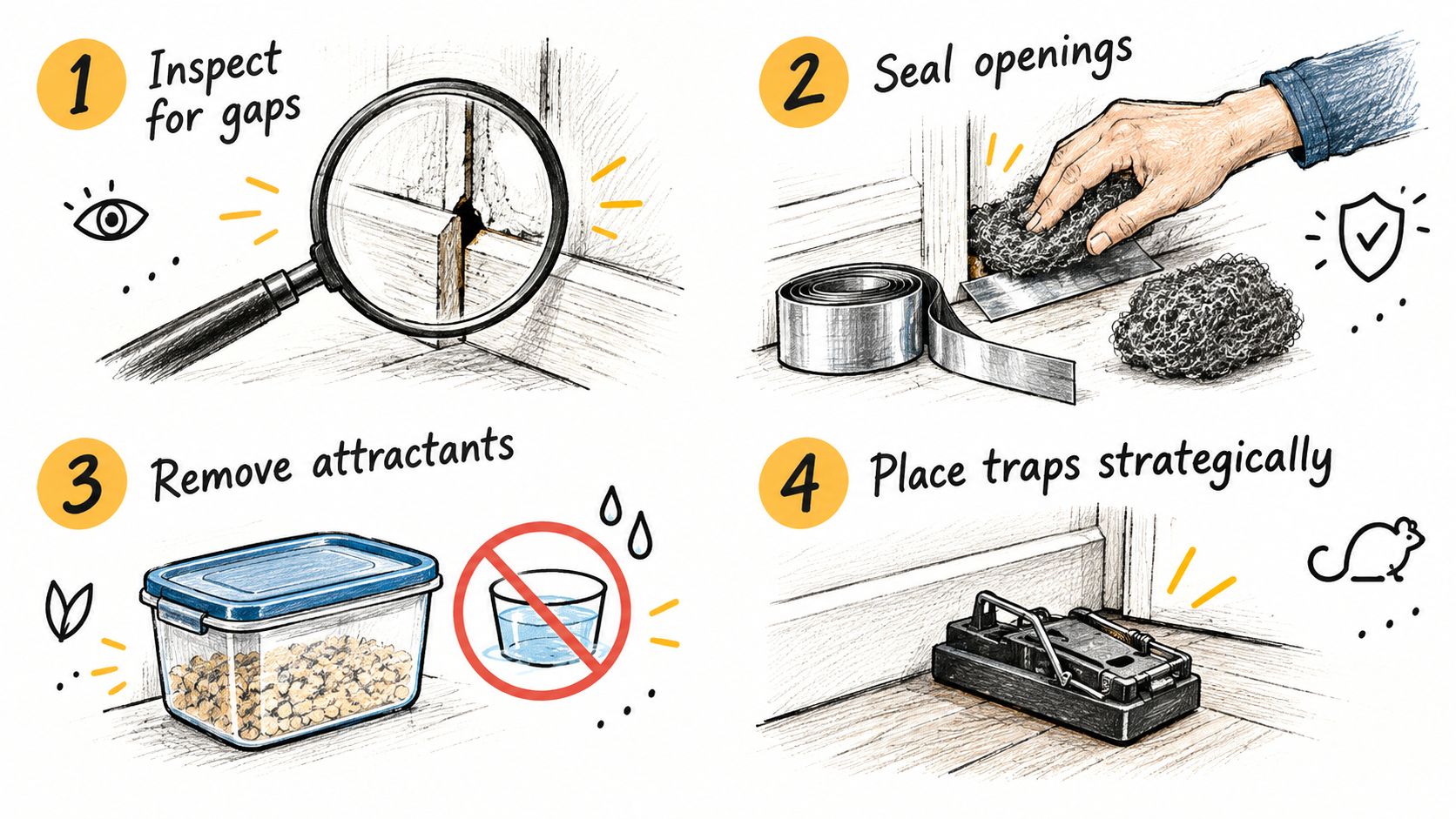
Effective rodent management follows a sequence. The EPA integrated pest management guidance links inspection, exclusion, food and water control, and trapping. Each step supports the next, so skipping the structural work usually produces a temporary result.
Start with the route, not the trap
Inspect first. Walk the exterior during daylight and check foundation interfaces, door thresholds, vents, roofline gaps, utility lines, pipe penetrations, attic transitions, and crawl-space screens. Indoors, follow droppings and rub marks toward cabinets, wall voids, appliances, and storage areas. A flashlight, inspection mirror, and camera can reveal gaps that aren't obvious from standing height.
Seal the structure. Close openings inside and outside the building. Small temporary gaps may be packed with steel wool, but durable repairs should use gnaw-resistant materials such as metal flashing, hardware cloth, mortar, or an appropriate repair compound. Install tight-fitting door sweeps, repair damaged screens, and seal around utility penetrations without blocking required ventilation.
For a location-by-location walkthrough, use this rodent entry-point sealing guide. Don't seal an active interior route blindly if doing so could trap a rodent in a wall void. Coordinate closure with removal and monitoring.
Remove the reasons to stay
Control food and water. Store pantry goods and pet food in rodent-resistant containers, clean crumbs and spills promptly, secure trash, repair leaks, and remove accessible food from garages and sheds. Clear clutter around walls so you can see fresh evidence and eliminate protected nesting sites.
Moisture can maintain the shelter conditions rodents prefer, particularly around crawl spaces and poorly ventilated areas. If damp soil, standing water, or wet insulation is part of the picture, consult guidance on moisture control for East Texas homes as part of the broader repair plan.
Trap the remaining animals. Place appropriate traps along active travel routes, near walls, and close to evidence, while keeping them inaccessible to children and pets. Check them consistently and record captures, fresh droppings, new gnawing, and sounds. Monitoring tells you whether the work is succeeding, unlike a single bait placement that offers little information about the remaining population.
The objective isn't an empty trap. It's a sealed, unattractive structure with no continuing evidence of activity.
Safe Cleanup Protocols for Contaminated Areas
Cleanup begins only after you've reduced the active rodent problem and can work without repeatedly disturbing fresh contamination. Treat droppings, urine, nesting material, and contaminated insulation as potentially hazardous. The CDC cleanup recommendations are clear about avoiding dry methods that can put contaminated dust into the air.
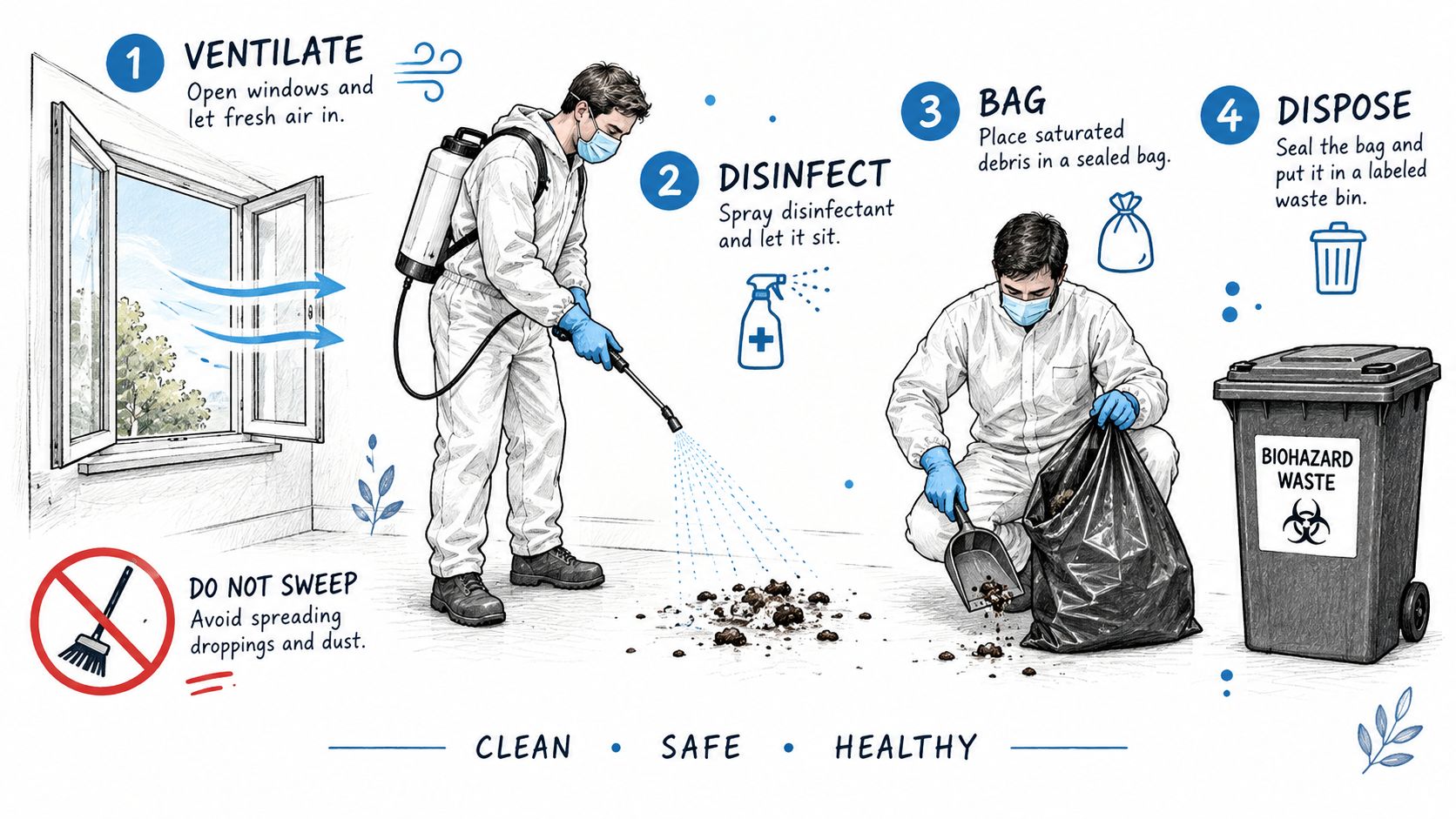
Keep contaminated dust down
Ventilate the space before cleaning when conditions allow, and keep children and pets out. Don't sweep, brush, or vacuum dry droppings, nesting material, or urine residue. Those actions can aerosolize particles and spread them beyond the original area.
Use protective equipment suitable for the task and follow current public-health guidance. Saturate contaminated material with an appropriate disinfectant, allow the product's required contact time, then collect the waste carefully. Avoid spraying in a way that creates additional airborne mist, especially in enclosed spaces.
Remove waste without spreading it
After the disinfectant has worked, lift the material rather than scraping it aggressively. Place waste into appropriate sealed bags or containers, clean the surrounding surface with disinfectant, and wash hands thoroughly after removing protective equipment. Don't handle contaminated food packaging as though it were ordinary trash. Discard items that have been gnawed or visibly contaminated.
A kitchen cleanup may also require attention to shelves, cabinet corners, appliance gaps, and nearby storage. For ordinary food-area organization after the hazardous material has been addressed, this Sweet Home Cleaning Service kitchen guide offers a useful checklist, but it isn't a substitute for rodent-contamination procedures.
Never make dry rodent waste airborne in the name of cleaning faster.
Heavy infestations, large attic nests, contaminated HVAC pathways, and inaccessible wall or crawl-space areas justify professional assessment. Surface wiping won't solve contaminated insulation, and deodorizing won't remove the source. A complete response may require controlled removal, replacement of affected material, and verification that new contamination isn't appearing.
Securing Professional Rodent Services in Magnolia
Minor activity may respond to careful sanitation, targeted trapping, and straightforward repairs. Call a licensed pest professional when signs continue after sealing, when you hear activity in inaccessible spaces, when wiring or insulation is damaged, or when droppings and nests are extensive. Commercial inspection tools and exclusion materials can reveal routes that a quick homeowner walkthrough misses.
Magnolia is a distinct municipality in southwestern Montgomery County, Texas, at the junction of Farm-to-Market roads 1774 and 1488. The city sits approximately 45 miles northwest of Houston and 25 miles southwest of Conroe, with Interstate 45 and U.S. 290 approximately 20 miles away (City of Magnolia location information). Those positions make Magnolia a practical service-area point between the Houston region and the Conroe corridor.
Clarifying the Magnolia service area
The incorporated city limits cover 2.87 square miles, with 2,359 residents recorded in the 2020 census and a density of 821.4 residents per square mile (U.S. Census Bureau Magnolia profile). That compact municipal footprint isn't the same as the broader Magnolia market. The City of Magnolia describes the greater area as extending approximately 12 miles in all directions and estimates its population at more than 138,000 using its own broader-area description (City of Magnolia location information). A technician should therefore confirm whether the property is inside the city or in a surrounding unincorporated or suburban community.
Magnolia belongs to Montgomery County's administrative network. The county lists a Magnolia Branch Office at 19100 Unity Park Drive, Magnolia, Texas 77355, and identifies the same address for Precinct 2 offices (Montgomery County Tax Office information). Nearby coverage may include Conroe, Montgomery, Spring, Willis, New Caney, Porter, and other Southeast Texas communities, but service boundaries should be confirmed before scheduling.
FullScope Pest Control is one local option for an inspection-led rodent program in Magnolia and nearby communities. Its rodent services address inspection, exclusion, sanitation guidance, and trapping, with treatment plans structured around the property rather than poison alone. Ask for the inspection findings, the proposed entry-point repairs, the removal method, and the monitoring plan before approving work.
If you're hearing scratching or finding droppings in a Magnolia-area home, schedule an inspection before sealing random gaps or placing poison. Document where you found evidence, keep children and pets away from contaminated areas, and ask the technician to identify the entry route, food or water attractant, removal method, and follow-up checks. A prompt, exclusion-focused plan protects both the household and the structure.