1500+ reviews

You're making coffee on a cool January morning when you notice a thin line of ants moving toward a honey jar. The kitchen is clean, the doors are closed, and outdoor activity seems to have stopped. So why are ants appearing inside your home now?
For homeowners in Magnolia, Kingwood, Conroe, and nearby Southeast Texas communities, winter doesn't always bring a complete shutdown. Mild conditions can allow intermittent foraging, while indoor heating creates warm pockets in walls, foundations, and utility spaces. Moisture from a small plumbing leak, condensation, or a damp basement can make those areas even more attractive.

The important point is that ants in house in winter often deserve diagnosis, not just a quick spray. A visible trail may come from a colony already established near the structure or inside a heated void. Seasonal pest behavior, moisture, food access, and entry gaps all help explain what you're seeing. Guidance on overwintering pests and seasonal activity provides useful context, but winter ant control requires attention to the home itself.
Introduction Why Winter Ants Show Up Indoors
Ants don't disappear when temperatures fall. Outdoor colonies often become less active, but ants can remain active in warm wall voids, basements, beneath heated slabs, and other protected microclimates. A heated home gives them a stable refuge from cold rain and changing outdoor conditions.
A Stanford study of invasive Argentine ants in Northern California found that household invasions were most likely during cold, wet conditions, with a major winter peak during rainstorms. The study also reported a smaller secondary peak during hot, dry periods, showing that weather can influence indoor pressure independently of sanitation or pesticide use. You can review the summarized findings in this winter ant activity guidance.
Practical rule: A few ants during a cold spell can be the visible edge of a hidden problem, not proof that the colony just wandered in from outdoors.
That distinction matters in Magnolia and the wider north Houston market. Indoor heating can create a steady temperature inside a wall or around a water heater even when conditions outside are unpleasant. In Southeast Texas, warmer winter days may also restart foraging after a brief cold snap, so activity can appear and disappear rather than follow a clean seasonal pattern.
The right response starts calmly. Note where the ants appear, whether they follow the same route, and whether the trail is close to water, heat, food, or a crack around a pipe. Then address conditions that support them before reaching for a surface repellent.
How Ants Survive Winter Inside Heated Homes
Outdoor ants often respond to cold by entering diapause, a low-energy state in which metabolism slows and the colony retreats deeper into its nest. In temperate regions, this period commonly lasts roughly four to six months, often from about October through March, according to cold-weather ant biology guidance.
That doesn't mean every ant becomes completely inactive. It means the colony conserves energy and limits movement when the environment becomes less reliable. A home can interrupt that pattern by supplying warmth, shelter, moisture, and accessible food.
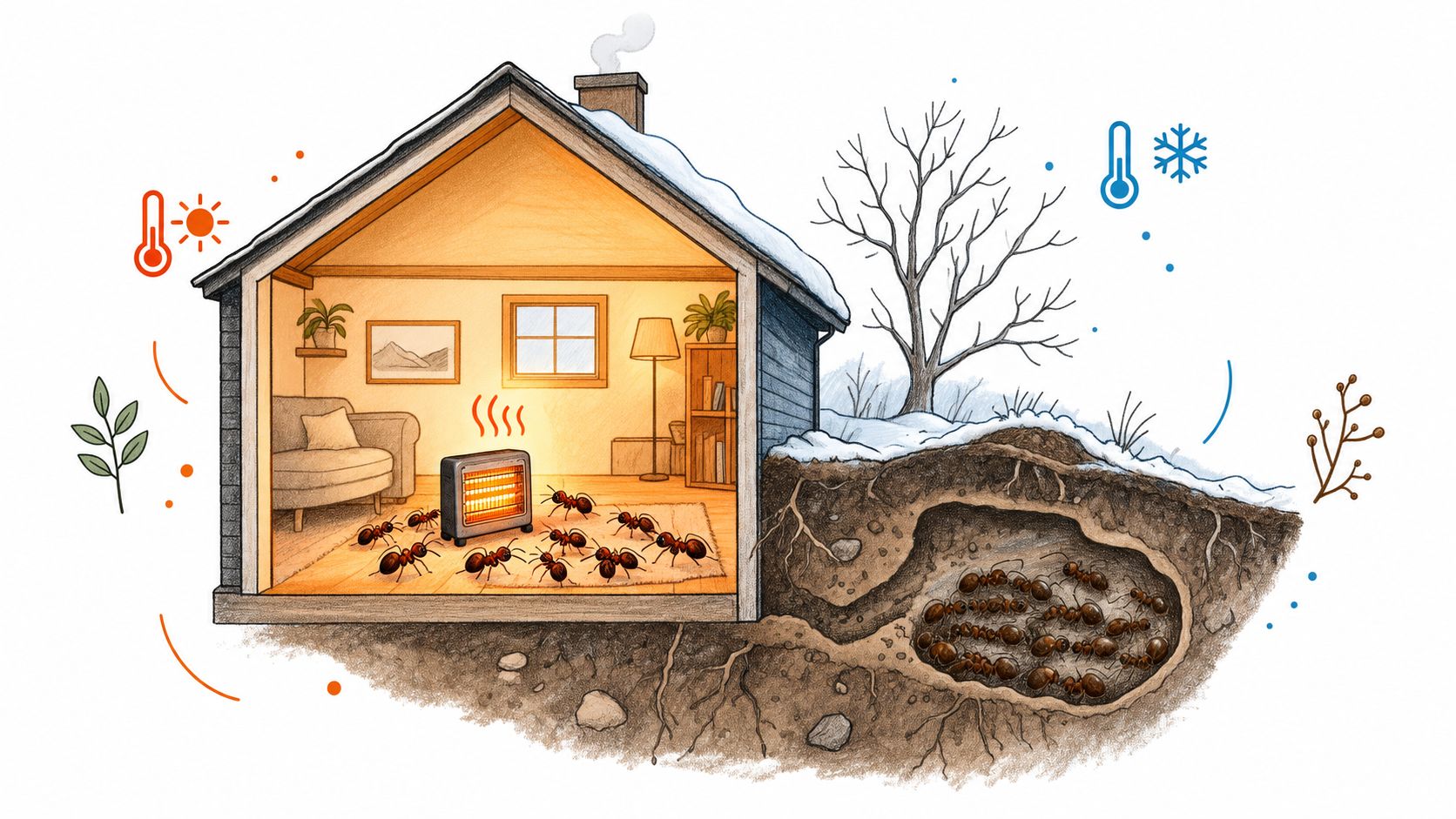
Think of the structure as a collection of small climate zones. The living room may feel cool at night, while the space beside a furnace, water heater, or heated slab edge stays comfortable. A wall cavity near a plumbing line may hold both warmth and humidity. Ants nesting in one of those spaces don't need to cross frozen soil to forage. They can move through protected gaps and emerge near a sink, baseboard, cabinet, or pantry.
This is why winter sightings often suggest that ants may have never left the structure. Indoor colonies can remain semi-active when outdoor colonies slow down. Ant entry and nesting guidance recommends focusing inspection on warmed cavities, foundations, slab edges, insulation-adjacent voids, and utility penetrations.
Why carpenter ants deserve extra attention
Carpenter ants are especially relevant when ants appear indoors during winter. They excavate galleries in wood rather than eating the wood, and they can use protected structural spaces as nesting areas. Damp or compromised wood around windows, plumbing, roofs, and wall cavities may offer the shelter a colony needs.
Carpenter ant activity doesn't automatically mean severe structural damage. It does mean you shouldn't treat repeated sightings as ordinary kitchen visitors. Look for ants near wood that feels damp, fine wood shavings below a void, or movement that seems to originate from trim, a wall, or a ceiling.
The video below offers a visual explanation of how indoor warmth changes winter ant behavior.
When a colony stays inside a heated space, killing visible workers may provide only temporary relief. The workers are messengers and foragers. A lasting solution requires identifying where the colony is nesting, what conditions keep it there, and how ants reach the rooms you use.
Signs You Have an Indoor Winter Nest
A single ant near a window doesn't tell you much. A recurring trail in the same room does. Winter sightings become useful when you treat them as clues that point toward heat, water, shelter, or an entry route.
Start with the trail itself. Don't wipe it away immediately. Watch where it begins and ends, then follow the route toward likely source areas.
Read the location before treating the trail
Check these locations first:
- Warm equipment: Look around furnaces, water heaters, boiler components, and heated slab edges where ants can remain active.
- Moisture zones: Inspect beneath sinks, beside toilets, near washing machines, and around plumbing penetrations.
- Protected edges: Examine baseboards, cabinet seams, window trim, door thresholds, and foundation joints.
- Food areas: Check honey, syrups, pet bowls, recycling containers, pantry shelves, and sticky residue near appliances.
Activity that keeps returning to the same room suggests a stable route. Activity around a furnace or water heater points toward a warm microclimate. Ants emerging from a crack around a pipe suggest an entry path or a hidden void on the other side.
Separate occasional foragers from a colony signal
Occasional foragers usually appear briefly and don't create a persistent route. A stronger indoor-nest signal includes repeated trails, ants emerging from a wall or baseboard, activity during cold weather, or ants appearing in more than one nearby room.
Carpenter ants add another clue. Fine wood shavings or frass below trim, a window frame, or a wall opening can indicate excavation activity. Rustling or movement inside a wall also deserves attention, although sound alone can't identify the species or confirm a nest.
Use the guide to finding ants indoors to organize your inspection. You don't need to cut into walls. Photograph the ants, mark the trail with removable tape, and record the time and room. That information helps a technician connect visible activity with hidden conditions.
Don't ask only, “How do I kill these ants?” Ask, “What warm, damp, or accessible route keeps bringing them back?”
What Really Draws Ants Indoors in Winter
In a Magnolia home, winter ants often point to more than a cleaning issue. Mild Southeast Texas weather can leave outdoor colonies active, while heated rooms offer a dependable combination of food, moisture, and shelter or access. Finding that combination turns an ant sighting into a useful home diagnosis.
Food gives workers a reason to keep foraging. A sugary spill, uncovered pet food, recycling residue, or pantry item can maintain a trail. Sealed containers and prompt wiping remove those rewards. They will not, however, resolve a colony already established in a wall void.
Moisture supports workers, brood, and nesting areas. Leaky plumbing, damp foundations, condensation on cold walls, and poorly ventilated utility spaces can create the steady humidity ants need. Winter moisture-control guidance identifies indoor water sources and damp conditions as important reasons winter activity can concentrate inside a home.
Shelter and access finish the route. Foundation cracks, plumbing and HVAC openings, worn door sweeps, and gaps near siding can lead ants into protected spaces. Inside, wall cavities and insulation work like covered hallways. Ants can travel through them and emerge where water or food is easiest to reach.
Winter Ant Driver Priority Matrix
| Driver | Winter Likelihood | What to Check First |
|---|---|---|
| Moisture | High when leaks, condensation, damp foundations, or humid utility spaces are present | Under sinks, around water heaters, basement walls, laundry areas, and ventilation |
| Shelter and access | High when ants repeat a route or emerge from a crack or wall | Foundation joints, plumbing penetrations, slab edges, door thresholds, and baseboards |
| Food | Common when ants reach dependable indoor sources | Honey, pantry goods, pet bowls, recycling, trash, and sticky cabinet surfaces |
Use the matrix to choose where to look first, not to prove the cause. A spotless kitchen with ants beside a damp pipe makes moisture the stronger lead. A dry area with ants emerging from a foundation gap points toward exclusion and a hidden route.
Magnolia homeowners can work through the drivers in order. Remove reachable food, correct water problems, then seal routes after you understand the travel path. Sealing too soon can redirect ants into another room, and spraying alone leaves the same shelter available. The goal is to identify what keeps the trail supplied, then remove that support.
Prevention Tips That Work in Southeast Texas Winters
In Magnolia, a warm spell can wake ants inside a wall while the yard still feels like winter. That makes prevention less about keeping every crumb away and more about finding the moisture, shelter, and access route that keep a hidden nest comfortable. Treat the house as a connected system, not as a single countertop problem.
Start with indoor moisture
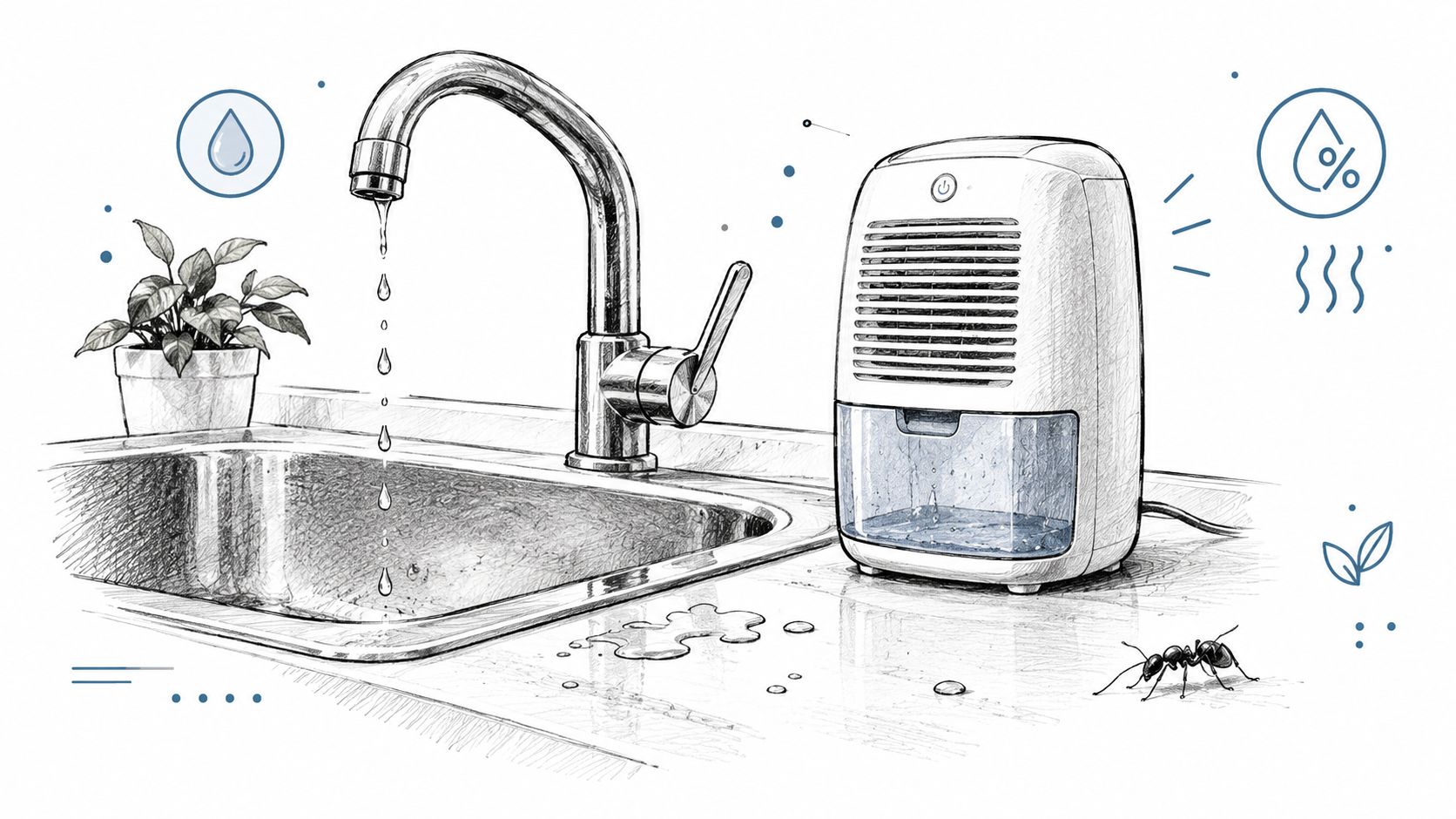
Keep indoor humidity in a moderate range, especially in laundry rooms, utility spaces, and other areas with limited airflow. A basic hygrometer can show whether a room stays damp. A dehumidifier may help, but it cannot replace leak repairs, better ventilation, or drainage work.
Walk through the home with a flashlight. Check cabinet floors, pipe connections, foundation walls, insulation, and ceiling areas for dampness, stains, condensation, or slow drips. Repair leaks, clear gutters, improve drainage, and direct downspouts away from the foundation. Moisture works like a steady water stop for ants, so removing it can make the area less useful even before you locate the nest.
Remove easy food rewards
Store sugar, cereal, pet food, and other pantry items in sealed containers. Wipe counters and cabinet edges after cooking, rinse sticky bottles before recycling, and clean beneath appliances when ants appear nearby.
A clean home can still have ants. The goal is to make food less dependable while you investigate the route, not to sterilize every surface.
Close the routes ants use
Inspect places where building materials meet. Seal foundation cracks, gaps around utility lines, openings near doors, and plumbing penetrations with suitable caulk or sealant. Replace damaged door sweeps and repair loose screens.
Watch an active trail before sealing anything. Follow its direction toward a wall gap, exterior joint, or utility opening, then close the access point after you understand the route. In Magnolia, Conroe, Kingwood, and nearby communities, this diagnosis-first approach is more durable than repeatedly treating the same baseboard.
Sequence matters: Dry the habitat, remove food access, identify the route, then seal the opening.
The same process helps rental homes and commercial properties, where kitchens, utility rooms, shared walls, and service areas can provide repeated access. If activity continues after housekeeping, moisture repairs, and basic exclusion, a targeted inspection can help distinguish a surface trail from a hidden-nest problem.
DIY Measures and Common Mistakes to Avoid
Vinegar, peppermint oil, and other household repellents may make a trail disappear from the counter, but disappearance isn't the same as colony elimination. Surface treatments affect the ants you can see. They usually don't reach a hidden nest inside a wall, foundation void, or slab edge.
Repellents can also change the route. Ants may avoid the sprayed area and emerge somewhere else, leaving you with the impression that the problem moved or multiplied. If a trail leads into a crack, spraying the entrance can interfere with observation and make the source harder to identify.
Why winter treatment timing matters
Winter often creates a mismatch between homeowner action and colony biology. People see ants in January and reach for a reactive spray, but the more useful winter task is usually diagnosis. Find the warm cavity, moisture source, or entry route that lets ants remain active.
Texas A&M's fire ant guidance says baiting is ideally performed from late August through October so populations can be reduced over winter. The Texas A&M fire ant FAQ supports a seasonal approach rather than waiting until winter sightings trigger a rushed treatment.
That timing doesn't mean winter control is pointless. It means the treatment plan should match the ant species, colony location, and current activity. A professional may use targeted baiting or other carefully selected methods, while homeowners should avoid combining random products or applying repellents directly over suspected routes.
When DIY helps, and when it only masks activity
DIY measures are appropriate when you find a clear food spill, a minor moisture issue, or an obvious exterior gap and the activity stops after correction. Keep monitoring rather than assuming the first quiet day proves the colony is gone.
Call for an inspection when trails persist, ants emerge from walls or trim, activity returns after cleaning, or you find damp wood and frass. Carpenter ant suspicion is especially important because the visible workers may be traveling away from the nest.
Winter gives you a useful opportunity. Instead of scattering ants with repeated sprays, document their routes while activity is concentrated around protected areas. That information can lead to more precise treatment and fewer repeat applications.
When to Call a Professional in Magnolia and North Houston
Call a professional when ants keep returning to the same location, appear from baseboards or wall gaps, continue after food and moisture corrections, or show signs associated with carpenter ants. Persistent activity means the visible trail may be connected to a protected nest or a recurring structural route.
Magnolia is in southwestern Montgomery County within the Houston metropolitan area, making it part of the north Houston and Southeast Texas service market. The city uses ZIP Codes 77354 and 77355, useful references when confirming coverage. Directory data lists 40,625 residents in 77354 and 29,300 residents in 77355, indicating a substantial local residential and commercial market for pest services, according to Magnolia ZIP Code population information and Magnolia ZIP Code references.
A licensed inspection should identify the ant type, trace entry points, evaluate moisture, and distinguish an exterior foraging route from an indoor nest. The treatment plan may combine targeted products, exclusion work, sanitation guidance, and follow-up monitoring. Ask about options appropriate for children and pets, including lower-toxicity approaches where suitable.
FullScope Pest Control offers ant inspections and targeted treatment within a broader service area that includes Magnolia-related north Houston communities, Cleveland, Kingwood, Conroe, and Porter. Its ant services include species-specific approaches, and its tawny crazy ant control information addresses a particular invasive ant concern.
If you're seeing ants in house in winter, don't wait for spring to reveal a larger trail. Photograph the activity, check for moisture, and contact a qualified pest professional serving your Magnolia ZIP Code, 77354 or 77355, to arrange a focused inspection and a treatment plan based on the actual source.
Contact FullScope Pest Control today to schedule an ant inspection in Magnolia, Kingwood, Conroe, Porter, or the surrounding north Houston area. Share the room, trail location, moisture clues, and any photos you've collected so the technician can begin with a targeted winter diagnosis rather than a temporary surface treatment.