1500+ reviews

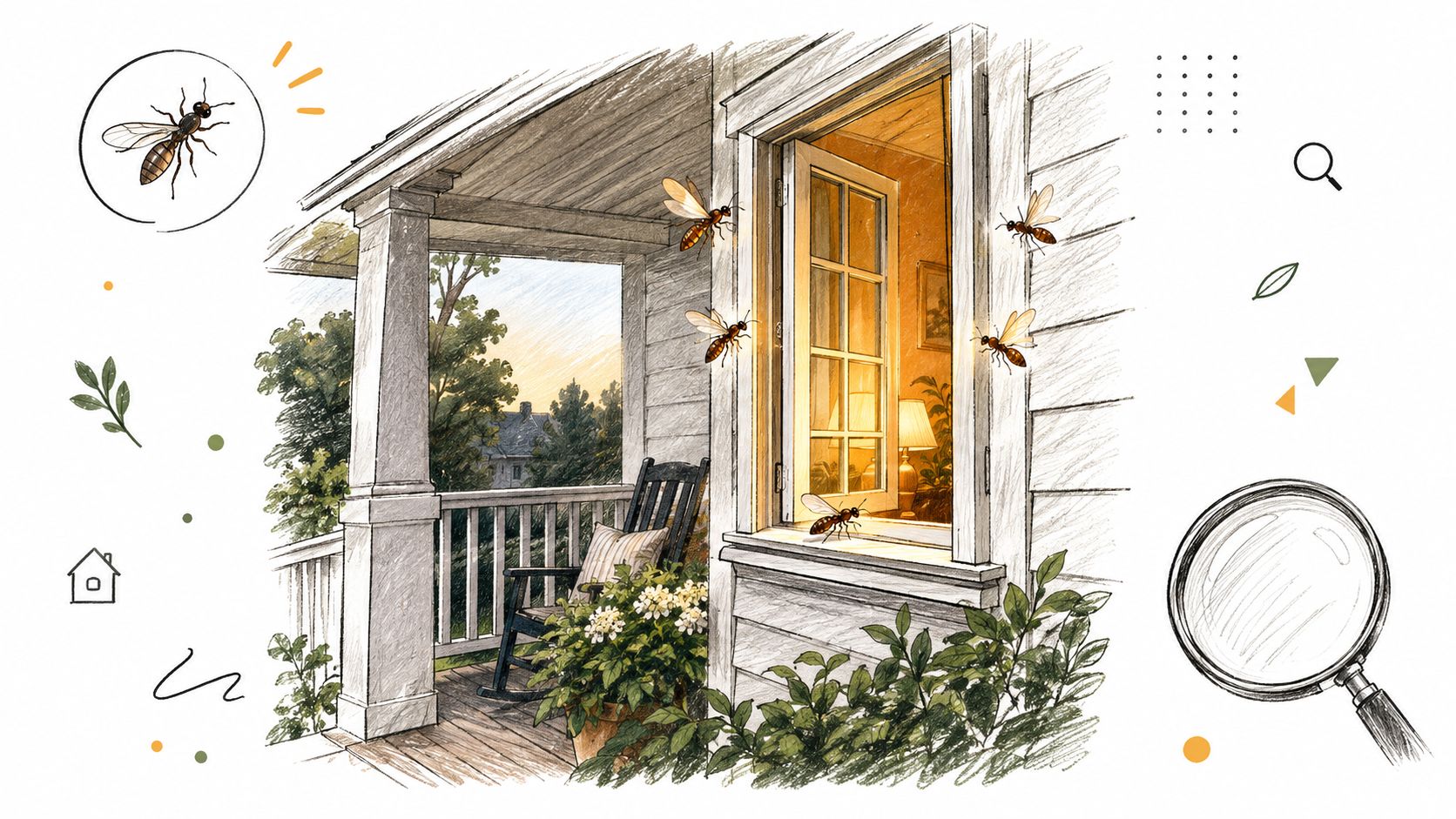
You're standing in your Magnolia kitchen when a few winged insects appear on the windowsill. Then more gather around the light. They may have come through a door, emerged from a wall void, or started a mating flight outside after warm, humid weather and rain. The sight can feel like a sudden winged ant infestation, but the insects are giving you a clue, not naming the problem for you.
The right response depends on what they are, where they appeared, and where they came from. This guide walks through the biology, the ant-versus-termite distinction, an indoor-versus-outdoor decision framework, and practical inspection steps for homes around Magnolia, Texas.
What You Are Actually Seeing When Winged Ants Appear
A Magnolia homeowner might first notice the event on a porch after a wet, warm afternoon. A few winged insects circle the light, land on the siding, and collect along a window. Inside, another homeowner may find loose wings on a sill or insects near a kitchen fixture. Those scenes look similar, but they can point to different sources.
Winged ants aren't a separate pest type. They're the reproductive males and new queens of an established colony, called alates. Their synchronized emergence is known as a nuptial flight, a short period when the colony releases reproductive ants to mate and establish new colonies. Warm temperatures, high humidity, and rain often help trigger the event.
Why the swarm itself can mislead you
A cloud of alates is the visible part of the story, but it may not be the control target. An outdoor colony can release reproductive ants from soil, pavement cracks, a stump, or dead wood. Those insects may drift toward a porch light or enter through an open door. An indoor emergence, especially from a wall, ceiling, floor edge, or trim gap, deserves more attention because it can indicate a concealed colony.
The location matters more than the apparent number of insects. A large outdoor flight may be a short seasonal event, while a smaller indoor emergence can reveal a persistent structural issue.
Practical rule: Don't treat the swarm before you identify its launch point.
Public swarms can also be dominated by one species in a particular market. In UK flying-ant surveys cited by the Natural History Museum's flying-ant survey reference, nearly 90% of observed winged ants were black garden ants, Lasius niger. That figure doesn't identify an insect in Magnolia, but it shows why appearance alone can encourage overconfidence. A familiar-looking swarm may represent one common species in one region and a different nesting pattern in another.
Start by saving a few intact specimens, if possible, and photograph the insects beside a coin or another familiar object. Note whether they came from outdoors, collected at a light, or emerged from a crack. Those observations will make the next diagnostic step far more reliable.
How Nuptial Flights Work and Why They Happen So Suddenly
An established ant colony operates like a neighborhood with different jobs. Workers maintain the nest and gather food, while the colony eventually produces a small group whose job is reproduction and expansion. The winged males and females are the colony's temporary “founders,” sent out to mate and begin new colonies elsewhere.
The reproductive ants are called alates. A swarm is their nuptial flight, the brief window when males and queens leave the nest together to mate in the air and disperse. After the flight, the workers remain behind, while successful queens seek a suitable place to establish a new colony.
The weather window
The colony doesn't release alates at random. Warm, humid, low-wind conditions after rain often create a workable launch window. Moisture can make surrounding soil more suitable for a new queen, while calmer air helps these relatively weak fliers move without being blown away.
That combination explains the “sudden infestation” feeling. The ants may have developed inside nearby colonies for a long time, but homeowners see them only when weather conditions synchronize their departure.
The Kansas State University explanation of winged ants and termites describes this relationship between established colonies, reproductive alates, and weather-linked flights. It also explains why an event can occur across a neighborhood rather than at one isolated nest.
Why several properties can see activity
An outdoor swarm doesn't necessarily come from the closest visible mound. Several colonies in soil, landscaping, dead wood, or pavement gaps may respond to the same weather pattern. That's why a homeowner near FM 1774 might notice flying ants on the same kind of humid afternoon as a neighbor closer to FM 1488.
The timing is seasonal, but the exact appearance depends on local weather and species. AntScout's calendar tracks recorded flight months for 207 ant species, and its flight database defines the event as the brief period when winged males and queens leave the nest together to mate in the air (AntScout flight calendar and database). Separate observations show that nuptial flights can be documented at substantial event scales, including 758 cases in one peer-reviewed Malaysian dataset and 123 observations of Messor barbarus in Iberian research covering 2003 to 2009. Those figures describe research datasets, not the size of a Magnolia swarm, so they shouldn't be used to estimate what's happening at a specific home.
The useful takeaway is simple. Weather can explain why winged ants appear all at once, but it can't tell you whether the source is outside or inside. For that, identification and entry-point evidence matter.
Winged Ants vs Termites and Which Texas Species You Have
The most expensive mistake is treating the wrong insect. Winged ants and termite swarmers can appear during similar seasonal conditions, but their bodies reveal important differences.
Look closely at three areas:
- Antennae: Ants have elbowed or bent antennae. Termite swarmers have straighter antennae.
- Waist: Ants have a narrow, pinched waist between the thorax and abdomen. Termites have a broader, less defined waist.
- Wings: Ants typically have front wings that differ in size from the hind wings. Termite swarmers have wings that are more equal in length.
A quick regional comparison
| Feature | Winged Ants | Termite Swarmers | What It Suggests in Texas Homes |
|---|---|---|---|
| Antennae | Elbowed and segmented | Straight or gently beaded | Bent antennae support an ant identification |
| Waist | Narrow and pinched | Broad and relatively uniform | A pinched waist points toward ants |
| Wings | Unequal front and rear wings | More equal-sized wings | Unequal wings support an ant identification |
| Common setting | Soil, cracks, stumps, dead wood, wall voids | Soil-to-wood routes or structural areas | Location helps determine whether inspection should focus on landscaping, moisture, or concealed structure |
| Possible concern | Hidden ant colony, especially carpenter ants | Potential termite activity | The treatment plan differs, so identification comes first |
In Southeast Texas, the likely ant category changes the risk. Carpenter ants are associated with moist or softened wood and concealed nesting areas. They don't eat wood like termites, but they can excavate galleries for nesting. If you find winged ants near damp trim, a leak, a roof or window connection, or damaged wood, the inspection should focus on moisture and wood access.
Pavement ants often nest around slabs, driveways, pavement cracks, and foundation edges. Fire ants are more commonly associated with outdoor soil and mounded yard activity, although winged reproductive ants can still be part of a broader event. These categories are starting points, not final identifications.
For more background on regional species, compare the descriptions in different types of ants in Texas. Save the insect rather than crushing every specimen. A technician can examine the body, wings, nesting evidence, and trail behavior together.
A winged insect near a window is an observation. A species identification requires the insect and its context.
If the insects have straight antennae, equal-looking wings, and a thick waist, don't assume you're dealing with ants. Termite swarmers can shed wings near windows, making the debris especially easy to misread. When wood damage, mud-like material, or repeated indoor emergence is present, a professional wood-destroying-insect evaluation is more appropriate than a general spray.
Does an Indoor Swarm Mean a Nest Is Inside Your Home
An indoor swarm deserves more attention than an outdoor cloud, but it doesn't justify an instant conclusion. The key question is where the insects began.
Extension guidance treats winged ants found inside as a strong indicator that a colony may be living indoors, often in a wall void or another concealed space. Outdoor swarms commonly originate from soil, pavement cracks, stumps, or dead wood. That distinction changes the inspection target from “remove the insects” to “locate the parent colony.”
Read the event like a trail
Start with the launch point. If you see insects gathering around a porch light while doors and windows have been open, outdoor swarmers may have been drawn inside by illumination or airflow. HVAC openings, door gaps, screens, and unsealed window edges can also provide routes into the building.
If insects emerge from beneath trim, a ceiling fixture, a wall crack, a floor edge, or another internal opening, the indoor-colony explanation becomes more concerning. Repeated events from the same area add weight to that conclusion, particularly when you also find ordinary worker ants, trails, moisture, or wood debris nearby.
Texas A&M's household ant management guidance states that winged ants swarming inside are likely to come from a colony inside, while outdoor swarmers around porch lights are usually not a concern. It doesn't quantify false positives, so homeowners should use the rule as a triage guide rather than a guarantee.
A practical decision path
- They appeared only around exterior lights: Check nearby soil, pavement cracks, stumps, and dead wood before assuming structural nesting.
- They entered through open doors or windows: Close those routes, photograph the insects, and watch whether activity stops when the outdoor event ends.
- They emerged from a wall, trim gap, or fixture: Schedule an inspection for concealed nesting and moisture connections.
- They return from the same indoor area: Treat repetition as a stronger structural clue, even if the original event began outdoors.
- They resemble termites: Stop relying on a general ant treatment and arrange species confirmation.
The apparent swarm may disappear quickly, but that doesn't prove the colony is gone. Conversely, a single indoor visitor doesn't prove a nest is established. The most useful combination is source location, repetition, physical identification, and evidence of moisture or wood contact.
Look for the origin, not just the concentration. The brightest room may be where insects collect, not where they nest.
How to Inspect Your Magnolia Home After a Swarm
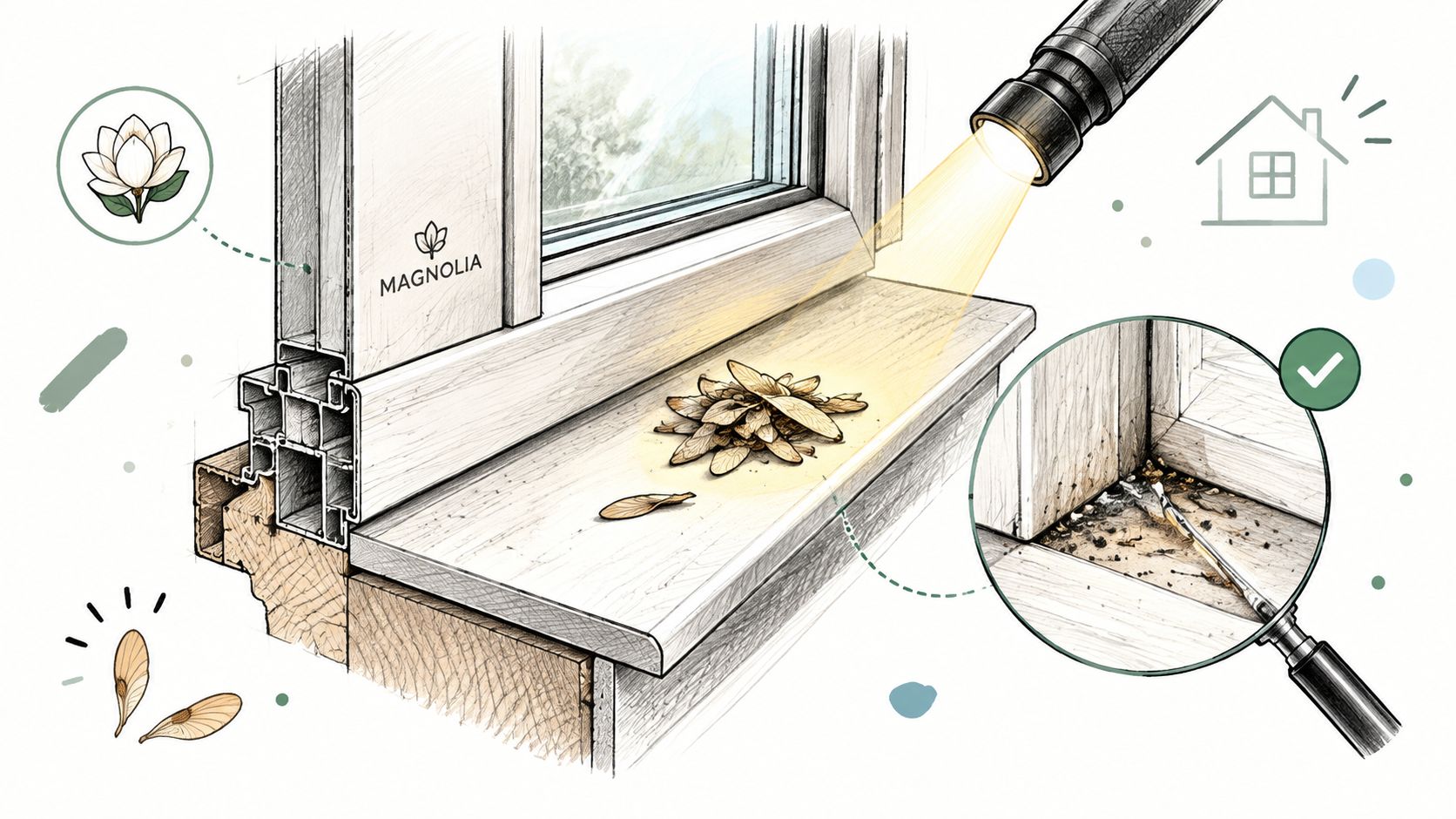
A careful inspection starts where you found the insects and then moves outward. Don't begin by opening wall cavities or probing structural wood. Photograph the scene first, preserve an intact specimen if you can, and record the date, weather, room, light conditions, and apparent entry route.
Work from the inside out
Use a flashlight and inspect the following areas:
- Windows and doors: Look for loose wings, live insects, damaged screens, and gaps around frames.
- Light fixtures: Check whether insects collected at the bulb or appeared from the fixture opening. A light can attract outdoor swarmers, but emergence from the fixture area needs evaluation.
- Kitchen and laundry: Check under sinks, around appliance connections, and near any sign of dampness or recurring leaks.
- Bathrooms: Examine plumbing access points, baseboards, and trim where moisture may affect wood or wall voids.
- Attic, crawlspace, and wall edges: Look for damp wood, trails, debris, and openings that connect the home with exterior areas.
The indoor ant inspection resource can help homeowners organize observations before requesting service. Avoid sealing a suspected active opening before documenting it, because the opening may help a technician trace the colony.
Check the Magnolia exterior
Outside, follow the foundation line around the property. Inspect soil transitions, pavement cracks, mulch, stumps, dead wood, porch columns, and places where wood meets soil or masonry. Also note branches, dense vegetation, and stored materials that touch or approach the exterior.
Carpenter-ant clues can include wood debris near a smooth opening, damp or softened wood, and activity close to a window, roof connection, porch, or plumbing area. Don't label every sawdust-like pile as carpenter-ant frass. Photograph it in place and keep a small sample if it's safe to do so.
Write down whether the event happened once or returned from the same location. That record helps distinguish a brief outdoor flight from a recurring indoor pattern, especially when the insects were attracted to lights or entered through HVAC and door gaps.
Prevention Exclusion and Treatment Options That Actually Work
The most effective response combines source control, exclusion, and species-appropriate treatment. Spraying visible alates may make the room look better, but it doesn't address the established colony that produced them.
Begin with conditions that support nesting. Repair leaks, improve ventilation where moisture accumulates, replace or correct damaged wood, and keep food residues contained. Seal practical gaps around windows, doors, vents, utility penetrations, and screens, but don't close an opening until you've documented it if you suspect insects are emerging from that location.
Reduce outdoor pressure
Exterior changes can lower the chance that swarmers reach the house:
- Lighting: Turn off unnecessary porch lighting during active flights, draw curtains, and move bright fixtures away from doors where feasible. Recent reporting from the Met Office on flying ants, heat, humidity, and lighting discusses links between warm, wet, humid conditions and larger swarms, along with research suggesting that LED lighting can trigger massive alate swarming in a tramp ant species in southern Taiwan.
- Contact with the structure: Keep branches and dense vegetation from creating direct routes to siding, eaves, windows, and doors.
- Wood and organic debris: Move firewood, stumps, dead wood, and damp yard materials away from the structure rather than storing them against walls.
- Foundation edges: Monitor cracks, slab joints, and soil contact points where outdoor ants may establish nests.
Climate and lighting can change how visible or disruptive flights become, but those factors don't replace inspection. A larger outdoor event still differs from ants emerging inside a wall.
Match treatment to the diagnosis
A vacuum can remove visible insects. Soap and water can clean trails from hard surfaces. Those steps handle immediate nuisance activity, but they rarely reach a concealed parent colony.
Baits may help when workers are actively foraging and carrying food back to the nest. Targeted applications may be appropriate for identified nesting areas, while carpenter-ant activity in damp structural wood calls for both pest treatment and moisture correction. Termite evidence requires a different inspection and control strategy.
DIY treatment becomes a poor fit when the species is uncertain, insects emerge from structural openings, activity repeats, or wood damage is visible. In those cases, a licensed professional can inspect, identify, locate likely nests, and select an integrated pest-management approach rather than scattering treatments across the property.
Next Steps for Magnolia Homeowners and Real Estate Transactions
Magnolia sits in southwestern Montgomery County, about 45 miles northwest of Houston and about 25 miles southwest of Conroe, according to the City of Magnolia community information. The city is positioned around the FM 1774 and FM 1488 corridor, so a useful service conversation should identify the specific neighborhood, subdivision, or nearby community rather than relying only on broad “north Houston” wording.
For homeowners, the next step is straightforward: save photographs, preserve an insect when possible, document the room or exterior launch point, and arrange an inspection when activity repeats or appears to come from the structure. Don't scatter the colony by sealing every gap or applying random products before someone evaluates the evidence.
Real-estate transactions need a documented answer, not a guess based on shed wings. Buyers, sellers, and agents may need a wood-destroying-insect inspection and report that addresses visible evidence and conditions relevant to the property. A wood-destroying-insect report can support clearer decisions when winged ants raise questions about carpenter ants or termites.
Agents managing several deadlines can also streamline deals with a platform that keeps inspection requests, documents, and transaction tasks organized in one workflow. That doesn't replace the pest inspection, but it can reduce missed handoffs between the buyer, seller, lender, and service provider.
FullScope Pest Control serves Magnolia and nearby Southeast Texas communities, with local service locations including Cleveland, Kingwood, Conroe, and Porter. Its licensed, QualityPro certified technicians offer inspections, targeted pest management, termite services, wood-destroying-insect reports, and recurring protection options for residential and commercial properties.
If winged ants appeared inside your Magnolia home, contact FullScope Pest Control to schedule a professional inspection, identify the insect, and determine whether the source is an outdoor flight, a building entry point, or a concealed colony. For a pending sale, request the appropriate wood-destroying-insect documentation early so the transaction can move forward with evidence instead of assumptions.