1500+ reviews

Yes, big black ants, mainly carpenter ants, can bite with their mandibles, but the bite is usually a brief pinch with mild burning from formic acid. Serious reactions are rare. A 2021 review found 95 reported human cases worldwide, with medically significant outcomes concentrated in a small group of ant species rather than ordinary household ants (systematic review of medically important ants).
You may be asking after spotting one large, dark ant on the kitchen counter following rain, or after seeing a line crossing the porch at dusk. In Magnolia, the more useful question isn't just whether big black ants bite. It's which ant you're looking at, where it came from, and whether the activity points to a nest in soil, damp wood, or a wall void.
What You Probably Saw and Why It Matters
The direct answer is yes. Carpenter ants, black field ants, and some large black fire ants can bite, but they don't all create the same hazard. Carpenter ants use strong mandibles and generally bite defensively, while fire ants bite to hold on and then sting repeatedly. The Cleveland Clinic's ant-bite guidance also distinguishes ordinary localized ant reactions from the more serious risks associated with stinging species.
A typical Magnolia sighting starts innocently. One dark ant appears beside the sink after a wet spell. Several large ants move along a porch edge near a shaded fence. Or winged ants gather near a window during a spring swarm. A single outdoor forager doesn't prove that a colony is inside, but repeated indoor trails, sawdust-like debris, or swarmers deserve closer attention.
The species changes the response
Carpenter ants are the primary concern when the issue is the house itself. They don't eat wood, but they excavate galleries in damp or decaying wood, including tree cavities, porch supports, window frames, and moisture-damaged wall areas. That makes them a wood-destroying pest concern, even when the bite is minor.
Fire ants create a different problem. Texas A&M explains that red imported fire ant workers first bite with their jaws, then inject venom through a stinger, often producing a burning sensation and a whitish pustule or fluid-filled blister after a day or two (Texas A&M fire ant field guide). A carpenter ant pinch and a fire ant sting shouldn't be handled as though they're the same event.
This guide covers four practical identification buckets:
- Carpenter ants, the main wood-related concern.
- Black field ants, usually outdoor soil and mound foragers.
- Large black fire ants, capable of both biting and stinging.
- Black crazy ants, recognized more by their erratic trailing behavior than by size alone.
Identify the ant before choosing a bait, spraying a trail, or assuming a bite is harmless.
Identifying Big Black Ants by Look and Behavior
Start with the body, then watch the behavior. You don't need a microscope, but you do need a clear view and a sense of where the ant is traveling. Carpenter ants are commonly described as large, dark ants measuring about one-quarter to one-half inch (carpenter ant identification guide). Other dark ants may look large at a glance but have different waists, body profiles, or movement patterns.
A field comparison
| Species | Size | Color & Finish | Body Shape | Nest Location | Foraging Clue |
|---|---|---|---|---|---|
| Carpenter ants | Large, about ¼ to ½ inch | Black or black with reddish tones, usually smooth | Single waist node, evenly rounded thorax in profile | Damp or decaying wood, tree cavities, wall voids | Steady trails up trunks, siding, porch columns, or window frames |
| Black field ants | Medium to large | Dark brown to black, often matte | Single waist node, more uneven profile | Soil mounds, logs, garden edges, beneath rocks | Outdoor lines between mounds, turf, gardens, and food sources |
| Large black fire ants | Variable, often visibly robust | Dark workers, sometimes with lighter reddish areas | Two waist nodes, uneven profile | Disturbed turf and soil mounds | Fast activity around sunny lawn areas and mound entrances |
| Black crazy ants | Smaller than carpenter ants | Dark, sometimes slightly hairy | Two waist nodes, long legs and antennae | Protected ground spaces, cracks, patios, and building edges | Fast, irregular trails along edges, wires, and patio borders |
In Magnolia, carpenter ants may forage up oak or pine trunks after spring rain, especially where dead limbs or damp wood are nearby. Fire ant mounds are more likely in sunny lawns, including residential areas near 1488 and 2978, while black crazy ants may trail across patios in neighborhoods near The Woodlands.
For a broader Texas comparison, use this guide to the different types of ants in Texas, then match the ant to its setting.
A quick matching checklist
- Large ant on wood or climbing a tree: Check for carpenter ant traits and frass nearby.
- Ants emerging from a soil mound: Consider field ants or fire ants, then inspect the waist structure.
- Repeated fast, scattered movement across patio edges: Black crazy ants become more likely.
- Winged ants near windows: Look for a swarm source indoors, in a wall void, or immediately outside.
Don't treat size and color as a complete identification. “Big black ant” is a homeowner description, not a species.
How Carpenter Ants Actually Bite and Sting
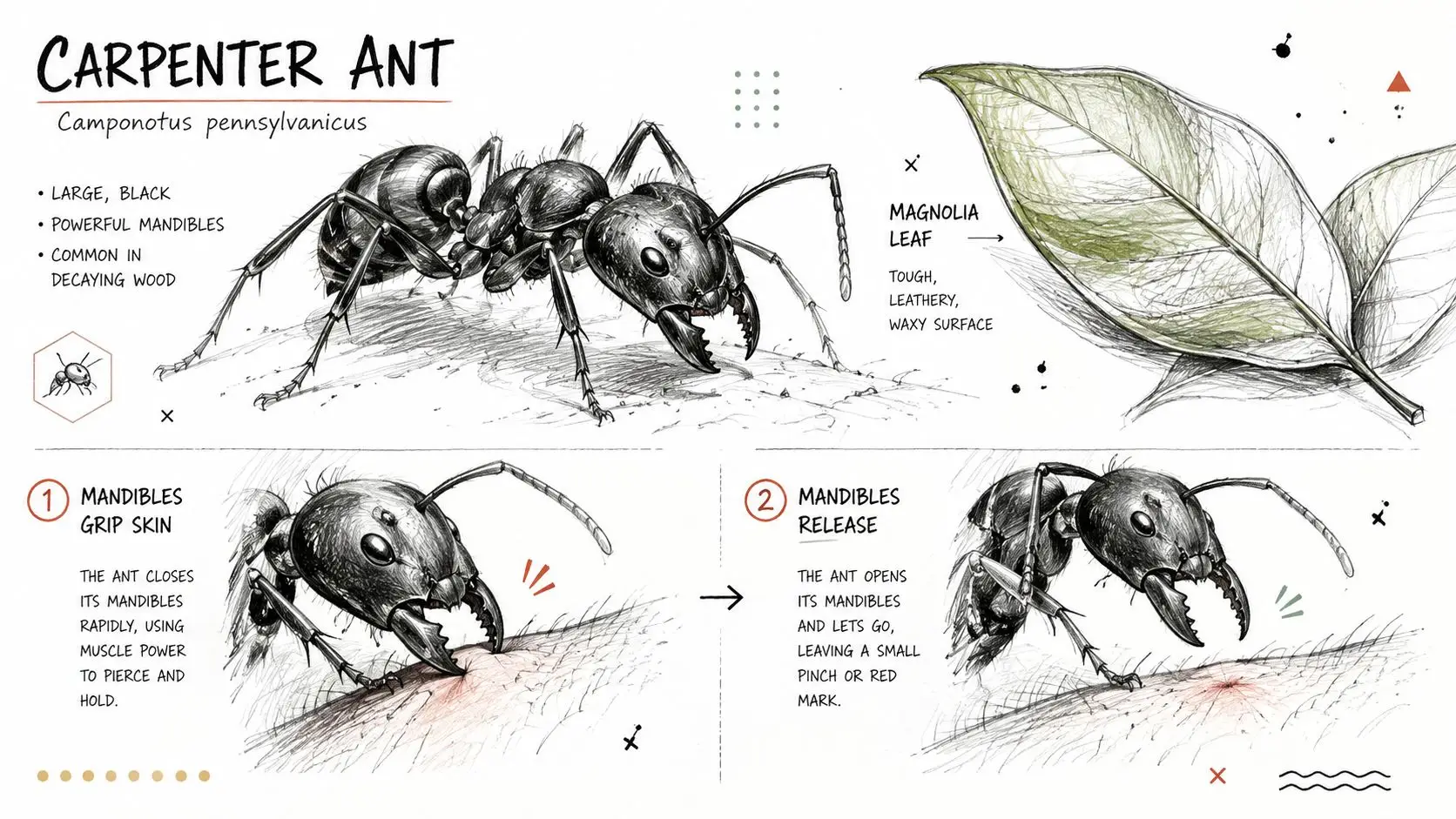
A carpenter ant bite is usually a mechanical pinch, not a venom injection. The ant clamps skin with its mandibles, often when it has been pressed against a person or trapped in clothing. That can happen under a hand towel, inside a gardening glove, beneath a sleeve, or during an attempt to swat the ant.
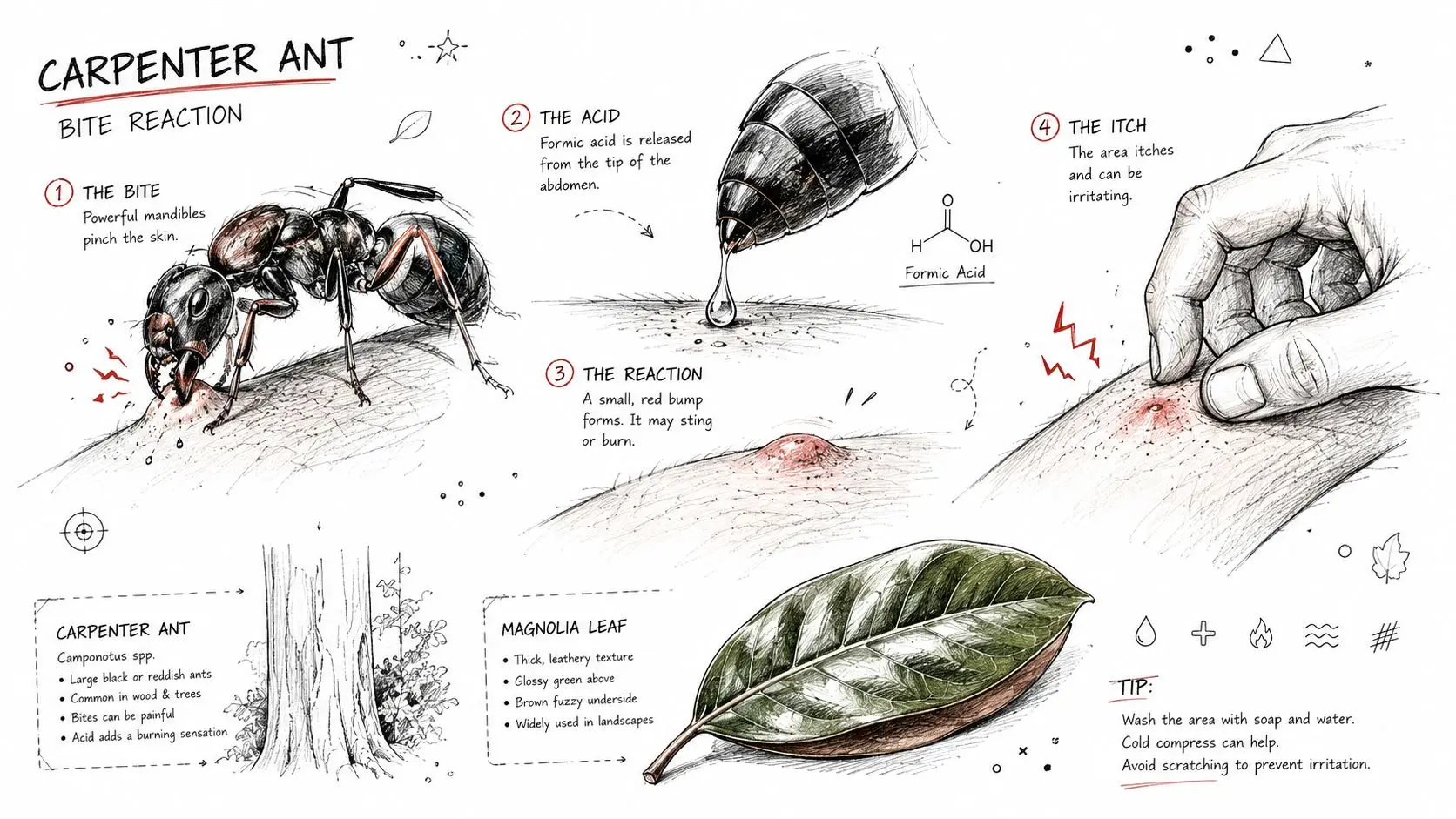
The bite itself may feel sharp because carpenter ants have powerful jaws. After clamping down, the ant can apply formic acid to the wound. That chemical irritation often explains the brief burning sensation people notice. Medical information about ant bites describes the same basic distinction between the physical bite and the irritation caused by the ant's defensive chemicals.
Defensive behavior looks different
Carpenter ants typically don't chase people, swarm over exposed skin, or attack in coordinated waves. A worker found on a counter is usually foraging. A worker trapped against skin may bite because it is being crushed or restrained.
Fire ants use a more serious sequence. Texas A&M describes workers biting to secure their grip and then stinging repeatedly from the end of the abdomen, injecting venom with each sting (Texas A&M red imported fire ant information). That explains why fire ant exposure often produces multiple burning points and later pustules, while a carpenter ant encounter more often produces one localized pinch.
Practical rule: A single pinch with brief burning suggests a defensive bite. Multiple burning spots followed by pale pustules point toward fire ants and call for a different level of caution.
The distinction matters during inspection, too. If the ant is coming from a damp porch column or damaged tree, the priority is locating moisture and galleries. If it's emerging from a sunny mound, the priority is keeping people and pets away while identifying a stinging species. For wood-related concerns, this carpenter ant inspection resource provides useful context on why the nest location matters as much as the visible trail.
Symptoms, First Aid, and When to Get Help
A carpenter ant bite normally stays local. You may feel a sharp pinch, followed by mild burning from formic acid. A small red mark, limited swelling, itching, or burning can follow, and these effects commonly settle within a few days (carpenter ant bite care guidance).
Fire ant reactions follow a different pattern. The burning can be immediate, and raised white pustules or fluid-filled blisters may develop after the sting. Swelling can remain noticeable for several days. Don't squeeze a pustule, because breaking the skin adds an avoidable infection risk.
Simple first aid
- Wash the area. Use soap and cool water to remove residue and reduce surface contamination.
- Cool the irritation. Apply a cold compress for about 10 minutes at a time. Wrap ice or a cold pack in cloth rather than placing it directly on skin.
- Control itching. A topical hydrocortisone or antihistamine cream may help when itching is the main complaint.
- Leave the area alone. Scratching can break the skin and create an opening for secondary infection.
- Watch the pattern. A localized mark that gradually improves is different from redness or swelling that keeps spreading.
Seek medical attention for hives, dizziness, difficulty breathing, throat swelling, intense swelling beyond the bite area, or rapidly worsening symptoms. Also call a clinician if you see pus, red streaks, increasing warmth, or other signs of infection.
Serious ant reactions are uncommon overall. The 2021 review identified 95 total human cases in the medically important ant literature, including 18 documented deaths, equal to 18.9% of the compiled cases, but those reports represent a concentrated set of medically significant species rather than the usual carpenter ant encounter (systematic review of medically important ants). If breathing or circulation symptoms appear, treat that as urgent rather than waiting to identify the ant.
Preventing Big Black Ant Problems in Magnolia Homes
Magnolia homes often give ants several useful pathways at once: wooded lots, shaded fences, damp crawl spaces, outdoor kitchens, and landscaping that touches siding. The prevention target isn't just the kitchen counter. It's the moisture and shelter that allow a colony to stay close to the structure.
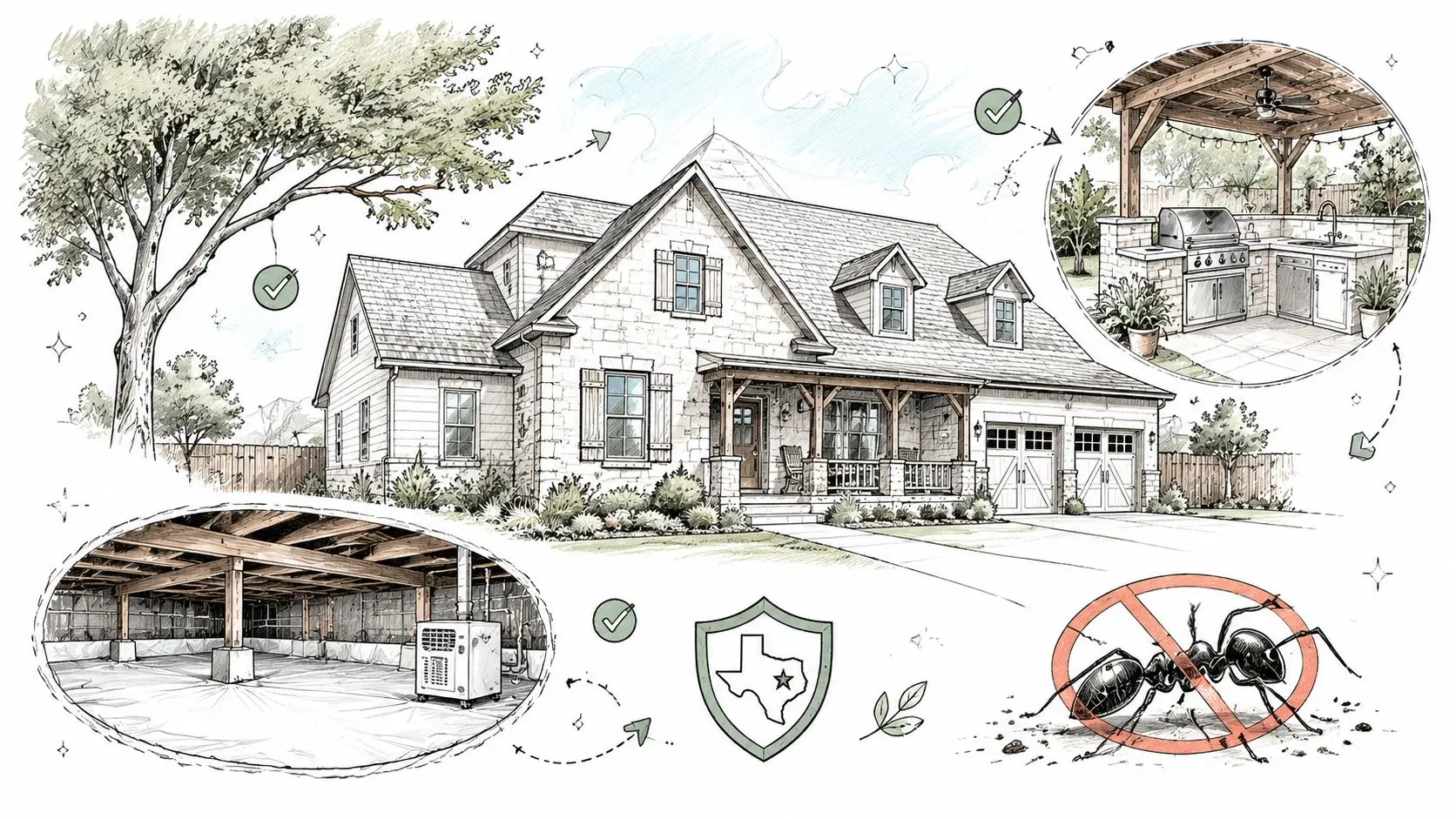
Begin outside. Trim limbs and shrubs away from siding and rooflines so ants can't use them as bridges. Keep firewood at least 20 feet from the house and off the ground, and remove leaf debris, bark mulch, rotting boards, and dead limbs from the foundation zone.
Inside, focus on the conditions that keep trails active:
- Food storage: Put pantry goods and pet food in sealed containers.
- Counter cleanup: Wipe syrup, grease, crumbs, and drink spills soon after they occur.
- Leak repair: Check under sinks, around dishwashers, and near laundry connections.
- Humidity control: Improve ventilation in bathrooms and laundry rooms, with a goal of keeping indoor humidity below 50 percent.
- Entry sealing: Caulk gaps around window frames, door thresholds, baseboards, and utility penetrations. Expanding foam can help with larger concealed gaps when used appropriately.
Inspect the perimeter on a schedule
Check window frames, porch columns, door thresholds, and siding transitions monthly. Look for frass, which resembles fine sawdust, beneath cracks or openings. Also inspect gutters, downspouts, HVAC areas, and crawl-space vents. Clean gutters help reduce the damp trail that carpenter ants can follow toward the home.
Keep outdoor kitchens especially clean. Grease around grills, food residue beneath counters, and damp wood near a patio can support foraging even when the colony is elsewhere. These simple ant prevention tips work best when paired with repairs, not used as a substitute for locating an active nest.
A practical demonstration can help you spot overlooked entry points and moisture sources:
When to Call a Southeast Texas Pest Professional
A professional inspection should answer three questions: What species is present, where is the colony, and what condition is supporting it? A technician normally starts with a perimeter walk, then checks likely entry points and moisture-sensitive areas. A moisture meter can help identify wet wood that looks normal from the outside.
Inside, the flashlight work usually centers on attic beams, sill plates, porch supports, wall openings, window frames, and plumbing-adjacent areas. Frass beneath a gallery, hollow-sounding wood, or rustling inside a wall carries more weight than one ant crossing a counter.
What treatment usually involves
Treatment depends on the species and nest location. A Southeast Texas pest professional may use a liquid perimeter application to reduce entry and exterior activity, bait stations along active trails, or direct injection into accessible carpenter ant galleries. Moisture correction remains part of the solution. Killing visible workers without addressing damp wood can leave the conditions that supported the colony.
DIY sprays often create a misleading result. They may kill ants on contact, but they can also scatter trails and leave the nest untouched. Store treatments are more reasonable for an isolated outdoor sighting than for recurring indoor activity, frass, or swarmers.
| Situation | DIY Approach | Call a Professional |
|---|---|---|
| One ant outdoors | Photograph it and inspect nearby soil, wood, and vegetation | If sightings continue or the species may sting |
| Short indoor trail | Clean food residue and seal obvious gaps | If the trail returns after cleaning |
| Large ants near damp wood | Correct the moisture source and remove damaged debris | If frass or galleries are present |
| Winged ants indoors | Save a specimen and avoid broad spraying | Arrange an inspection promptly |
| Repeated activity after store treatment | Stop changing products and document locations | Have the colony and entry route traced |
Call rather than continuing DIY when you see more than a dozen large black ants indoors in a week, visible frass piles, structural sounds in walls at night, recurring sightings after store treatments, or any evidence of ants inside the home rather than only outdoors.
Properties beside pine stands, creeks, or heavily shaded lots face more persistent pressure. A quarterly service plan can make sense for those homes when inspection and moisture corrections alone haven't stopped recurring activity. FullScope Pest Control is one local option offering ant treatment, inspections, and preventive service plans across Southeast Texas.
Putting It Together for Magnolia Homeowners
Magnolia isn't a single-ZIP-code area. The community is covered by 77353, 77354, and 77355, with 77354 and 77355 serving as standard delivery ZIP codes and 77353 used as a P.O. Box ZIP code (Magnolia ZIP code information). Those service-area details matter because lot conditions vary considerably across the area.
Residents in 77355, including western Magnolia, Magnolia Ridge, and more wooded properties near the San Jacinto River, are likely to encounter carpenter ants foraging from oak and pine debris. Fallen limbs, old stumps, and damp outbuildings can support exterior colonies that send workers toward the house.
In 77354, central Magnolia, including Tamina and many residential streets off FM 1488, moisture around air-conditioning equipment, crawl spaces, and shaded foundations can create attractive routes. In 77353, eastern Magnolia and the fringe near The Woodlands, newer developments may still experience a mix of carpenter ants and fire ants as landscaping matures and disturbed soil settles.
| ZIP Code | Primary Big Black Ant Risk | Typical Setting | Likely Season for Indoor Activity |
|---|---|---|---|
| 77353 | Carpenter ants and fire ants | Newer development, landscaped lots, The Woodlands fringe | Warm, wet periods and spring activity |
| 77354 | Carpenter ants near moisture | Homes around Tamina, FM 1488, HVAC and shaded foundation areas | After rain and during humid weather |
| 77355 | Carpenter ants near wooded debris | Magnolia Ridge, wooded lots, pine and oak surroundings | Spring through warm, humid periods |
Use a three-step response
First, confirm the species. Look at body shape, waist nodes, movement, nest location, and whether you see a mound, wood debris, or a fast irregular trail.
Next, match the response. A carpenter ant bite usually calls for washing, cooling, and observation. A suspected fire ant exposure calls for avoiding the mound and watching for a stronger reaction. For the property, correct moisture, remove wood debris, seal openings, and clean food sources.
Finally, escalate when the evidence points indoors. Winged swarmers, frass piles, recurring indoor trails, or sounds in walls justify a professional inspection. Don't wait for a bite to prove there's a problem. The nest location and building conditions provide better evidence.
Big black ant sightings are common and manageable in Magnolia. The reliable approach is species-first identification, calm first aid, and prompt attention to moisture or wood damage when the ants are carpenter ants.
If you're seeing large dark ants in a Magnolia home, save a clear photo or specimen, note exactly where you found it, and check nearby wood, soil, windows, and moisture sources. Contact FullScope Pest Control to arrange a Southeast Texas inspection when activity repeats indoors, frass appears, or you find winged ants, so the treatment can target the colony rather than only the workers you can see.