1500+ reviews

96% of baited colonies were eliminated in field studies, with 158 of 165 colonies removed, so termite treatment without tenting is a real and effective path for many Southeast Texas homes. Bait stations, nonrepellent liquid barriers, and targeted heat each handle different infestation scenarios.
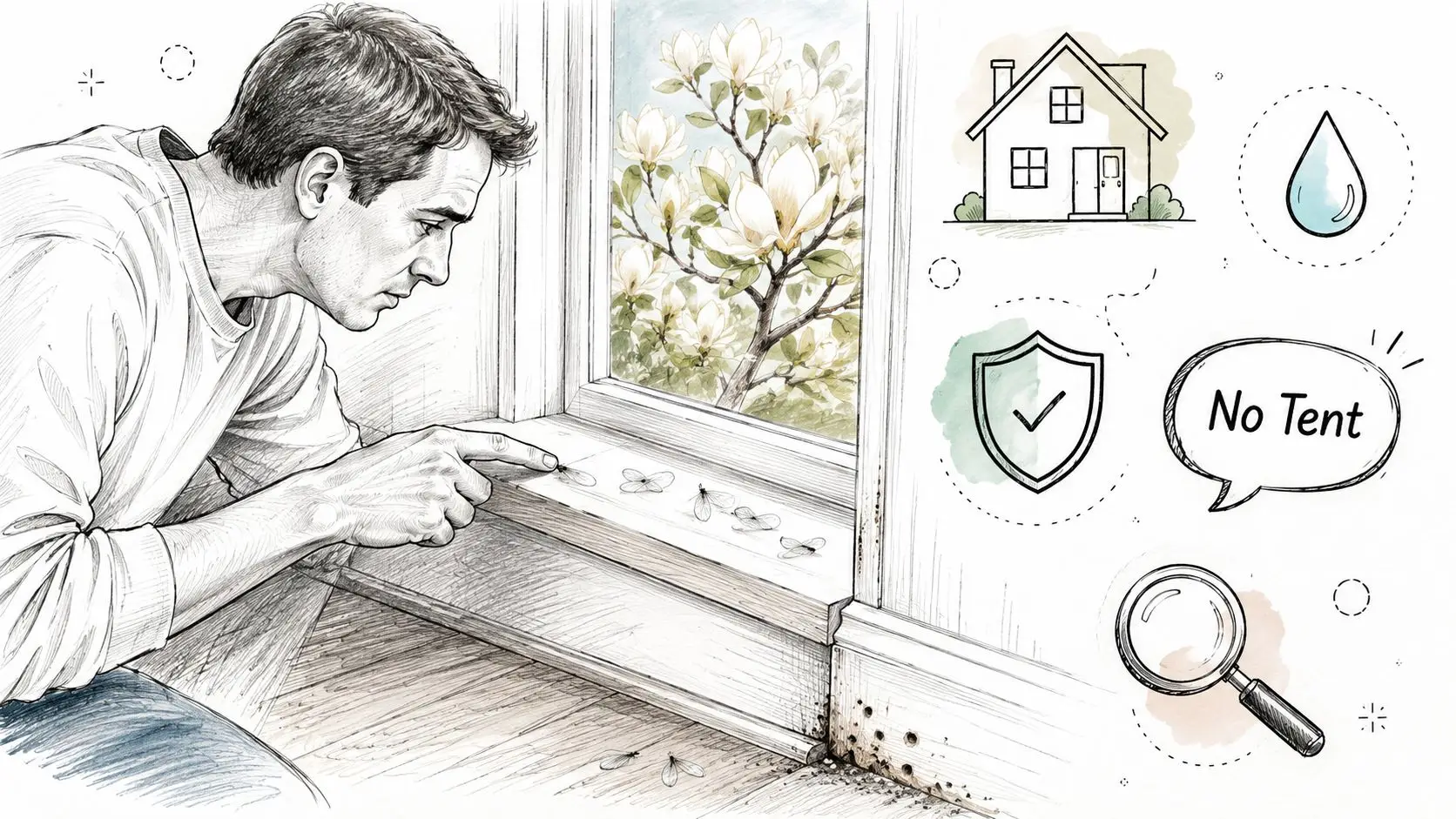
You may be standing in a Magnolia, Texas, kitchen with discarded wings on the windowsill, a soft baseboard, or a thin mud tube along the foundation. The immediate question is practical: can the termites be stopped without covering the house with a tarp and forcing everyone out?
Often, yes. The right answer depends first on termite species, then on where the colony lives, whether technicians can reach it, how the home was built, and how much disruption you can tolerate. A no-tent plan can mean monitored bait stations, a liquid soil treatment, direct wood injection, localized heat, or a combination. It isn't one universal product or a shortcut around inspection.
What Homeowners Mean by Termite Treatment Without Tenting
A Magnolia homeowner may notice wings on a sill after warm weather or find a baseboard that sounds hollow under a probe. Those signs don't tell you the treatment yet. They tell you to identify the termite and trace the route into the building.
Termite treatment without tenting means treating the soil, foundation perimeter, accessible wood, or selected structural areas without sealing the home under a gas-filled tarp. Whole-structure fumigation uses sulfuryl fluoride to reach concealed drywood galleries. No-tent methods work differently, so the treatment must match the colony's location.
The three main choices
- In-ground bait stations: Technicians place cellulose bait around the property. Foraging subterranean termites feed on it and share the active ingredient with nestmates, making this a colony-level monitoring strategy.
- Nonrepellent liquid soil barriers: A technician treats soil around the foundation, beneath slabs, or beside piers. Termites cross the treated zone without detecting it, which can interrupt entry routes.
- Targeted heat or wood treatment: Technicians focus on accessible drywood activity in wood, wall voids, trim, or other mapped areas. Direct injection, foam, and borate applications may supplement the work.
Borate wood treatments and direct wood injection can make sense when the inspector finds isolated, reachable activity. They don't automatically solve colonies hidden elsewhere.
Practical rule: Choose the treatment based on where termites live, not on which method sounds least disruptive.
Construction matters. A slab home may need drilling through concrete to reach soil beneath a patio, while a pier-and-beam home may allow treatment beside grade beams. Moisture control also matters. If you need to understand how ground moisture can affect vulnerable wood and crawl spaces, Home Pro's vapor barrier installation guide offers useful background.
Why Tenting Exists and When It Still Wins
Tenting exists because some termites live inside the building, not outside it. Drywood termites occupy beams, furniture, attic framing, and other wood, where a surface spray or perimeter treatment may never reach the entire gallery system.
Whole-structure fumigation seals the building and distributes sulfuryl fluoride through concealed spaces. That broad reach is its advantage. It treats the structure as one enclosed volume rather than asking a technician to locate and access every colony individually.
Situations where fumigation earns its place
Tenting remains the safer recommendation when drywood activity is widespread across multiple rooms and the inspector can't map every colony. It also has a strong case when furniture-grade or antique wood contains suspected activity and the owner can't reasonably discard or dismantle those pieces.
Construction can narrow the alternatives. A slab or pier-and-beam home with inaccessible structural cavities may leave technicians unable to reach key drywood galleries. A targeted application only works on the areas the technician can identify and treat.
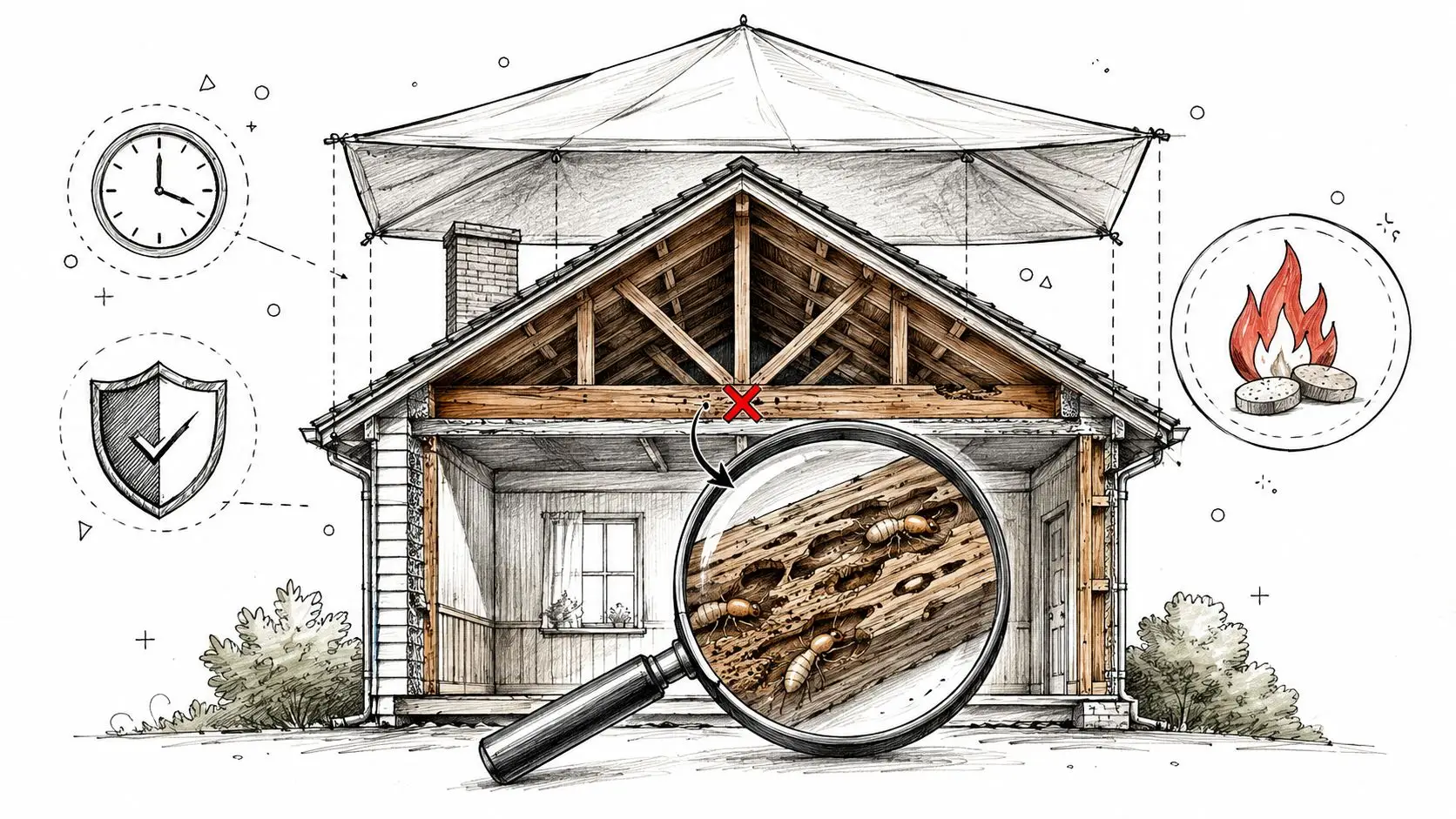
The distinction between termite types is decisive. Subterranean termites nest in soil, so tenting the house doesn't eliminate the outside colony. If activity is confined to an accessible subterranean entry zone, soil treatment or baiting is usually the smarter route.
For a whole-house drywood infestation, fumigation remains the benchmark for a single-visit, structure-wide kill. No-tent treatment can be highly effective when the colonies are found and reachable, but it carries a different failure risk: an undetected colony survives.
Tenting is disruptive, but it solves a reach problem that targeted treatments can't always solve.
How Bait Stations Stop a Colony From the Outside
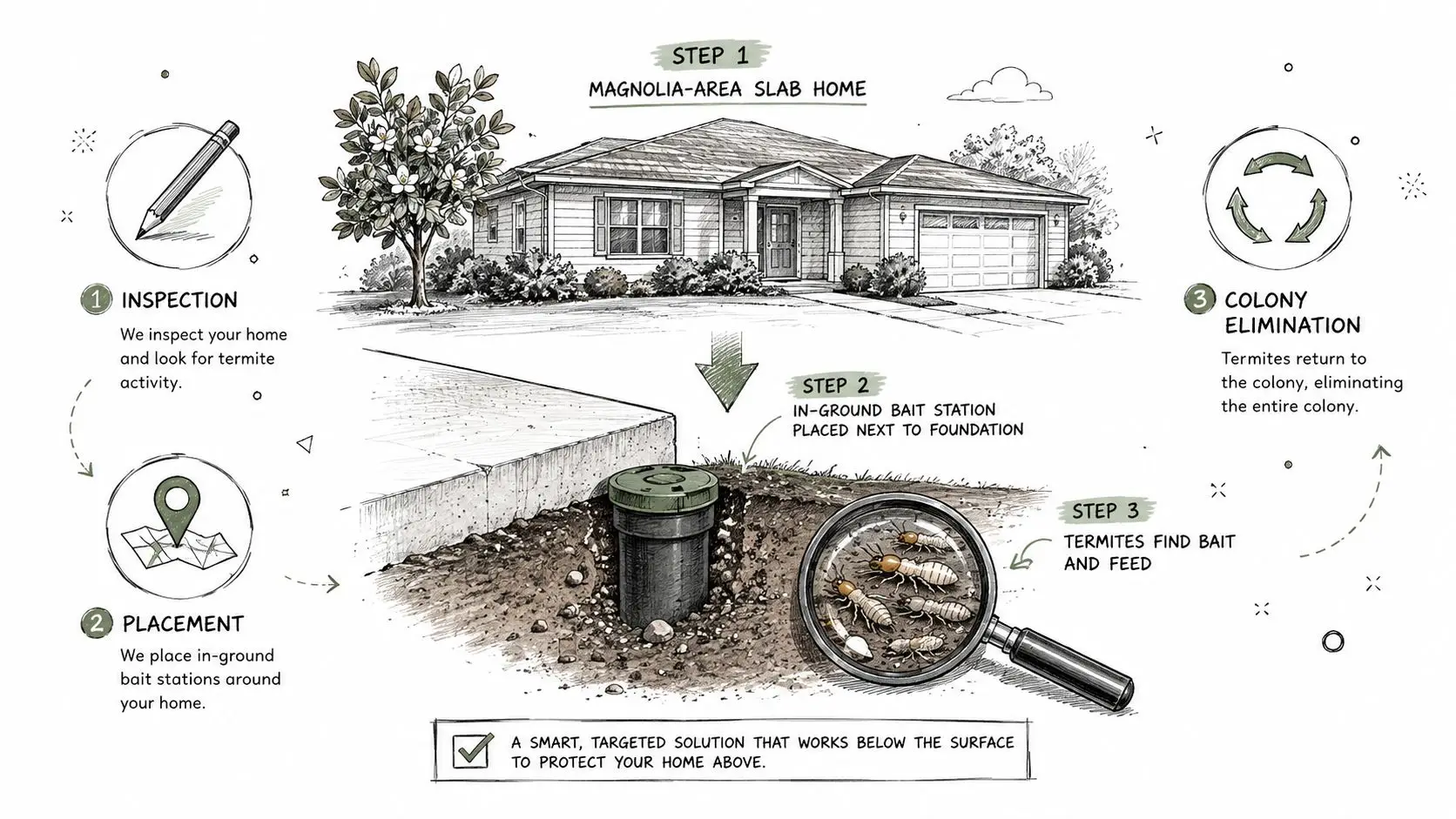
Consider a Magnolia-area slab home with mud tubes near the foundation and no evidence that termites are living independently inside dry wood. The first job is to confirm subterranean activity, identify entry points, and inspect conditions that make the slab perimeter attractive, such as damp mulch, leaking downspouts, or wood touching soil.
A technician then places in-ground stations around the perimeter, often at intervals of 10 to 20 feet and near known mud tubes. Those spacing figures come from the prescribed service approach in this guide, so the written plan should show station locations rather than promising “perimeter coverage.”
What happens inside the stations
The station contains a cellulose matrix treated with a slow-acting insect growth regulator, such as noviflumuron. Worker termites feed on the material and carry the toxicant through normal food sharing and colony contact. The point isn't to kill the first termite immediately. The point is to interfere with the colony's ability to maintain itself.
The termite baiting colony-control process is useful background for homeowners who want to understand why a slow-acting bait can affect termites that never directly feed at the station.
Technicians check stations every 60 to 90 days. Colony elimination typically takes three to six months in the practical scenario described here, and annual renewal keeps the perimeter under surveillance. The program is deliberately slow compared with a liquid application, but it produces little indoor disruption and doesn't require tenting.
EPA guidance says termite bait products should eliminate an active infestation within 12 months of installation and keep the structure termite-free for 12 additional months, with structural-protection claims supported by efficacy under laboratory and real-use conditions. Read the EPA termite bait guidance before treating a marketing promise as a guarantee.
Baiting fits subterranean termites, especially where occupants want minimal disruption and can commit to inspections. It isn't the right standalone answer for drywood termites hidden inside furniture or attic beams.
Liquid Soil Treatments That Build a Hidden Barrier
A liquid soil treatment creates a treated zone where subterranean termites try to enter. The method is only as good as its continuity. A missed section beside a porch, utility penetration, or foundation transition can become the route termites use next.
Older repellent products, including some pyrethroid approaches, can cause termites to detect and avoid treated soil. Nonrepellent chemistries such as fipronil, imidacloprid, and chlorfenapyr are designed to let termites pass through the zone without the same avoidance response, allowing exposure and transfer within the colony.
How technicians reach the soil
- Trenching: The technician treats soil along the foundation and digs a shallow trench beside piers where appropriate.
- Slab drilling: Concrete slabs, porches, and patios may require drilled access points so product can reach soil beneath the structure.
- Rodding: In pier-and-beam construction, the technician may rod alongside grade beams and other below-grade routes.
A Magnolia or Tomball property may contain several of these conditions on the same job. A quote that says only “perimeter treatment” doesn't tell you whether the technician will trench, drill, rod, or leave a gap.
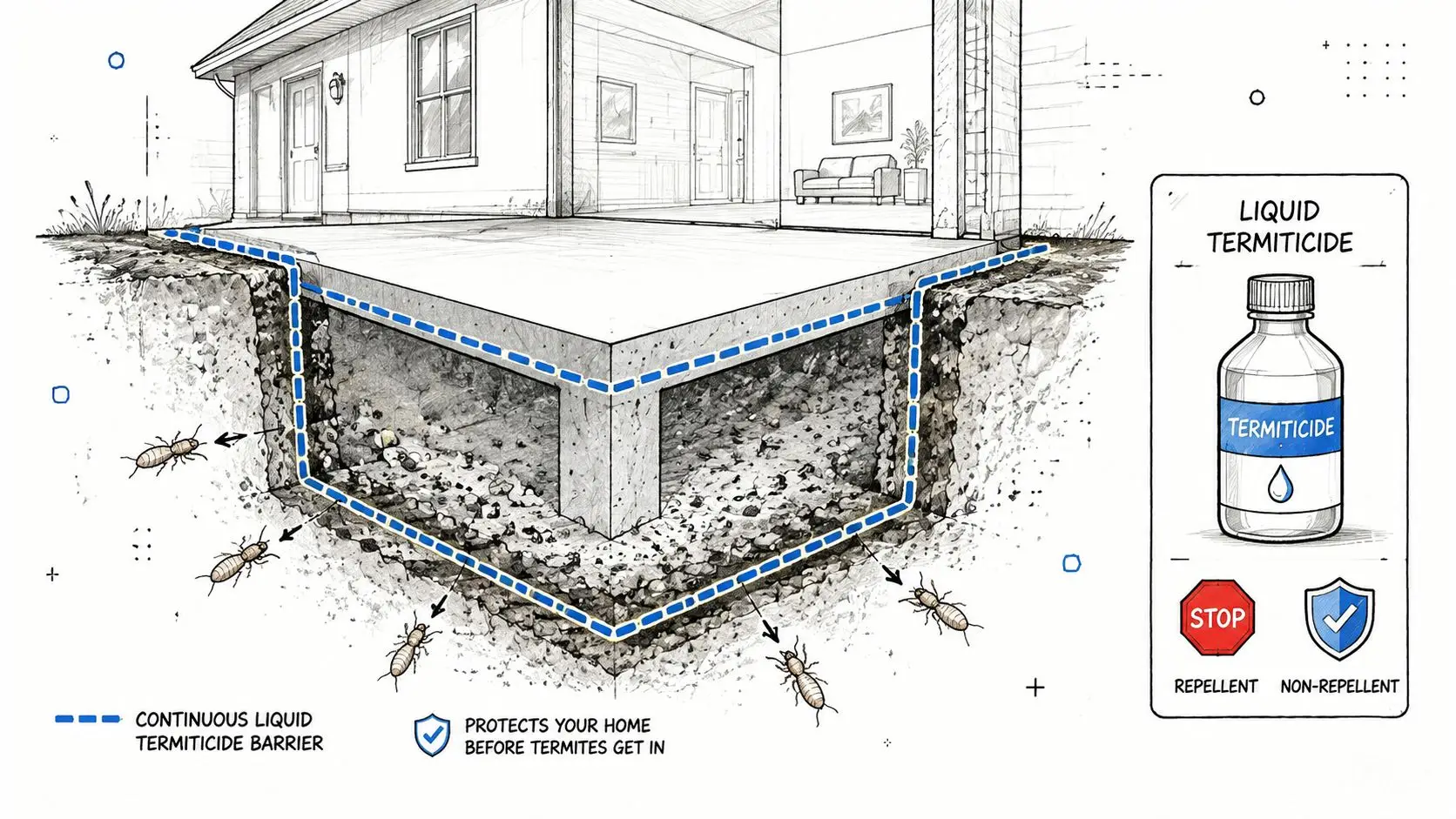
EPA identifies liquid soil-applied termiticides as an approved treatment class, and its termite identification and control guidance describes soil-based control as a recognized option. Research on chlorantraniliprole also found efficacy against eastern subterranean termites in structural infestations in Texas and other U.S. states, supporting the use of properly applied targeted soil treatments without fumigation.
A properly completed nonrepellent treatment can produce colony-level impact within roughly 60 to 90 days and may carry a retreatment warranty of five to ten years. Those figures belong in the written proposal, along with conditions that void coverage. Repellent barriers generally provide a shorter-lived defense and depend heavily on termites never finding an untreated gap.
The soil treatment approach for protecting foundation integrity explains why technicians must work around the structure's actual entry routes. Liquid soil treatment won't eradicate drywood termites living inside the building. It protects against soil-based entry.
Heat and Spot Treatments and Where They Fall Short
Heat is often sold as the clean alternative to fumigation. A whole-structure heat treatment raises interior air to roughly 120 to 150 degrees Fahrenheit for 90 minutes or more, with the intent of bringing every infested section of wood to a lethal temperature.
That approach can work for drywood termites when technicians maintain lethal temperatures throughout the infested wood. It doesn't solve subterranean termites entering from soil, and it isn't a sensible default for a Magnolia slab home showing mud tubes.
The cold-spot problem
Controlled testing found that “heat only” produced mortality as low as 9% at 43.3°C and complete mortality only at 47.4°C. Field work found a 33.33% callback rate for standard heat treatment compared with 0% for an improved heat protocol at six months. These findings are reported in the Journal of Economic Entomology heat-treatment research.
Structural heat sinks, dense framing, tile, masonry, and concealed voids can keep portions of the infestation cooler than the surrounding air. A serious provider should use temperature mapping, document cold spots, and explain the retreatment trigger.
Spot treatment is more defensible when activity is isolated to one door frame, trim section, or attic beam. Direct wood injection, expanding foam in an accessible void, or a borate application may address that mapped area. It becomes a bandage when the house contains multiple unlocated colonies or when subterranean termites continue entering from the soil.
Comparing No-Tent Options Against Fumigation
Homeowners usually compare these methods on price first. That's backward. Species, reach, and treatment objective determine the fit, while cost and disruption help break a tie.
| Method | Typical Cost | Timeline | Disruption | Best For |
|---|---|---|---|---|
| Bait stations | $1,200 to $3,500 | One to three years to collapse a colony, with ongoing monitoring | Minimal | Subterranean termites and long-term perimeter management |
| Nonrepellent liquid barrier | $1,500 to $4,500 | Colony reduction within 60 to 90 days | Moderate, especially if drilling is needed | Subterranean entry routes around foundations and slabs |
| Heat | $2,500 to $6,000 | Treatment over one to two days | Evacuation during service | Accessible or mapped drywood activity |
| Whole-structure fumigation | $3,000 to $8,000+ | Tenting for two to four days, including gas and clearance procedures | Full evacuation and preparation | Widespread, concealed drywood infestation |
The cost ranges and timelines in this table come from the supplied treatment comparison, not from a universal price list. Get an inspection-based quote that states exactly what the provider will treat and what follow-up is included.
Bait systems minimize disruption but don't provide instant knockdown. Liquid barriers act faster against subterranean entry but can require drilling through hardscape and careful soil work. Heat avoids fumigant gas but depends on complete temperature control, while fumigation reaches concealed drywood galleries throughout the structure.
My recommendation: Subterranean infestations in Magnolia homes almost never need tenting. Widespread drywood activity often does, especially when inspectors can't access every colony.
A combined bait and liquid program may fit a property with recurring subterranean pressure and difficult entry routes. A localized drywood colony may need direct injection instead. Don't accept a one-size-fits-all proposal.
The Inspection and Treatment Workflow for Magnolia Homes
A legitimate service begins before the technician arrives. During the phone call, provide the property address, construction type, year built, prior termite treatment history, and every visible sign you've noticed. Mention wings, droppings, mud tubes, hollow wood, swarm activity, and any recent plumbing or drainage issue.
At the property, a licensed Texas Structural Pest Control Service licensee should inspect more than the room where you found damage. The technician should probe baseboards, take moisture meter readings where appropriate, inspect the garage and attic over the foyer, and walk the perimeter.
What the inspection should document
- Foundation conditions: Mulch beds, wood-to-soil contact, cracks, penetrations, and areas where grade meets the slab.
- Water movement: Downspouts that drain toward the slab, irrigation overspray, plumbing leaks, and damp crawl-space conditions.
- Access points: Porches, patios, piers, grade beams, utility lines, and concealed wall or attic areas.
- Species evidence: Subterranean signs such as mud tubes versus drywood evidence inside structural wood.
The complete termite inspection guide can help you understand why a perimeter inspection matters as much as an indoor visual check.
From proposal to monitoring
The written proposal should identify the species, infestation extent, treatment method, areas included, preparation requirements, warranty terms, and follow-up schedule. A provider may recommend a liquid barrier, bait stations, a combined program, or fumigation. The recommendation must explain why the chosen method can reach the colony.
Expect the service day to match the plan. Afterward, ask for monitoring at 30, 90, and 180 days, plus annual renewal visits when you sign a bait agreement. Keep the treatment report, the TDA-300 form or equivalent, photographs, diagrams, product information, and every renewed contract.
FullScope Pest Control is one local option that provides termite inspections, monitoring, and targeted treatment among its residential and commercial pest services. Compare its scope with other licensed providers rather than choosing from a brand name alone.
Your Next Steps to Protect a Southeast Texas Property
Start with the paperwork. Pull previous termite reports, warranties, repair invoices, real estate inspection documents, and any diagram showing old bait stations or treated areas. A prior treatment doesn't identify today's colony, but it can reveal where access was difficult and which warranty conditions still matter.
Then schedule two inspections with different licensed providers. Ask each company to identify the termite species, show active evidence, map the treatment area, explain why no-tent treatment fits, and state what would make fumigation necessary. Compare the scope, not just the lowest quote.
Walk the property before the appointments and note:
- Moisture sources: Leaking hose bibs, irrigation overspray, plumbing leaks, and downspouts draining toward the slab.
- Wood contact: Fence components, stored lumber, mulch, or trim touching soil.
- Ventilation gaps: Blocked crawl-space vents, damp soil, and areas where airflow is poor.
Magnolia sits in southwestern Montgomery County, and the city is positioned around FM 1774 and FM 1488, about 45 miles northwest of Houston and 25 miles southwest of Conroe according to a regional civic profile. The city itself is geographically small, with about 4.844 square miles of land area and a 2020 population of 2,359, while the service decision often reaches surrounding communities such as The Woodlands, Tomball, Conroe, and Pinehurst. See the City of Magnolia community information and the regional Magnolia profile for local context.
High water tables, expansive clay soils, and Formosan termite pressure in Montgomery County can push the recommendation toward a combined liquid and bait program. No-tent protection requires commitment, so annual renewal and inspection records matter.
For fair comparison, use the supplied local price bands as a starting framework: bait systems around $1,200 to $3,500, liquid barriers around $1,500 to $4,500, heat around $2,500 to $6,000, and fumigation around $3,000 to $8,000 or more. Ask whether the quote includes drilling, repairs, monitoring, retreatment, warranty renewal, and written verification.
Book two licensed termite inspections in Magnolia or your nearby Southeast Texas community this week. Bring your existing paperwork, request a mapped treatment proposal from each provider, and choose the plan that can clearly reach your termite colony, not simply the plan that promises to avoid a tent.