1500+ reviews

A Magnolia homeowner flips open an irrigation box and finds the plastic bottom moving. Thousands of tawny crazy ants pour over the valve, cross the driveway in every direction, and vanish beneath the air-conditioning pad. Spraying the visible ants may make the surface look better for a short time, but it doesn't solve the outdoor population feeding, nesting, and returning around the property.
That's why tawny crazy ant control requires more than a foundation spray. The practical plan combines identification, inspection, harborage reduction, baiting, exterior treatment, moisture correction, and control of the honeydew-producing insects that keep colonies supplied with food.
Why Magnolia Homeowners Are Seeing More of These Ants
The irrigation-box scene captures the problem in miniature. These ants don't behave like the orderly trail of common household ants or the obvious mound activity of fire ants. They move rapidly and erratically, spread across broad areas, and seem to appear simultaneously around the slab, mulch, fence, trees, and outdoor equipment.
A typical Magnolia lot gives them plenty of places to settle. Irrigation boxes stay damp, mulch holds moisture, leaf litter collects against foundations, and tree branches can create a continuous route to the eaves. The AC pad, meter box, hose bib, and shaded edges of a garage provide additional shelter close to the structure.
Tawny crazy ants were discovered in Harris County in 2002, and by 2025 they had expanded to 43 Texas counties, according to Texas A&M's tawny crazy ant management guidance. That history explains why Magnolia residents may be dealing with pressure that doesn't originate in their own yard. A treated property can receive new workers from surrounding lawns, drainage areas, wooded edges, and unmanaged lots.
Practical rule: If ants are pouring from several outdoor locations, treat the property as part of a connected landscape problem, not as one indoor infestation.
The usual spray-and-pray approach fails because it targets the workers you can see while leaving nests and food sources intact. Texas A&M advises that prevention is the best management practice, because once tawny crazy ants establish on a property, control generally means managing the population rather than eradicating it outright. Their colonies nest outdoors, so indoor-only treatment won't provide meaningful suppression.
For a Magnolia homeowner, that means the service plan has to follow the ant pressure outward. A useful overview of the local problem is FullScope's guide to tawny crazy ants on Texas lawns, but the field reality is straightforward. Broad activity calls for a buffer, not a single spot treatment.
Confirming What You're Dealing With
Before buying bait or scheduling treatment, confirm the species. A wrong identification can send you toward the wrong product, the wrong placement, and a treatment schedule that wastes the season.
Start with movement and body shape
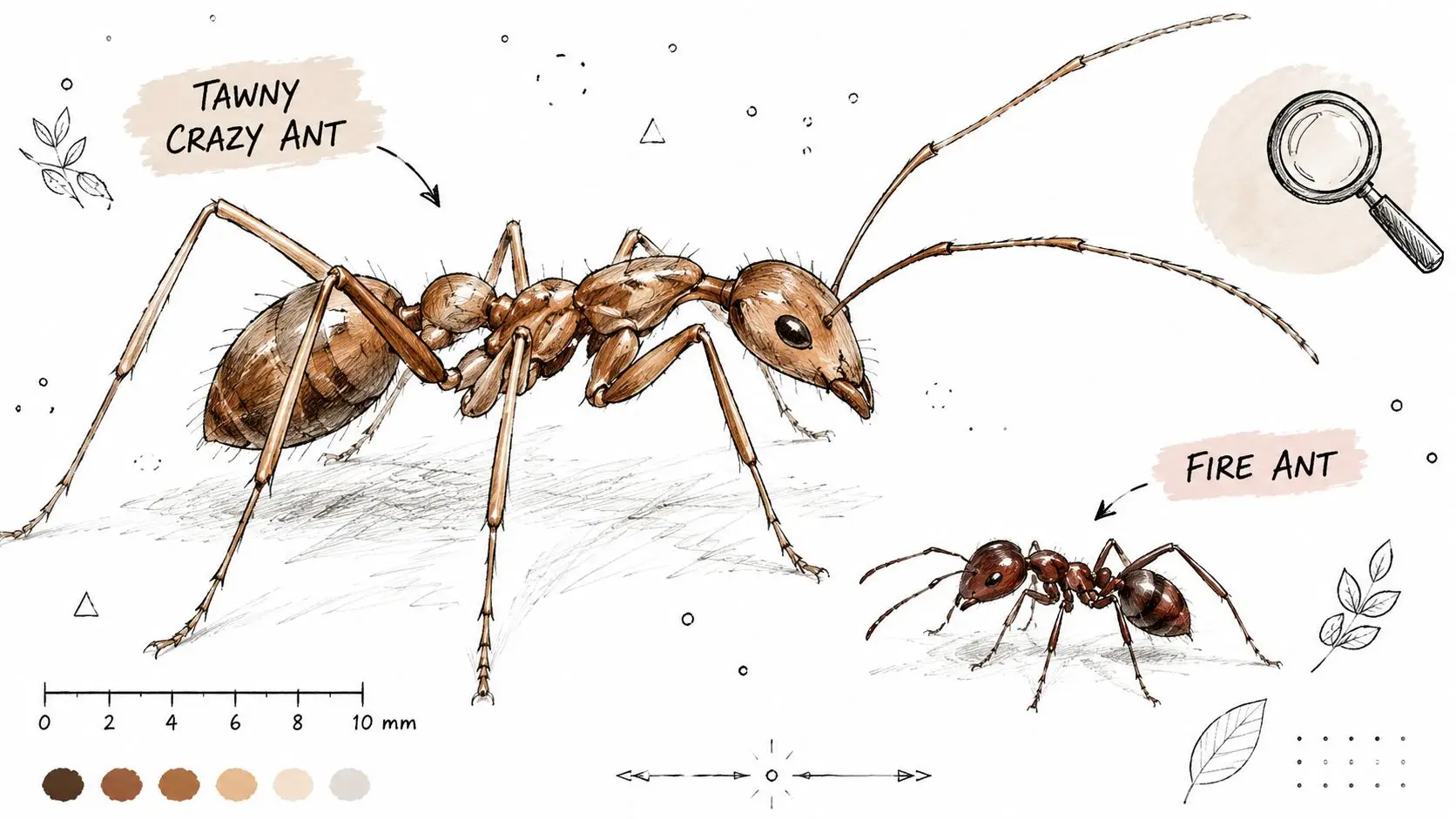
Tawny crazy ants are usually small, reddish-brown to golden-brown ants with long legs and long antennae. Their movement is the most useful field clue. Workers scatter in frantic, irregular patterns rather than maintaining a clean, single-file line. You may see a wide moving sheet of ants across pavement, mulch, or a wall instead of one narrow trail.
Fire ants are more likely to be associated with visible soil mounds and defensive stinging behavior. Tawny crazy ants don't create the same obvious mound pattern, and their activity often looks more like a moving swarm across multiple surfaces.
Use a simple sample check
Brush a few workers into a clear jar, close the lid, and observe them under a flashlight. Don't handle them directly. Look for the long, slender body, extended legs, and antennae without an obvious club at the end. Then watch how they move when disturbed. Tawny crazy ants typically run in unpredictable directions instead of regrouping into a neat trail.
Caribbean crazy ants can create similar confusion because they also move quickly and have elongated legs. Odorous house ants are another common Southeast Texas look-alike, but they more often produce defined trails and may give off a noticeable odor when crushed. Field identification can still be difficult, especially when workers are mixed with other ants around a foundation.
Use this Texas ant identification guide to compare likely species, then call a licensed technician if the activity is widespread, enters the home, or involves electrical equipment. A professional can inspect the trail pattern and nesting areas before choosing a control method.
Inspecting a Magnolia-Style Property
A good inspection starts outside, where the colony usually lives. Walk the property slowly instead of treating the first trail you see. The objective is to locate moisture, shelter, food, and routes that connect the yard to the structure.
Begin at the foundation and move clockwise. Check expansion joints, slab edges, door thresholds, conduit penetrations, and weep-hole areas. Look for leaf litter pressed against the concrete, debris bridging a joint, or vegetation touching the wall. Those small connections can let workers bypass an otherwise clean perimeter.
Next, inspect the damp stations. Open irrigation boxes, check hose bibs, examine downspouts, and look beneath AC equipment. A wet patch under a condenser pad or a slow irrigation leak can support activity even when the rest of the yard looks dry. Check the meter box and nearby outdoor lighting as well, because large ant populations may concentrate around electrical equipment.
Walk the landscape, not just the slab
Mulched beds, compost, firewood, fence lines, and stacked lumber deserve close attention. Turn over pots, boards, and loose debris carefully, watching for workers underneath. Then look upward. A pecan or oak canopy touching the eaves can create a route across the building envelope, while crepe myrtles and citrus may support honeydew-producing insects that attract foragers.
| Inspection station | What to look for | Action if found |
|---|---|---|
| Foundation perimeter | Trails, leaf litter, cracks, debris against the slab | Clear the edge, seal suitable gaps, and mark active routes |
| Irrigation boxes and hose bibs | Damp soil, leaks, ants beneath covers | Repair leaks and dry unnecessary moisture |
| AC condenser pad | Ant activity, mulch contact, wet ground | Remove nearby harborage and keep treatment focused on the exterior |
| Meter box and utilities | Workers entering seams or equipment | Document activity and use a professional for sensitive equipment |
| Mulch, compost, and firewood | Nesting under boards, pots, or organic debris | Remove clutter and store firewood away from the structure |
| Trees and shrubs | Branch contact, scale, aphids, or whiteflies | Prune contact points and address plant pests appropriately |
Finish with a written checklist: foundation, doors, utility penetrations, irrigation, AC pad, meter, mulch, fence, firewood, compost, downspouts, and tree contact. A regular pest inspection guide can help organize the process, but the Saturday-morning version is simple. Find where ants rest, where they feed, and how they reach the house.
The Baiting and Treatment Plan That Works
The treatment order matters in Greater Magnolia and north Houston. Start with the outdoor population, then work toward the structure. Fogging rooms rarely solves an infestation that is still feeding and nesting across the yard.
Build the program around timing
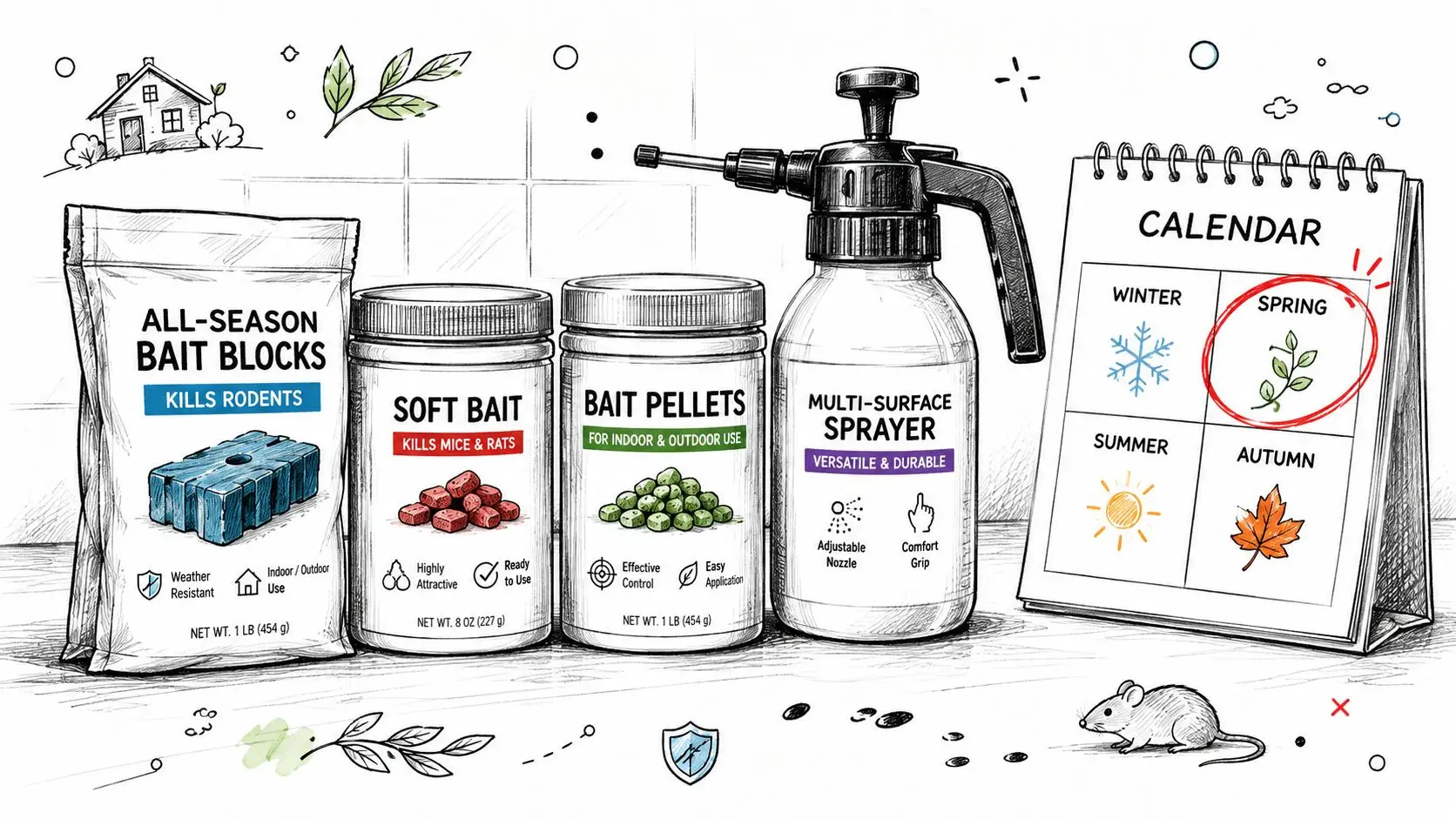
Spring is a strong treatment window. Extension guidance favors earlier applications, before colonies expand from overwintering sites into larger permanent nests. USDA research also reports greater winter concentration, which can provide a better opportunity to reach colonies. In local yards, waiting until summer often means treating trails across beds, fences, equipment pads, and shaded edges.
Place slow-acting bait where workers are actively foraging, especially along trails and near outdoor harborage. The bait must remain available long enough for workers to carry it back, so do not immediately wash treated areas or bury placements under mulch. Follow the product label for species, placement, weather limits, and protection of children and pets.
A non-repellent exterior treatment can support the perimeter plan. Workers can cross the treated zone without immediate avoidance, while bait targets foragers. Granular products may suit mulched beds, irrigated edges, and garden areas, but drainage and label directions determine where they belong.
Avoid the foundation-only trap
A repellent pyrethroid spray on the foundation can reduce visible workers while leaving the colony and surrounding harborage untouched. It may also redirect traffic to another entry route. One application rarely holds because nearby populations can recolonize treated areas within 2 to 4 weeks, according to Texas A&M's management guidance.
Barrier-style contact insecticides often lose effectiveness within 2 to 3 months, so maintenance belongs in the plan. Rotate products only when labels allow it, and never mix incompatible materials. USDA states that no fully effective control method is available yet. Repeated, nest-directed treatment and a wider perimeter program are more realistic than a one-time spray.
For stinging insects around sheds or eaves, this hornets nest removal guide provides separate safety context. Keep that work apart from ant baiting, because broad insecticide use near bait placements can reduce foraging.
The Half Nobody Talks About, Starving the Colony
Killing ants is only half the job. In many Magnolia areas, the other half is reducing the food supply that keeps workers returning.
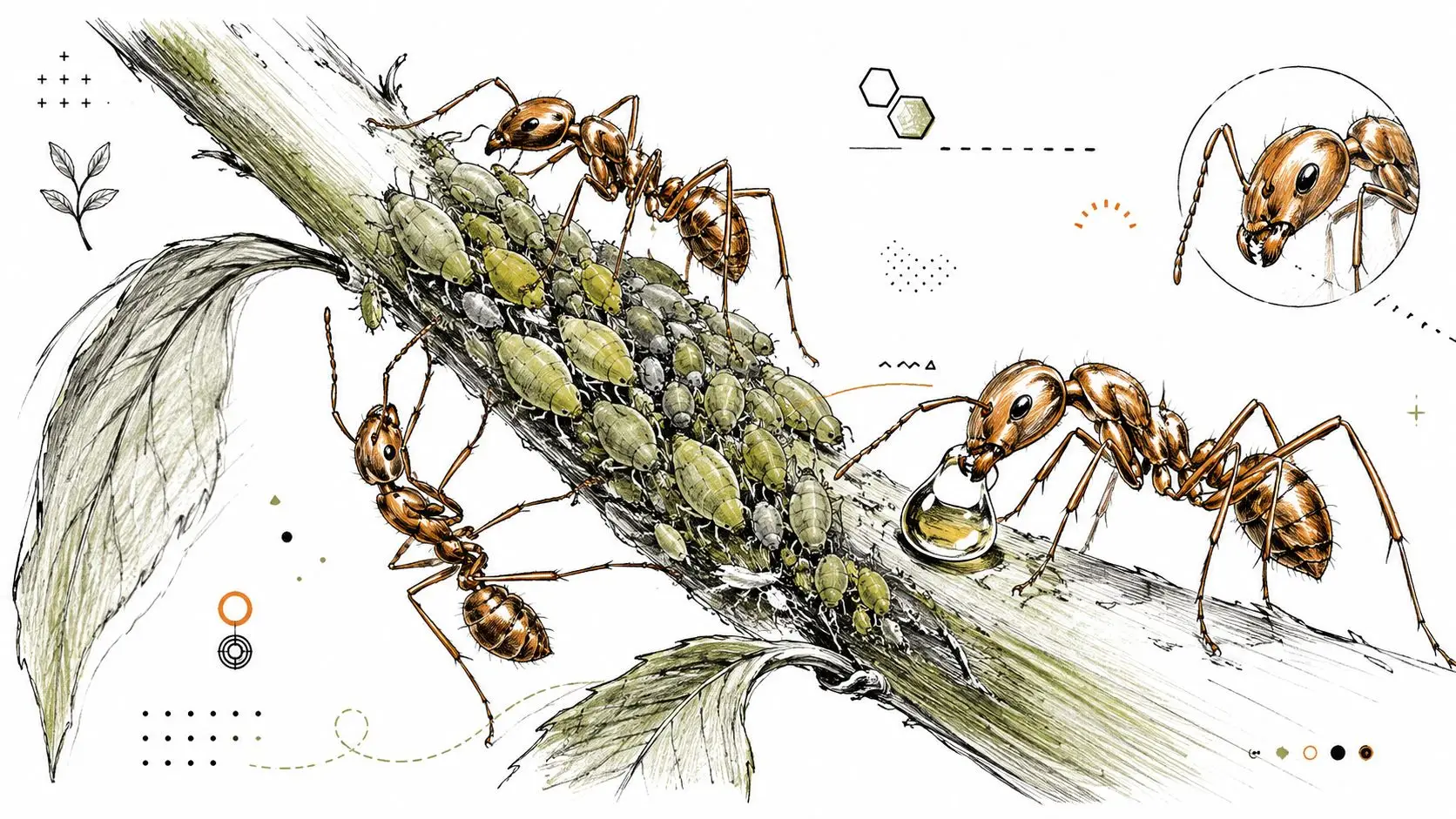
Tawny crazy ants are strongly associated with honeydew produced by aphids, scale insects, mealybugs, and whiteflies. These plant pests feed on sap and excrete a sugary liquid. Ants protect and tend them in exchange for that resource, so a tree or ornamental bed can function as a reliable food station even after direct ant treatment.
Inspect the plants that feed the trails
Look beneath leaves and along stems on pecans, oaks, crepe myrtles, citrus, and other plants. Sticky leaves, black sooty mold, clusters of insects, and unusually busy ant traffic can point to a honeydew connection. Don't assume the busiest plant is the nest. It may be the colony's preferred food source.
Research summarized in landscape infestation guidance from the University of Georgia found that reducing honeydew-producing scale insects with systemic imidacloprid led to fewer tawny crazy ant trails, lower trailing intensity, less foraging, and less nesting on treated plants. That makes plant-pest control a meaningful companion to direct ant treatment, not an optional cosmetic step.
Systemic products require careful judgment. Read the label, consider the plant's condition, and avoid unsafe applications to flowering plants visited by bees. A licensed pest professional can help determine whether a plant treatment is appropriate, especially around edible citrus, pollinator gardens, children, and pets.
The emerging biological-control research points in the same direction. A naturally occurring fungal pathogen was observed across 15 local populations for 8 years, and every population harboring it declined, with 62% disappearing entirely, according to the University of Texas Austin report. The fungus spread through a park-scale population within 1 year, and the ants were gone after 2 years in that example. That work is promising, but it isn't a widely deployed permanent property treatment.
Exclusion and Sanitation You Can Do This Weekend
Chemical control lasts longer when the property stops offering easy routes and shelter. A homeowner can make meaningful progress in a weekend by correcting the conditions found during the inspection.
Start at the structure. Seal cracks around utility conduit, door frames, and suitable exterior joints with an appropriate exterior sealant. Don't block required weep holes or alter drainage paths. Replace worn door sweeps and close gaps beneath thresholds, since a clean perimeter is less useful if workers can walk beneath the door.
Then remove the bridges. Cut branches back from eaves and walls, pull leaf litter away from the slab, and clear debris from expansion joints. Move firewood and lumber off the ground and away from the house. Reduce dense clutter around sheds, fences, and AC equipment without covering vents or interfering with service access.
A practical weekend punch list
- Repair moisture sources: Fix leaking hose bibs, irrigation lines, and downspouts. Confirm that water drains away from the foundation.
- Clear harborage: Remove trash, loose boards, excess leaf litter, plant pots, and clutter from the perimeter.
- Trim contact points: Prune vegetation that touches walls, eaves, utility lines, or roof edges.
- Protect food indoors: Sweep foundation edges, clean kitchen crumbs, seal pantry goods, and don't leave pet food exposed.
- Check equipment: Photograph activity around AC units, meters, pumps, and outdoor lights before moving or opening anything.
- Track recurrence: Mark active locations on a simple property sketch so you can tell whether pressure is shifting.
These steps won't replace large-scale treatment when colonies are established across neighboring lots, but they remove the conditions that make reinvasion easier. FullScope Pest Control offers exclusion support, including rodent-style sealing, within its broader pest planning for the north Houston region.
What to Expect in the First 90 Days
Homeowners often judge tawny crazy ant control too soon. Track changes in activity, entry routes, and nesting pressure instead of expecting every worker to disappear after the first visit. In Greater Magnolia and north Houston, nearby wooded lots, drainage areas, irrigation, and unmanaged vegetation can keep supplying new workers.
The first week
During week one, heavy trails may continue, especially near untreated areas or neighboring properties. A good initial service can reduce activity at the original hot spot while workers search for other routes. Bait also needs time to move through the colony, so immediate surface knockdown is not the goal.
Leave bait placements undisturbed and report new indoor trails. Spraying every visible ant with a repellent product can interrupt the treatment pattern and push workers toward another gap.
Weeks two through four
A rebound during this period does not automatically mean treatment failed. Texas A&M notes that larger surrounding populations can recolonize treated areas within 2 to 4 weeks when baiting temporarily lowers activity. A technician should revisit active trails, inspect the property buffer, refresh suitable bait, and correct remaining moisture or harborage.
Watch the pattern. Is activity returning with the same intensity and in the same locations, or is it shrinking and shifting? Broad activity across the yard usually means a single-property spot treatment cannot keep pace with colonies on nearby lots.
Months two through three
Barrier-style products may lose effectiveness within 2 to 3 months, making retreatment and maintenance normal parts of the program, as noted in Texas A&M's broader buffer guidance. Product rotation, when allowed by the label and appropriate for the site, can prevent overreliance on one treatment type. Each visit should continue addressing nests, trails, moisture, plant pests, and perimeter access.
The overlooked half is food supply. Tawny crazy ants often use honeydew from plant-feeding insects, so treating aphid, scale, or similar plant-pest activity can reduce the food supporting trails around Magnolia homes. Killing visible ants without reducing that supply can leave the property under pressure.
Biological control is developing, but USDA ARS research states that no fully effective control method is available. Expect lower pressure and better control of reinvasion, not a permanent guarantee that no ant will cross the property.
Escalate from DIY when colonies extend across nearby lots, ants persist indoors, activity centers on AC or electrical equipment, or equipment damage is possible. Ask any company:
- Licensing: Are technicians licensed for Texas pest work?
- Quality standards: Is the provider QualityPro certified?
- IPM process: Will the inspection address moisture, harborage, plant pests, baiting, and exclusion?
- Treatment design: Does the plan combine baiting with non-repellent perimeter options?
- Follow-up: What observations trigger retreatment or adjustment?

FullScope Pest Control serves Magnolia-area homeowners through coverage that includes Conroe, Cleveland, Porter, Kingwood, Montgomery, New Caney, Splendora, Spring, Willis, and nearby communities. Magnolia is in southwestern Montgomery County, near FM 1488 and FM 1774 and about 20 miles southwest of Conroe, according to the city's geographic reference. Texas Agriculture's Section 18 label for tawny crazy ant control explicitly includes Montgomery County.
If trails cross your Magnolia yard, photograph hot spots, check irrigation and plant pests, and mark routes around the foundation. For established activity, contact a licensed local pest professional and request an inspection-based IPM plan addressing the structure, baiting, non-repellent perimeter treatment, and follow-up rather than a one-time spray.