1500+ reviews

The first clue is usually small. Your dog keeps scratching at the base of the tail, your cat won't settle on the couch, and you start noticing tiny dark specks in the bedding or on the carpet after a humid Magnolia afternoon. In Southeast Texas, that kind of pattern deserves attention fast, because fleas don't stay a one-animal problem for long.
I see this most often after a yard outing, a visit with another pet, or a stretch of warm, damp weather that never really lets up around Magnolia, Conroe, Kingwood, and the surrounding communities. One restless pet can mean fleas are already working through the house in different life stages, hiding in fabric, carpet edges, and pet resting spots. A clean-looking home can still have a real infestation if the signs are subtle.
For homeowners trying to separate flea irritation from carpet dust or allergy symptoms, it helps to compare what you're seeing with other household triggers, including the kind of irritation discussed in Birmingham homeowners' allergy solutions. The point isn't to overreact. It's to catch the problem while it's still manageable.
That Itchy Feeling in Your Magnolia Home
A lot of flea calls start the same way. Someone notices a pet scratching more than usual, then the pet starts biting at the belly, shoulders, hindquarters, or near the tail, and the behavior just does not let up. Persistent scratching or biting is one of the most common indicators of flea trouble, especially on the legs, belly, back, shoulders, or near the tail.
In Magnolia, that pattern gets louder in warm, humid weather. Fleas do well in the kind of conditions we get across Southeast Texas, and they do not need much of an opening to spread through a home. Once they settle into pet bedding, carpet edges, or upholstery seams, the problem can feel like it showed up all at once.
What homeowners usually notice first
The first signs are often behavioral before they are visual. A pet may pace, chew, lick, or scratch the same spot over and over, especially around the head, neck, tail base, belly, and hindquarters. On people, flea bites often show up as small red, itchy bumps, commonly on exposed skin and especially the lower legs. For a closer look at what those bites can look like, see what flea bites look like on people.
Practical rule: if the scratching keeps returning in the same areas, do not write it off as dry skin or a rough day. Check the coat, the bedding, and the resting spots.
That timing matters. Fleas do not need much space to build a foothold, and by the time the scratching becomes obvious, the home may already have eggs, larvae, pupae, and adults spread through the environment. I have seen homeowners in Magnolia think they had “just one flea” on a pet, only to find the carpet and couch were part of the problem too.
If the itching also seems tied to carpet contact or a dusty room, keep the broader picture in mind. Flea irritation and other indoor irritants can overlap, but flea signs usually cluster around pet resting areas and low-contact skin on people. For a related comparison, see Birmingham homeowners' allergy solutions. In Southeast Texas, that pattern is enough to justify checking the home right away, because flea pressure can stay active through more of the year than many people expect.
The Telltale Signs on Your Pets and Family
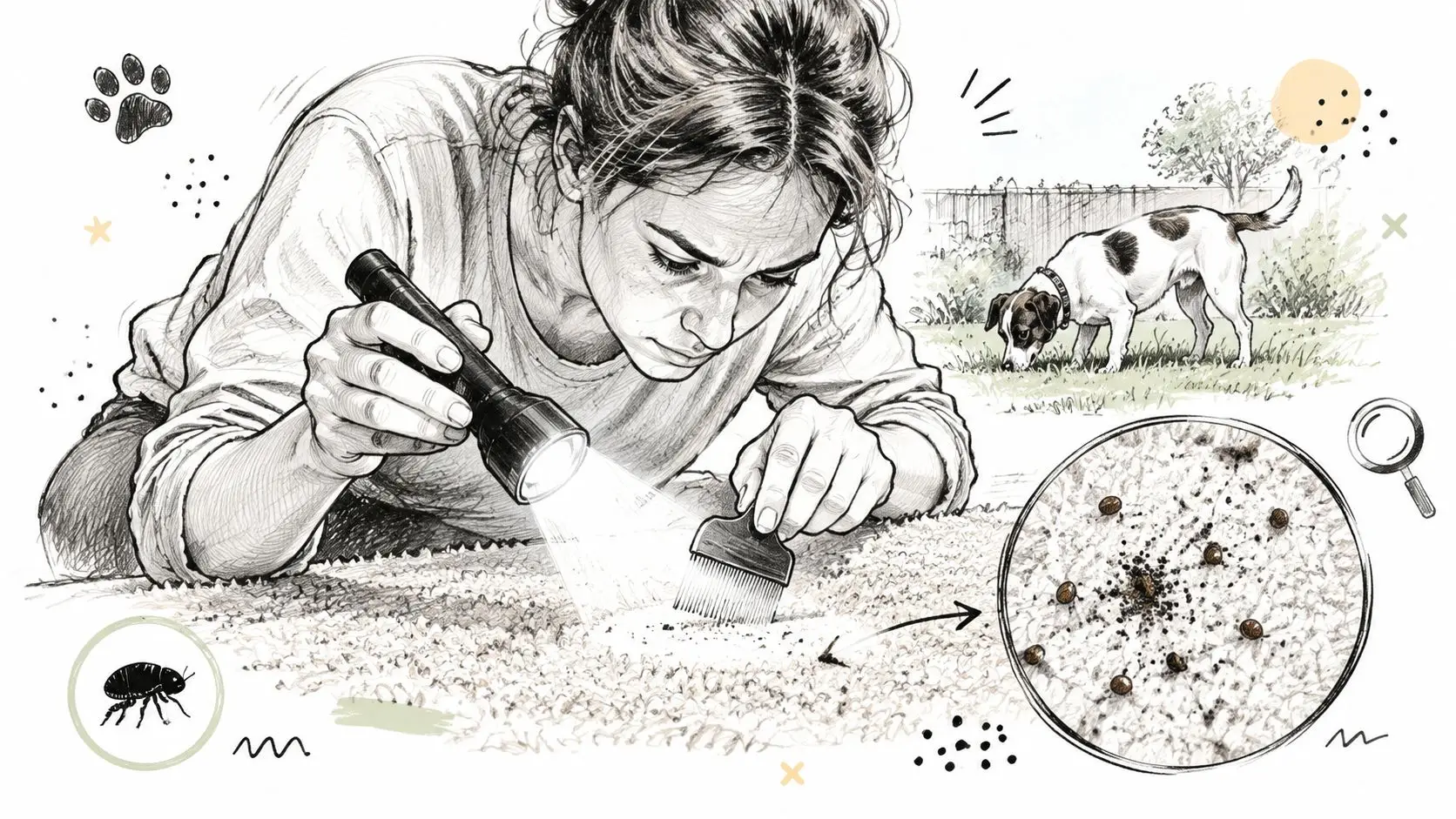
In a Magnolia home, the clearest clue is often what stays behind after the scratching starts. Flea dirt is the dried waste fleas leave after feeding, and it usually looks like black dandruff on the coat. The practical test is simple. Put the specks on a damp white towel or cloth, and if they turn red, you are looking at blood-based flea debris rather than normal skin flakes.
How to check a pet the right way
Use a flea comb and work through the places fleas tend to collect, especially the neck, back, base of the tail, belly, and hindquarters. Comb slowly so you catch what is sitting in the coat instead of brushing past it. Then tap the combed-out material onto a damp white paper towel or white cloth. A reddish-brown stain points to flea dirt, and that is a stronger sign than itching alone.
That difference matters in Southeast Texas, where pets can pick up fleas even if the yard looks clean. Ordinary dirt falls away. Flea dirt leaves a blood-colored mark when moistened, and that tells you the pest is active on the animal and likely leaving material in bedding and resting spots too.
People can show the problem as well. Flea bites often appear as small, itchy red bumps, sometimes in clusters around the ankles and lower legs, because fleas feed on blood and usually bite exposed skin. If you want a closer comparison, see what flea bites look like. When several people in the home wake up itchy, check pet bedding, upholstered furniture, and any soft spot where a pet rests.
The pattern is what matters. One itch can be a lot of things. Repeated bites on people, along with black specks on the pet and red-brown staining on the towel test, should be treated as probable flea activity until you prove otherwise.
Uncovering Hidden Fleas in Your Home and Yard
Fleas don't live only on pets. Their immature stages hide in protected spots where the air stays humid and debris collects, which is why Magnolia homes with soft furnishings and shaded yards can keep feeding the problem long after the first adult flea disappears. Flea larvae develop in pet bedding, carpet nap, furniture fibers, and sheltered floor edges, especially where organic debris accumulates Chewy education guide.
The rooms and surfaces that deserve the closest look
Check the places where a pet rests, not just the rooms that look dirty. That means bedding, the edges of rugs, couch cushions, chair seams, the baseboards behind furniture, and the underside of beds if pets are allowed there. I'd also look along the path from the back door to the pet's favorite spot, because fleas often end up where traffic and fabric meet.
A simple sock check can help in carpeted areas. Walk slowly in white socks across the carpet, especially near pet rest sites and along room edges. If adult fleas are present, they can jump onto the fabric and make themselves visible against the white background.
Where the yard keeps feeding the cycle
Outside, fleas are drawn to shady, moist areas like leaf litter, overgrown plants, thick grass, and sheltered spots under decks or around stored items. That matters in Southeast Texas because our yards often hold the exact conditions fleas use to stay active. If pets spend time in those areas, they can bring the problem straight back indoors.
For homes where fleas seem to keep returning from sleeping spaces, this guide on can fleas live on your bed can help frame the inspection. The bed isn't the whole story, though. If the carpet edges, pet crate, or shaded yard remain untreated, the infestation keeps a foothold.
Practical rule: inspect the resting site first, then the travel path, then the yard conditions that could be seeding the house again.
Confirming an Infestation and Understanding the Enemy
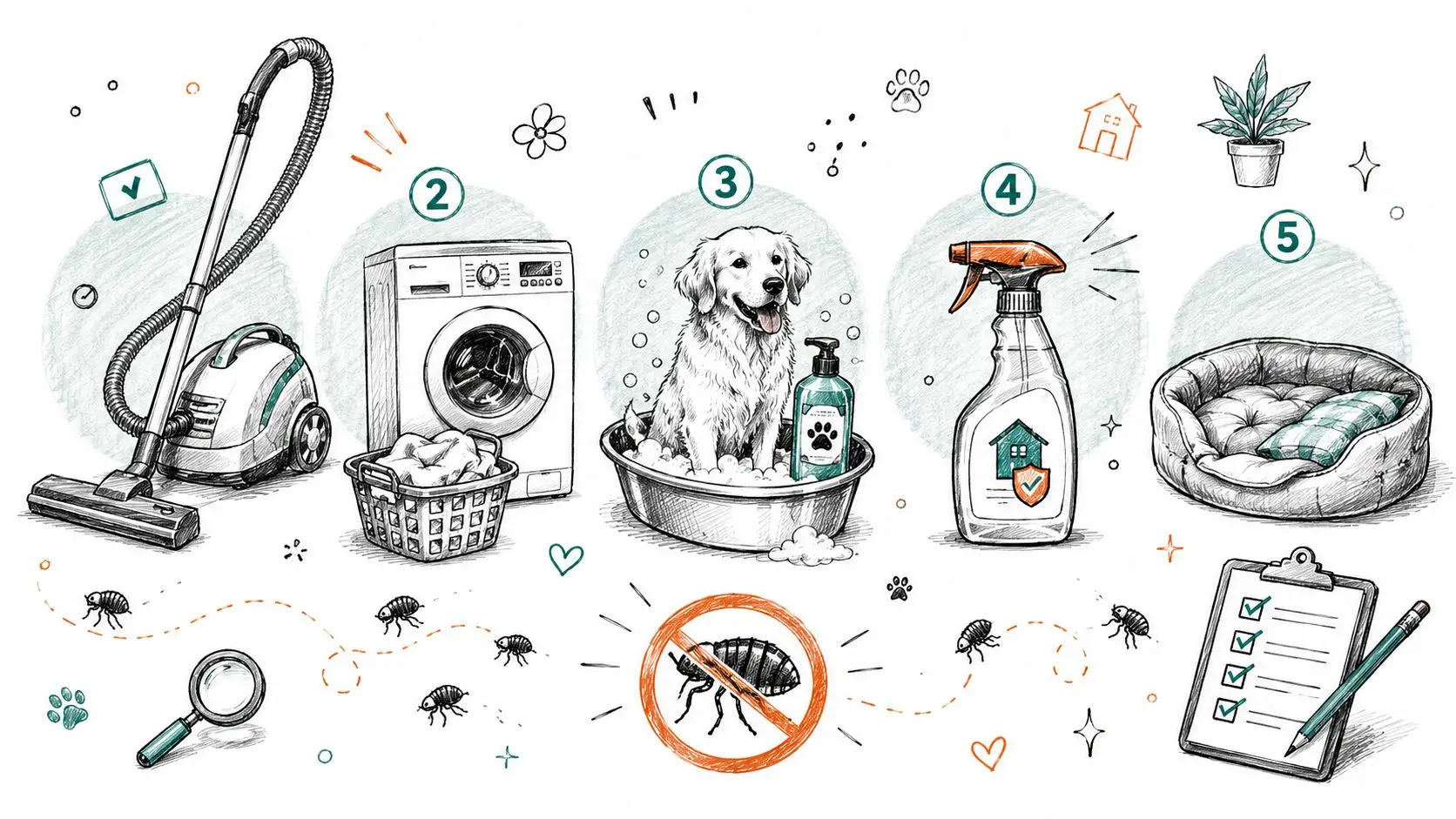
A few bites or a few dark specks do not prove a full infestation by themselves. Live fleas in any life stage, larvae, pupae, or adults, are the clearest confirmation that the problem is active, as noted earlier. That is the point where a guess turns into a real flea issue in the home.
The flea life cycle is the reason the problem can seem to calm down and then come back. Eggs, larvae, pupae, and adults do not all react the same way to cleanup or treatment, and the pupal stage can hold out until the conditions change. In a Magnolia home, that can make the first round of cleaning look successful before the next wave shows up.
Why one sighting rarely means one flea
One adult flea usually means the indoor environment has already been seeded. Eggs fall into carpet and fabric, larvae stay tucked into protected fibers, and pupae wait until the room and the host activity line up again. In Southeast Texas, warm and humid weather can keep that cycle moving longer than many homeowners expect, especially when pets move between shaded yards and soft indoor resting spots.
What confirmation changes
Once live fleas show up, the response has to go beyond treating one spot. The pet needs treatment, the home needs cleaning, and the yard or entry points need attention so the infestation does not keep feeding itself. If one life stage is missed, the cycle keeps going.
That is also why effective yard treatment for ticks and fleas matters in this part of Texas. Shady beds, moist soil, and protected edges around the house can keep supplying fleas even after the indoor signs ease up. For a worried homeowner, the useful shift is simple. Stop relying on itching alone and confirm the actual insects before deciding how far the problem has spread.
Immediate DIY Steps You Can Take for Flea Control
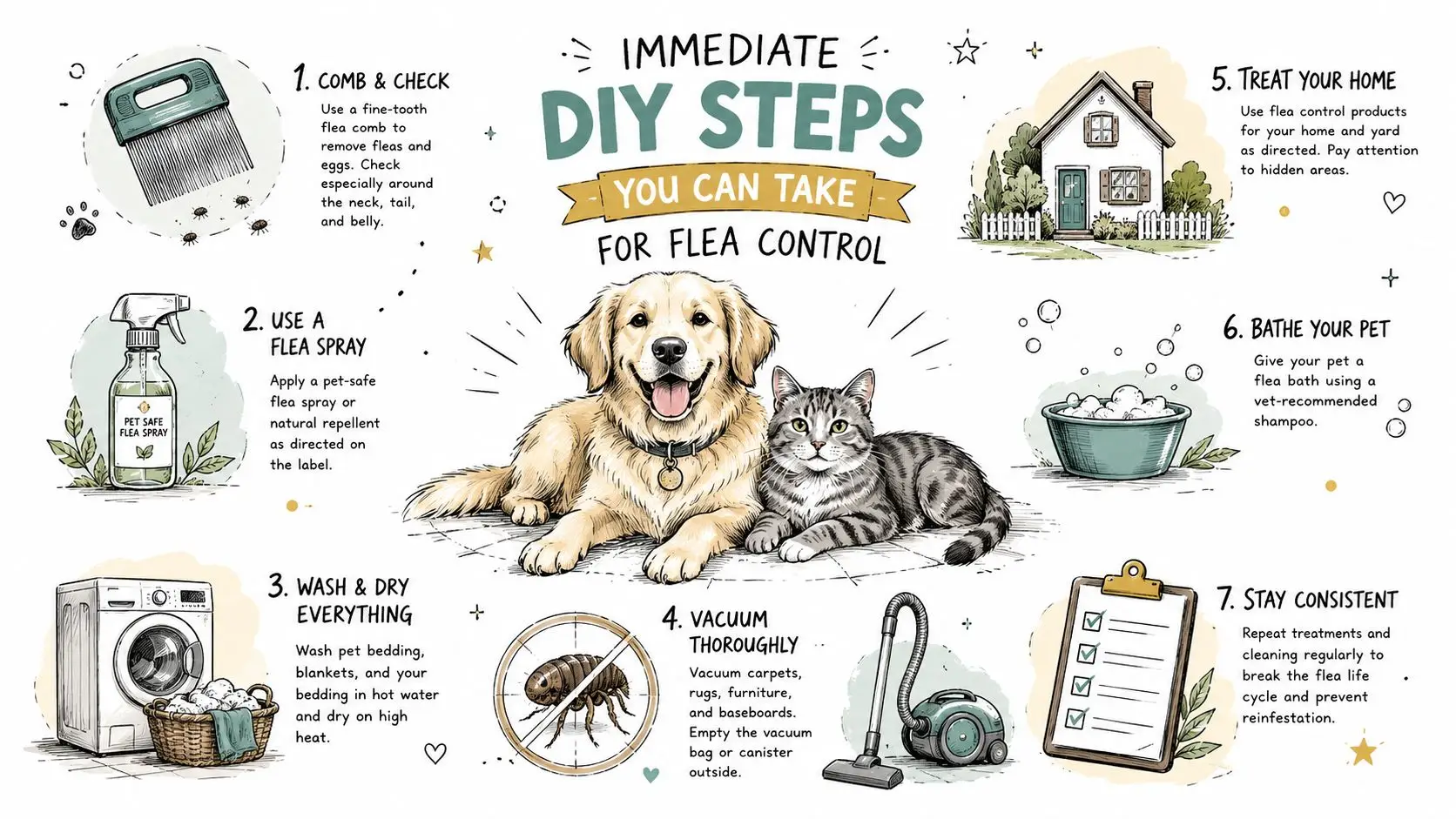
A homeowner in Magnolia usually notices the problem in the same places first, a dog scratching after coming in from the yard, a cat grooming more than usual, or tiny bites around ankles after time on the carpet. At that point, fast cleanup matters. Start with vacuuming and do it thoroughly. Missouri Extension recommends vacuuming the entire house weekly, with extra attention to pet resting areas, carpets, and cracks along baseboards, and it notes that vacuuming reduces the population rather than solving the problem on its own Missouri Extension.
What to do first
Use the vacuum on carpets, rugs, upholstered furniture, under cushions, along baseboards, under beds, and around pet crates or bedding. If the vacuum has a bag, seal and remove it right after use. If it is bagless, empty the canister outside the home so live fleas and eggs do not stay in the indoor trash.
Wash pet bedding, blankets, throws, and soft toys in hot, soapy water. That removes a lot of the material fleas use to keep the cycle going. If pets sleep on the couch or your bed, clean those fabrics too, because that is where flea debris tends to settle.
What these steps can and can't do
These measures help quickly, but they do not always finish the job in an established infestation. Vacuuming and laundering cut the number of fleas, yet fleas hiding in deeper carpet fibers, wall edges, or outdoor reservoirs can survive. In heavier cases, Missouri Extension says an insecticide spray is usually needed for carpeting and structural hiding places.
For yard-heavy problems, homeowners sometimes need a separate outdoor approach as well. If you are comparing options for the grass, shrubs, and shaded perimeter, this resource on effective yard treatment for ticks and fleas is a useful reference point.
A clean vacuum line matters less than consistent coverage. Hit the pet zone, the room edges, and the places where fabric and dust collect.
If fleas are already showing up in more than one room, treat these steps as control, not a cure. Use practical guidance on whether pest control can get rid of fleas to judge whether the infestation has gone beyond DIY. In Southeast Texas, warm air and humidity keep flea pressure active longer than many people expect, so year-round prevention matters once pets start moving between lawns, patios, and living spaces.
When to Call Professionals for Flea Treatment in Texas
A Magnolia homeowner can clean, vacuum, and wash bedding, then still find fleas jumping back a few days later. That pattern usually means the infestation is already past the point where surface cleaning can finish it, especially here in Southeast Texas where humidity keeps flea activity going in yards, shaded beds, and pet rest areas far longer than many people expect.
Call for professional help when fleas keep showing up after thorough cleaning, when more than one pet or family member is reacting, or when the problem returns season after season. In this part of Texas, that pattern is common because flea pressure can continue outside the narrow bug season people expect. Healthline notes that infestations can happen any time of year, and that pets in warmer climates like Southeast Texas should stay on a high-quality flea preventative year-round because fleas thrive where tall weeds and grasses are common Healthline.
The decision point that matters
If you are still seeing fleas after vacuuming, washing bedding, and checking the pet, the infestation is probably bigger than the surface signs suggest. That is especially true in Magnolia, Kingwood, Conroe, and nearby neighborhoods where pets move between lawns, patios, garages, and living rooms. The home and yard work together, so treatment has to do the same.
A professional service can inspect both indoor and outdoor hiding spots, then apply targeted treatments based on where fleas are living. For homeowners wondering whether standard services can clear them out, it helps to understand does pest control get rid of fleas. In practice, that means a more strategic response than chasing the visible adults. It also gives you a prevention plan so you are not starting over after the next humid stretch.
What a service call changes
A trained technician can separate likely flea activity from look-alikes, identify hotspots you may have missed, and build a treatment sequence that reaches the pet zone, the floor edges, and the surrounding yard. FullScope Pest Control is one local option that provides flea control as part of its pest services in the Magnolia and north Houston area, including homes that need inside-and-outside coverage.
If you have reached the point where the scratching keeps coming back, do not wait for the next round of bites. Book a professional inspection, keep the pet on year-round prevention, and ask for a plan that addresses both the house and the yard. That is the most reliable way to break the cycle in Southeast Texas homes, especially around Magnolia, where fleas do not really take a season off.