1500+ reviews

A lot of Alden Bridge homeowners meet fire ants the same way. You step off the patio to move a hose, pull a weed, or edge around a flower bed, and within seconds your ankle is covered. By the time you realize what happened, the stings have already started.
That's not bad luck. It's normal fire ant behavior in Southeast Texas, and it's one reason this pest keeps showing up in the same neighborhoods year after year. In a place like The Woodlands, where lawns stay watered, soils get disturbed, and storms can rearrange an entire yard in a day, fire ants have everything they need.
Your Guide to Fire Ants in Alden Bridge
You notice fire ants in Alden Bridge where daily life happens. A mound shows up by the mailbox, along the driveway, beside the condenser pad, or in the strip of lawn the kids cut across every afternoon. In Southeast Texas, that is normal yard pressure, not a rare event.
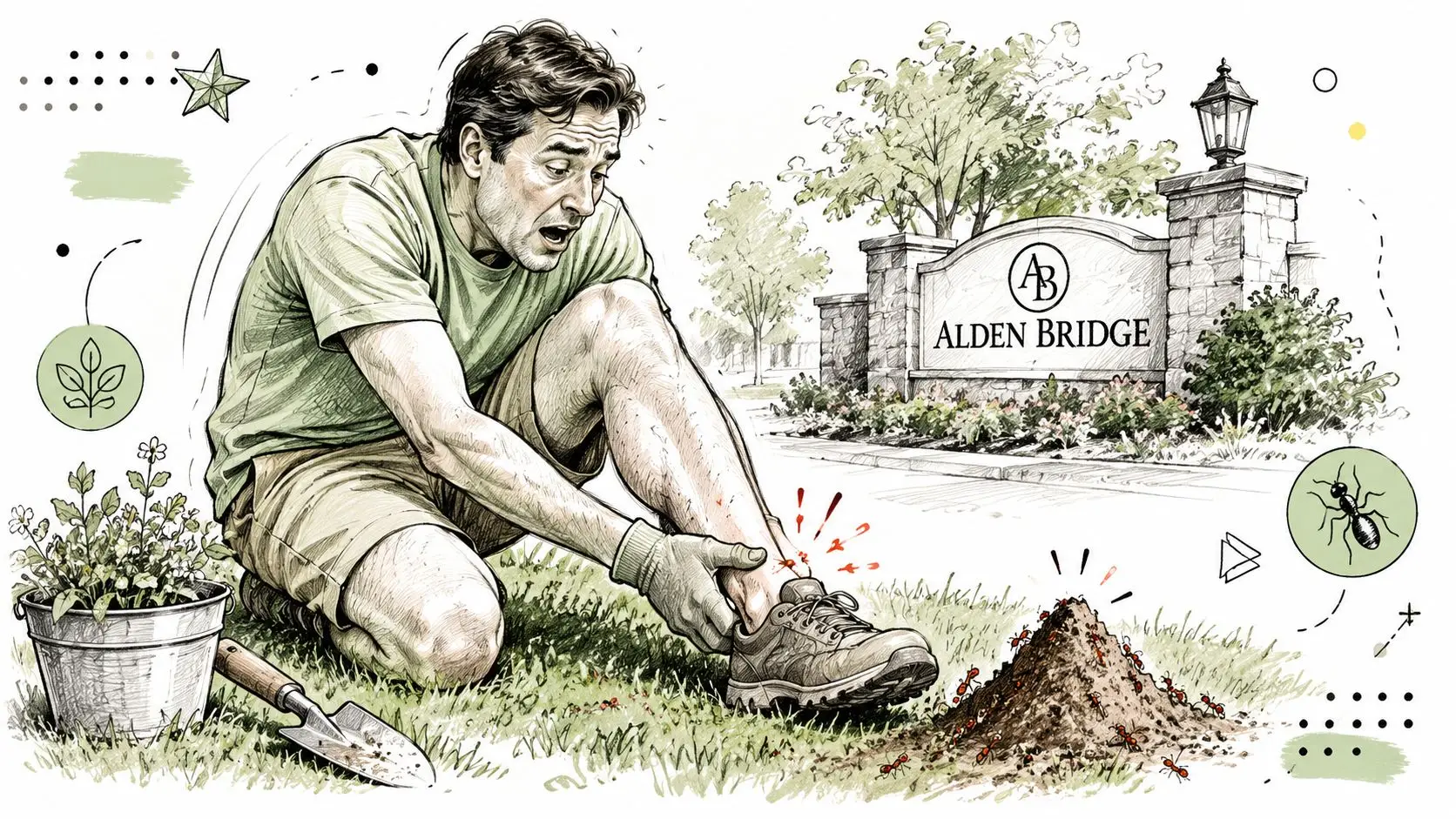
The problem here is persistence. Fire ants rebuild after disturbance, shift locations after heavy rain, and spread in from neighboring lots that are not being treated on the same schedule. Flooding and saturated soil can break up colonies and move them, which is one reason homeowners often feel like the ants "came back overnight" after a storm.
That reality changes the goal. Good fire ant control is not about pretending you can clear a property once and never deal with them again. It is about reducing active colonies, lowering sting risk, and keeping the yard usable with a plan that holds up through irrigation, heat, and storm season.
Most homeowners want clear answers fast:
- How do I know these are fire ants
- How much risk do they pose for my family and pets
- Will store-bought products solve it
- What kind of treatment schedule works in this part of Texas
Those are the questions that matter.
One other point is easy to miss. Not every ant problem in a yard is a fire ant problem, and treating the wrong species wastes time and product. If you want a quick reference before treating, this guide to common ant types around Texas homes helps sort out what you are seeing.
The long-term trade-off is simple. Spot-treating mounds can knock down visible activity fast, but it usually leaves pressure elsewhere in the yard. A broader management plan takes more consistency, but it does a better job of keeping new colonies from turning the lawn into a sting hazard a few weeks later.
How to Identify Fire Ants and Their Nests
The first mistake many homeowners make is treating every ant mound like it's the same pest. It isn't. Correct identification matters because fire ant control works differently than control for other lawn ants.
What the ants look like
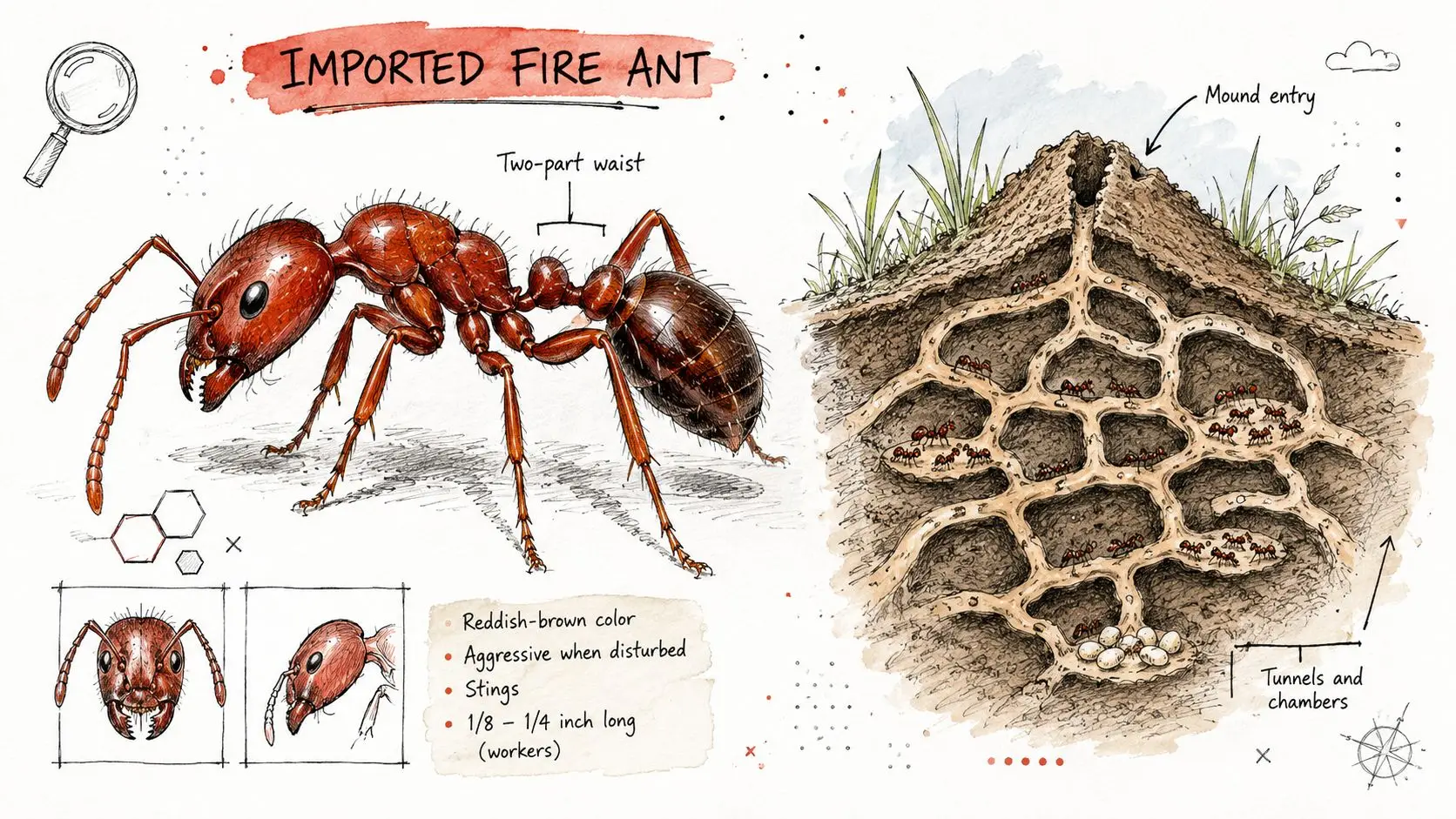
Red imported fire ants are reddish-brown to black and average 1/8 to 1/4 inch in length, with workers that vary noticeably in size within the same colony. That mixed-size worker group is one of the key field clues. The National Park Service also notes that their rapid swarm response after mound disturbance is a defining behavior of this species in affected regions, as described in this fire ant identification guide from the National Park Service.
If you want a side-by-side overview of other ant species homeowners commonly confuse with them, this guide to common ant types around Texas homes helps sort out the differences.
What the mound looks like
A fire ant mound often looks like a loose, fluffy pile of worked soil. Homeowners usually notice it after rain, mowing, or fresh irrigation because the disturbed earth stands out more clearly then. In lawns, the mound may not have a visible center hole like some other ant nests.
Check these common nesting spots around Alden Bridge properties:
- Sunny lawn areas where irrigation keeps the soil workable
- Garden edges where mulch meets turf
- Around tree bases where ants can nest close to roots and protected soil
- Near driveways and sidewalks where heat and disturbed ground favor activity
The behavior gives them away
If you're still not sure, behavior is usually the deciding factor. Disturb the mound lightly and watch what happens. Fire ants don't wander out slowly. They boil up fast and spread aggressively over the mound surface.
That fast swarm response is the clearest sign most homeowners can use without a microscope or specimen jar.
A short visual helps if you've never seen that response up close.
Understanding the Dangers of Fire Ant Infestations
Alden Bridge homeowners usually realize how serious fire ants are the moment somebody steps into a mound barefoot, a dog noses one in the flower bed, or a child gets hit while playing near the lawn edge. Around Southeast Texas, that can happen fast, and after heavy rain or flooding, colonies often turn up in places people did not expect a day earlier.
What happens during a sting event
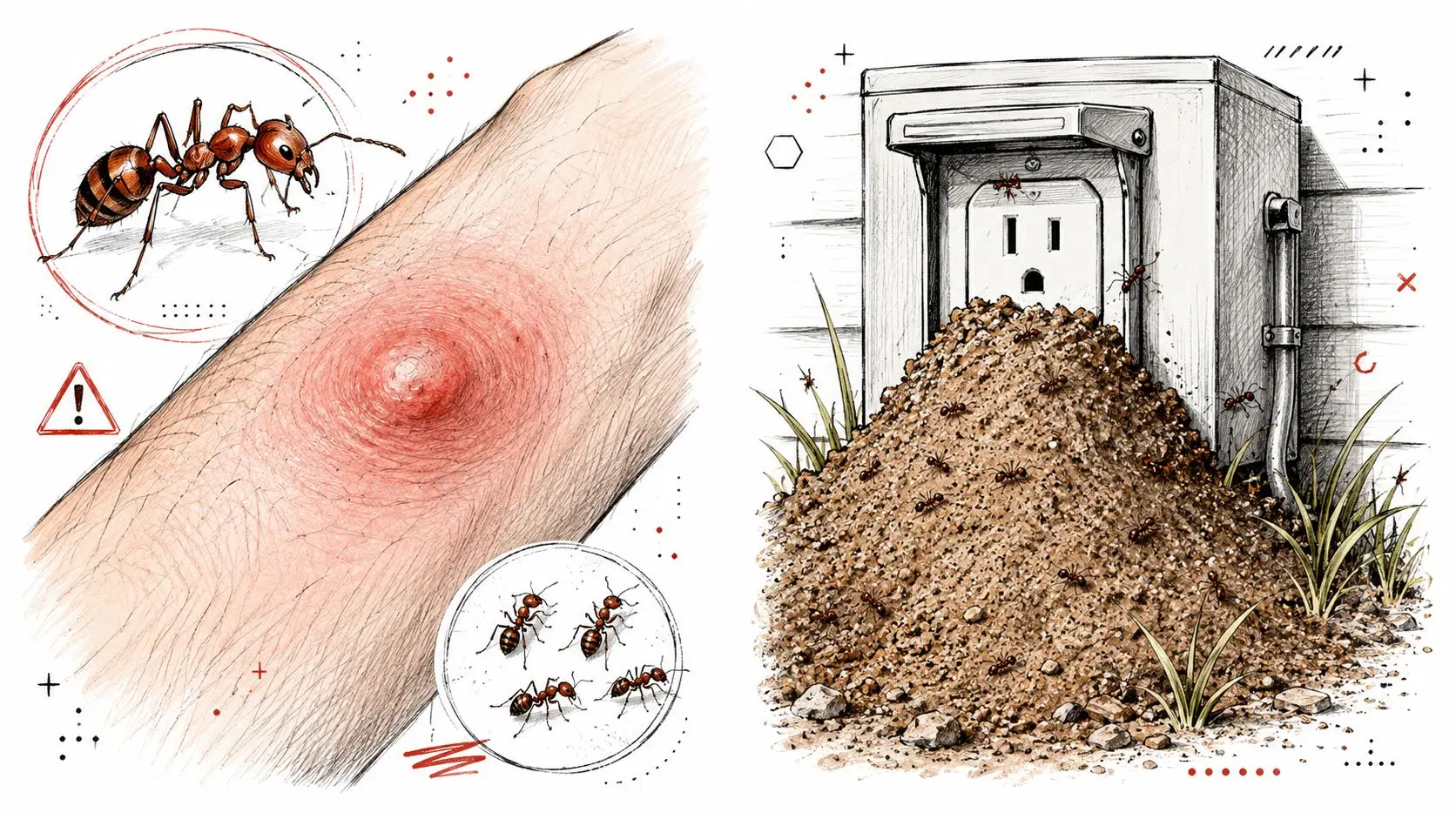
Fire ants do not bite and leave. They grab the skin with their jaws, pivot, and sting multiple times when the nest is disturbed. NC State Extension describes the usual reaction clearly: immediate pain, a raised welt, and then a pustule that often forms within 24 to 48 hours, as explained in this red imported fire ant reference from NC State Extension.
That pustule is where a bad situation often gets worse. Kids scratch them open. Adults rub them raw with socks, work boots, or yard clothes. Once the skin is broken, infection becomes a real concern.
Why the medical risk is different
For many people, the result is sharp pain and several miserable days of itching. For others, the risk is more serious. In rare cases, hypersensitive individuals may experience nausea, shock, and chest pains.
That is why I tell homeowners not to judge the threat by mound size. A small mound in the wrong spot can still put a lot of ants on a person or pet in seconds.
Use more caution around fire ants if your household includes:
- Young children who may not recognize a mound before stepping into it
- Older adults who may have trouble moving away quickly
- Pets that investigate with their paws or muzzle
- Anyone with a history of severe insect sting reactions
The problem goes beyond stings
Fire ants also interfere with how you use the property. They can make parts of the yard functionally off-limits, especially around play areas, garden beds, mailboxes, utility boxes, and equipment pads. In Southeast Texas, flooding adds another layer to that problem because colonies can relocate and rebuild in new spots instead of staying where you first noticed them.
Quick surface treatments do not solve that. They may knock down visible activity for a short time, but if the colony survives or nearby colonies move back in, the problem returns. That is one reason why fire ant mounds often multiply in spring and after weather shifts catches so many homeowners off guard.
Property damage is part of the risk
The sting hazard gets the most attention, but it is not the only issue. Fire ants have also been reported around air-conditioning units and wiring areas, which is why technicians pay attention when they see mound activity near outdoor equipment.
Once ants move into those spots, the job changes from simple yard treatment to protecting systems that cost real money to repair.
| Area | What fire ants affect |
|---|---|
| People | Painful stings, pustules, possible severe reactions |
| Pets | Repeated stings on paws, face, and belly |
| Lawn use | Less safe access to play, mowing, and routine yard work |
| Equipment zones | Added concern around AC units, utility boxes, and wiring areas |
Fire ants are a health issue, a yard-use issue, and sometimes an equipment issue. In this part of Texas, long-term control matters more than a quick kill on one mound, because weather, moisture, and migration keep changing where the next problem shows up.
Fire Ant Activity by Season in Southeast Texas
Fire ant pressure in Southeast Texas doesn't stay the same year-round. The colonies stay active, but where you notice them and how they behave shifts with weather, soil moisture, and flooding.
When activity is easiest to spot
In Alden Bridge, homeowners usually notice fresh mounds most clearly when temperatures are milder and the lawn has regular moisture. After rain, irrigation, or a stretch of more workable weather, colonies rebuild visible mounds fast. That's one reason spring and fall are the windows commonly associated with active treatment.
If you've seen mounds multiply after a seasonal weather shift, this overview of why fire ant mounds multiply in spring and how to respond matches what many Southeast Texas homeowners deal with.
Summer changes the pattern
In peak heat, the ants don't disappear. They adjust. Homeowners often assume the problem is gone because they see fewer obvious daytime trails. In reality, colonies may still be active while shifting their movement to more favorable conditions.
That matters for DIY efforts. A homeowner may apply a product in the hottest part of the day, see little immediate result, and assume the product failed when timing and ant behavior were part of the issue.
Flooding changes the risk completely
Flood season is where generic fire ant advice breaks down. Southeast Texas yards don't just get wet. They can take on standing water, runoff, and debris that move pests from one part of a property to another.
Texas A&M entomologists confirm that fire ant colonies floating in floodwaters are alive and will "explode" upon contact with an object or person, causing immediate bites and stings, according to Texas A&M AgriLife guidance on floating fire ants during flood hazards.
That changes cleanup priorities. A pile of wet leaves, a branch caught near a fence, or a piece of yard debris in standing water may not just be debris. It may be carrying a live colony.
After flooding, treat every clump of floating yard material like it could contain fire ants until you know otherwise.
What homeowners should do after storms
Post-flood fire ant safety is mostly about contact prevention.
- Wear cuffed gloves when handling debris in wet areas
- Use rubber boots during yard cleanup where water has stood
- Avoid reaching blindly into brush piles, drains, or saturated mulch beds
- Rub ants off quickly if they get on skin, rather than crushing them against the body
In Southeast Texas, flood recovery and fire ant control overlap. Homeowners who understand that are much less likely to get surprised during cleanup.
DIY Fire Ant Control Methods and Common Pitfalls
Alden Bridge homeowners usually start DIY fire ant control the same way. They treat the mound that ruined the weekend, then wait to see if the yard feels better. A week or two later, new mounds show up near the driveway, fence line, or back beds, especially after rain.
That pattern is common in Southeast Texas because fire ant control fails at the property level before it fails at the mound level.
What doesn't work
The grits myth refuses to die. It sounds cheap, easy, and harmless, but it does not solve a fire ant problem. Texas A&M explains that worker ants cannot ingest particles that large, which is why remedies like instant grits do not work, according to the Texas A&M fire ant management FAQ.
The same problem shows up with random store-bought sprays used on whichever mound is easiest to reach. You may kill surface ants. You may even flatten that mound for a while. But if there is no yard-wide plan, nearby colonies keep foraging, new queens establish, and the pressure returns.
Fire ants reward coverage and timing, not guesswork.
The boiling water trade-off
Boiling or very hot water is a method that is sometimes effective. It can knock out a mound fast, and I understand why homeowners try it when they want immediate relief in a small area.
The trade-off is real. Texas A&M notes that using about 3 gallons of very hot water on a mound works only part of the time, and it carries a real risk of burns and plant injury. In a well-maintained yard, that matters. A quick mound kill is not much of a win if you also scorch turf, damage roots, or spill water on yourself carrying a heavy pot across uneven ground.
Here is the practical breakdown:
| Method | Upside | Limitation |
|---|---|---|
| Instant grits | Cheap and easy to try | Does not work on fire ants |
| Very hot water | Fast mound knockdown in some cases | Inconsistent control, burn risk, plant damage |
| Spot mound treatments | Useful for high-activity mounds | Misses colonies elsewhere in the yard |
| Broadcast bait | Treats the larger population across the property | Takes patience, timing, and follow-up |
What DIY looks like when done correctly
The better DIY approach is broad coverage first, then cleanup work. In plain terms, that usually means applying a broadcast bait across the yard and following up later with direct treatment on the mounds that remain active.
That approach matches how fire ants spread across a property in this part of Texas. After heavy rain, mowing, irrigation changes, or neighborhood disturbance, activity can shift. The mound you see is not always the only colony that matters.
For homeowners comparing products and application methods, this guide to do-it-yourself fire ant control methods gives a useful overview of the main options.
If your plan only attacks the mound you can see today, you should expect more work next month.
DIY treatment can reduce fire ant pressure. It does not usually give stable, long-term control unless the whole yard is treated on a schedule and adjusted for Southeast Texas conditions, especially after flooding or long wet periods.
The Case for Professional Fire Ant Management
The primary argument for professional fire ant work isn't convenience. It's consistency. Homeowners can knock back visible colonies on their own, but long-term control usually breaks down when there's no coordinated yard-wide plan.
Why short-term wins fool people
Many homeowners focus on what seems cheaper this weekend. That's understandable, but it often leads to repeat spending on one-off products that never reduce the bigger pressure. Research cited for Alden Bridge homeowners notes that while 90% versus 60% short-term effectiveness may sound like a major difference, neither method provides long-term control unless a yard-wide bait is used, making that the only cost-effective long-term solution despite the higher initial investment, as discussed in this fire ant management discussion on long-term effectiveness.
That lines up with what pest professionals see in the field. A strong mound kill is not the same thing as a stable yard.
What a professional plan does differently
A professional program usually follows the same basic logic that works best in fire ant management:
- Broadcast first to cover the full property and reach colonies beyond the obvious mound
- Target survivors with direct mound treatment where nuisance activity remains
- Repeat on schedule because fire ants don't stay controlled permanently
That approach fits integrated pest management. It treats the property as an active environment instead of a collection of isolated mounds.

Where local service fits
For homeowners who don't want to manage bait timing, mound follow-ups, and recurring reinfestation on their own, FullScope Pest Control is one local option that provides professional pest services in north Houston and nearby Southeast Texas communities.
The practical value of professional fire ant management isn't hype. It's fewer surprise mounds in high-use parts of the yard, fewer failed DIY experiments, and a treatment schedule built around the fact that fire ants come back unless somebody keeps pressure on them.
Common Fire Ant Questions from Alden Bridge Residents
Alden Bridge homeowners usually ask the same thing after a sting or a sudden flare-up after rain. Why are these ants back again, and what keeps them under control here?
Can fire ants be permanently eradicated from my yard
No. In Southeast Texas, permanent eradication at the yard level is not a realistic goal. Colonies shift, neighboring properties act as source areas, and wet weather can push ants into new parts of the surroundings.
The workable goal is long-term suppression. That means reducing mound pressure across the property, treating on schedule, and expecting retreatment over time.
Are fire ants really that common in Texas
Yes. Fire ants are well established across much of Texas, including communities like Alden Bridge where warm temperatures, irrigated lawns, and frequent rain support colony growth.
In this part of the state, flooding makes the problem worse. Colonies can raft, relocate, and show up in spots that looked clean a week earlier.
When should I treat for them
Spring and fall are usually the best times for broad property treatment because colonies are active and bait programs tend to perform more consistently then.
That said, Southeast Texas does not always follow a neat calendar. Mild winters, heavy summer rain, and saturated soil can change ant movement fast, so the right timing depends on conditions in your yard, not just the month.
Should I trust home remedies I see online
Usually no. Grits, club soda, boiling water, dish soap mixes, and other quick fixes may kill a few visible ants or flatten one mound, but they rarely solve the property-wide problem.
That is the trade-off homeowners run into. Cheap, fast treatments feel productive, but they often miss the colony or leave nearby nests untouched. A yard can look better for a few days and still have active pressure underneath.
Are professional treatments only for severe infestations
No. Some homeowners call after the yard gets out of hand. Others bring in a pro because they are tired of chasing mounds one at a time and want a maintenance plan that fits local conditions.
That approach makes sense in neighborhoods where reinfestation is common and weather keeps resetting the problem.
What should families with kids and pets ask before treatment
Ask what product is being applied, whether it is a broadcast bait or a direct mound treatment, where it will go, and how long the family and pets need to stay off treated areas.
Also ask what the follow-up plan is after rain. Around here, that matters. A treatment choice that works on a dry schedule may need adjustment after storms, standing water, or repeated flooding.
Fire ants are part of yard care in Southeast Texas. Homeowners who get the best results treat them as an ongoing management issue, not a one-time knockout job.
If fire ants keep showing up in your Alden Bridge yard, the next step is simple. Get the colonies identified correctly, stop wasting time on remedies that don't work, and use a yard-wide plan that matches Southeast Texas conditions.