1500+ reviews

If your yard already feels buggier than usual this year, you’re not imagining it. NOAA has confirmed El Niño conditions are active and strengthening, with forecasters now putting real odds on this becoming one of the strongest El Niño events on record heading into late 2026. For North Houston homeowners, that’s not just a weather story. It’s a pest story.
Here’s what a super El Niño year actually means for the bugs in your backyard, and what to do about it before fall and winter rains turn a normal mosquito season into a much bigger one.
What Is a Super El Niño, and Is 2026 Really One?
El Niño is a natural Pacific Ocean warming pattern that reshapes weather across the globe. The World Meteorological Organization doesn’t officially use the term “super El Niño,” but forecasters use it informally to describe the strongest tier of events, the kind that bring outsized swings in rainfall and temperature.
This year, the signals are pointing that direction. NOAA’s Climate Prediction Center has issued an El Niño Advisory, with El Niño conditions present and expected to strengthen into winter. Some forecasts give a 63% chance of a very strong El Niño developing between November 2026 and January 2027, putting it in range of the most powerful events ever recorded.
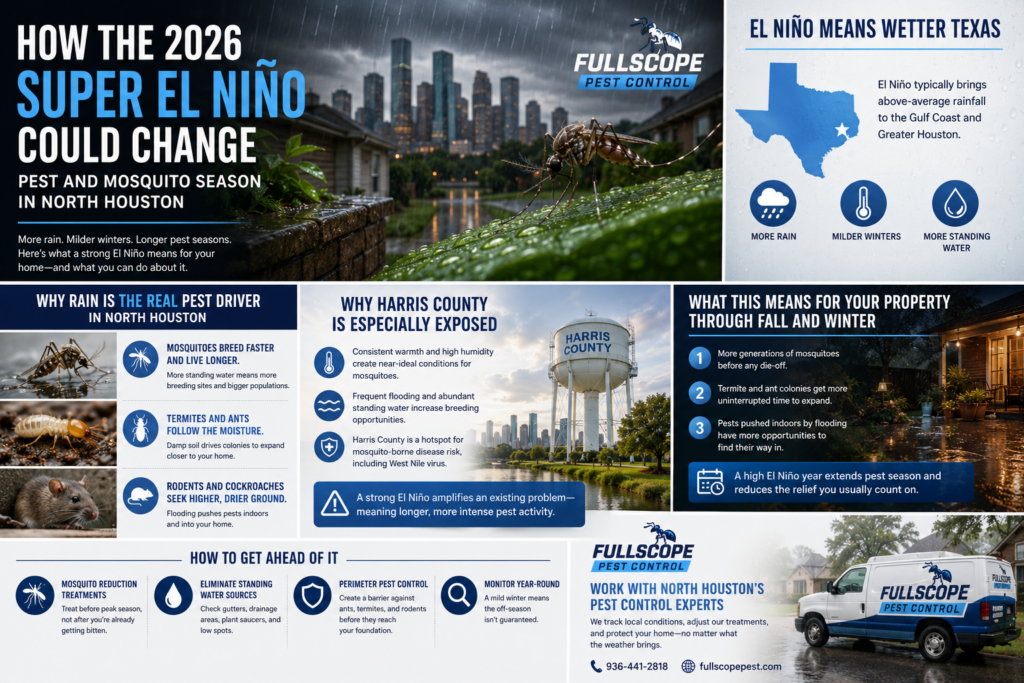
For Texas, El Niño typically means one thing above all else: wetter conditions across the southern tier of the state, including the Gulf Coast and Greater Houston.
Why Rain Is the Real Pest Driver in North Houston
Houston already averages around 50 inches of rain a year, and the humidity rarely lets up from April through October. Add a strong El Niño pattern on top of that baseline, and you get more standing water, softer soil, and longer stretches of the exact conditions pests need to thrive.
A few specific effects to watch for in a high El Niño year:
Mosquitoes breed faster and live longer. Mosquitoes need standing water for nearly every stage of their life cycle. More rain means more puddles, clogged gutters, and water-logged low spots, which means more breeding sites. Warmer temperatures also speed up larval development, so populations can build up faster than residents expect.
Mild winters mean fewer pests die off. One of the biggest factors behind a rough mosquito season isn’t just rain, it’s the lack of a hard freeze. Cold snaps are one of nature’s only checks on mosquito populations. When winters stay mild, mosquitoes simply don’t die off the way they would in a typical year, and that carries into the following season as a head start.
Termites and ants follow the moisture. Subterranean termites and several common ant species are drawn to consistently damp soil. Extended wet periods can push termite colonies to expand foraging closer to structures, and can drive ants indoors looking for dry shelter.
Rodents and cockroaches seek higher, drier ground. Heavy rain events and localized flooding, both more likely in a strong El Niño pattern, push rodents and roaches out of flooded burrows and drainage systems and toward the nearest dry structure. That structure is often a home.
Why Harris County Is Especially Exposed
North Houston sits in a part of the state entomologists describe as a near-ideal climate band for mosquitoes: consistent warmth, high humidity, and abundant standing water for most of the year. Harris County’s dense population, frequent flooding, and subtropical climate already make it a recognized hotspot for mosquito-borne disease risk, including West Nile virus, which has been detected in the county every year since 2002.
A strong El Niño doesn’t introduce a new problem to Houston. It amplifies an existing one. Local entomologists have already pointed to last year’s mild winter and wetter pattern as a driver behind early, elevated mosquito activity this season, and a strengthening El Niño into fall and winter raises the odds that trend continues rather than resets.
What This Means for Your Property Through Fall and Winter
In a typical year, North Houston homeowners might see mosquito activity ease up with the first real cold front in November. In a high El Niño year, that relief can arrive later, or not show up at all if winter stays mild. That extended activity window matters for three reasons:
- More generations of mosquitoes can complete their life cycle before any die-off
- Termite and ant colonies get more uninterrupted time to expand
- Pests pushed indoors by flooding or saturated ground have more opportunities to find their way in
None of this means your year is destined to be miserable. It means the margin for waiting on pest control gets a lot smaller.
How to Get Ahead of It
The properties that handle a high El Niño year well are the ones that treat proactively, not reactively. That looks like:
- Mosquito reduction treatments before peak season, not after you’re already getting bitten in your own yard
- Eliminating standing water sources around gutters, drainage areas, plant saucers, and low-lying yard spots
- Perimeter pest control that creates a barrier against ants, termites, and rodents before wet soil pushes them toward your foundation
- Monitoring through fall and into winter, since a mild winter means the usual off-season isn’t guaranteed
Work With North Houston’s Pest Control Experts
FullScope Pest Control has been tracking exactly these patterns across North Houston for years, and we know what a wet, warm stretch does to mosquito, termite, ant, and rodent activity in this specific climate. We’re not guessing based on national weather trends. We’re adjusting treatment plans based on what we’re already seeing on the ground in your neighborhood.
If you want a property that’s protected no matter what this super El Niño year brings, FullScope Pest Control is the team North Houston homeowners trust to stay ahead of it.
Ready to pest-proof your property before peak season hits? Contact FullScope Pest Control today for a North Houston mosquito control and pest assessment.