1500+ reviews

You open the front door, do a quick floor walk, and spot the problem before the first customer does. A roach near the beverage station. Droppings behind a stock shelf. A gnawed corner on packaged goods in the back room. In retail, that moment hits fast because the pest itself is only part of the problem.
The bigger risk is what follows. Staff get distracted. Customers notice things your team hoped to handle discreetly. Inventory gets pulled. Someone posts a photo. A routine store opening turns into damage control.
That's why smart retail managers don't treat pests as a one-time emergency. They treat them as an operating risk that needs a system, documentation, and clear accountability.
Protecting More Than Just Your Products
A lot of managers still think pest control means calling someone after a sighting. That model is outdated. The U.S. pest control industry grew from an estimated $14.3 billion in 2012 to over $24 billion in 2023, according to Statista's pest control market overview. That kind of growth tells you something important. Pest management has become a routine business function, not just an emergency purchase.
In retail, that shift matters because your exposure isn't limited to damaged goods. You're protecting shopper confidence, employee morale, sanitation standards, and the daily flow of the store. A single pest issue in the wrong place can affect all four.
What a pest sighting really means
If a mouse shows up on the sales floor, the underlying problem usually started somewhere else. It may have begun at the receiving door, near a leaking mop sink, inside a cluttered electrical room, or in a stock area where old corrugate sat too long. By the time a customer-facing sighting happens, the pest has already found food, water, shelter, or an entry route.
That's why sanitation and pest control have to work together. If your store handles packaged food, beverages, breakroom waste, or any area where contamination matters, this practical guide on preventing salmonella in food facilities is worth reviewing with the people who oversee cleaning standards.
Practical rule: If your pest plan starts after a customer complaint, you're already behind.
Brand protection is an operations issue
Managers usually feel pressure to solve the visible problem quickly. That makes sense. But quick treatment without inspection, exclusion, and monitoring often just pushes activity around the building. The pest disappears from one area and shows up in another.
A better approach is to treat pest control the same way you treat slip hazards, refrigeration issues, or after-hours security. It needs a procedure, not a panic response. If you want a broader business view of what unchecked activity can cost, this breakdown of the business cost of an unchecked pest problem is a useful reference for store leadership.
Common Pest Threats in Texas Retail Environments
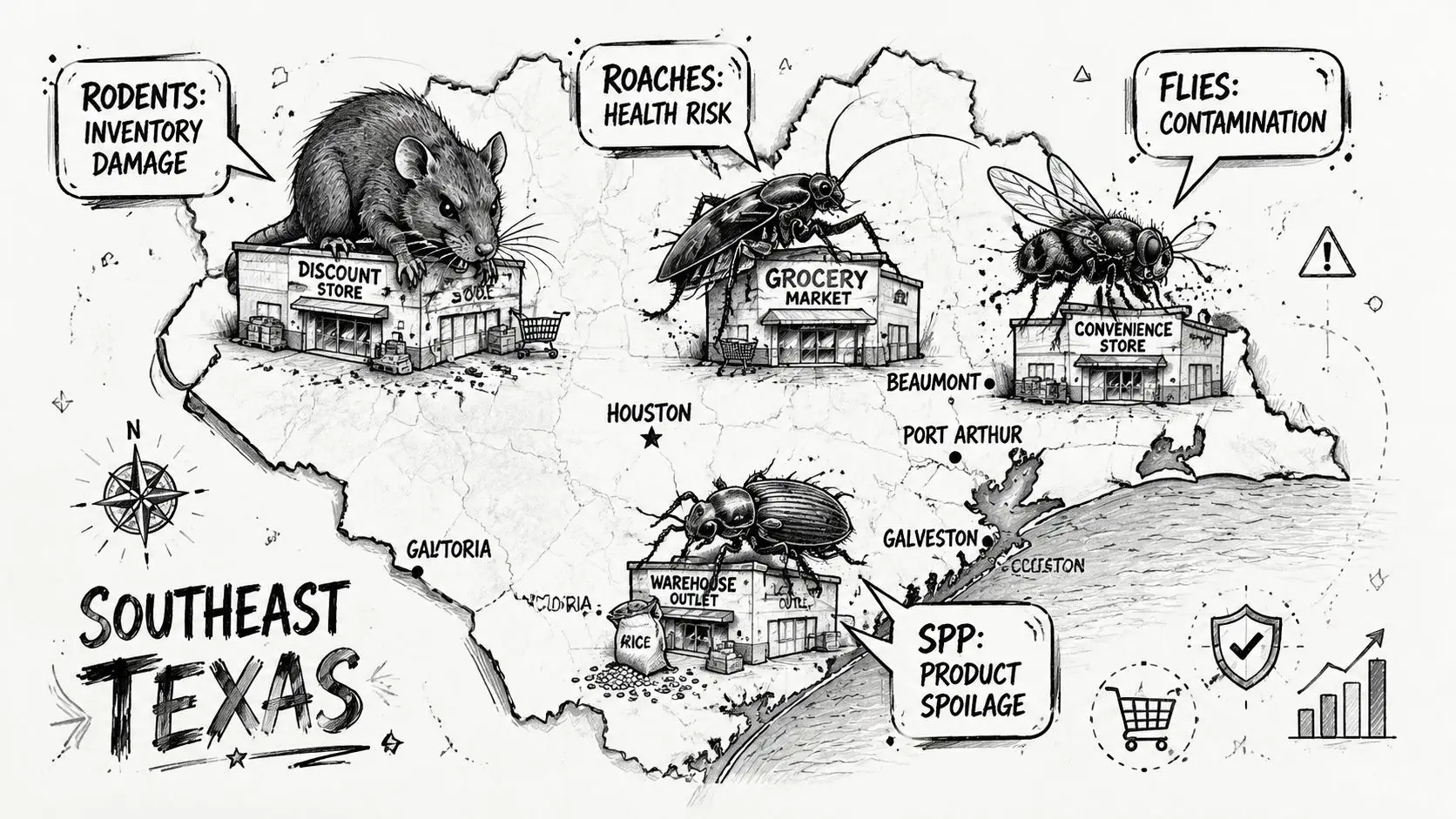
Southeast Texas retailers deal with year-round pest pressure, but not every pest creates the same kind of risk. Some damage product. Some trigger customer complaints. Some signal sanitation or moisture issues that are bigger than the pest itself.
Houston managers should take that seriously. ConsumerAffairs identifies Houston, Texas, as the most cockroach-infested U.S. city in its pest control statistics report. For local retail operations, that means roach control can't be handled with casual service intervals and generic spray work.
Rodents and roaches create the highest business risk
Rodents are disruptive because they rarely stay contained to one zone. They move through receiving, stockrooms, wall voids, and employee areas. They chew packaging, foul hidden spaces, and create a credibility problem fast. If staff are finding droppings in the same area more than once, don't assume trapping alone will solve it. The building is giving them access.
Cockroaches are different. They usually point to moisture, harborage, food residue, or all three. In retail, I'd pay special attention to floor drains, under-shelving voids, soda stations, mop closets, breakrooms, and any warm equipment area. Roaches also thrive where the store looks clean at eye level but stays neglected below counters, under fixtures, and behind equipment.
A practical cleanup checklist helps, especially in utility areas. These WipesBlog insights on facility pests are useful for managers dealing with sink zones, drains, and hidden wet areas where roaches get established.
The pests customers notice first
Flies don't need a large infestation to hurt you. One or two in the wrong place can shape customer perception immediately. In many stores, flies point to drain buildup, trash handling problems, standing water, or exterior door management that's too loose.
Stored product pests are quieter but expensive in a different way. They often arrive through inbound goods and spread before anyone catches them. If your store carries dry goods, pet food, grains, snacks, or packaged pantry items, train receiving staff to check seams, corners, and damaged packaging. This guide to pantry pests in stored goods is especially relevant for stockrooms and backroom inventory control.
After you understand where these pests show up, it helps to see how professionals inspect those areas in practice.
A clean sales floor can hide a dirty pest story in the stockroom, under shelving, or at the dock.
Where Texas retail sites usually get exposed
Watch these zones first:
- Receiving doors: Frequent openings, pallet movement, and cardboard buildup create easy access.
- Employee break areas: Food residue, crumbs, and overlooked trash keep pests fed after hours.
- Utility and mop sink rooms: Moisture problems often start here, then spread outward.
- Dumpster and compactor approaches: Exterior pressure builds here before it enters the store.
- Hybrid backrooms: Order staging, returns, and e-commerce packing create clutter and extended holding time.
The IPM Framework A Modern Defense Strategy
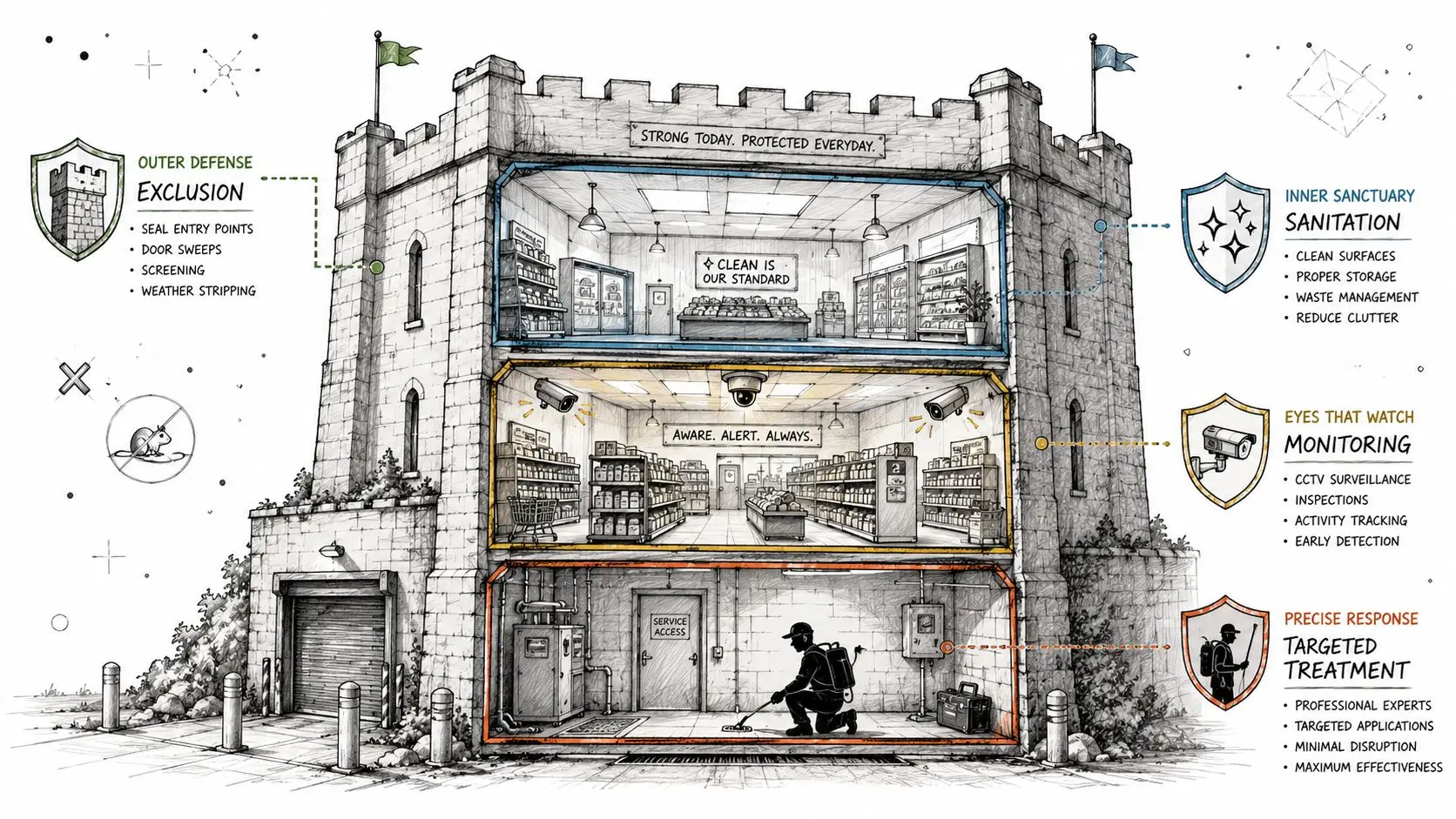
Good retail pest control works like a layered building defense. You don't rely on one product, one visit, or one device. You create multiple points where pests are denied entry, detected early, and removed before they build pressure inside.
That's Integrated Pest Management, or IPM. For a retail manager, the practical meaning is simple. You combine inspection, exclusion, sanitation, monitoring, and targeted treatment into one repeatable process.
Start outside, not at the sighting
Many stores waste time treating where the pest was seen instead of where the pest entered. That's backward. Purdue Extension's guidance on rodent IPM lays out a three-layer program using exterior bait stations, perimeter bait boxes against the building wall, and interior traps near entry points and high-activity areas in its facility pest management publication. That layered setup works because it intercepts movement at more than one point.
For retail, think of those layers this way:
- Exterior pressure control: Reduce activity before pests test the building.
- Perimeter interception: Catch movement at the shell of the structure.
- Interior monitoring and removal: Confirm where pests are getting through and stop active traffic.
If a provider skips the outside environment and focuses only on indoor treatment, you're not getting a full IPM program.
The four working parts of a real IPM plan
A serious plan has four parts, and each one answers a different question.
Inspection
Where are pests living, entering, feeding, and hiding? During an inspection, technicians check dock plates, door sweeps, wall penetrations, drains, voids, shelving bases, and stock rotation habits. Good inspection also separates a one-off introduction from an established pattern.
Exclusion
How are they getting in?
This is the physical side of pest control. Door sweeps, seals, screens, gap repair, brush strips, and utility penetration sealing do more long-term work than repeated broad applications inside a store.
Sanitation
What's keeping them there?
Pests stay where food, moisture, and shelter remain reliable. If the floor gets cleaned but syrup tracks build under dispensers, if breakroom trash sits overnight, or if old corrugate piles up in receiving, treatment won't hold.
Targeted treatment
What needs direct action right now?
This is the part often considered first, but it should come last in the decision chain. The goal isn't “spray more.” The goal is to use the right material, in the right place, for the right pest, with monitoring to verify results.
Field note: “Spray and pray” usually looks active to a manager in the moment. It rarely fixes the reason the pests are there.
IPM is a management process
The best programs include written monitoring points, assigned responsibilities, and follow-up reviews. Someone has to own sanitation corrections. Someone has to keep dock doors from being propped open. Someone has to report sightings by exact location, not just “saw bug in back.”
That's why IPM works better than a treatment-only model. It gives the store and the pest vendor a shared operating plan.
Building Your Retail Pest Control Service Program
When you review pest proposals, it helps to know what you're buying. “Pest control” can mean anything from basic recurring treatment to a structured service program with monitoring, exclusion, reporting, and emergency response. Those aren't the same thing.
A store with light general pest pressure may need a different setup than a grocery-adjacent retailer, pet supply operation, or hybrid store that receives constant shipments. The right program depends on risk points inside the building and how your team runs the space day to day.
What each service component does
| Service Component | What It Is | Best For |
|---|---|---|
| Ongoing monitoring | Scheduled inspections, device checks, trend tracking, and documentation of activity by location | Stores that need early detection and accountability |
| Exclusion work | Sealing gaps, improving door sweeps, correcting penetrations, and reducing entry routes | Buildings with repeated entry from rodents or crawling insects |
| Preventive treatment | Targeted product application in known risk zones based on pest pressure and site conditions | Retail sites with recurring seasonal or structural pest pressure |
| Sanitation guidance | Written correction items tied to drains, clutter, waste handling, moisture, and storage practices | Managers who need operational fixes, not just chemical service |
| Emergency response | Fast service after a sighting, complaint, or sudden spike in activity | High-visibility retail settings where downtime and customer exposure matter |
| Trend review and reporting | Service logs, findings, hotspot mapping, and follow-up recommendations | Multi-manager sites, audit-sensitive facilities, and owners who want proof of due diligence |
Match the plan to the building
Some managers overspend on treatment because nobody addressed the building issues. Others underspend by buying a low-cost recurring service that doesn't include exclusion, detailed monitoring, or root-cause recommendations. Both mistakes are common.
A stockroom with cluttered floor storage may need a storage reset before treatment delivers stable results. In those cases, better shelving and spacing matter. If you're reviewing layout changes, these examples of heavy-duty inventory racking systems are relevant because racking height, clearance, and access directly affect inspection quality and pest harborage.
What to ask for in plain language
Before you sign a service agreement, ask the vendor to state:
- Where devices will go: You want exact zones, not general promises.
- What's included in reporting: A service ticket alone isn't enough for many retail operations.
- Who handles exclusion recommendations: Some companies identify gaps but don't help coordinate solutions.
- How emergencies are defined: “Urgent” means different things to different providers.
- What your staff must do: Good service plans include store responsibilities, not just technician tasks.
If you want one example of a provider structure, FullScope Pest Control offers commercial pest programs built around inspection, treatment planning, and ongoing protection for businesses in north Houston and nearby Southeast Texas communities.
How to Choose the Right Pest Control Partner
Price matters, but cheap pest control often becomes expensive pest control. If a provider can't document findings, explain pressure points, or adapt to your building's actual operation, you'll keep paying for repeat problems.
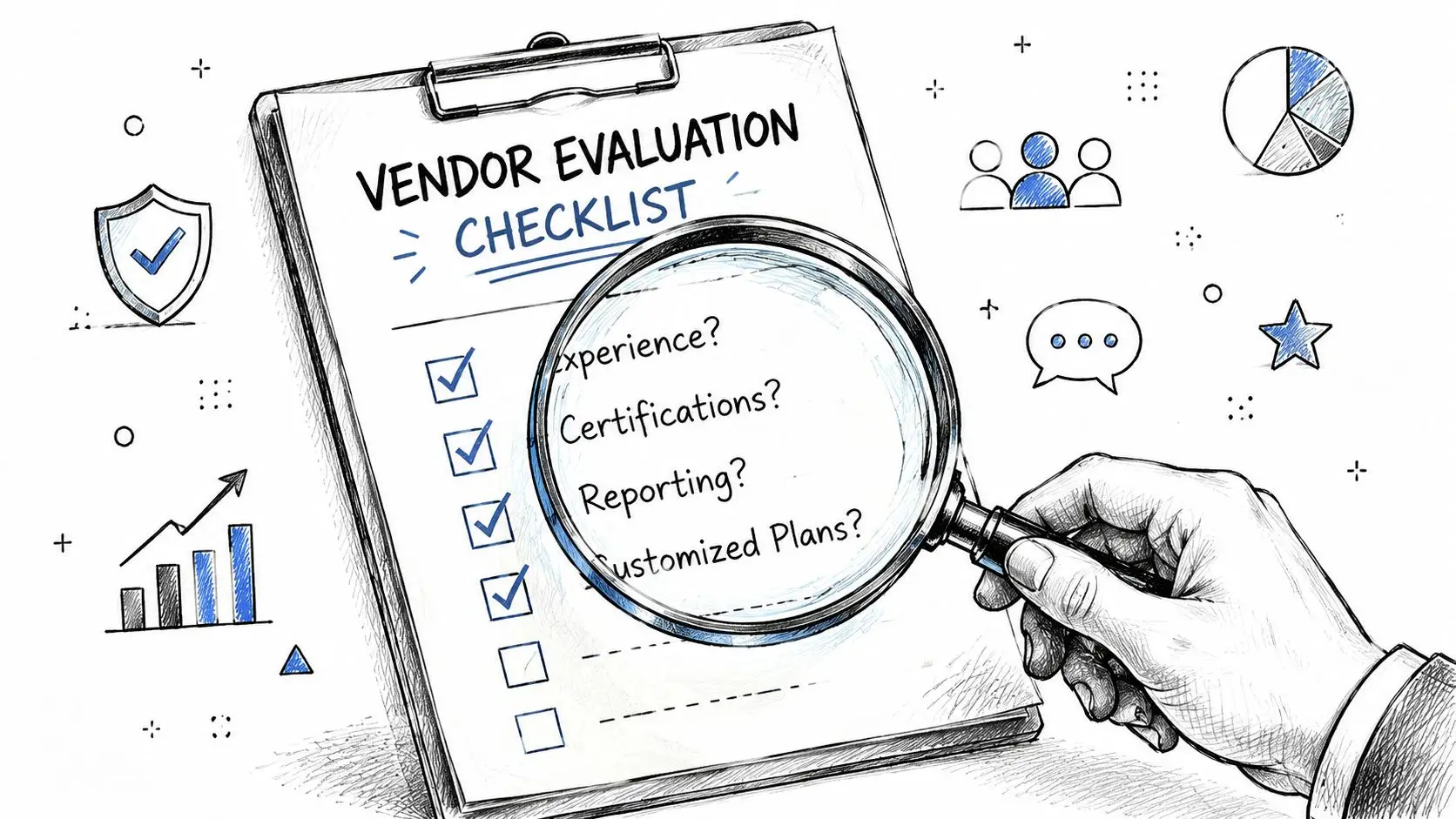
The better way to compare vendors is to ask questions that reveal how they think. A capable provider should be able to walk your site, identify likely entry and harborage points, explain monitoring strategy, and tell you what your staff needs to change immediately.
Ask questions that expose generic service
One of the smartest questions in retail today has nothing to do with price. It's about operations. Public guidance often lags behind what stores have become. Orkin's commercial retail guidance highlights a real gap around omnichannel stores, dark stores, and mixed retail-warehouse layouts, and points out that managers should ask how a provider adjusts protocols for sites that also function as fulfillment nodes with more package handling and backroom staging, as noted in its discussion of grocery pest risks and prevention.
That question matters because a hybrid store doesn't behave like a classic storefront. Pest pathways change when inventory sits longer in back-of-house staging, returns accumulate, pallets cycle faster, and receiving never really stops.
Ask any bidder these questions:
- How do you change service for a store that also handles fulfillment?
- What monitoring points would you add in packing, returns, or staging areas?
- How do you inspect inbound freight risk?
- How will you document trends by zone, not just by visit date?
- What should my staff photograph and report between services?
A provider who answers vaguely is probably delivering a generic route service.
Documentation separates professionals from spray vendors
Retail managers need records. If a district manager, property owner, health inspector, or insurance representative asks what you've done, you need more than “we called pest control.” You need dated service notes, findings, recommendations, and evidence that someone followed up.
That's also where credentials matter. Licensing, insurance, technician training, and recognized standards such as QualityPro tell you the company operates with structure. They don't guarantee results by themselves, but they do filter out providers who run without process.
The vendor should be able to tell you not only what they treated, but why that area mattered and what should happen next.
For a practical buyer's framework, review these considerations when choosing a pest control company. Use it to compare bids side by side instead of defaulting to the lowest number.
Local knowledge still matters
Southeast Texas buildings have their own trouble spots. Humidity, frequent deliveries, mixed-use properties, and urban pest pressure all shape service needs. A vendor who understands local building types, loading patterns, and regional pest behavior will usually inspect differently from a company running a generic checklist.
That shows up in the details. They'll spend time at dock edges, utility penetrations, exterior waste zones, and moisture-prone rooms. They'll ask how the store operates, not just how it looks on a floor plan.
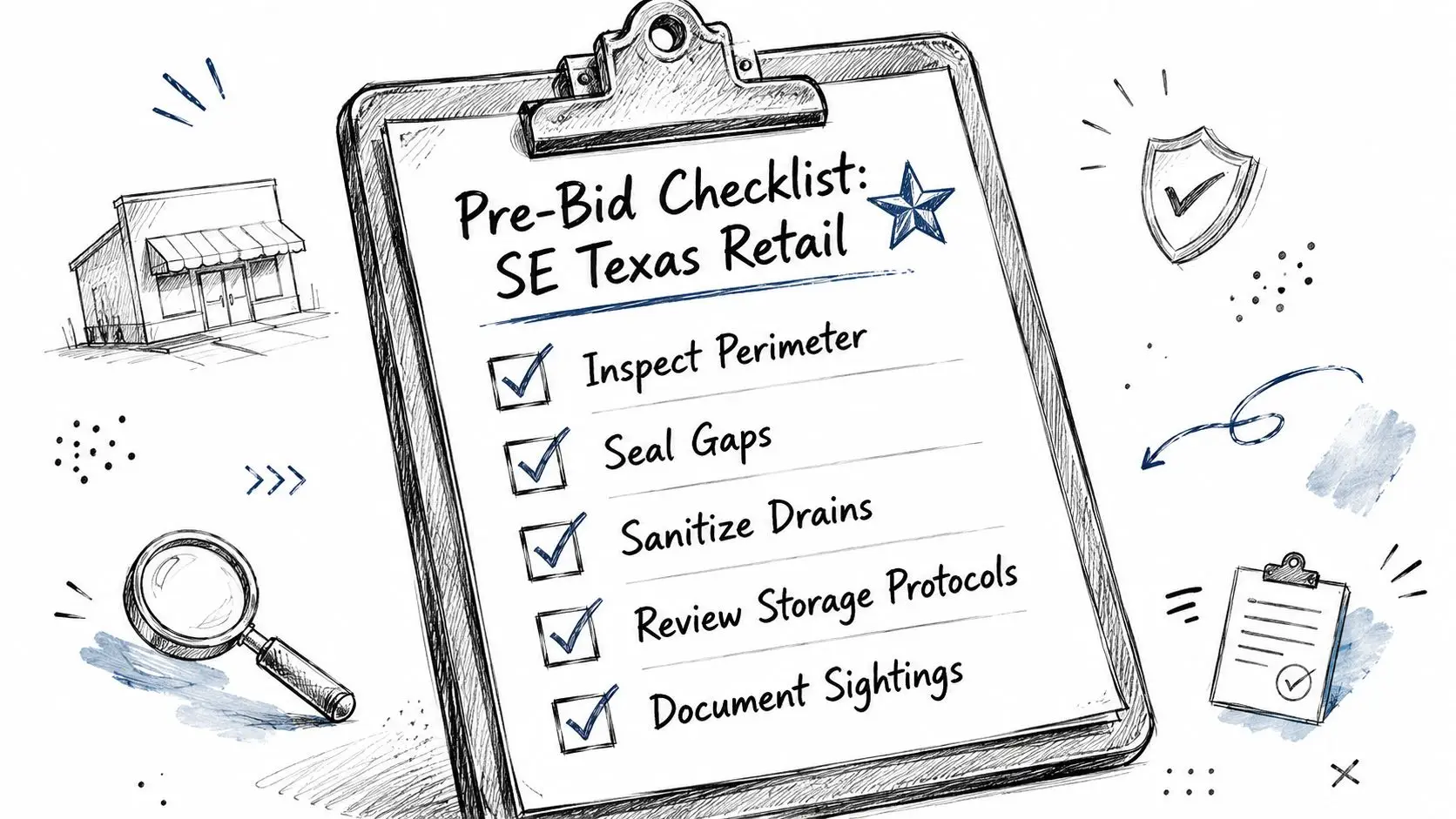
Your Pre-Bid Checklist for Southeast Texas Retailers
Before you request proposals, do one facility walk with pest control in mind. Not a housekeeping walk. Not a safety walk. A pest walk. That gives you better bids, fewer surprises, and a faster path to a program that actually fits the store.
What to do before any vendor visit
Bring a phone, a notepad, and one person who knows receiving, closing, and cleaning routines. Then work through this list.
Photograph entry points
Get clear photos of dock doors, rear exits, door sweeps, damaged thresholds, wall penetrations, roofline gaps you can see from grade, and torn screens. Bidders give better recommendations when they can see exact conditions.Map product and traffic flow
Note where goods enter, where they wait, where returns pile up, and where online pickup or staging happens. In hybrid retail sites, those movement patterns matter as much as the sales floor.Mark every water source
Include mop sinks, floor drains, beverage stations, restrooms, refrigeration condensate areas, irrigation near entrances, and any spot where standing water tends to show up after cleaning or rain.Gather pest history
Pull together employee reports, customer complaints, service tickets, and photos from the past year. Don't summarize loosely. Keep locations specific.
What to inspect in the back of house
Most persistent retail pest issues start where shoppers never look.
- Receiving zone: Check pallet storage, cardboard accumulation, and corners where product sits untouched.
- Breakroom: Open lower cabinets, look behind appliances, and inspect trash and sink areas.
- Electrical and utility rooms: These spaces often hold warmth, clutter, and low traffic.
- Stockroom perimeter: Look for rub marks, droppings, webbing, damaged packaging, or insect fragments along walls.
- Returns and damaged goods area: Slow-moving product creates shelter and feeding opportunity.
Manager's shortcut: If your team says, “We don't really go back there much,” inspect that area first.
Questions to answer before you request a quote
Write down your answers. A good proposal should respond to them directly.
What pest are you most worried about right now?
Not every store has the same immediate risk.Which areas would hurt the business most if pests were seen there?
Front checkout, pharmacy waiting, stockroom, fitting rooms, food-adjacent zones, and customer service all carry different consequences.Do you need recurring prevention, urgent cleanup, or both?
Be honest about whether you're solving an active issue or trying to prevent one.Who inside the store will own follow-through?
Pest control fails when recommendations have no internal owner.Does your site behave like a storefront, a warehouse, or both?
That answer should change the bid.
What a strong bid should include
When proposals come back, look for specificity:
- Inspection findings tied to your building
- Monitoring points by area
- A treatment approach matched to your pest risk
- Sanitation and exclusion recommendations
- Clear service frequency
- Emergency response terms
- Documentation and follow-up process
If the bid reads like it could apply to any building on the block, it probably will.
A Healthy Business Starts with a Clean Environment
Retail pest control isn't a side task. It's part of store operations. The stores that stay ahead of pest pressure usually do the same few things well. They inspect thoroughly, fix structural openings, tighten sanitation, and choose providers who can document the work and adapt to how the building operates.
That matters even more in Southeast Texas, where urban pest pressure, humidity, shipping activity, and mixed-use retail layouts can create steady exposure. A clean-looking store isn't always a protected store. The back room, dock, utility areas, and staging zones usually reveal the full story.
If you've worked through the pre-bid checklist, you're already in a stronger position than most buyers. You know where your risks are, what questions to ask, and what kind of service plan your operation needs.
If you manage a retail site in north Houston or nearby Southeast Texas and need a practical review of your pest exposure, contact FullScope Pest Control to discuss your facility layout, current concerns, and service options.