 1500+ reviews


How to Get Rid of Fire Ants in Southeast Texas
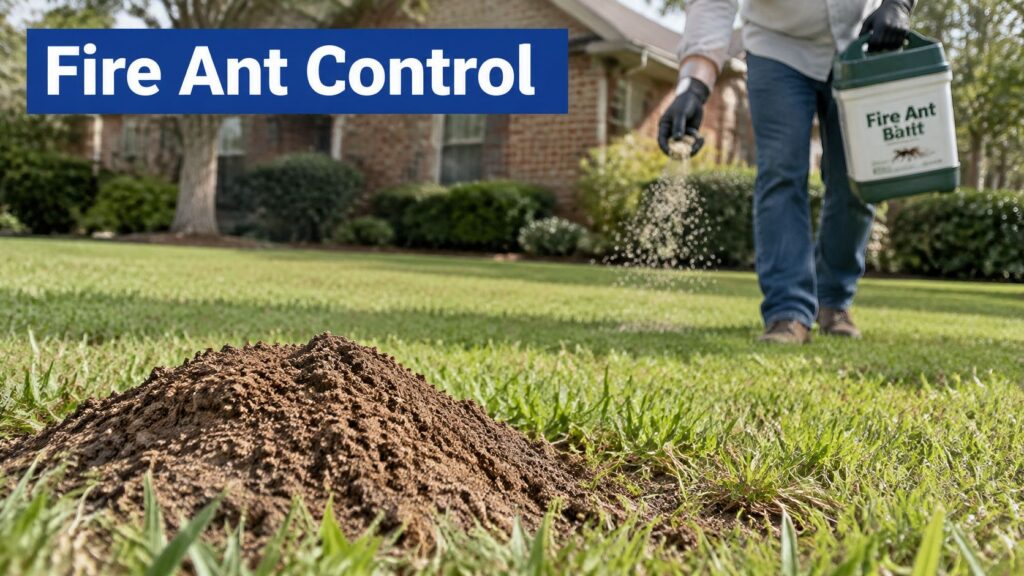
You walked out to the mailbox in sandals and found out the hard way. The grass was still wet from Tuesday's storm, and the soft pile of dirt that wasn't there last week turned out to be full of ants. By the time you got back inside, your ankle was on fire and you'd spotted three more of those piles along the driveway. That's usually the moment people start searching for how to get rid of fire ants, and it's also the moment most of them buy the wrong thing. A single mound looks like the whole problem. It isn't. The colony under that mound is one of several on your lot, and workers from the ones you can't see are foraging across your lawn right now. The approach that holds up in Southeast Texas is unglamorous and it works: treat the entire yard with bait to knock down the colonies you never located, then handle the urgent mounds near doors and play areas as exceptions. Here's how to do it in the right order. How to Spot Fire Ant Mounds in Your Yard Walk the yard on a cool morning, before the sun bakes the soil and the workers drop deeper. Zigzag the front lawn, then the back, then the beds, the pavers, the fence line, and the utility boxes. You want a loose, crumbly dome of soil, usually with no obvious hole in the middle, from a few inches to more than a foot across. A fresh mound looks like someone dumped a scoop of sifted dirt on the grass and left. Fire ants rebuild after rain, after mowing, and after any soil disturbance. A yard that was clean in March can show six new piles in May. They favor sunny, open ground: sidewalk joints, the strip against the slab, irrigation heads, utility boxes, and the bare patch where the mower turns. One dome near the mailbox is not the inventory. Workers from mounds you have not found are still foraging across the lawn, so a mound-only count will look finished while the yard is not. Mounds get misread constantly, and a misread wastes the bait. Treat a mole ridge or a native ant nest and the product looks like a failure when the target was wrong. Feature Fire ant mound Other ant nest Mole or gopher tunnel Shape Loose, crumbly dome Small packed rim around an opening Long ridge or tunnel line Central opening Usually none Visible central opening None on the ridge; the entry hole sits off to the side Size A few inches to more than a foot across An inch or two across Ridge can run several feet Step 1. Flag every mound. A stake, a plastic knife, a golf tee, anything you can still see next week. Flagging makes you cover the whole property, not just the two paths you always walk. Step 2. Count by zone. Front lawn, back lawn, beds, fence line. Note how many sit within about 20 feet of doors, play sets, pet runs, or the patio. Those get priority later. The rest of the flags still matter, because they show where foraging colonies sit away from the house. Step 3. Run the tap test. Lay a stick across the top of one mound and tap twice. Fire ants boil out fast and climb the stick. Native ants usually send a few scouts and quit. Do this on one mound per zone, not every flag. Enough to confirm the species, not enough to stir every nest. Step 4. Sketch the property. Rough is fine. Mark the flags, the zones, and the count, then keep the sketch where you will find it. That sketch is your baseline. Without it you cannot tell whether the yard is improving or whether you stopped looking. Fire ant stings leave a pustule a day later rather than a single welt, and anyone with a known allergy should stay off an active mound. If the dome still does not match the table, this breakdown of the different types of ants in Texas sorts species before you buy product. Choosing the Right Fire Ant Treatment The useful question isn't which product kills fire ants fastest. It's which product matches the job in front of you: reducing colonies across a property, or removing one nest that's in the way. Option Best use Timing Safety notes Main limit Broadcast bait Whole lawn, reducing colonies across the yard Once or twice a year, when ants are actively foraging Low risk when applied as labeled; keep pets and children off treated areas until it is settled Works slowly; colonies take weeks to months to decline Mound bait Single mound in an open area away from doors When the mound is active and workers are foraging Low to moderate; keep bait off hard surfaces and sweep up spills Only covers the mound and nearby foragers, not the whole yard Contact insecticide mound drench Urgent mound near doors, play areas or livestock Immediately, when the mound is a direct hazard Higher exposure; keep people and pets away until the label allows reentry Can scatter the colony and does not protect untreated areas Boiling water Isolated mound far from structures, as a last resort Immediately Scald risk to people, pets and roots; not for use near foundations No residual effect; can damage turf and nearby plants Professional integrated pest management Property-wide infestations, repeat mounds, or households that cannot control contact Scheduled inspection, then treatment and follow-up Handled by licensed technicians using the lowest effective product level Costs more than DIY and depends on the service plan chosen Read that table by job, not by strength. The most aggressive product on the shelf is the wrong tool when the problem spans the lot, and the cheapest bait is the wrong tool when a mound sits against the back door where a four-year-old plays. Texas A&M AgriLife Extension treats fire ant control as a recurring program, not a one-time hit on visible mounds. Their