 1500+ reviews


How to Keep Rats Out of Yard: Magnolia, TX Guide
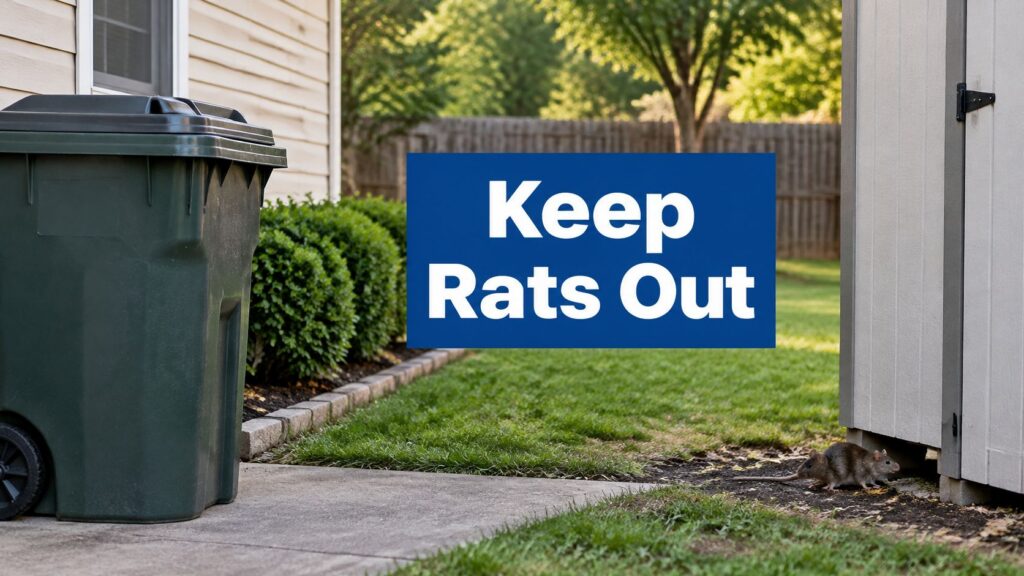
The bin goes out at dusk, you turn back toward the porch, and something dark slips along the fence and disappears under the shed. You tell yourself it was a cat. A week later there are droppings in the garage corner and a chewed lid on the compost, and the story changes. That's how most rat calls start. Not with a dramatic infestation, but with one animal that found a shortcut and stayed because the yard pays it. Every rat runs on the same four needs: food, water, access and harborage, the combination municipal rodent programs have been chasing for a century. Southeast Texas yards hand over all four without much effort. St. Augustine holds moisture, irrigation heads weep at the joint, pecan and citrus drop fruit, the bird feeder throws seed, the dog's bowl sits out, and the shed has a gap at the sill. None of it looks like a rat problem. All of it is one. Knowing how to keep rats out of your yard is mostly a question of order: which problem to fix first, which fix to skip, and when a trap, a bait station or a technician is the wrong first move. This guide ranks the changes by impact, then works through signs, sealing, trapping, poison trade-offs, and what Magnolia and the surrounding Montgomery County area look like on the ground. Which Yard Changes Stop Rats First Stand at the door you use most, look across the yard, and name the first food, water or cover you can see. That's your starting point. It's almost never the rat itself. Yard changes ranked by impact Priority Yard Change Why It Ranks Here Quick Check 1 Lidded garbage bins and compost Most reliable food source Lids close fully, no spill at bin base 2 Fallen fruit and spilled seed Food keeps rats near the yard Ground clear each morning 3 Dripping faucets and irrigation leaks Water keeps rats in the yard No standing water after irrigation runs 4 Pet food left outdoors Easy, high-calorie meal Bowls indoors or picked up at dusk 5 Brush, lumber and clutter Shelter for nesting and travel Piles off the ground and away from walls 6 Vegetation touching the house Concealed route to eaves and vents No growth touching walls or roof The order isn't arbitrary. Food pulls rats toward the wall, water holds them on the property through a dry spell, and shelter lets them stay long enough to breed. A bin with a cracked lid outranks a brush pile at the back fence, because it feeds animals that are already within a few feet of your slab. The EPA's rodent control guidance treats prevention as three controls, exclusion, repair and sanitation, and sanitation is what makes the other two hold. The same pattern shows up at city scale. New York's sanitation department reported a 6.4% overall decrease in rat sightings in its 2024 year-over-year comparison and a 14.3% decrease in designated Rat Mitigation Zones after trash-container reforms (NYC Department of Sanitation). Containers did what bait alone had not. What to fix first: the resource nearest the house. Distance is the whole game in a suburban yard. Fixing half the problem wastes the other half. Sealing the house while the compost stays open leaves the outdoor population in place and hunting for the next gap. Cleaning up without closing entry points invites the same animals back within a week. Yard work starts with what the property gives rats, not with what you can buy to kill them. For the plant side of that work, landscaping choices that influence pest activity around your home matter as much as the trash can does. Walk the yard once this week, fix the highest item you can reach that day, and put the rest on a calendar. Read the Signs and Map Rat Activity A yard tells you where to work before it tells you what to buy. Rat sign clusters on the same edges night after night, so the marks are less a mystery than a route map. Sign What It Suggests Where to Check Dark droppings along walls Active travel route Under decks, shed corners, fence lines Gnaw marks on containers, wood or cords Repeated access to food or an entry Bin lids, garage door bottoms, shed corners Greasy rub marks along walls or pipes Regular runway Pipe runs, fence bottoms, foundation edges Burrow openings about 2 inches wide Active nesting below Beside sheds, fences and the foundation Droppings along a wall are the sign homeowners spot first, and they matter most when they repeat in the same line. A few pellets under a deck can be old. Fresh droppings at the same post for two nights is traffic. Turn the marks into a drawing before you move a single bin: Walk the perimeter at dusk and again at dawn. Those quiet windows show use; midday mostly shows old sign. Flag every mark. Droppings, gnaw points, rub lines and burrow mouths each get survey tape or a stake. Recheck the flags across three or four nights. A route repeats. A single stray dropping does not. Note the resource at each end. Every runway connects shelter to food, water or both. Sketch the yard and draw the routes on it. One page: house outline, fence line, shed, bins, feeders, woodpiles. Read the sketch by distance. Marks tight against the foundation mean the payoff is close, often a bin, pet bowl, feeder spill or compost edge within a few feet of the wall. Marks that stay at the far fence, woodpile or dense hedge and never approach the slab point to harborage, where rats can stage out of reach and commute only when pressure is low. The same compound approach holds at the curb: sealed storage for food and pet food, brush, rocks, junk and cluttered firewood cleared, entry points closed once activity is quiet, and tight-fitting lids on trash and compost. Remove one attractant while the rest stay put and the traffic