 1500+ reviews


Armyworm Damage Lawn: How to Spot, Stop and Repair It
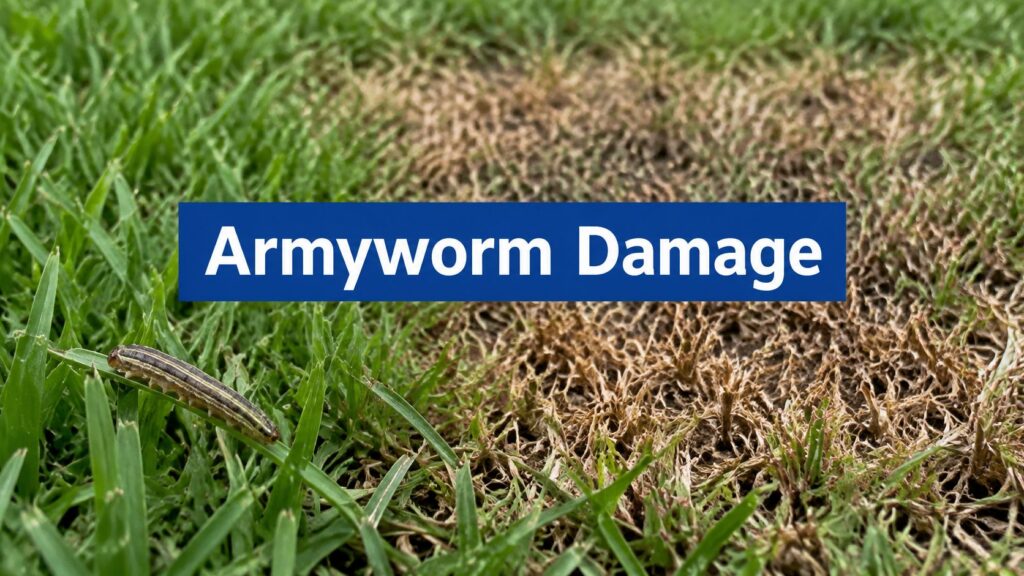
Your lawn looked fine on Friday. By Monday, ragged brown patches have spread across the sunniest part of the yard, and watering hasn't changed a thing. That's the pattern that should make you think about armyworm damage on a lawn before you reach for fertilizer or a fungicide. Don't spray based on color alone. First, work out whether caterpillars are still feeding, how many you've got, and whether the grass underneath is still alive. Those three answers split the job into two separate decisions: stop active feeding, then restore the turf. Treating them as one problem is how homeowners waste money on a lawn that would've recovered, or miss a feeding front that strips the rest overnight. Tell Armyworm Damage From Drought, Grubs and Disease A Southeast Texas lawn can go from green to straw colored in a weekend when fall armyworms hit their final growth stages. The Texas A&M AgriLife Extension guide on fall armyworm identification and control reports that armyworms can consume an area as large as a football field in as few as 2 to 3 days, and that fifth and sixth stage caterpillars consume more than 90% of the total foliage they eat during their entire larval life. That timing explains why you didn't see it coming. Small larvae barely mark the blades. Large ones strip leaf tissue fast, mostly at night, and hide in thatch by day. The species commonly attacks bermudagrass, ryegrass, fescue, and bluegrass, so it fits most residential lawns and sports fields in this region. Match the Symptom Before You Treat Armyworm damage compared with look-alike lawn problems Symptom Likely cause Quick check Ragged leaf edges, stripped blades, brown patches that spread in days Armyworm larvae feeding, mostly at night Soap flush or look in thatch at dusk Turf lifts like a loose carpet when pulled Grubs cutting roots Tug test on the edge of the brown area Brown patches with intact blades and dry, hard soil Drought or heat stress Check soil moisture a few inches down and irrigation coverage Ring-shaped lesions on blades, worst in humid weather Fungal disease such as brown patch Look for lesions on leaf sheaths and examine in early morning dew Irregular patches along a building, post or sign edge with moths present Egg masses or adult moth migration Check vegetation at dusk and look for egg masses beside structures The tug test matters. If turf peels back easily, you're probably dealing with roots, not leaf feeding, and the best time to treat lawn grubs and prevent damage becomes the more relevant question. If blades are intact but wilted and soil is dry several inches down, check irrigation coverage first. For broader yellowing patterns that don't fit any row above, troubleshooting commercial lawn discoloration is a useful reference for separating nutrient and watering problems from pest injury. Do this at dusk: Pull back a turf edge at the border between green and brown grass and part the thatch with your fingers. If you find green brown caterpillars curled there, you've got your answer before any product comes out. Don't rule armyworms out from a midday walk. Larvae shelter low in the canopy during heat, so a clean look at noon proves very little. How to Scout for Larvae With a Soap Flush One brown corner does not mean the whole lawn is loaded. Armyworms bunch up. A clean stretch of St. Augustine ten feet away can be empty while the damaged edge is full of larvae, and a blanket spray based on that one patch treats a lot of turf that never needed it. The Utah State University guidance on armyworms and cutworms in turfgrass pairs a look at the injury with a soap flush run the same way each time, instead of calling the lawn infested from discoloration alone. A flush answers a narrower question than most homeowners expect. It tells you whether larvae are still in the thatch and still able to feed. Brown blades with a zero count are a recovery problem, not a reason to spray tonight. Run the Flush the Same Way Every Time Pick your spots: Choose three damaged areas and two apparently healthy areas, ideally near dusk. Larvae cluster unevenly, so a single test can miss them entirely. Mix the solution: Stir about 2 tablespoons of lemon-scented liquid dish detergent in 2 gallons of water. Don't substitute antibacterial soap or bleach-based detergents, which can burn turf. Pour evenly: Flood a 1 square foot section so the solution soaks through the thatch rather than running off the blades. Wait and count: Watch for 5 to 8 minutes and count every larva that surfaces. Note their size. Small larvae are the ones still doing most of the feeding, and they respond to a later treatment far better than nearly mature ones. Record each spot separately: Write down the count, larval size, turf species, damage severity, and location. Don't average a hot spot into clean areas and lose the signal. Repeat before deciding: Run the test in each area, then compare counts against the thresholds below. The common slip is sampling only green turf because it looks like the place worth saving. Larvae sit in thatch during daylight and feed outward from damaged edges, so the transition between green and brown gives you the most honest count. If that band is empty and the brown area is already straw, you are past active feeding and into repair. Compare Your Count to the Right Threshold Larvae thresholds by guidance source Guidance source Threshold Per square foot equivalent Context Utah State University turf guidance 10 to 15 larvae per square yard with obvious feeding injury About 1.1 to 1.7 per square foot Treatment threshold for turf Texas A&M AgriLife 3 to 5 larvae per square foot 3 to 5 per square foot Visible thinning of turf Texas A&M AgriLife 6 or more larvae per square foot 6 or more per square foot Severe damage possible within 2 to 3 days These two sources