 1500+ reviews


Getting Rid of Ants in Car the Safe Way
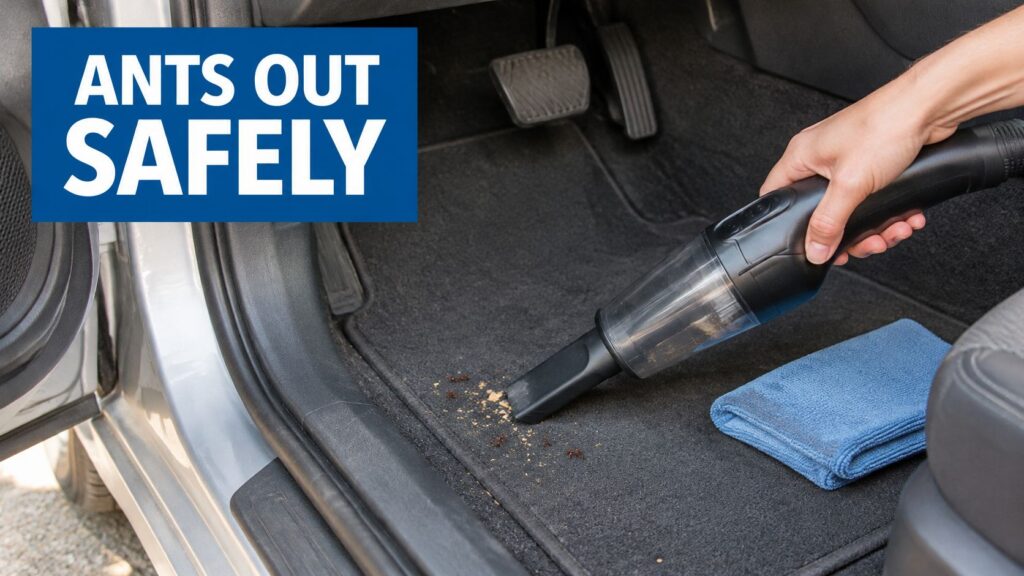
It's Saturday morning, you're loading groceries in Magnolia, and a thin line of ants is crossing the center console toward yesterday's soda cup. Your first instinct is probably to grab whatever spray is under the sink and fog the whole cabin. Don't. Getting rid of ants in car interiors safely starts with figuring out why they're there, because a crumb trail from the driveway and fire ants riding in soil under the mats need completely different responses. Treat the wrong one and you'll add chemical residue to your seats while the colony keeps sending workers. Sort the Ants Before You Treat Say you're parked off FM 1488 and you spot that line on the console. Pause before you spray. Ants in a vehicle are usually visitors, not residents. They've followed a scent trail in from outside, found food or moisture, and they're carrying it back to a nest that's rarely in the seats themselves. What they look like and where the car has been tells you more than color alone. Tiny dark ants headed for a soda ring are typically sugar-loving nuisance ants. Reddish ants plus grit on the mats after parking beside a mound, pasture, or landscaping load point toward fire ants that may have ridden in with soil. Large dark ants around a damp spare-tire well suggest moisture is drawing them, not a colony living in your dashboard. If the ants vanish on the highway and return only in one parking spot, the colony is almost certainly in the yard, curb, or shrub bed. You're treating a parking spot problem, not a cabin problem. Read the Clues First A crushed ant that smells like rotten coconut fits odorous house ants. A painful sting and a soil mound fit fire ants. Neither clue is a full species identification on its own, and guessing wrong leads to the wrong bait later. If you want help narrowing the group before you buy anything, our guide to common ant types in Texas homes and yards walks through the traits that separate them. What the ants in the car mean What you see Likely group Where to look First move Tiny dark ants on crumbs or a soda ring Sugar-loving nuisance ants Console, mats, door pockets Vacuum, wash the film, bait the trail Ants only in one parking spot, gone after a drive Colony outside the car Curb, shrub bed, driveway pad Treat the parking spot, not the cabin Reddish ants plus soil after a mound or job site Fire ants possible Mats, wheel wells, soil underneath Knock off soil and inspect before driving on Large dark ants and a damp trunk or spare well Moisture followers, carpenter ants uncommon in cabins Trunk seams, spare-tire well Dry the area and find the outdoor source Trail into a dash gap or vent Foragers following a scent Gap edge only, not the wiring Bait at the edge, never aerosol inside Pick one row before any cleaner or bait comes out. That choice decides whether you clean, dry, inspect soil, or leave the cabin alone entirely. Ants on the console don't mean ants live in the console. Find where the trail starts and ends, and you've found the real problem. Skip Sprays That Stain Paint and Miss Nests Plenty of quick tips tell you to fog the cabin and shut the doors. That advice skips the only document that matters: the product label. The label, not a video or a forum post, decides where a product can go. EPA pesticide safety materials state that pesticide use must follow the product label, including permitted application sites, frequency, protective equipment, and exposure controls. For a car, that standard raises the bar fast. Aerosol solvents and propellants can stain trim and haze finishes they were never formulated to touch, and a sealed cabin lets vapors and residue settle onto surfaces your hands contact every drive. If accidental overspray lands on paint, rinse it off right away rather than letting it dry. Unless a label expressly lists vehicles as an application site, that product stays out of the cabin entirely, both in use and in storage. That's a very different picture from "spray until they stop moving." If the mound sits beside your driveway, interior spray loads cloth and plastic with residue while the colony outside stays untouched. Bait earns its place instead: ants carry it home themselves, so treatment reaches the nest when it's placed where ants already travel. Match the Move to the Surface Safe and unsafe moves by vehicle surface Cabin or exterior area Do this Do not do this Floor mats and carpet Vacuum, then soap and water Soak with insecticide Trails on plastic trim Tiny bait beads if the label allows vehicles Broadcast spray along the dash Dashboard gaps and vents Bait at the gap edge Aerosol into electronics or wiring Paint, wheels, and panels Rinse accidental spray off immediately Leave pesticide to dry on paint Passenger area storage Keep pesticides out of the cabin Carry open containers on the seat Never aim aerosol into vents, fuse boxes, seat motors, or wiring. Ants in a dash gap are following a scent along an edge. They aren't nesting on a circuit board, and flooding that gap puts solvent and propellant where they don't belong. The safer order is simple. Remove food, trash, and moisture first. Vacuum ants and clean trails second. Figure out whether activity is confined to the cabin or starts in the parking area third. Only then consider a product, and only one whose label expressly permits the surface you're treating. Practical rule: If you can't find vehicles listed on the label, that product doesn't go in your car, no matter how well it worked in a kitchen. Save the professional call for now. But if you're seeing stinging ants in soil on the vehicle, or trails that survive a full, undisturbed bait cycle, that's no longer a cleaning problem. How to Clear the Cabin Step by Step Work the cabin only when