1500+ reviews

A lot of people in The Woodlands have the same summer routine. You step outside to grill, let the dog out, water a bed near the patio, or sit down for ten quiet minutes before dark, and the mosquitoes find you almost immediately. Then the next morning, you're getting tagged again in broad daylight near a shaded walkway or planter.
That's why mosquitoes feel so relentless here. It isn't just that summer is hot. It's that The Woodlands combines heat, humidity, irrigation, stormwater infrastructure, shaded landscaping, and two different mosquito species with different feeding habits. One can bother you in the daytime. The other ramps up around evening and overnight. If you only think about “mosquitoes” as one single problem, the yard never seems to stay under control for long.
There's a practical way to look at it. Some fixes help. Some are overrated. Some fail because they address adult mosquitoes while ignoring where the next wave is coming from.
Summer in The Woodlands A Battle Against Mosquitoes
You step out to grill at 7 p.m., slap your ankle before the lid is even open, then get bitten again the next morning while watering a shaded bed by the front walk. That pattern is common in The Woodlands, and it throws people off because it does not match the old idea that mosquitoes are only a dusk problem.
What makes summer here feel relentless is that homeowners are often dealing with two different mosquito behaviors in the same yard. Day-biting Aedes stay active around shade, planters, entryways, and other tight, humid spots close to the house. Dusk-biting Culex build pressure later, especially near patios, fences, drains, and heavier vegetation. If you treat every bite as the same problem, the control plan usually misses half of what is happening.
A clean-looking yard can still support heavy activity. In my experience, the worst properties are not always the ones with obvious standing water. They are the ones with scattered hiding and breeding spots that get overlooked for weeks. A gutter elbow holding water, a drain basin that never dries fully, a low spot along a fence, or containers tucked behind shrubs can keep mosquitoes coming. Homeowners who want to get ahead of that should start by checking the common mosquito breeding spots around Texas homes instead of only looking for one big puddle.
Why the problem feels nonstop
The pressure usually shows up in a few recognizable patterns:
- Bites in daylight near shaded walkways or landscaping often point to Aedes activity close to the home.
- A spike around dusk near patios and back doors is more consistent with Culex moving out to feed as air movement drops.
- Fast flare-ups after rain happen because summer heat shortens the timeline from standing water to new adults.
- Mosquitoes that persist between storms often mean irrigation, clogged drainage points, or water trapped in small containers is keeping the cycle going.
Here is the practical takeaway. If you are getting bitten during the day and again around sunset, the yard probably has more than one active habitat and more than one feeding pattern in play.
That is why mosquito season in The Woodlands wears people down. The issue is not just summer heat or one bad puddle in the neighborhood. It is a local mix of moisture, shade, drainage infrastructure, and two mosquito types that feed at different times, which makes the pressure feel constant even when the sources look minor.
The Perfect Storm Why The Woodlands Is a Mosquito Haven
Step outside in The Woodlands after a summer rain, and the yard can look fine by the next day. The problem is what stays wet where nobody checks. Water settles in drain structures, gutter debris, dense ground cover, planter trays, corrugated pipe, and shaded low spots. In summer heat, those small holding areas stay productive long enough to keep new mosquitoes coming off the property week after week.

Water persistence matters more than people expect
The Woodlands Township points to the same trouble spots technicians see every summer: storm drains, clogged gutters, yard low spots, and over-watered areas that hold water longer than homeowners realize, according to The Woodlands Township mosquito information page.
That local pattern matters more than one large puddle.
Aedes mosquitoes use small containers and tiny pockets of clean to lightly dirty water close to the house. Culex mosquitoes are more comfortable in catch basins, drains, and water with more organic material. In The Woodlands, both habitat types are common on the same block, and often in the same yard. That is one reason the pressure feels constant instead of occasional.
I see this mistake all the time during inspections. A homeowner checks for a bucket or a birdbath, finds nothing obvious, and assumes the source must be a neighbor's property or nearby woods. Sometimes that is true. Just as often, the source is a half-clogged downspout extension, a French drain outlet that never dries fully, or mulch beds that stay damp under thick shrub cover.
For a practical checklist of the spots that get missed most often, review these common mosquito breeding grounds around Texas homes.
Why suburban landscaping can backfire
The Woodlands was built with the features mosquitoes use well. Mature trees lower air movement. Dense shrubs and foundation plantings give adults cool resting cover through the day. Fences, beds, and drainage features break up airflow and help moisture linger near the ground.
A neat yard can still be a mosquito yard.
Three conditions usually make control harder on residential properties here:
- Heavy shade near outdoor living areas: Adults rest in protected foliage, then shift a short distance to feed when people walk out.
- Drainage that works on the surface but holds water below: Lawns can look dry while basin edges, pipe runs, and storm drain pockets stay wet.
- Irrigation schedules that keep marginal sites active: Sprinklers can extend wet time in spots that would otherwise dry out between rains.
The trade-off is straightforward. The same trees and landscaping that make a yard comfortable in a Texas summer also create cooler, more humid resting zones for mosquitoes. Add warm nights, regular rain, and a lot of stormwater infrastructure, and The Woodlands gives both daytime Aedes and dusk-feeding Culex what they need close to where people spend time outside.
That is why mosquito pressure here can stay high even in well-kept neighborhoods with no obvious standing water.
Meet Your Attackers The Two Mosquitoes Plaguing Your Yard
The all-day bite pattern in The Woodlands usually comes from two different mosquitoes, not one. Woodlands-area reporting identifies the Southern House Mosquito (Culex quinquefasciatus) as an evening to early-morning biter associated with residential breeding in organic water, and the Asian Tiger mosquito (Aedes albopictus) as an aggressive daytime biter that breeds in artificial containers, according to this Woodlands-area mosquito species report.
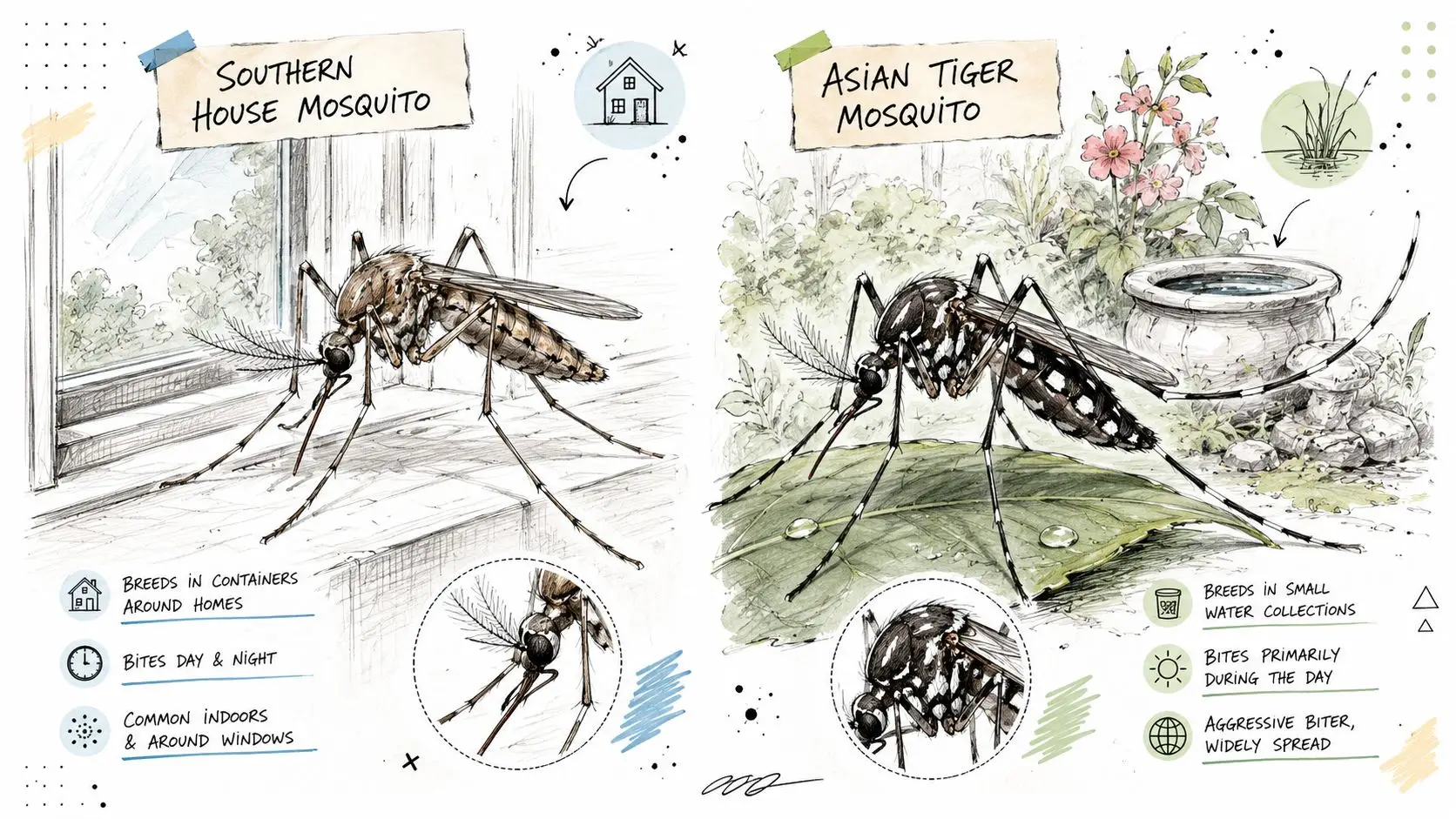
That species split explains a lot of homeowner confusion. Someone says, “We sprayed, so why am I still getting bitten when I drink coffee outside?” Another says, “They're worst at dusk near the back door.” Both can be true.
Southern House Mosquito
This is the mosquito many people notice in the evening. It's commonly tied to more organic water sources, including water with decomposing material. In residential areas, that often means neglected drains, catch areas, gutter sludge, and water that doesn't look “clean.”
Typical clues include:
- Bites increase around dusk: You step out in the evening and activity ramps up fast.
- Pressure near drainage features: Storm drains and low wet areas often play a bigger role than decorative planters.
- Backyard comfort drops after dark: Patios that seem tolerable in late afternoon become difficult to use later.
Asian Tiger Mosquito
This species changes the whole conversation because it bites during the day. It likes artificial containers with relatively clean water. That includes buckets, toys, saucers, corrugated downspout extensions, birdbath edges, and anything else that catches small amounts of water.
Homeowners usually notice it this way:
- You're only outside for a few minutes.
- You're in shade or near ornamental plantings.
- You get bitten on legs and ankles before sunset.
Later in the day, different pressure may take over.
A quick visual overview helps if you want to see how mosquito habitats and behaviors differ in practice:
Why one treatment approach often falls short
A yard can need control for both container breeders and mosquitoes tied to drains or organic standing water. That's why one-dimensional control usually disappoints. If you only spray shrubs but ignore hidden water-holding containers, daytime pressure often lingers. If you empty a few buckets but never address drainage and resting zones, evening activity can stay high.
The fastest way to waste money on mosquito control is to treat the symptom you notice most and ignore the second mosquito that's still active on the property.
When people ask why mosquitoes are so bad in The Woodlands during summer, this is a big part of the answer. Residents aren't fighting one pest with one schedule. They're often fighting two with different habits in the same yard.
DIY Mosquito Myths and Remedies That Actually Work
A lot of DIY mosquito advice sounds good because it's easy, cheap, and repeatable. That doesn't mean it changes yard-wide pressure. Dryer sheets, random essential-oil hacks, and a couple of citronella candles usually don't solve a serious summer problem in The Woodlands.
The reason is simple. Mosquitoes don't disappear because one scent is nearby. They're responding to body heat, sweat, perfumes, dark clothing, and local airflow, and Delaware's environmental guidance notes that those factors can make bite pressure vary even between homes on the same street. It also notes that fans and small-area repellents offer limited protection, as discussed in this state mosquito guidance on attraction factors and airflow.
What usually doesn't work well enough
The most common DIY mistake is relying on gadgets or scents instead of reducing breeding and resting pressure.
A few examples:
- Citronella candles alone: They may help very close to the table in light conditions, but they don't fix a yard with active breeding sites.
- Bug zappers: They don't address the hidden water sources producing the next wave.
- Single-event foggers from the hardware store: They can knock down visible adults briefly, but they rarely hold up if breeding sites remain active.
- Dryer sheet folklore: There's a big difference between a social media tip and a control method that works across an entire property.
What does help right away
The first useful DIY move is source reduction. That means removing water-holding spots before they stay wet long enough to produce adults. This is tedious, but it's the one thing almost every effective mosquito plan has in common.
Start with a real inspection:
- Walk the property after rain or irrigation: Check low spots, drain ends, wheelbarrows, tarps, toys, saucers, buckets, and trash lids.
- Clean gutters and downspouts: Not just for overflow. Mosquitoes use trapped organic water in clogged sections.
- Fix overwatering: Wet mulch, saturated beds, and runoff-prone turf keep mosquito habitat active.
- Thin dense vegetation where practical: Adults rest in cool, shaded foliage during the day.
If you want a homeowner checklist that lines up with these field habits, this guide with 7 tips to reduce mosquitoes around your home and backyard is a practical place to start.
Personal protection that actually changes outcomes
Once the yard is cleaner, personal habits matter more than people think.
Use these where they make sense:
- Oscillating fans on patios: Mosquitoes are weak fliers, so moving air can make a seating area less attractive and harder to approach.
- Light-colored clothing: Dark clothing can make you more attractive.
- Less fragrance outdoors: Perfumes and heavily scented products can work against you.
- Better screening and enclosure maintenance: If mosquitoes are entering around worn screens or open patio gaps, it helps to review how to keep bugs out for good so you're not only fighting them after they're already inside or around gathering areas.
A fan over a seating area often does more for comfort than a candle on the table, especially in a sheltered backyard with still air.
DIY works best when you're disciplined and the pressure is moderate. Once the yard has recurring drainage issues, dense landscaping, or pressure from surrounding properties, DIY usually becomes maintenance, not full control.
Choosing Effective EPA-Approved Mosquito Repellents
For personal protection, the label matters more than the brand name on the front. The most useful way to shop is by active ingredient. For most homeowners, that means looking at DEET, Picaridin, or Oil of Lemon Eucalyptus (OLE).
Each has a place. The right one depends on how long you'll be outside, how much you'll sweat, and whether you need something for quick yard tasks or longer evening use.
EPA-Approved Mosquito Repellent Comparison
| Active Ingredient | Typical Protection Time | Notes |
|---|---|---|
| DEET | Varies by product and formulation | Common choice for longer outdoor exposure. Check the label and apply as directed. |
| Picaridin | Varies by product and formulation | Often preferred by people who want an alternative feel on skin or gear. Check the label for use details. |
| Oil of Lemon Eucalyptus (OLE) | Varies by product and formulation | Plant-derived option sold in EPA-registered products. Follow label directions closely. |
How to choose without overthinking it
If you're outside for a quick task like taking out trash cans, watering, or checking the grill, many homeowners do fine with a straightforward skin-applied repellent used exactly as labeled. If you're sitting outdoors longer, sweating, or moving between sunny and shaded areas, choose a product and formulation intended for that duration and activity level.
A few practical points help:
- Read the active ingredient first: Don't buy based only on the front label's marketing language.
- Match the product to the job: Short exposure and extended outdoor time aren't the same thing.
- Reapply only as directed: More product doesn't automatically mean better protection.
- Don't confuse yard sprays with personal repellents: They solve different parts of the problem.
What repellents can and can't do
Repellents protect people. They don't clean up breeding sites, and they don't create whole-yard control by themselves. If mosquitoes rise from drains, containers, or shaded foliage every day, repellent helps you function outdoors, but it won't change the property's underlying pressure.
That's the trade-off. Personal repellent is a smart tool, especially for dusk and daytime exposure windows, but it works best as part of a broader control plan.
When to Call for Professional Mosquito Control
There's a point where DIY stops being efficient. If you've emptied containers, cleaned gutters, adjusted irrigation, and changed your outdoor habits but the yard still becomes unusable, the issue usually isn't effort. It's coverage, timing, or hidden habitat you can't fully address on your own.
That happens a lot in The Woodlands because mosquito pressure doesn't come from one neat source. It comes from layered conditions. Shaded foliage gives adults a place to rest. Drainage structures hold water where homeowners can't easily treat them. Nearby properties may keep contributing pressure even when your own yard looks improved.
Signs your yard needs more than DIY
Professional treatment makes sense when one or more of these are true:
- You're getting bitten at different times of day: That often means multiple mosquito behaviors are in play.
- The yard rebounds fast after rain or irrigation: Hidden breeding sites are probably staying active.
- Dense landscaping surrounds living areas: Adults have too many protected resting sites.
- You need reliable use of the outdoor space: For families, pets, guests, or routine patio use, “some relief” often isn't enough.

What professional service actually changes
A professional program usually does two things homeowners struggle to do consistently. First, it treats the foliage and shaded zones where adult mosquitoes rest. Second, it applies treatment with better property-wide coverage and a repeatable schedule.
Barrier sprays are useful when mosquitoes are resting in shrubs, groundcover edges, and damp shaded areas near patios and walkways. Automated misting systems can make sense for properties with chronic pressure and owners who want a built-in management approach rather than repeated manual effort.
Timing matters too. Even though that article discusses another region, this practical look at when to spray for mosquitoes in Tampa is still useful because it shows why treatment timing and mosquito activity windows affect results.
For homeowners in north Houston communities, mosquito control services for home protection can make sense when the goal is to reduce pressure across the entire yard rather than protect one person at a time with repellent. FullScope Pest Control is one local option that provides barrier sprays and MistAway automated misting systems.
Yard-wide relief usually requires two things at once. Fewer breeding opportunities and better control of the adults already resting on the property.
That's the practical answer. Why mosquitoes are so bad in The Woodlands during summer comes down to local moisture patterns, storm drains and micro-sites, dense suburban landscaping, and two dominant mosquito species with different feeding schedules. Once you treat it like that kind of problem, the solutions get much more effective.
If your yard in The Woodlands stays buggy even after cleanup and repellent, it may be time to move from spot fixes to a property-wide mosquito plan.