1500+ reviews

Most general pest control treatments last about 30 to 90 days. That's the standard answer, but in Southeast Texas it's only a starting point because the actual lifespan depends on the pest, the treatment method, weather exposure, and how much pressure your home has around it.
If you're reading this right after a service, you're probably asking the same thing most homeowners ask: “How long will this hold?” That's a fair question, especially around Houston where heat, humidity, rain, dense landscaping, and long pest seasons put constant pressure on a home.
A treatment isn't a force field. It's closer to a managed barrier. Some products keep working for a while, some pests take time to die out, and some properties invite reinfestation faster than others. A brick home in a tidy subdivision can behave very differently from a shaded property near standing water, woods, or a drainage area in Kingwood, Porter, Conroe, or Cleveland.
What matters most is not just how long the product sits there. It's how long the pest pressure stays under control.
The Real Answer to How Long Pest Control Lasts
Most homeowners want one clean number. In the field, that number doesn't exist.
For general pest control, professionally applied treatments are commonly reported to remain effective for about 30 to 90 days, which is why quarterly service is so common in the industry according to Barnes Exterminating's overview of treatment duration. That window is useful, but it doesn't tell you enough by itself.
The better question is this: what are you trying to control, and what's working against the treatment?
A light issue with occasional ants and a few perimeter spiders may stay quiet for a good stretch after a service. A heavier infestation, or a property with recurring entry points, moisture problems, or outdoor harborage, can need follow-up much sooner. In Southeast Texas, that's common. Homes stay pest-prone for long parts of the year because warm conditions don't give insects much of an off-season.
What homeowners usually expect
Many people expect pest control to work like weed killer. Spray once, pests disappear, and the problem is over. That's not how most residential pest work goes.
A solid service does a few things at once:
- Knocks down active pests that are already moving through the home
- Leaves residual material in key areas so new activity is limited
- Reduces access points where pests are entering
- Sets up monitoring so you can tell whether pressure is fading or rebuilding
Practical rule: The treatment duration that matters most is the period when your home stays stable, not the day the product was applied.
Why this matters in Houston-area homes
The Houston climate changes the conversation. Heat pushes insect activity. Rain shortens some outdoor protection. Irrigation, mulch, dense shrubs, and slab cracks all give pests a path back in.
That's why homeowners get the most realistic results when they think in terms of management cycles, not one-and-done fixes. For some houses, quarterly maintenance is enough. For others, especially with recurring ants, roaches, mosquitoes, rodents, or severe interior activity, the schedule has to be tighter until pressure drops.
Expected Treatment Lifespan for Common Texas Pests
Different pests respond to different tools. That's why asking “how long does pest control last” without naming the pest usually leads to a vague answer.
Here's the practical version for common Southeast Texas pest problems.
Typical Pest Control Duration by Pest Type
| Pest Type | Typical Treatment Lifespan |
|---|---|
| General crawling pests | 30 to 90 days for most professionally applied general pest treatments |
| Ants | Often repeated every 3 to 6 months in ongoing programs |
| Roaches | Full results may take 2 to 8 weeks depending on infestation extent |
| Severe infestations | May require monthly treatments for up to 6 months |
| Mosquitoes and flying insects | Around 30 days for many treatment programs |
| Outdoor residual barriers in rainy conditions | May shorten to about 60 days |
| Rodents | No fixed lifespan. Control lasts only as long as exclusion, sanitation, and trapping remain effective |
| Termites | No single universal duration. Protection depends on the specific system, monitoring, and follow-up plan |
Ants and roaches don't behave the same way
Ant control often looks slower than homeowners expect. You may still see ants for a while because the goal isn't just to hit the foragers you see. The primary target is the colony structure behind them. Available guidance notes that ants may keep appearing for weeks, and roach treatments can take 2 to 8 weeks to show full results in some situations according to Smithereen's explanation of pest-control timelines.
That delay doesn't automatically mean the treatment failed. It often means the process is still unfolding.
If roaches are your main concern, this more focused look at how long after pest control do cockroaches die helps set expectations about what you may see in the days and weeks after service.
Seeing a few pests after treatment can be normal. Seeing the same level of activity with no slowdown is a different story.
Mosquitoes and outdoor pests usually fade faster
Mosquito treatments don't last like indoor crack-and-crevice work. They're exposed to sun, irrigation, rain, and plant growth. In Southeast Texas yards with heavy foliage, shaded fence lines, and standing moisture, outdoor pressure returns faster than many homeowners expect.
That's why mosquito control is typically treated as an ongoing exterior program, not a long-term single visit.
Rodents and termites need a different mindset
Rodent control isn't about residual life in the same way. If rats or mice still have access to food, shelter, and entry points, activity can return even after trapping succeeds. The service holds only when exclusion and sanitation hold.
Termite work is similar in one sense. Homeowners often ask how long a termite treatment lasts, but the better issue is whether the system is being monitored, maintained, and inspected properly. With termites, the absence of visible damage doesn't mean the risk is gone.
Key Factors That Influence Treatment Longevity
Two homes on the same street can get the same service and have very different results. The difference usually comes down to pressure, exposure, and setup.
Weather strips down outdoor protection
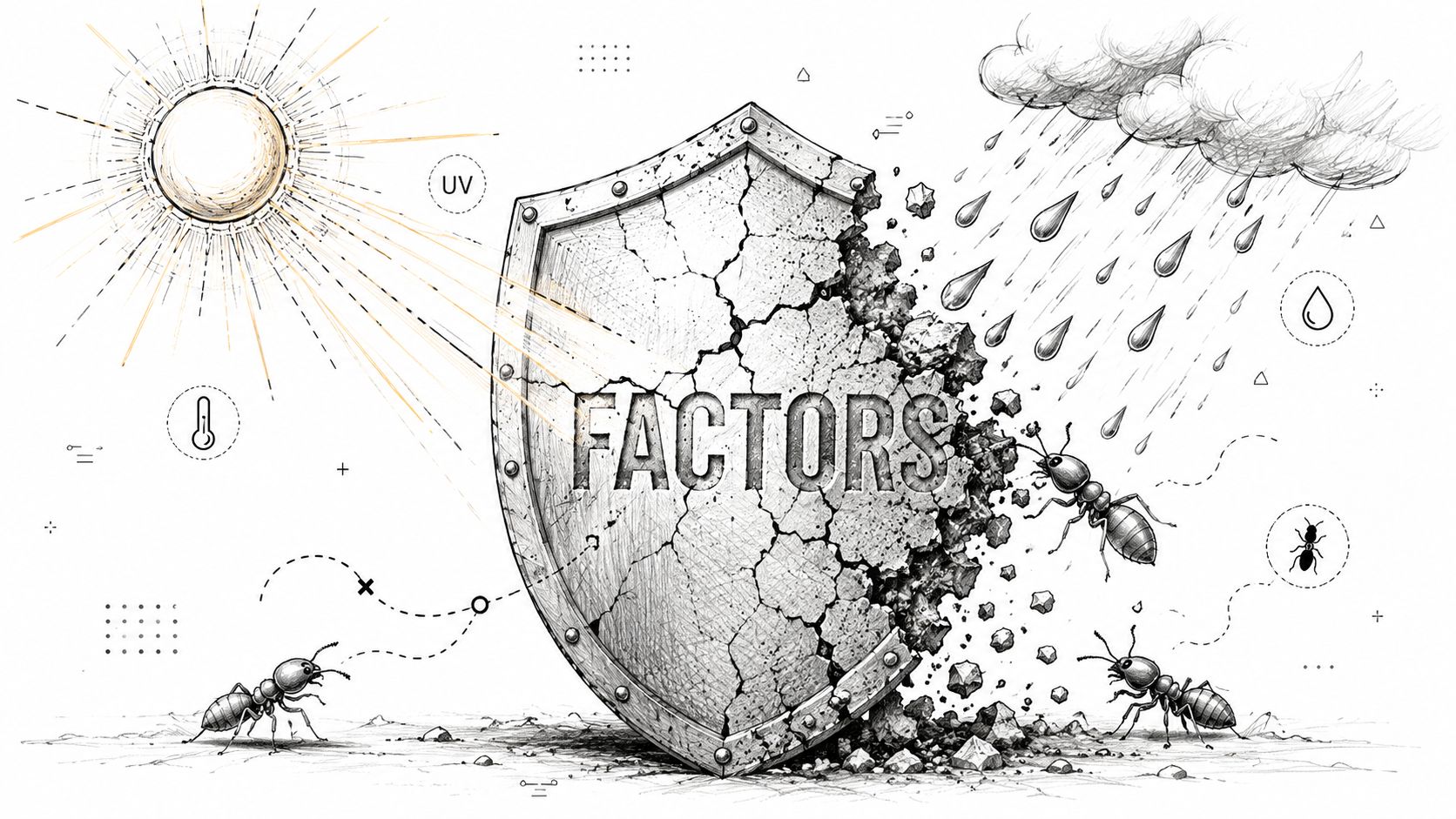
Residual spray programs usually stay effective for 30 to 90 days, but exposure matters. Outdoor applications with consistent or heavy rainfall may drop to about 60 days, and mosquito or flying-insect treatments may last around 30 days according to Solutions Pest & Lawn's treatment lifespan guide.
That matters a lot in the Houston area. Strong rain, long humid stretches, sprinklers hitting the foundation, and intense summer sun all wear down exterior treatments faster.
If you want a broader homeowner-friendly look at prevention instead of relying on spray alone, this explanation of how IPM keeps pests out is worth reading.
Infestation size changes the timeline
A light nuisance problem behaves differently than an established infestation.
Here's what usually shortens the effective life of a treatment:
- Heavy pest pressure means more insects are already breeding, hiding, and feeding on the property.
- Multiple nesting zones create rebound problems. One treatment point won't solve pests living in walls, attics, mulch beds, and garage voids at the same time.
- Untreated source conditions such as leaks, grease buildup, pet food, cardboard storage, or clutter keep feeding the problem.
The treatment type matters as much as the product
Not every service is trying to do the same job. A perimeter residual spray, an interior bait rotation, a termite system, and a rodent exclusion plan each age differently.
Consider the following:
- Residual applications buy time by leaving treated zones behind.
- Baits work through feeding behavior and can appear slower.
- Exclusion work lasts as long as repairs hold.
- Sanitation and moisture correction make every other treatment last longer.
A pest service lasts longer when the home stops helping the pests.
In Southeast Texas, the homes that stay quiet longest are usually the ones where the chemical treatment is paired with dry conditions, sealed gaps, trimmed vegetation, and realistic follow-up.
Signs Your Pest Protection Is Wearing Off
Individuals often wait until they see a bug in the middle of the floor. By then, the pattern has usually been building for a while.
The better approach is to watch for repeat activity in the same zones. One random insect near a back door isn't always meaningful. New ant trails at the same threshold every morning are.
What normal post-treatment activity looks like
Some pests don't disappear overnight. Ants may keep showing up for weeks, and roach control can take time to fully play out. That means brief activity after a service isn't always bad news.
What's usually normal:
- A short burst of visible movement after treatment as pests are flushed from hiding
- Dead or dying insects showing up near baseboards, garage edges, or utility areas
- Reduced activity over time, even if it isn't zero immediately
What suggests the barrier is fading
Pay attention when the pattern changes from occasional to repeating.
Common signs include:
- Fresh spider webs reappearing in the same exterior corners or garage edges
- New ant trails around windows, sink areas, or patio doors
- Roach sightings shifting from isolated to regular
- Droppings or gnaw signs returning in pantry, attic, or garage areas
- Mosquito pressure climbing back in the same shaded parts of the yard where people spend time
- Pest activity after weather events that likely washed down exterior coverage
If the number of sightings is shrinking, the service is probably still working. If the same pest is reclaiming the same area, the protection is likely thinning out.
What to do before you assume failure
Check the location, timing, and pattern. Write down where you saw activity, whether it happened after rain, and whether it's the same pest or different ones.
That detail helps a technician tell the difference between normal post-treatment lag and a real rebound. In practice, the pattern matters more than the single sighting.
How Homeowners Can Extend Pest Control Effectiveness
The homes that stay protected longest usually aren't the ones getting sprayed hardest. They're the ones where the homeowner removes the conditions pests need.
Start with food, water, and access
If pests can eat, drink, and get back inside, they'll test the treatment constantly.
Focus on these first:
- Dry out moisture spots under sinks, around water heaters, at AC drain lines, and near hose bibs.
- Store food tighter in pantry zones, pet feeding areas, and garages.
- Cut back vegetation that touches the house or creates bridges to the roofline.
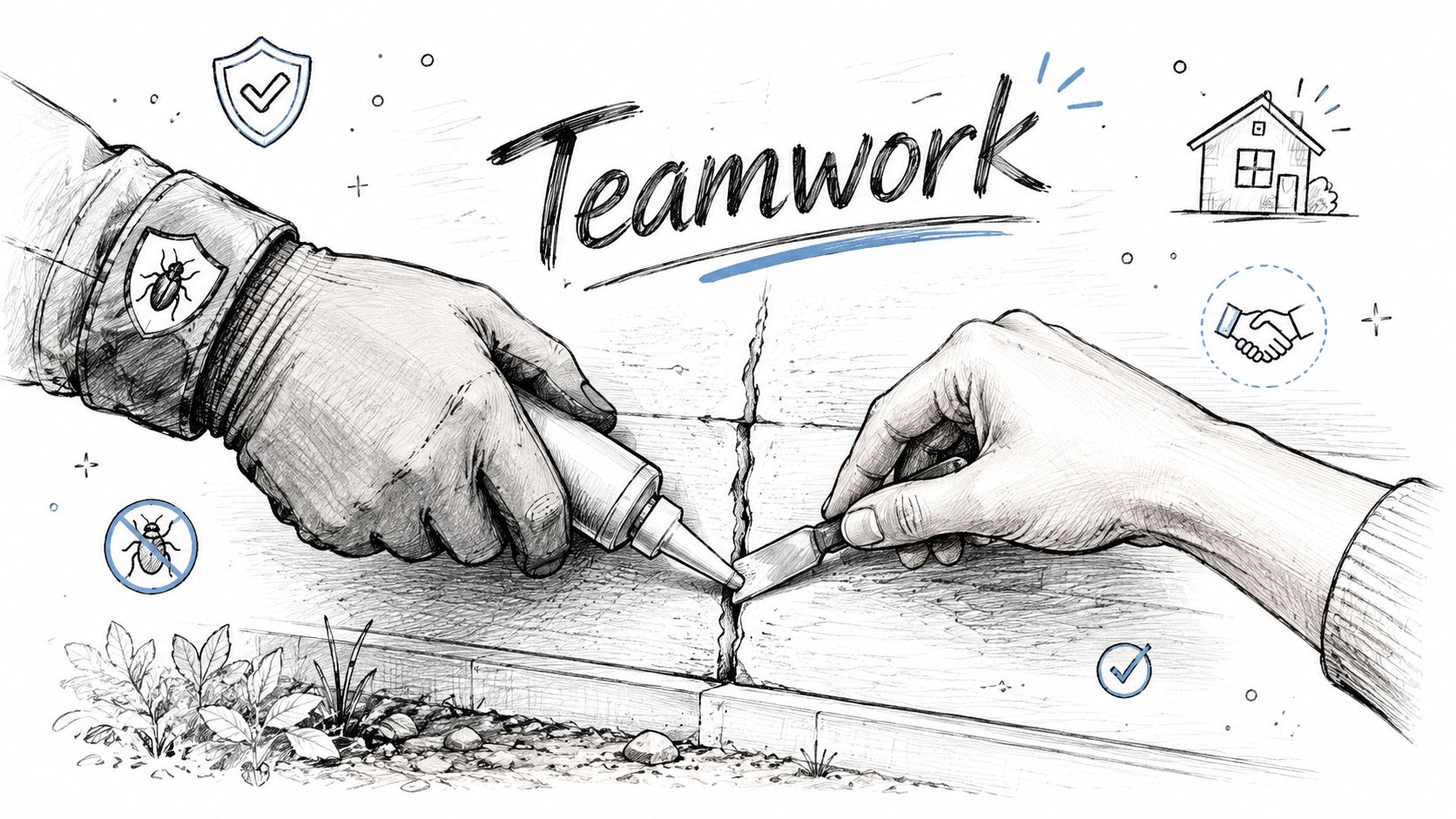
- Seal easy entry points around pipe penetrations, door sweeps, utility lines, and foundation gaps.
A lot of homeowners need help finding the right trade help for those repairs. This step-by-step guide for homeowners is useful if you need someone to handle sealing, drainage correction, or exterior maintenance work that supports pest prevention.
Treat prevention like part of the service
Professional pest work lasts longer when the property stops refueling the infestation. That's especially true in older Houston-area homes with settling cracks, worn weatherstripping, and garage-door gaps.
For a more detailed prevention checklist, this guide on pest-proofing your home covers the kinds of small repairs and housekeeping changes that improve long-term results.
Here's a simple visual walkthrough that reinforces the same idea:
Yard conditions matter more than many people think
Outdoor pressure often starts the indoor problem.
Keep these in mind:
- Mulch piled too high can hold moisture and give insects cover near the slab.
- Leaf buildup and clutter near the foundation create harborage.
- Standing water in planters, drains, and low spots supports mosquitoes and other insects.
- Firewood and stored items against the house give pests a staging area.
When homeowners tighten those conditions, treatments usually last closer to the strong end of their expected window.
Why Scheduled Service Is the Best Bet for Texas Homes
In a climate like Southeast Texas, pest control works best as maintenance. Not because every house is infested, but because pest pressure doesn't shut off for very long.
The business trend reflects that. The U.S. professional pest control market was estimated at about $24.9 billion in 2023, with projections of roughly $29.1 billion by 2026 according to PestPac's pest-control market overview. Homeowners keep paying for recurring service because recurring pressure is real.

Quarterly service makes sense for many Houston-area homes because it lines up with the way general protection wears down and the way pests cycle back in. For homes with tighter needs, a more frequent schedule may be the practical choice until activity settles. If you're weighing that decision, this breakdown of whether quarterly pest control is worth it helps frame the trade-off.
Some pest issues also demand a more specialized plan from the start. Bed bugs are the clearest example. If that's your concern, this guide on how to eradicate bed bugs is a useful companion resource because bed bug work follows a very different timeline than routine perimeter service.
For homeowners in Kingwood, Conroe, Porter, Cleveland, and nearby communities, FullScope Pest Control offers the kind of scheduled residential service, termite protection, mosquito management, and rodent support that fits this climate and these pest patterns.
If you're wondering how long pest control will last at your house, the honest answer is this: it depends on what's being treated, what your property is giving pests, and how consistent the follow-up is. In Southeast Texas, the most reliable results come from a treatment plan that matches the season, the pest, and the way your home is built.