1500+ reviews

You walk outside in July, and one part of the St. Augustine looks off. The grass is yellowing near the driveway, the patch seems to get wider every few days, and watering hasn't fixed it. That's the moment a lot of Southeast Texas homeowners start chasing the wrong problem.
In this area, chinch bug lawn damage often gets mistaken for drought stress, fungus, or bad irrigation coverage. The lawn looks thirsty, so people add more water. The grass keeps declining anyway. By the time the damage is obvious, the insects are usually well established in the hottest parts of the yard.
If you're in Kingwood, Conroe, Porter, or nearby communities, the pattern is familiar. Hot sun, St. Augustine, a bit of thatch, and a stretch of dry weather can set the stage fast. The good news is that chinch bugs are one of the few lawn pests you can often confirm yourself before you spend money on the wrong treatment.
How to Identify Chinch Bug Damage in Your Lawn
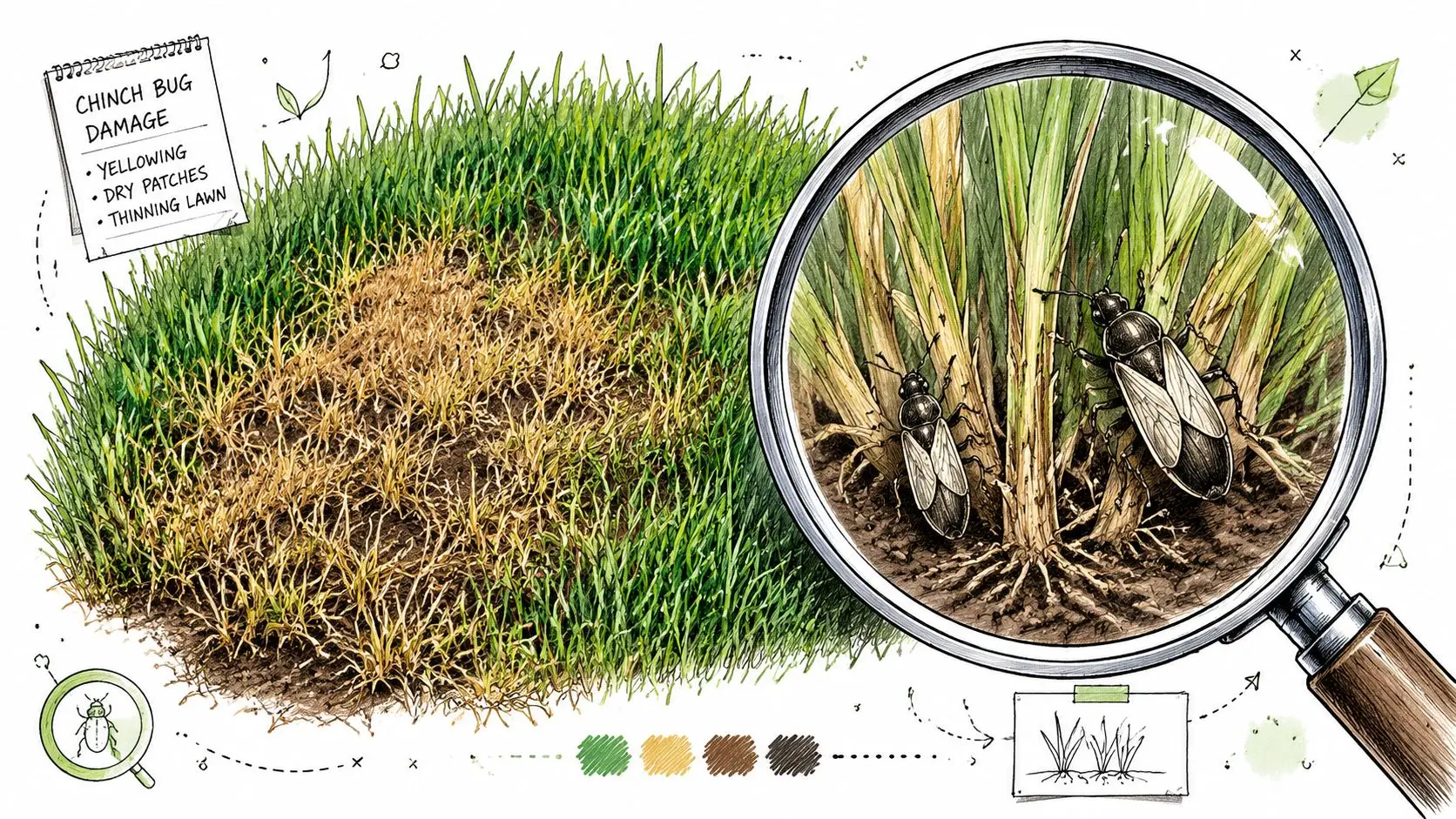
In Southeast Texas, chinch bug damage usually shows up where the lawn already has a hard time holding up. I see it first along driveways, sidewalks, curb lines, and other full-sun spots in St. Augustine. The grass fades from green to yellow, then turns brown in uneven patches that keep widening even though the irrigation is running.
That pattern matters. Drought stress usually follows sprinkler coverage or soil conditions. Chinch bug injury tends to spread outward from the hot edge of the problem area, especially during long stretches of heat and humidity when St. Augustine is under pressure.
What the damage actually means
Chinch bugs feed low in the turf, around the crown and thatch layer. As they feed, the grass starts acting drought-stressed even when water is available. Homeowners usually notice the same thing first. The lawn looks thirsty, but extra watering does not bring it back.
That is why overwatering is such a common mistake here. It does not solve the insect problem, and in some yards it adds new stress by keeping the surface damp while the damaged grass continues to decline.
Practical rule: If St. Augustine keeps thinning and spreading into irregular brown patches after watering, check for chinch bugs before you assume the sprinkler system is the problem.
How to do the can test
The quickest DIY check is the can test, sometimes called the water-flooding test. It is simple, cheap, and useful if you do it in the right spot. LSU AgCenter recommends this approach for flushing chinch bugs out of turf during diagnosis in their chinch bug diagnostic guidance.
- Test the edge of the damage. Pick the line where green grass meets yellowing or straw-colored turf.
- Use a large can with both ends removed. A one-gallon can works well.
- Press it a few inches into the soil. That helps hold the water in place.
- Fill the can with water.
- Watch the water line for several minutes. If chinch bugs are present, they often float up or start moving near the surface.
This test is more reliable at the edge of an active patch than in the center of dead turf. Once the grass is gone, the bugs may have already moved outward to healthier grass.
What you're looking for
Adults are small, dark insects with light wings folded over the back. Younger chinch bugs, called nymphs, are smaller and easier to miss down in the thatch. A hand lens helps, especially in thick St. Augustine.
If you want a side-by-side visual, this guide to Southern chinch bug yard pest signs gives homeowners a good picture of what to watch for.
One more field tip from local lawn work. Check more than one hot spot. In Southeast Texas, I often find the first activity near concrete edges and then in a second patch farther out in the same sunny section. Catching that spread early gives you better treatment options and usually saves more grass.
The Chinch Bug Lifecycle in Southeast Texas
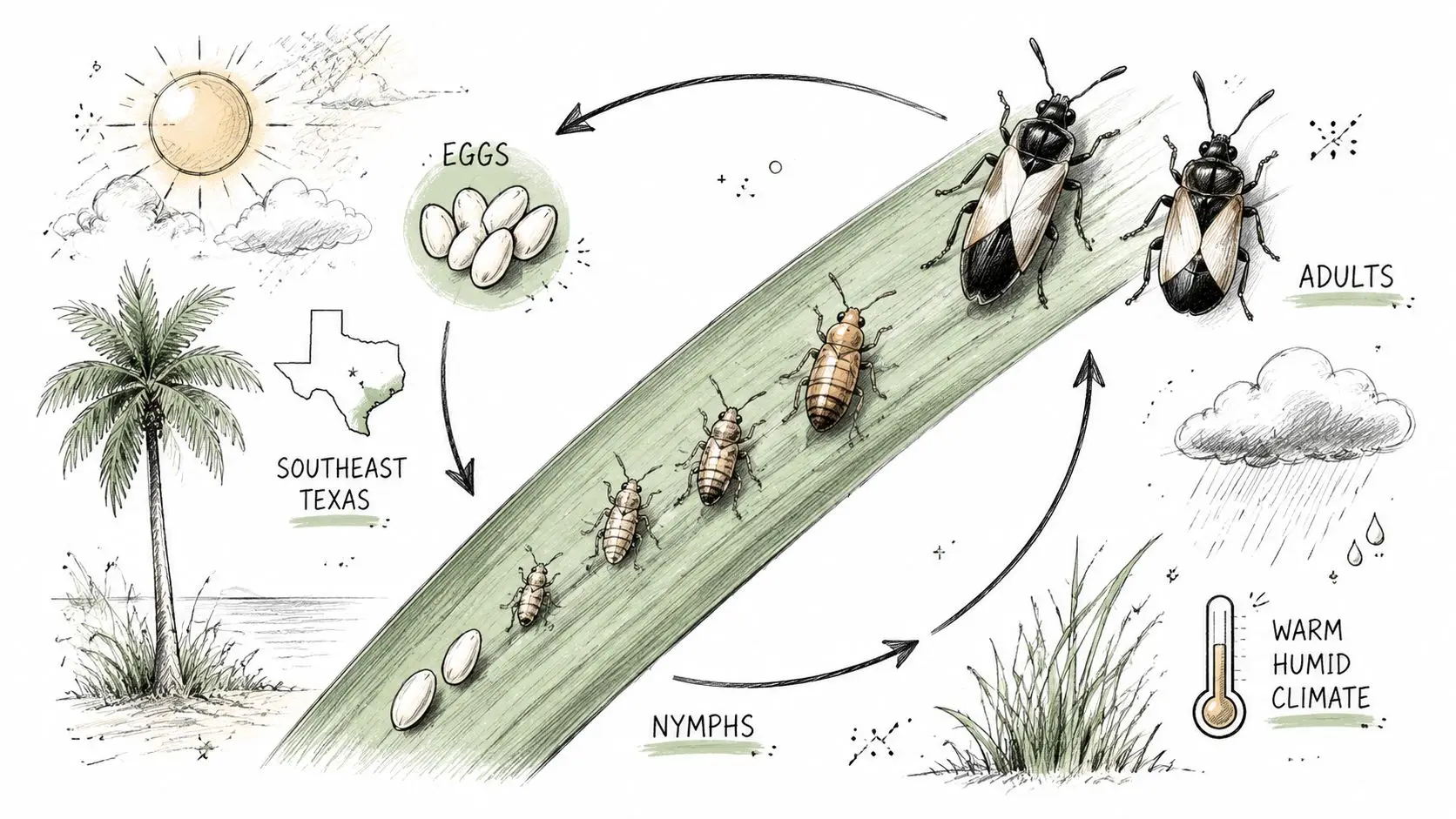
You water a dry-looking St. Augustine patch in June, and the color still does not come back. A week later, the edge has crept farther into the healthy turf. In Southeast Texas, that pattern often lines up with chinch bug activity because our heat arrives early, our humidity stays high, and stressed St. Augustine gives them room to build.
Chinch bugs do not show up as a one-and-done summer problem here. In our part of Texas, they overwinter down in protected spots, then ramp up as the weather warms. By the time homeowners notice a spreading patch, the population has usually been active for a while.
Why Southeast Texas lawns get hit hard
This region gives southern chinch bugs a long working season. St. Augustine is the grass they damage most often, and it is also the grass many Southeast Texas homeowners rely on because it handles our soils and heat better than finer-bladed turf. That creates a common local problem. The lawn type that performs well here is also the one chinch bugs prefer.
Hot sun makes it worse. I see the first activity most often along driveways, sidewalks, curbs, and broad open sections that bake through the afternoon. The canopy can stay humid, but the upper thatch and surface still get hot and dry. That combination puts St. Augustine under stress and gives chinch bugs an easier target.
The stage that matters most
For control timing, nymphs are usually the window to watch. They are smaller, easier to miss, and easier to knock back before the population spreads across a larger area. Adults are tougher to catch after the damage pattern is obvious.
In Southeast Texas, the practical timeline starts in spring and carries into the hottest part of summer. Early warm-ups can get activity going sooner than homeowners expect, especially after a mild winter. Then pressure often builds again as summer heat settles in and stressed turf loses its ability to outgrow feeding injury.
That is why repeat problem lawns need attention before the grass looks bad.
What this means for St. Augustine owners
If the same sunny section declines year after year, treat that area like a known risk zone. Do not wait for a large straw-colored patch to confirm the pattern. Check those spots early in the season, especially if the lawn had chinch bugs before or struggled through last summer.
There is a real trade-off here. Homeowners who wait for obvious damage get a clearer visual signal, but they usually have more turf to recover. Homeowners who monitor early have a better shot at stopping spread, but they need to inspect the lawn before it looks urgent.
If you want a plain-language breakdown of seasonal timing and treatment decisions, these common chinch bug treatment questions from local lawn pros are a useful next reference.
The big takeaway is simple. In Southeast Texas, chinch bugs are usually a seasonal pressure issue in St. Augustine, not a random surprise. Once you know when your lawn tends to get hit, you can catch activity earlier and protect a lot more grass.
Immediate Treatments for Chinch Bug Infestations
A common Southeast Texas call goes like this. The St. Augustine looked fine last week, then one sunny strip by the driveway turned yellow and started widening. If you have already confirmed chinch bugs, treat quickly. Waiting a few more days in hot weather can turn a manageable patch into a repair job.
The goal is to stop feeding where the lawn is still alive, especially along the outer edge of the damaged area. Water will not stop an active infestation. Fertilizer will not stop it either, and pushing growth on bug-stressed St. Augustine can make recovery harder if the insects are still feeding.
Choose treatment based on how fast the patch is moving
For an active outbreak, faster knockdown usually makes more sense. In the field, that often means a pyrethroid product. Homeowners usually notice quicker suppression with that route, which matters when the grass is burning up in full sun.
Neonicotinoid products can still have a place, but they are usually a better fit when the infestation is caught early and the lawn is not declining fast. The trade-off is simple. A slower product can be acceptable in a lighter case, but it is a poor choice when the yellow edge is expanding across St. Augustine in July heat.
| Treatment type | Best use | Trade-off |
|---|---|---|
| Pyrethroid | Fast suppression during active feeding | Good coverage matters or control can be uneven |
| Neonicotinoid | Earlier-stage infestations with less visible spread | Slower results when turf is already under stress |
Read the label before you buy. Some products fit homeowner broadcast use better than others, and some are a poor fit if you are only trying to stop one active patch.
Application mistakes cause a lot of failed DIY results
Most chinch bug failures are coverage problems. The bugs stay down in the canopy and around the thatch layer, not out where a light spray on top of the blades will do much good.
Use these field-tested rules:
- Treat beyond the obvious patch. The active population is usually feeding where green grass meets yellowing turf, and often a little past that line.
- Cover the edge evenly. A rushed spot treatment in the dead center misses the bugs that are spreading the injury.
- Apply at the right time of day. Early morning or late afternoon usually works better in Southeast Texas than spraying during peak heat.
- Follow the label on irrigation after application. Some products need a dry finish on the leaf and thatch. Others may allow light watering. The label decides that, not guesswork.
- Do not stack products just because the lawn looks bad. Mixing or repeating too soon can waste money and increase turf stress without improving control.
One more point that matters in this region. Heat-stressed St. Augustine often has separate problems at the same time. Chinch bugs may be the main driver, but poor drainage, reflected heat off concrete, compacted soil, or shade stress can slow recovery after treatment. If part of the lawn struggles because it never gets enough light, it helps to find ideal turf for shade before spending more money trying to force St. Augustine to hold in the wrong spot.
What to do right after treatment
Give the product time to work, then watch the border of the damaged area. The first sign of success is usually that the patch stops advancing. The dead grass in the middle may not green back up right away, especially if the runners are already gone, but the edge should stop moving.
Hold off on heavy fertilizing until you know the infestation is under control. Keep irrigation even, but do not overwater trying to rescue a section that is still being fed on. In Southeast Texas, soggy soil plus heat usually creates a second problem instead of solving the first.
If you want a plain-language comparison of homeowner options, timing, and what to expect after service, review these common chinch bug treatment questions from local lawn pros.
Long-Term Prevention and Lawn Health Best Practices
A typical Southeast Texas call goes like this. The lawn looked fine in June, then a sunny strip by the driveway started yellowing in July, and by the time the damage was obvious, the St. Augustine had already thinned out enough for chinch bugs to keep pushing.
Prevention works better than repair in this region because our heat, humidity, and long growing season give chinch bugs plenty of time to build pressure. St. Augustine can recover from a lot, but repeated feeding during hot weather slows it down and turns a small problem into patching or resodding.
A good prevention plan has two parts. Keep the grass strong enough to handle stress, and pay close attention to the spots where chinch bugs usually start.
Cultural practices that actually help
Healthy turf will not make chinch bugs disappear. It does make St. Augustine less likely to collapse fast under pressure.
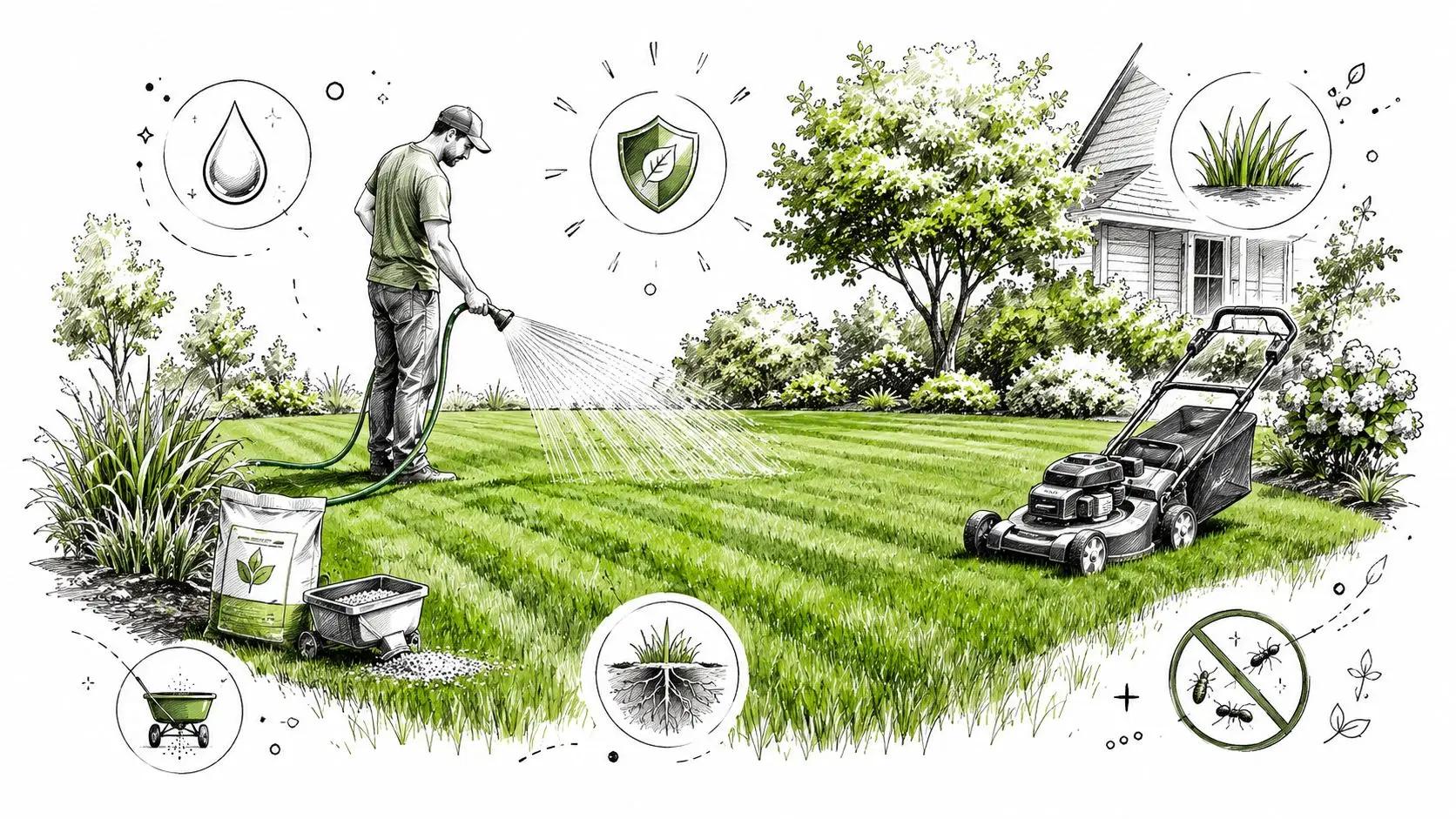
- Keep thatch under control: Heavy thatch and built-up leaf litter give chinch bugs cover near the surface. If the lawn feels spongy or you can see a thick brown layer above the soil, it is time to address it.
- Water thoroughly, not constantly: In Southeast Texas, shallow daily watering often creates weak surface roots and extra stress once the heat sets in. Deeper, less frequent irrigation supports stronger rooting and more even recovery.
- Mow St. Augustine high enough: Scalping exposes the crown and heats the soil fast, especially along concrete. A little extra blade height helps the turf shade itself and hold moisture longer.
- Watch hot edges first: Parkway strips, driveway borders, and areas against south- or west-facing hardscape are where I usually see early activity.
- Fix the site problem, not just the symptom: If one section stays thin because of dense shade or reflected heat, that weak spot will keep drawing trouble. If the area does not get enough sunlight, it helps to find ideal turf for shade before putting more money into St. Augustine that is already in a losing spot.
Build a lawn that recovers faster
Long-term prevention is not just about killing bugs early. It is also about reducing stress so the grass can grow runners, fill thin spots, and hold density through summer.
That means avoiding two common mistakes. One is pushing tender growth with too much fertilizer during peak heat. The other is keeping the lawn wet all the time because it looks dry in the afternoon. In our area, both can make a stressed yard harder to manage.
Some properties also benefit from changing the grass choice in trouble spots. Endophyte-enhanced turf can help on certain lawns, but it is not a blanket answer for every Southeast Texas yard, and it needs to be matched to the property and used with care. For most homeowners with St. Augustine, the bigger win comes from better mowing, better irrigation habits, and catching problem areas before they spread.
For a broader look at types of lawn pest control services, compare one-time treatment with season-long prevention and inspection. That helps homeowners decide whether a simple DIY watch plan is enough or whether recurring service makes more sense for a high-risk yard.
Healthy turf does not stop every chinch bug problem. It gives your lawn a better chance to hold up in July and recover once the pressure is gone.
When to Call a Professional for Lawn Pest Control
You water the lawn on Saturday, put out a store-bought treatment on Sunday, and by midweek that brown patch along the driveway is bigger. In Southeast Texas, that is usually the point where waiting costs more than the service call, especially with St. Augustine in full summer heat.
Some chinch bug problems are still manageable with careful DIY work. Others need a trained inspection because the issue is no longer just the insects. It is the insects, the heat load, the watering pattern, the grass variety, and the speed of decline all working together.
Signs the problem is beyond DIY
Call a professional if you are seeing any of the following:
- The damaged area keeps expanding over a few days: This is common along sidewalks, curbs, driveways, and other hot edges where St. Augustine stays under stress.
- You already treated once and the lawn is still declining: That usually points to a problem with diagnosis, application coverage, or timing.
- The same sections get hit every summer: Repeat flare-ups often mean the site conditions are favoring chinch bugs year after year.
- You cannot rule out something else: Drought stress, dry spots from irrigation issues, disease, and soil compaction can all look similar from the street.
- Large sections are thinning at once: Once the turf opens up, recovery gets slower and more expensive.

Why professional service changes the outcome
A good lawn pest technician does more than treat the brown area. They verify that chinch bugs are present, check the edge of the damage for active feeding, look at thatch and mower height, and figure out whether irrigation is helping the lawn recover or keeping it under stress.
That matters here because Southeast Texas lawns rarely fail for one reason. On St. Augustine properties, I often see chinch bug injury stacked on top of shallow watering, reflected heat from concrete, and grass that is already struggling in the hottest part of the yard. If you only spray and do nothing else, the lawn may stop getting worse for a bit, then slide right back into the same pattern.
There is also a timing issue. Once a patch has crossed from stressed to dead, treatment can stop the spread, but it cannot bring dead turf back. At that point, you are talking about plugs, sod repair, or waiting on runners from the edges.
A strong local provider should also be easy to vet. If you want to see what a credible company should be doing online before you hire them, this guide on optimizing Google Business Profile for pest control gives homeowners a practical way to check reviews, service clarity, and whether the company really works in your area.
For severe chinch bug lawn damage in Conroe, Kingwood, Porter, and nearby communities, getting professional help early usually saves more St. Augustine and shortens the repair bill.
Your Top Chinch Bug Questions Answered
Can chinch bugs bite people or pets
They're a lawn pest, not a pest people usually notice the way they notice fleas or mosquitoes. The primary issue is turf damage, especially in St. Augustine during hot weather.
Will the lawn recover on its own
Sometimes, but it depends on how much living turf is left. If the roots and crowns still have life, grass can fill back in after control and proper care. If the area is fully dead, recovery may require patching, resodding, or plugging.
Why is the damage worse in sunny spots
Because chinch bugs thrive in hot, open areas, and stressed grass gives them an easier target. In Southeast Texas, that usually means driveway edges, curb strips, and broad sections with full afternoon sun.
How do I tell chinch bug damage from fungus
Start with behavior, not just color. Chinch bug lawn damage usually keeps expanding even when you water, and it often starts in heat-heavy zones. Fungal issues can look different in pattern and often follow moisture conditions more than sun exposure. If the can test brings bugs to the surface, that answers the question fast.
Should I wait until I see a lot of damage before treating
No. Waiting is what turns a manageable infestation into a repair job. Chinch bug control works best when you catch the population early and treat at the right point in the season.
If your St. Augustine is yellowing, thinning, or dying in patches and you want a local diagnosis instead of guesswork, FullScope Pest Control lawn care services can help homeowners in Kingwood, Conroe, Cleveland, Porter, and nearby Southeast Texas communities inspect the problem, confirm whether chinch bugs are involved, and build a treatment plan that fits the lawn.