1500+ reviews

You step into the backyard, hear a heavy buzz, and spot a wasp the size of your thumb carving a tunnel into the dirt. In Southeast Texas, that moment sends a lot of homeowners straight to the same conclusion: hornets, danger, and an afternoon nobody wanted.
Most of the time, it's a cicada killer. It looks intimidating. It flies low, patrols hard, and kicks up little piles of soil that make the yard look active in all the wrong ways. But this isn't usually the kind of wasp problem that calls for panic or blanket spraying.
The better question is simpler. Do you need cicada killer control at all? In many yards, the answer is no. In others, especially where burrows sit in play areas, along walkways, or in spots with constant foot traffic, control makes sense. The key is making that call before you start dumping product into the lawn.
That Giant Wasp in Your Yard Friend or Foe
A common Southeast Texas scene goes like this. Mid-summer heat. The St. Augustine has thinned out along a sunny edge of the yard. The clay soil has cracked where the sprinkler coverage is weak. Then a large wasp appears, hovering over one patch of bare ground like it owns the place.
That insect is usually a cicada killer, and despite the name and the size, it's often more nuisance than threat.
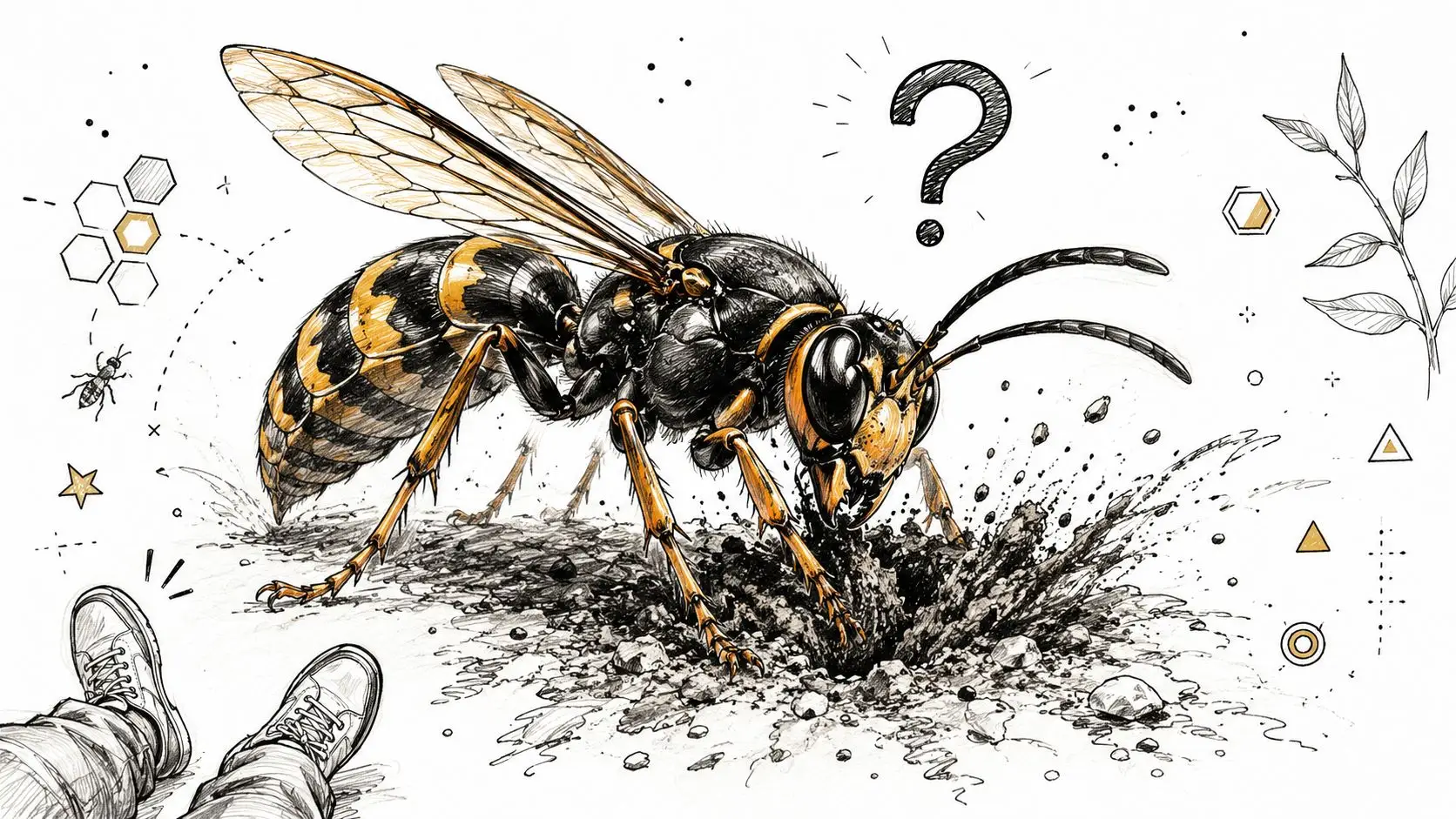
Why they alarm people so fast
They don't move like paper wasps around an eave. They don't hide like yellow jackets. Cicada killers are out in the open, flying patrol routes over the lawn and digging visible burrows. That makes them feel more aggressive than they usually are.
In practice, most homeowners are reacting to three things:
- Their size makes them look more dangerous than they are.
- Their flight pattern feels confrontational when they hover near people.
- Their digging creates fresh mounds that make the infestation look bigger than it is.
What they're actually doing
These wasps are solitary ground nesters. They aren't building a social nest under your roof, and they aren't looking for a fight with the family. They're using open soil to dig burrows and hunt cicadas.
That's why I tell homeowners to slow down before they decide the whole yard needs treatment. A cicada killer in a back corner bed is one thing. A cluster of burrows beside the pool gate or in a ball-play area is something else.
Practical rule: If the wasps are scary but not interfering with how you use the yard, tolerance is often a reasonable choice.
That distinction matters. Good cicada killer control starts with deciding whether you're dealing with a real yard-use problem or just an unnerving insect.
Identifying Cicada Killers and Assessing the Real Risk
A lot of Southeast Texas homeowners call these “hornets” the first time they see one cruising low over the yard. That misidentification is where bad decisions start. Before treating anything, make sure you are looking at cicada killers and not a social wasp that brings a different level of risk.
What to look for in the yard
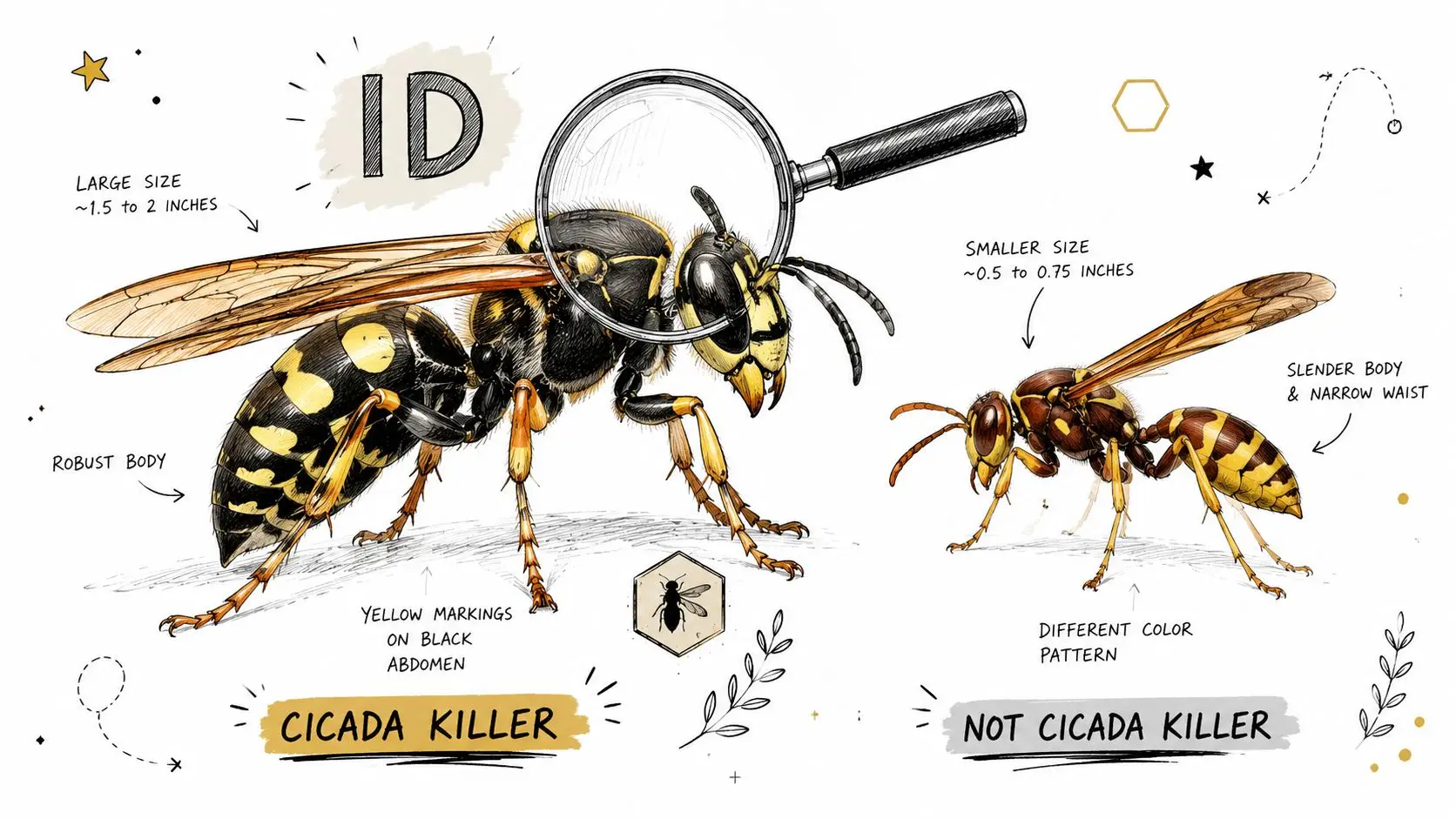
Cicada killers are large, ground-nesting wasps with yellow and black markings and a rusty cast on parts of the body. In the field, behavior usually confirms the ID faster than color does. You will see them working open, dry soil, dropping into a hole, backing out dirt, and flying short patrols a few feet above the ground.
The soil gives them away too. Active burrows usually have a fresh, fan-shaped or crescent pile of loose dirt at the entrance. Around here, I see them most often in bare spots, thin turf, flower bed edges, and hard-packed areas that crack out in the summer heat.
Males are often the ones homeowners notice first because they patrol aggressively around nesting zones. They may rush up to your face or hover in front of you. That behavior is intimidating, but it is different from a yellow jacket nest defending itself.
If you are still sorting out what you saw, this Atlanta homeowner's guide to bee identification is a useful visual reference for comparing body shape, markings, and nesting habits.
Checklist for assessing risk
Correct identification matters, but location matters more. In many yards, cicada killers are a nuisance you can tolerate for a season. In other yards, they interfere with normal use enough that control makes sense.
Use a simple decision check:
- Burrows in high-traffic areas. Front walk edges, pool gates, play zones, dog runs, patio approaches, and mailbox paths deserve more attention than a back fence line.
- Repeated activity in bare, compacted soil. In our clay soil, they often pick the same thin or dry areas year after year if the site stays open and undisturbed.
- A household sting concern. If someone has a known sting allergy, the threshold for action is lower even when the wasps are not especially aggressive.
- Visible soil displacement. A few holes are mostly cosmetic. A larger cluster can create a maintenance issue in beds, turf edges, or freshly improved lawn areas.
- Low-use corners. If the nesting area is out of the way and nobody has to pass through it, watching and correcting the habitat is often the better call.
That last point is the one homeowners skip.
I do not tell every customer to wipe them out on sight. If the burrows are tucked behind shrubs along the fence and the family never goes there, treatment may do less good than thickening the grass and reducing exposed soil. If the nest area is right where kids cut through the yard every afternoon, that is a different decision.
For a broader comparison of species and nesting habits, this page on ground wasps and nesting behavior helps put cicada killers in the right category.
A practical example helps. A few burrows in a dry side yard usually fall into the monitor-and-improve-the-site category. A cluster beside the AC unit, near the garbage cans, or along the path from the driveway to the door usually deserves action because people have to use that space.
Most cicada killer issues come down to nest placement and yard use, not danger alone.
DIY Cicada Killer Control That Actually Works
If the nest cluster is beside the front walk, near the AC, or along the route kids and pets use every day, control makes sense. If it is a couple of holes tucked into a back fence line, treatment may be more trouble than benefit. Make that call first, because the best DIY plan is targeted work on the burrows that matter.
The mistake I see in Southeast Texas is treating cicada killers like a general lawn pest. Homeowners spray a whole section of yard, then wonder why the wasps are still flying. Cicada killer control works best when you treat the tunnel entrance itself. Broad surface applications usually miss the female's travel path and do little for burrows already established in hard, dry soil.
North Carolina State University makes the same point in its cicada killer guidance. Direct burrow treatment is the method that gives homeowners the best chance of getting control.
What works
Use a labeled insecticidal dust and place it into the active entrance. The older extension recommendation many technicians learned on was 5% carbaryl dust applied into the burrow opening, then leaving that opening undisturbed so the female moves back through the treated area. The product matters, but placement matters more.
That is why precision beats coverage.
A practical DIY sequence
A small, contained nesting pocket is a reasonable DIY job if you stay disciplined.
Confirm which holes are active
Watch during the warm part of the day and identify the entrances with regular traffic. Fresh spoil piles help, but flight activity is the better indicator.Use a dust labeled for the site
Read the label for lawn, ornamental bed, or bare-soil use, depending on where the burrow sits. Do not substitute a random spray because it is already in the garage.Apply directly into the entrance
Put the dust into the tunnel opening, not across the surrounding turf. In our clay soils, product left on the surface often sits where it does very little.Leave the hole open at first
Do not mash the entrance shut right after treatment. You want the returning wasp to contact the treated zone.Check the site again
If the same entrance still has steady activity later, treat the active hole again or reassess whether you identified the right opening.
What usually fails
Poor results usually come from poor targeting.
- Broadcast lawn sprays. They spread product over a big area without putting enough where the wasp is traveling.
- Treating every hole you see without watching first. Old burrows and lookalike holes waste time.
- Home remedies. Gasoline, fire, boiling water, and soap mixes create safety problems and can wreck turf or stain concrete.
- Working in the middle of the day without a plan. Heat, glare, and wasp activity make it easy to miss active entrances and rush the job.
A cicada killer burrow is a site-specific treatment problem, not a whole-yard spray problem.
Safety and limits
Keep kids and pets out of the area until the application is finished and the product label says reentry is allowed. Homeowners comparing options for yard treatments around animals may also want general background on safe lawn treatment for pets in Georgia.
A few burrows in one sunny patch are manageable. Multiple clusters across the yard are different. At that point, you are not just treating insects. You are dealing with the bare, dry conditions that drew them in. If you want to address those conditions too, this guide on what attracts wasps around the yard and how to keep them away gives helpful context.
If you cannot safely reach the nests, if the activity is spread across several high-use areas, or if you have someone in the home who panics around stinging insects, that is usually the point where DIY stops being the smart option.
Long-Term Prevention Through Smart Lawn Care
The most effective long game usually isn't more insecticide. It's making the yard less inviting for burrowing.
Virginia Tech points out that cicada killer colonies are strongly associated with dry, sparse turf and exposed soil, and that promoting thick turf through adequate watering, liming, and fertilization can often eliminate an infestation in one or two seasons without pesticides, as covered in Virginia Tech's cicada killer management guidance.
Why this matters in Southeast Texas
Our hot weather and heavy clay soil create a familiar pattern. The yard starts the season looking full, then a few high-sun areas thin out, irrigation misses the edge, the top layer dries and cracks, and now the wasps have a workable digging site.
That's why cultural suppression carries so much weight. If you only kill active burrows but leave the same dry, open nesting habitat in place, you're treating the symptom and keeping the invitation.
What to change in the yard
Focus on the spots where the turf has opened up.
- Water the weak zones better. Dry, dusty ground is easier for them to use. Consistent moisture helps the lawn compete.
- Push for turf density. Fertility and soil correction matter because thin grass leaves exposed soil between runners and roots.
- Cover bare ground. In beds, use mulch. Along edges or worn zones, close up exposed areas before they become nesting sites.
This is also where broader wasp prevention overlaps with lawn care. If you're trying to reduce attractants and nesting opportunities around the property in general, this guide on what attracts wasps and how to keep them away is worth reading.
The trade-off homeowners should understand
Chemical treatment can knock down active burrows. Lawn improvement changes the property so the problem is less likely to repeat.
That's not always the fast answer people want, but it's usually the honest one. In Southeast Texas, the lawns that stay dense through heat and sun are the lawns that give cicada killers fewer easy places to set up.
If you want fewer burrows next season, fix the habitat this season.
When to Call a Professional for Cicada Killer Problems
Some cicada killer situations are manageable with a hand duster and patience. Others stop being practical for a homeowner pretty quickly.
The call for backup usually comes down to scale, location, and comfort level. If you're dealing with a few isolated holes in an open patch of dirt, DIY can be reasonable. If the activity is spread across multiple nesting areas or the burrows sit where people have to walk, the margin for trial and error gets a lot smaller.
Signs the job has outgrown DIY
These are the situations where professional help makes sense:
- The nesting area is widespread. You're not seeing one cluster. You're seeing activity across different parts of the yard.
- The burrows are in sensitive spots. Near entry walks, sports-use turf, pool access paths, or places where someone will keep crossing the wasp flight path.
- You can't confidently identify active entrances. That leads to partial treatment and repeat activity.
- You're not comfortable applying insecticidal dust. That alone is reason enough to hand it off.
- Someone in the home has a serious sting allergy. In that case, “probably fine” isn't good enough.
For homeowners weighing that decision, this article on when to call a professional against wasps gives a useful bigger-picture standard.
DIY vs Professional Cicada Killer Control
| Factor | DIY Control | Professional Control (FullScope) |
|---|---|---|
| Best fit | A few visible burrows in a simple area | Larger or more disruptive nesting problems |
| Accuracy | Depends on your ability to find active entrances | Inspection-driven treatment plan |
| Time required | Monitoring, treating, and rechecking takes effort | Homeowner spends less time managing the problem |
| Product handling | You handle selection, label reading, and application | Licensed technicians handle application |
| Risk of partial control | Higher if burrows are missed | Lower when treatment is targeted after inspection |
| Prevention advice | Homeowner researches turf correction alone | On-site guidance based on the property layout |
What a pro should bring to the job
A good service visit shouldn't look like a generic wasp spray. It should start with inspection, focus on the actual nesting areas, and include practical guidance on why the wasps chose that part of the yard in the first place.
That matters because cicada killer control is rarely just about killing insects. It's about stopping the repeat setup in the same hot, open, easy-to-dig zone next season.
Protect Your Southeast Texas Yard with FullScope
Cicada killers look severe, but many yard situations don't require an all-out extermination approach. The smart move is to judge the location, the traffic around the nests, and whether the activity is disrupting how you use the property. If it's just a low-use corner, better turf and a little patience may be enough. If it's a high-use area with active burrowing, targeted treatment is the right answer.
For homeowners in Kingwood, Conroe, and nearby Southeast Texas communities, local conditions matter. Clay soil, heat, and worn sunny patches create the exact kind of nesting pockets these wasps like. FullScope Pest Control understands those patterns and builds treatment around them.

FullScope is a QualityPro certified pest management company serving north Houston and surrounding areas with licensed technicians, targeted treatment plans, and integrated pest management methods. If the burrows are spreading, the yard isn't usable, or you'd rather not handle dust applications yourself, reach out through the FullScope Pest Control website for a professional inspection and a treatment plan built for your property.
Built with the Outrank tool