 1500+ reviews

What Do Termite Tunnels Look Like? Texas Guide
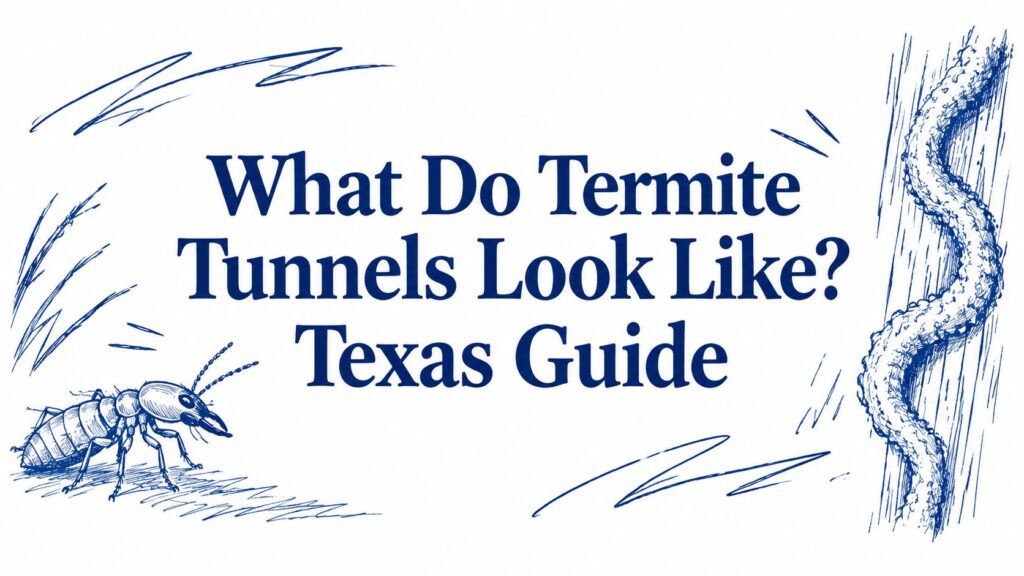
You're walking around your Magnolia home when a thin, dirt-colored line catches your eye on the concrete foundation. It looks too deliberate to be ordinary soil, but too small to seem like a serious problem. That narrow mark may be a subterranean termite shelter tube, and the visible section may represent only one access route from a hidden colony. The practical answer to what do termite tunnels look like is more nuanced than “a pencil-sized line of mud.” Tubes can be narrow, dry, branching, patchy, or blended so closely with masonry that homeowners miss them during a quick inspection. Knowing where to look, how the material behaves, and whether the structure is active gives you a much better starting point than scraping it away and hoping the termites disappear. Identifying Termite Shelter Tubes on Your Property A subterranean termite shelter tube is an earthen passage built across an exposed surface. It usually appears as a narrow, crusted line of dried dirt on a foundation, wall, crawl-space pier, or masonry surface. The purpose is protection. Termites use the covered route to travel between soil and a food source while reducing exposure to dry air and predators. During a preliminary check, start at the places where the ground, structure, and moisture meet. Walk the entire exterior perimeter with a flashlight, even if the suspicious mark is only on one side of the house. Where to direct your flashlight Check these areas closely: Foundation walls: Look for vertical lines rising from soil, landscaping, expansion joints, or slab edges. Masonry and concrete: Inspect cracks, corners, utility penetrations, steps, and areas where tubes can follow an irregular surface. Crawl-space piers: Examine both sides of wooden or masonry supports, especially where the pier meets the ground. Wooden supports: Check sill plates, joists, porch framing, and other wood located close to soil. Fence lines and outdoor wood: Stumps, timbers, and fence posts can provide nearby access points even when the house itself shows little visible evidence. The tubes are commonly about pencil-width, roughly one-quarter inch, according to Texas A&M AgriLife's reference on subterranean termites. That description helps, but don't treat it as a strict measurement. A tube may look like a raised dirt seam, a flattened strip, or a thin crust that disappears around a corner. Practical rule: Photograph the tube before disturbing it. Include a close view and a wider image showing its location on the property. You can also compare your observation with this guide to what to do after spotting a termite mud tube. The key point is simple: a visible tube deserves inspection, but its presence alone doesn't tell you how far the colony has traveled or whether the route remains active. The Variable Size and Texture of Mud Tubes The building material is a mixture of soil or wood particles bound with termite saliva and fecal matter. That blend produces an earth-toned surface that can resemble dried dirt, tan soil, brown sediment, or a gray crust. On concrete, the tube may be only slightly darker than the wall. In a crawl space, it can blend into dusty masonry or exposed soil, so a quick visual check may miss it. The material composition is described by Texas A&M AgriLife. Why width isn't a reliable diagnosis Field observations show that tubes may range from one-quarter inch to one inch or larger, particularly where a colony is active and established. A narrow route may serve as a protected passage, while a wider section can reflect repeated travel, repairs, or a need to move more workers and material. Width should guide inspection, not decide the diagnosis. Scientific work also describes narrower egress structures measuring 3 to 5 millimeters. Other termite species build fewer, wider, less-branched tunnels. The research in this study of termite tunnel architecture helps explain why a suspicious line should not be dismissed because it is thin or lacks a rounded profile. Texture offers additional clues: Dry and crusted: Exposure to air or changing moisture may harden the outer surface. Patchy or incomplete: Termites may cover only the section needed to cross an exposed area. Rough and granular: Sand, soil, wood particles, and organic debris can leave an uneven finish. Flattened against masonry: Limited space and pressure from the wall can make the tube look like a dirt smear. Slightly damp or compact: Moisture can keep the material cohesive and make it appear darker. Texas soil conditions affect what an inspector sees. Sandy material may leave a loose, grainy surface, while clay-rich soil can form a smoother, denser crust. Moisture near slab edges, shaded crawl spaces, or poorly drained areas can also keep tubes darker and less brittle. Species, humidity, available particles, and the tube's function all influence its final shape. A narrow, dry, or broken-looking tube doesn't rule out activity, while a thick tube does not prove termites still use it. Appearance identifies where to investigate. Activity requires a closer check of the route, surrounding soil, and nearby wood. Understanding the Hidden Branching Network A straight line on a foundation can give the wrong impression. It suggests a single route with a clear beginning and end, but subterranean termites often work through a branching system that changes as workers locate food and encounter crowded areas. Research described by the International Research Group on Wood Protection found that tunnel systems can radiate from discovered food sites, intercept nearby sites, and branch again. Related species also differed in how much they branched. At congested tunnel faces, workers may extend the existing route or create a side branch, depending on the conditions they encounter. One visible tube can have many hidden connections The section you see on the foundation may be only the exposed part of a larger foraging system. Other routes may remain underground, pass through cracks, follow the slab edge, or enter structural wood without creating a conspicuous surface line. That distinction matters during an inspection. If a homeowner scrapes off one tube, the colony hasn't necessarily lost access. Workers may repair the
Carpenter Ant vs Termite: How to Tell Them Apart
A small pile of gritty debris beside a Magnolia baseboard can trigger an expensive question: is a carpenter ant excavating a nest, or is a termite consuming the house? Pale winged insects near a window create the same worry, especially after a warm spring rain. The insect matters, but the more useful question is what kind of wood damage and moisture condition you're looking at. In Montgomery County homes, common discoveries include shed swarmers by a back door, fibrous frass below a bathroom baseboard, or a soft spot in a porch beam. A reliable diagnosis combines body shape, antennae, wing pattern, gallery construction, and debris, then connects those clues to the wood's location and moisture history. What a Homeowner in Magnolia Just Found A homeowner may notice the problem while sweeping the garage, checking a back porch, or opening a bathroom cabinet. The debris might look like coarse sawdust. The insects might be dark, pale, winged, or already dead on the windowsill. From a standing position, those clues can feel interchangeable, but they point to different service decisions. Carpenter ants and termites are often confused because both can appear around wood and both produce winged reproductive insects. Their biology, however, is different. Carpenter ants excavate wood to create nesting galleries, while termites consume cellulose in wood as food, a distinction documented by University of California Integrated Pest Management guidance on carpenter ants. A porch beam that feels soft may reflect moisture damage before any insect arrived. A bathroom baseboard with frass may indicate a nest in damp framing. Shed wings near a door may show a swarm event, but the wings alone won't tell you whether the colony is inside the structure, below the slab, or outside and attracted to light. Practical rule: Treat the insect as a clue, not the entire diagnosis. The wood condition often explains why the pest is present and what must change for control to last. Start with the three visible clues Body structure: Carpenter ants have a narrow, pinched waist. Termites have a thicker body without that constriction. Antennae: Carpenter ant antennae are elbowed. Termite antennae are straight. Wings and debris: Ant swarmers have unequal wing lengths, while termite swarmers have two pairs that are about equal. Fibrous frass favors carpenter ants, while mud tubes and packed galleries favor subterranean termites. A photograph can help narrow the possibilities, but it has limits. A crushed insect may hide the waist. A close-up may omit the wings, antennae, foundation, or moisture source that makes the difference. If the finding involves structural wood, preserve the evidence and arrange an inspection instead of relying on a quick visual guess. Two Wood Pests, Two Very Different Habits Carpenter ants are wood-nesting insects, not wood-eating insects. They excavate galleries in damp, softened, or decaying wood, often using a moisture-compromised joist, window header, soffit, porch component, tree, stump, or fence post as a nesting site. Their galleries are usually smooth and clean, and the colony pushes fibrous material out through small openings. Termites use wood differently. Subterranean termites maintain a soil-connected colony and travel through protected mud tubes to reach structural timber. They consume cellulose and commonly hollow wood along the grain, which can leave serious thinning behind surfaces that still look intact. The University of Massachusetts comparison of termite and carpenter ant control describes this difference in both feeding behavior and gallery pattern. Trait Carpenter Ant Subterranean Termite Relationship with wood Excavates wood for nesting Consumes cellulose as food Typical gallery appearance Smooth, clean galleries, often across the grain Grain-following damage, often packed or lined with mud Moisture relationship Strongly associated with damp or decayed wood Relies on moist soil and protected humidity Common evidence Coarse, fibrous frass near kick-out holes Mud tubes, hollowed wood, or packed galleries Body structure Pinched waist and elbowed antennae Thick body and straight antennae Winged forms Front wings longer than hind wings Two wing pairs about equal in length Why the nesting location matters A carpenter ant colony can occupy a moisture-damaged section of framing, while additional satellite nests may occur outdoors in trees, stumps, or fence posts. The visible ants may be foraging from a nest that isn't directly behind the baseboard. Subterranean termites usually depend on a route between soil and wood. Foundation edges, crawl spaces, plumbing penetrations, porch connections, and other concealed transitions deserve attention because the colony may remain underground while workers feed inside the structure. Drywood termites also occur in Texas coastal areas, but inland Southeast Texas homes more often require careful evaluation for subterranean activity and moisture-conducive conditions. The important distinction isn't colony size. It's whether the insect is using the wood as shelter or as a continuing food supply. That biology explains the practical severity gap. Carpenter ants can create extensive tunnel networks, but their excavation is closely tied to nesting behavior and pre-existing wood deterioration. Termites can continue consuming sound cellulose, which raises a more direct concern about ongoing structural loss. Maryland's pest guidance on termites and ants also emphasizes that carpenter ants may signal hidden moisture intrusion rather than represent an isolated insect problem. Reading the Body, Wings, and Antennae Most homeowners don't find termite workers or carpenter ant workers during a swarm event. They find winged reproductives, shed wings, or a few dead insects near a window. That makes three physical checks especially useful. Check the waist first A carpenter ant has a distinct, narrow waist between the thorax and abdomen. It looks segmented and pinched, similar to the body plan people associate with ants. A termite has a broad, more uniform body with no obvious constriction. Don't judge by color alone. Both groups can include dark or pale reproductive forms, and size can overlap. The waist is more dependable than a quick impression from across the room. Inspect the antennae Carpenter ant antennae are elbowed, with a visible bend near the head. Termite antennae are straight and bead-like. If the insect is intact, this feature can separate the two even when lighting
Are Termites Dangerous to Humans? Texas Homeowner Guide

Termites do not typically bite people, and they are not known to spread disease to humans. The problem is hidden structural damage, plus the risk of making a bad situation worse if you spray the wrong way in a home with kids, pets, or asthma. That's the part Magnolia homeowners need to hear first. Termites are usually a property threat, not a medical one, but the response you choose can create a safety problem all by itself if you treat the wrong wood, use the wrong product, or wait too long. The Short Answer and Why It Matters The straight answer to are termites dangerous to humans is no, not in the direct medical sense. Major pest references say they're not known to spread disease to people, and bites are rare enough that they usually only happen if someone handles a termite directly. That means termites are not a venom issue, not a blood-feeding issue, and not a disease-spread issue. The risk is mostly hidden, slow, and structural, which is why homeowners should stay calm but take the problem seriously. What matters in Magnolia is how termites behave inside a house. They chew cellulose in wood, so the danger shows up in floors, walls, support beams, and other load-bearing parts of the structure. That kind of damage can sit out of sight until the wood is already compromised. If you want a concise homeowner primer, this termite facts guide covers the basic behavior without the scare talk. Practical rule: if you see termite evidence, don't start with panic and don't start with spray. Start with a careful inspection of the structure and the moisture conditions around it. For a Magnolia homeowner, that distinction changes everything. A colony in the wall is a property problem. A bottle of hardware-store pesticide used carelessly can become a household safety problem. That's especially true in north Houston homes where humidity, crawl spaces, slab edges, and older wood framing can give termites exactly the conditions they want. So the right mindset is simple. Don't ask whether termites are “dangerous” in the abstract. Ask whether they're active in your home, where the moisture is coming from, and what response keeps your family safe while the colony is being eliminated. The Four Real Risks Termites Pose to Your Household Structural damage is the main threat Termites become a real problem when they eat through the parts of the house that hold weight. A joist, subfloor, or wall stud can look solid from the outside while the inside is already weakened. That is how a homeowner ends up with a soft spot in the floor, sagging trim, or a doorway that no longer closes the way it should. The damage does not have to look dramatic to matter. A small colony can keep feeding inside hidden channels, and by the time the problem shows up, repairs may already be costly. In the U.S., termites damage about 600,000 homes each year, and residents spend an estimated $5 billion annually on control and repair, with a commonly cited average repair bill of $3,000 per affected homeowner. For a clearer breakdown of how that damage shows up in a house, see these top 3 ways termites are harmful to your home (Today's Homeowner termite statistics). Dust, debris, and irritated airways Termite debris can bother sensitive people. WebMD notes that breathing termite dust from damaged wood or disturbed colonies may trigger allergies or respiratory irritation, and fine particulates from tunneling, shed wings, and frass can make coughing, sneezing, itchy eyes, or asthma-like symptoms worse in susceptible occupants (WebMD on termites). That is not the same as a major health threat, but it is still an indoor air quality problem. If someone in the house already has asthma or allergies, do not disturb suspected wood damage casually. Wear protection, keep dust from spreading, and get the area inspected before you start pulling off trim or baseboards. A damaged wall cavity can be both a pest problem and a breathing problem. Do not treat it like only one of those. Trip and collapse hazards Termite damage also creates physical safety risks that people miss because the house still looks normal. Bubbling paint, warped trim, hollow-sounding steps, and soft spots in flooring can lead to slips, missteps, or even a stair failure if the wood underneath has been eaten away. That matters in older Magnolia homes with mixed construction, where one damaged support can affect a larger section of the floor than you would expect. A child running down a hallway or a guest stepping on a weakened stair tread does not care how minor the infestation seemed last month. If wood feels spongy, pay attention now. Treatment mistakes can be worse than the termites The least discussed risk is chemical exposure during a DIY response. Some termite pesticides can be harmful when they are used incorrectly, and trying to get rid of termites can create more risk for children, pets, and anyone with asthma if the product, placement, or ventilation is wrong (TLC Inspectors). That is the tradeoff Magnolia homeowners need to take seriously. The safest response is not just killing insects. It is controlling the colony without turning the house into a chemical hazard, especially in Magnolia and the greater north Houston service corridor where families, pets, and older homes are often dealing with the same tight indoor spaces. Termite Species Common in Southeast Texas Subterranean termites are the usual Magnolia problem For most Magnolia homes, subterranean termites are the species to respect first. More than 2,500 termite species exist worldwide, but only a minority cause major structural damage, and subterranean termites are the ones most homeowners in Southeast Texas run into. They live in the soil, move through hidden tubes, and enter a house where wood meets moisture and ground contact. That behavior fits our local housing conditions. Magnolia sits in the greater north Houston service corridor, where humidity and soil contact make termite prevention part of routine home care. A
Termite Prevention Cost: A Local Pricing Guide

Preventative treatments on an established home typically run $500 to $1,500 upfront, and ongoing monitoring usually adds $200 to $900 per year depending on the method chosen. In Magnolia, that's a key number to weigh against a repair bill that can jump fast once termites get a foothold. A lot of homeowners first hear about termites when the renewal letter shows up, a neighbor mentions a treatment, or an inspector knocks on the door after a nearby hit. At that point, the question isn't whether termites are a nuisance. It's whether you're budgeting for a controlled protection plan or gambling on a future repair problem. Why Magnolia Homeowners Are Asking About Termite Prevention Cost A Magnolia homeowner looking at a $900 quote usually isn't comparing it to a luxury upgrade. They're comparing it to doing nothing, hoping the house stays quiet, and trusting that the first sign of damage won't come through a soft floor or a swollen trim board. That's a bad bet in Southeast Texas. Orkin says U.S. residents spend an estimated $5 billion annually to control termites and repair termite damage, and it also notes that termites damage approximately 600,000 homes each year. The same source says the average homeowner who discovers termite damage spends about $3,000 on repairs, which is why prevention makes sense as a risk-management line item, not a discretionary purchase. Orkin's termite statistics Magnolia sits in the kind of humid, high-pressure termite environment where slab-on-grade homes and recurring soil contact keep pest pros busy year after year. That's why two neighbors can get very different quotes for what sounds like the same service. One house may need a simple monitor-and-check plan, while the other needs perimeter work, station hardware, or a warranty that means something. If you want a hard reminder of how expensive hidden wood damage can become, a practical reference like termite damage repair tips for Long Island is useful because it shows the downstream cost of waiting too long. The lesson is universal, even if the geography isn't. Practical rule: if the quote feels high, compare it to the repair exposure, not to a lawn service bill or a one-time spray. The Four Main Prevention Methods and What Each Costs Start with inspection, because it sets the baseline A professional inspection is the cheapest doorway into termite prevention, but it's also the step that keeps people from overbuying. The inspector checks for activity, past damage, moisture conditions, access points, and the shape of the perimeter before recommending anything. That matters because termites aren't priced like a generic pest visit, they're priced around the structure. The background pricing guide in the research says inspection-only entries commonly sit around $75 to $325, and that's the number to expect when a provider is evaluating risk and writing a report. For a Magnolia homeowner, that fee is often the smartest money spent in the whole process, because it tells you whether you're dealing with a low-risk maintenance situation or a home that needs a real barrier plan. FullScope's termite control options Liquid soil barrier and bait systems are the core protection choices Liquid soil barriers work by creating a treated perimeter in the soil around the home. The installed price commonly lands in the low thousands for many houses, and the annual renewal keeps the barrier active. Bait systems use stations around the property, then require ongoing checks and service to keep the system functioning. Industry pricing in the supplied data puts chemical soil treatments around $3 to $20 per linear foot, bait systems at about $7 to $12 per linear foot or roughly $1,000 to $2,500 for a whole home, and annual monitoring often at $200 to $400 per year. That's a real difference in how the job is built, not just how it's sold. Monitoring-only plans are the lightest commitment Monitoring-only plans are the lowest-friction option for a home that's low risk or already under another pest maintenance contract. They don't promise the same level of perimeter intervention as a barrier, but they do give you recurring checks and early detection. For Magnolia homeowners, that can make sense on newer builds, on homes with good drainage, or on properties where the owner wants a cautious entry point before committing to a heavier treatment. The tradeoff is simple, you're paying less upfront, but you're also accepting less aggressive protection. A cheap plan that doesn't match the home's risk profile isn't a bargain. It's just underbuilt. Liquid Barrier vs Bait System vs Monitoring Plan The choice usually comes down to how much risk you want to push away from the house and how much you're willing to spend every year to keep it there. A liquid barrier is the most direct perimeter defense. A bait system is more modular and station-based. A monitoring plan is the least expensive on day one, but it's also the slowest to respond if activity appears. Here's the buying view I'd use in Magnolia. Prevention Method Comparison at a Glance Typical Upfront Cost Annual Renewal Service Life Best Fit Liquid barrier $1,000 to $2,500 for many homes $150 to $350 Ongoing with renewals Slab homes, visible perimeter access, owners who want direct soil protection Bait system $1,200 to $2,500 $200 to $400 Ongoing with station service Properties that need station-based monitoring and recurring oversight Monitoring plan Lower entry cost than full treatment $200 to $400 or more depending on plan Service-based, not a fixed barrier Low-risk homes, budget-conscious owners, early detection focus The key difference is not just price, it's behavior. A liquid barrier is built to hold the line at the soil interface. A bait system depends on stations, inspections, and follow-up. Monitoring plans are there to catch trouble early, which is useful, but they're not the same thing as a treated perimeter. For a Magnolia homeowner, I'd rank them like this. If the house has a slab, decent access, and you want stronger defense, liquid barrier usually earns its keep. If the property needs a more
Termite Inspection: Everything You Need to Know
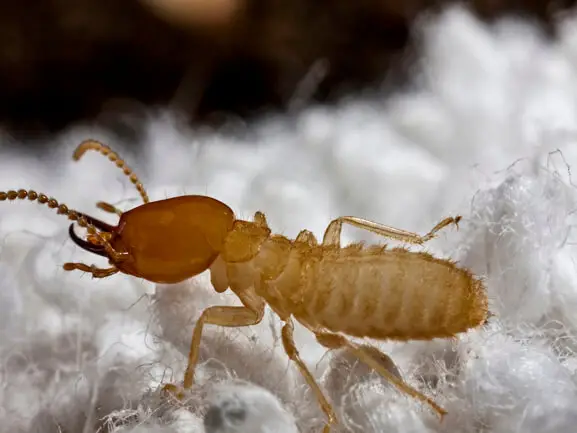
Key Highlights Introduction Your home is not just a place to hang your hat; it’s your sanctuary, a place where you feel safe and secure. However, there are unwelcome guests that can threaten the structural integrity of your home: termites. These tiny pests can infest your home and cause extensive damage, often without you even realizing it. That’s why termite inspection is so important. In this blog, we will provide you with everything you need to know about termite inspection. From understanding the significance of early detection to recognizing signs of termite activity, we will guide you through the process of termite inspection and explain the key benefits it offers. We will also take an in-depth look at the termite inspection process, including what to expect during the inspection, the tools and techniques used, and how to interpret the inspection report. Additionally, we will address common concerns and questions related to termite inspections, such as choosing a reliable termite inspection company, the cost of termite inspection, DIY vs. professional inspections, dealing with a termite infestation, and insurance coverage for termite damage. By the end of this blog, you will have a comprehensive understanding of termite inspection and be well-equipped to protect your home from these destructive pests. Understanding Termite Inspection: A Comprehensive Guide Understanding termite inspection is crucial for homeowners to protect their properties from the devastating effects of termite infestation. A termite inspection is an investigation conducted by professionals to determine the presence of termites in and around your home. It plays a vital role in termite control and prevention, as it allows for early detection and treatment of termite infestations. By conducting regular termite inspections, homeowners can develop a comprehensive termite control plan and take necessary preventive measures to minimize the risk of termite damage. Professional pest control companies, like FullScope Pest Control, have the expertise and specialized equipment to conduct thorough termite inspections and provide effective treatment options. 1. The Importance of Early Detection Early detection of termite infestation is of utmost importance in protecting your home from extensive termite damage. Termites are known for their ability to silently and rapidly destroy wooden structures, causing significant structural damage that can compromise the integrity of your home. By detecting termite activity early on through regular termite inspections, you can take immediate action to eliminate the infestation and prevent further damage. Early detection also plays a crucial role in real estate transactions, as termite damage can significantly impact the value of a property. By conducting a termite inspection before buying or selling a home, you can ensure that you are aware of any existing termite issues and address them accordingly, protecting your investment and providing peace of mind. 2. Recognizing Signs of Termite Activity Recognizing the signs of termite activity is essential in detecting a termite infestation and taking appropriate measures to address it. During a termite inspection, professionals look for specific signs that indicate the presence of termites. These signs include: Recognizing these signs during a termite inspection allows for early detection and prompt action to eliminate the termites and prevent further damage to your property. 3. Key Benefits of Regular Termite Inspections Regular termite inspections offer numerous benefits for homeowners in terms of termite control and prevention. Some key benefits of scheduling regular termite inspections include: By investing in regular termite inspections, homeowners can proactively protect their properties and minimize the risk of termite damage. 4. How FullScope Pest Control Conducts Inspections FullScope Pest Control follows a meticulous process for termite inspections. Our licensed inspectors thoroughly examine accessible locations within your property, using special equipment to identify termite activity. They check for signs like termite wings, droppings, or mud tubes. If necessary, they might tap on wood structures to listen for hollow sounds or use a screwdriver to probe for wood damage. This detailed approach ensures a comprehensive inspection, allowing us to provide accurate findings and recommendations for a tailored treatment plan. 5. Preventive Measures to Keep Termites at Bay To prevent termite infestations, start by eliminating wood-to-soil contact. Keep firewood and mulch away from your home’s foundation. Repair any leaky plumbing and address moisture issues promptly. Regularly inspect your home for signs of termite activity, such as mud tubes or termite wings. Seal cracks and crevices in your home’s exterior to deny termites easy access. Trim tree branches and shrubbery away from the house. Consider professional termite inspections for a more thorough assessment of your property’s vulnerability. In-Depth Look at Termite Home Inspection Process When it comes to termite inspections, it’s important to understand the process involved. A termite inspection typically consists of the following steps: Before the termite inspector arrives, there are a few pre-inspection preparations you can make to ensure a smooth process: During the inspection, the termite inspector will carefully examine your home for signs of termite activity. They will inspect areas such as crawlspaces, basements, attics, and wooden structures to identify any evidence of termites. The inspector may use specialized tools and equipment, such as moisture meters and thermal imaging cameras, to aid in the detection process. They will also look for visible signs of termite damage, such as mud tubes, wood damage, or live termites. At the end of the inspection, the termite inspector will provide you with a detailed report outlining their findings, including any signs of termite activity and recommendations for treatment. This report will help you make informed decisions regarding termite control and prevention. Termite inspectors use a range of tools and techniques to conduct thorough inspections and accurately assess termite activity. Some of the tools and techniques commonly used during termite inspections include: By employing these tools and techniques, termite inspectors can conduct more comprehensive inspections and accurately identify termite activity. This ensures that appropriate treatment measures can be implemented to eliminate termites and prevent further infestations. After completing a termite inspection, the inspector will provide you with a detailed report outlining their findings and recommendations. This report is an essential tool for understanding the extent
Termites in House | How to Check for Termites | FullScope
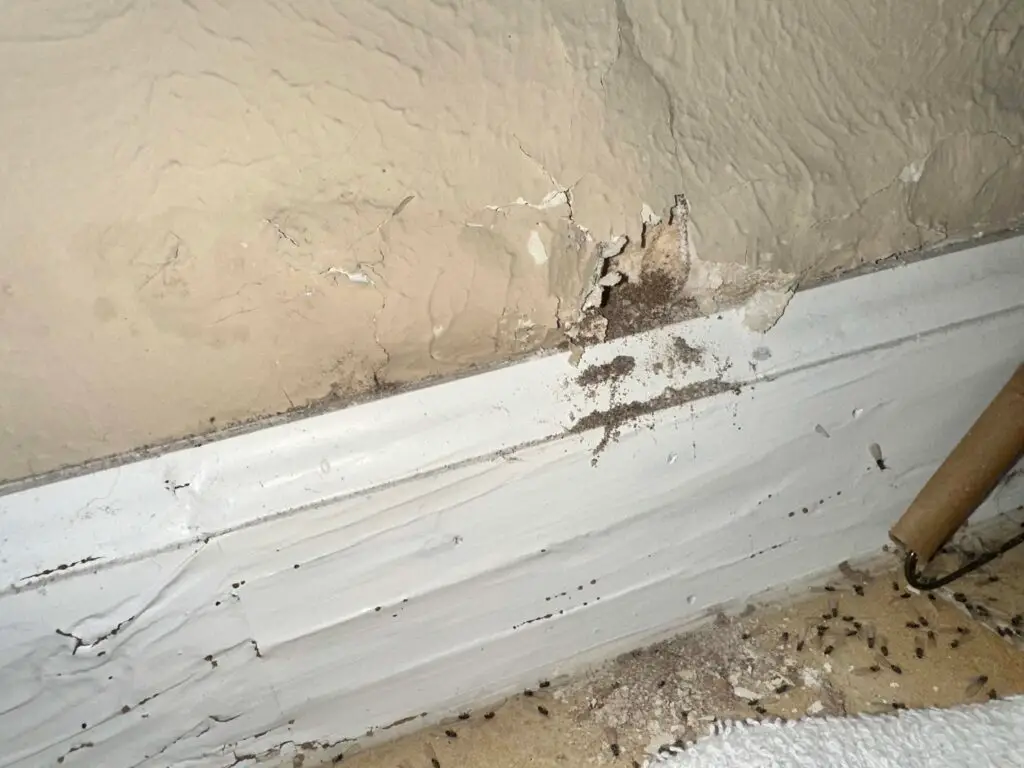
Key Highlights Introduction Termites are among the most destructive insects in the world, capable of causing significant damage to homes and other wooden structures. If left untreated, termite infestations can lead to structural damage and even the collapse of a building. However, with early detection and proper treatment, homeowners can protect their homes from the devastating effects of termites. Identifying the signs of a termite infestation is the first step in preventing extensive damage. In this blog, we will discuss how to check for signs of termites in your house and provide effective solutions for termite control. We will also explain the impact of termites on your home and answer some frequently asked questions about termite infestations. By understanding the warning signs of termites and taking appropriate measures, homeowners can safeguard their homes and ensure the longevity of their structures. Whether you choose to conduct a termite inspection yourself or hire a professional, the key is to be proactive in preventing and addressing termite infestations. Let’s dive into the details and learn how to check for termites in your house. Identifying Signs of Termites in Your Home Identifying the signs of a termite infestation is crucial in order to take prompt action and prevent extensive damage to your home. While termites can be difficult to detect, there are several warning signs that can indicate their presence. By keeping an eye out for these signs, you can catch a termite infestation early and minimize the potential damage to your property. 1. Unexplained Cracks on Internal Walls One of the first signs of a termite infestation is unexplained cracks on internal walls. As termites feed on wood, they create tunnels and galleries within the walls, causing the structure to weaken. This can lead to cracks appearing on the surface of the walls, especially in areas where the infestation is concentrated. These cracks may be small at first but can gradually widen over time, indicating significant termite damage. If you notice unexplained cracks on your internal walls, it is important to investigate further for a possible termite infestation. 2. Doors and Windows Becoming Hard to Open or Close Difficulty in opening or closing doors and windows can be a clear indication of termite damage. As termites feed on wooden structures, they can cause the wood to warp or become distorted. This can affect the functionality of doors and windows, making them hard to open or close smoothly. If you notice that your doors or windows are becoming increasingly difficult to operate, it is important to inspect the frames for signs of termite infestation. Pay close attention to any visible damage or weakened areas in the wood, as these can be telltale signs of a termite problem. 3. Clicking Sounds Within the Walls Clicking sounds within the walls can indicate termite activity. Termites communicate through vibrations, and these vibrations can produce clicking sounds that are often faint and difficult to detect. However, if you hear consistent clicking sounds coming from within your walls, it is advisable to investigate further for a possible termite infestation. While clicking sounds alone may not confirm the presence of termites, they can serve as an early warning sign and prompt further inspection. 4. Presence of Flying Termites or Their Discarded Wings The presence of flying termites or their discarded wings is a strong indication of a termite infestation. Flying termites, also known as termite swarmers, are reproductive termites that emerge from mature colonies in search of a mate and a suitable location to start a new colony. Seeing a swarm of flying termites or finding their discarded wings around your property can indicate the presence of an active termite infestation. These swarmers are often attracted to light sources and may be found near windows and doors. If you come across flying termites or their wings, it is important to take immediate action to address the termite problem. 5. Tunnels in Wood or Mud Tubes on Exterior Walls Tunnels in wood or mud tubes on exterior walls are clear signs of termite activity. Subterranean termites, one of the most common types of termites, build mud tubes to protect themselves while traveling from their underground colonies to sources of food, such as wood in your home’s structure. These mud tubes can often be found on exterior walls, especially near the foundation. If you notice mud tubes or tunnels in wood, it is important to address the termite infestation promptly to prevent further damage to your home. 6. Soft Wood That Sounds Hollow When Tapped Soft wood that sounds hollow when tapped can indicate a termite infestation, particularly drywood termites. Drywood termites infest dry wood and create galleries within the wood as they feed. This can result in the wood becoming hollow and weakened, causing it to produce a distinctive hollow sound when tapped. If you suspect a termite infestation and find areas of wood in your home that sound hollow, it is important to conduct a thorough inspection to confirm the presence of termites and take appropriate measures for termite control. 7. Piles of Termite Droppings Near Wood Structures Piles of termite droppings, also known as frass, near wood structures can indicate a termite infestation. As termites feed on wood, they produce droppings that are pushed out of their tunnels and accumulate in piles. These droppings are often small, granular, and resemble sawdust or coffee grounds. If you come across piles of termite droppings near wooden structures in your home, it is a clear sign of termite activity. Prompt action is necessary to address the infestation and prevent further damage to your property. You see swarmers emerge inside the building, or find dead swarmers on the floor or windowsill. If you see swarmers emerging inside your building or find dead swarmers on the floor or windowsill, it is a strong indication of a termite infestation. Swarmers are reproductive termites that leave their existing colonies to start new colonies. Their emergence inside the building suggests that there is an active termite
Termites in North Houston: Don’t Let Silent Destroyers Win Your Home
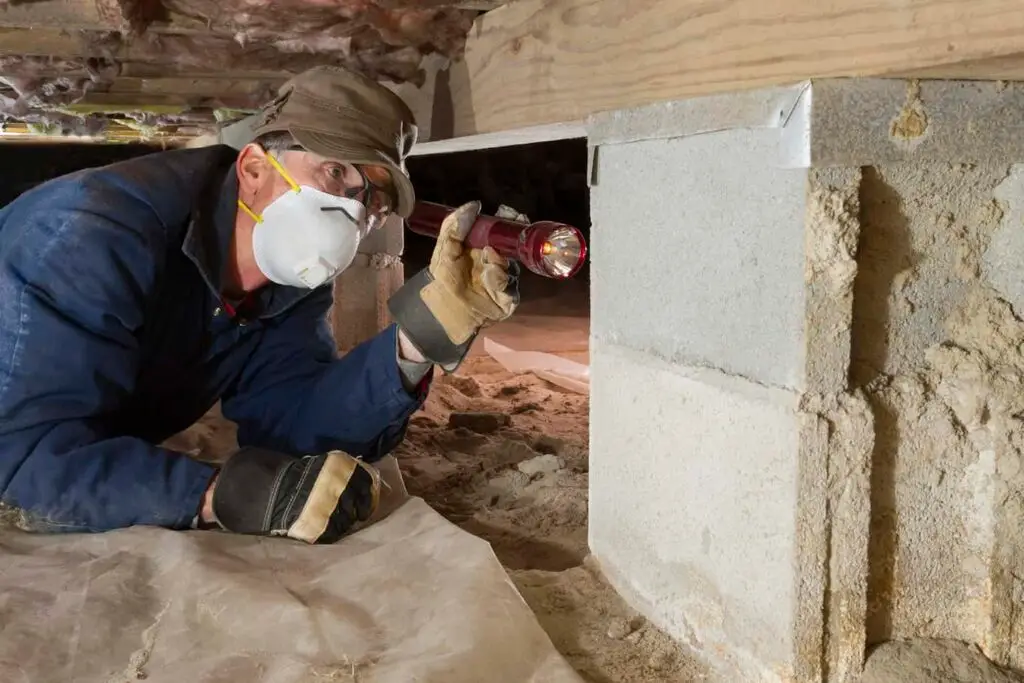
North Houston’s warm, humid climate creates a paradise for many things, including unfortunately, termites. These silent destroyers can wreak havoc on your home’s foundation and structure, costing homeowners thousands of dollars in repairs. Whether you’re a seasoned resident or a newcomer, understanding the termite threat and taking preventive measures is crucial. The Two Main Culprits: 1. Subterranean Termites: 2. Drywood Termites: Signs of Trouble: Prevention is Key: Don’t Wait Until It’s Too Late: Early detection and treatment are vital to minimize damage. If you suspect a termite infestation, act immediately. Contact your local licensed pest control professionals, FullScope Services for a thorough inspection and treatment plan. We can: Offer preventative measures to safeguard your home in the future. Remember: Termite damage is often not covered by homeowner’s insurance. Taking proactive steps now can save you significant financial stress and heartache down the road. Don’t let these silent destroyers win your home; arm yourself with knowledge and take action! Additional Resources: